

This article is a part of Poland Unpacked. Weekly intelligence for decision-makers
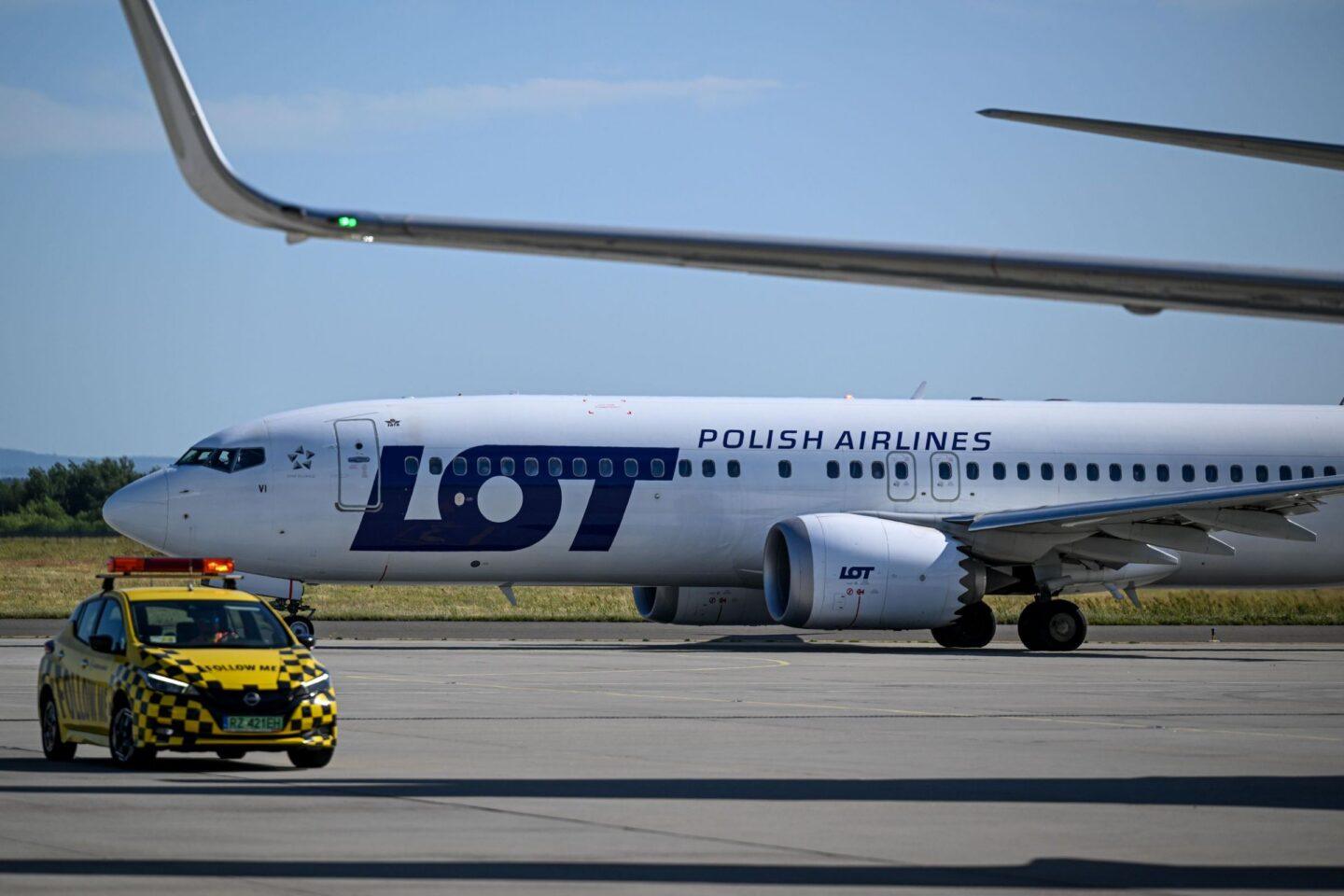
Negotiations between LOT and Smartwings have been in the media spotlight for months, but attention has recently intensified. Money.pl, citing an anonymous source within LOT, reported that the carrier is in the final stages of acquiring the foreign airline.
However, LOT remains tight-lipped, consistently declining to confirm or deny the reports. “PLL LOT does not comment on speculation appearing in the media,” company spokesman Krzysztof Moczulski said. This response has been repeated in media conversations for weeks.
What is clear is that Smartwings, the Czech charter airline, is indeed up for sale.
Czech billionaire sells Smartwings
Smartwings originated as part of Travel Service, the largest tour operator in the Czech Republic, which also operates subsidiaries in Poland, Hungary, and Slovakia. According to the ch-aviation database, as of November 2025, the airline’s fleet comprised 41 short- and medium-range aircraft, including Airbus A220s, A320s, and various Boeing B737 models.
The airline is co-owned by billionaire Jiří Šimáně, founder of the Unimex financial group. In 2025, Šimáně ranked 40th on Forbes’ list of the richest Czechs, with an estimated fortune of CZK 13.7 billion (roughly EUR 0.5 billion).
Šimáně has sought a buyer for Smartwings for several years but has yet to succeed. In 2022, Israeli airline Isair came close to acquiring the carrier but withdrew from the deal this year. Prior interest came from Eurowings, part of the Lufthansa Group, and Turkish airline SunExpress.
What are the benefits for LOT?
Although LOT has remained silent on the matter, aviation experts highlight several potential advantages of acquiring Smartwings. Foremost, it would provide LOT with immediate access to new Boeing 737 MAX aircraft and enhance its holiday route network.
The takeover would also mark an expansion into foreign markets – a move LOT has entertained before. In 2018 and 2019, the airline not only considered establishing a base in Budapest but also launched transcontinental flights from there – to New York first, then Seoul. This Budapest experiment ended this summer when LOT suspended its South Korea route.
Dr. Tomasz Balcerzak, Vice-Dean for Internal Security at Helena Chodkowska University of Technology and Economics, views the prospects of the acquisition positively. He suggests it could yield tangible benefits for both LOT and its passengers.
“Smartwings operates in four markets with a sizable Boeing 737 fleet and is well-established in the charter and regional sectors. Integrating such an airline into a larger carrier’s structure can bring operational efficiencies through scale and diversification. For LOT, this means reinforcing its regional presence, accessing additional markets, and increasing fleet availability – something crucial today,” Dr. Balcerzak explains.
He cautions, however, that aviation acquisitions come with significant operational challenges, including the integration of crews, fleets, and safety systems. Yet, in today’s competitive landscape, such bold moves may be necessary.
“Medium-sized carriers like LOT must make daring decisions to stay relevant in an era dominated by mega-groups and global alliances. The potential acquisition of Smartwings could be part of a broader strategic effort to cement LOT’s leadership in Central and Eastern Europe,” adds Dr. Balcerzak.
The European sky is consolidating
Meanwhile, in Europe, aviation giants are considering smaller ownership transactions to strengthen their positions against competitors.
Air France-KLM has just announced interest in the privatization process of the Portuguese carrier TAP. TAP, which operates flights including those between Lisbon and Warsaw, has struggled financially for many years. As Portuguese Prime Minister Luis Montenegro remarked, Portugal no longer wants to invest in this “bottomless pit”. TAP is valued at around USD 1 billion.
In July of this year, the Portuguese government approved the sale of 49.9% of the airline’s shares. They plan to sell up to 44.9% of TAP’s capital, reserving 5% for employees.
According to Reuters, in March Lufthansa acquired a 10% stake in Latvian carrier airBaltic for EUR 14 million. In August, following months of negotiations, Turkish Airlines acquired a 26–27% stake in Spain’s Air Europa. The transaction’s value was EUR 300 million.
Earlier this year, Lufthansa finalized the purchase of a 41% stake in Italy’s ITA Airways, the successor to the former Alitalia, which faced enormous financial challenges and was liquidated in 2021. However, ITA Airways also began incurring losses and formally joined the Lufthansa Group this year.
“The consolidation of the European aviation market is a process ongoing for many years, but now it is clearly accelerating. Airlines today operate under enormous cost pressures, rising fuel prices, fleet availability shortages, regulatory changes, and post-pandemic demand restructuring. Under these conditions, reasonable consolidation is no longer optional – it has become a condition for survival,” comments Dr. Tomasz Balcerzak.
According to the expert, several parallel trends are observable in Europe. First, large groups like Lufthansa and Air France-KLM are reinforcing their already strong positions through acquisitions. Second, low-cost carriers, led by Ryanair, continue to expand into new markets. The third trend is Central and Eastern European countries strengthening their carriers so they are not marginalized.
“Consolidation in the region is inevitable. The only question is whether we will be active participants or mere observers,” concludes Dr. Tomasz Balcerzak.


Key takeaways
- LOT is reportedly close to acquiring Smartwings, which could significantly strengthen its position in the region. The transaction would provide immediate access to an additional fleet, particularly Boeing 737 MAX aircraft. For LOT, it would also mark a return to international expansion following earlier unsuccessful attempts. At the same time, the acquisition would boost the carrier's presence in the leisure travel segment.
- Consolidation in the European aviation market is clearly accelerating and has become essential for survival. The largest players, such as Lufthansa and Air France-KLM, are systematically acquiring smaller airlines to increase their scale of operations. Meanwhile, governments in Central and Eastern Europe are working to strengthen their national carriers to prevent their marginalization.
- The potential acquisition of Smartwings by LOT has its advantages but also involves considerable operational complexity. Integrating crews, fleets, and systems is a difficult and costly process that can take years to complete. Nevertheless, experts point out that mid-sized carriers can no longer avoid making bold moves.