

This article is a part of Poland Unpacked. Weekly intelligence for decision-makers
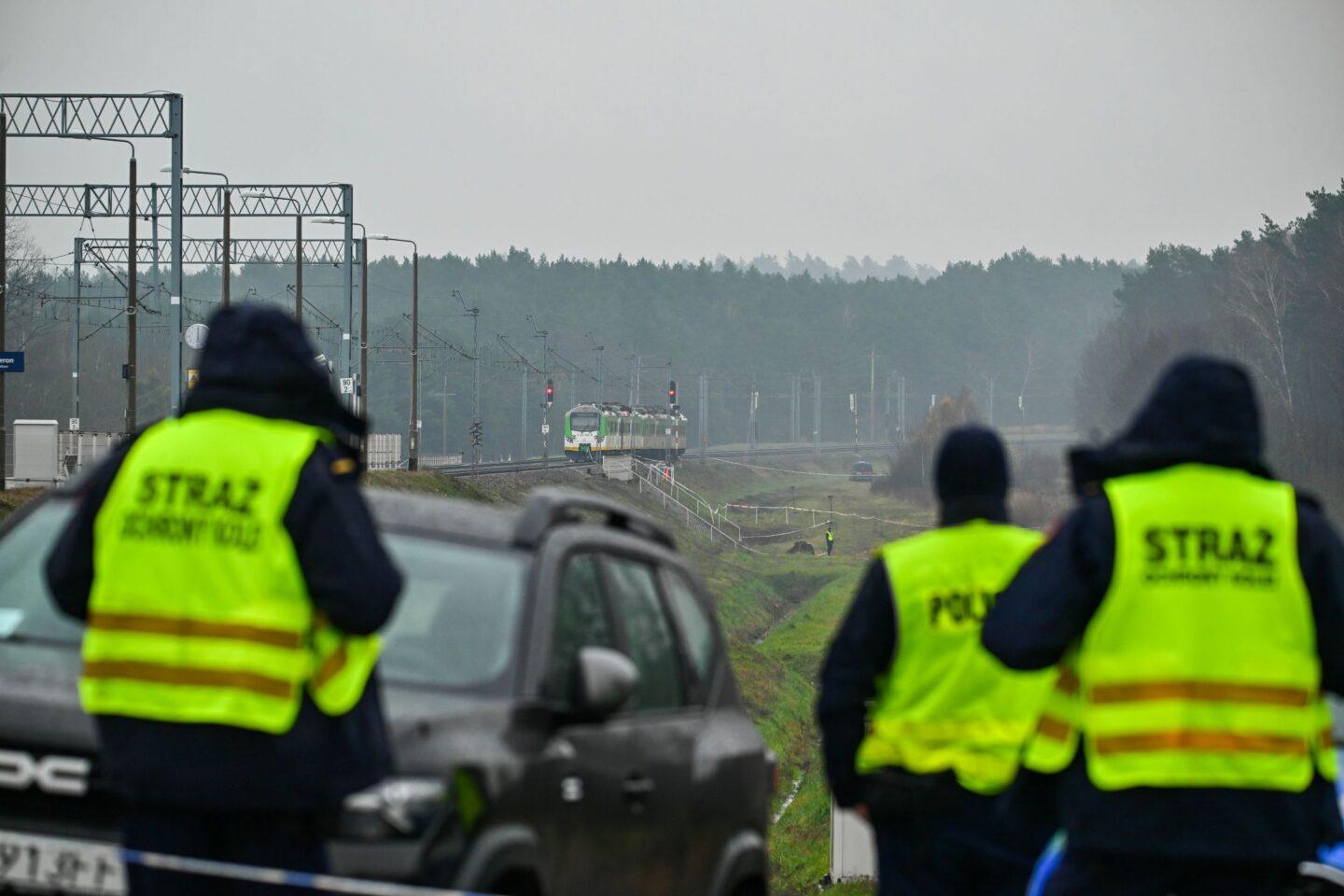
This past week, Polish politics has been dominated by Russian acts of sabotage. The incidents occurred between November 15 and 17 along the Warsaw-Dorohusk rail line in the east of the country. The first involved an explosion that damaged a section of track in the town of Mika. The second incident came to light when a train carrying 475 passengers was forced to brake suddenly due to damage to the railway line in the Lublin region.
Russian sabotage in Poland
Prime Minister Donald Tusk has raised the alert level to Charlie, which means heightened vigilance by security forces at railway facilities across the country.
On Tuesday, the prime minister briefed the Sejm (lower chamber of Polish parliament) on the acts of sabotage. He reported that the suspects are Ukrainian citizens working for Russia, and that these individuals have fled to Belarus. PiS politicians (the opposition) criticized the government for failing to arrest the suspects before they escaped.
In his Tuesday address, the Prime Minister stated that the incidents were deliberate and intended to cause a train disaster. He also appealed to the public not to fuel anti-Ukrainian sentiment or spread disinformation.
Actions taken by the Ministry of Foreign Affairs: Closure of the Russian diplomatic mission in Gdańsk and Russia’s response
The Ministry of Foreign Affairs took diplomatic action against Russia. On Wednesday, Foreign Minister Radosław Sikorski announced the expulsion of Russian diplomats from the consulate in Gdańsk. They must vacate the facility by December 23. Calls to close the Russian consulate in Gdańsk have been mounting since the start of Russia’s full-scale invasion of Ukraine. It is the last remaining Russian consulate operating in Poland – the consulate in Poznań was closed earlier.
In retaliation for the decision to close the Gdańsk facility, Russian authorities removed memorial plaques from the cemetery of Polish soldiers in Katyń, a symbolic place for Poles where Polish citizens murdered by the Russians during WW2 are buried.
Meanwhile, Poland’s ambassador to Russia, Krzysztof Krajewski, announced on Thursday that he had been assaulted in St. Petersburg the previous Sunday.
Andrei Ordash, Russia’s chargé d'affaires in Poland, was summoned to the Polish Ministry of Foreign Affairs on Thursday to address these matters. During the meeting, he was handed a formal note regarding the closure of the consulate in Gdańsk, and discussions covered both the assault on the ambassador and the desecration of the Katyń memorial site.
On Wednesday, Minister Sikorski met with NATO Secretary General Mark Rutte, and on Thursday he met with EU foreign ministers in Brussels.
Disinformation online: accusations against Ukraine
The scale of disinformation was significant. Even before state institutions released official details, the internet was flooded with conspiracy theories. On Tuesday morning, Res Futura, an analytical outlet, presented data on online narratives surrounding the railway track damage. For the analysis, they examined over 14,000 posts by internet users. The report’s authors emphasize that the data reflects prevailing online sentiment and narratives, not representative views of the general public.
The largest share of comments suggested that Ukrainians were behind the damage to the tracks. Some claimed that Ukraine was trying to drag Poland into a conflict with Russia. Other narratives suggested this was an attempt to pressure Poland for additional military aid. There was also widespread speculation that Ukrainian operatives were operating undetected among civilians. Critics of this theory, however, pointed to the lack of evidence. The accusations against Ukrainians were sweeping in nature, targeting the entire ethnic group rather than specific individuals. As many as 42% of comments blamed Ukrainians for the incidents.
Nearly half as many (24%) attributed responsibility to Russia. These commenters cited hybrid warfare tactics and previous acts of sabotage by Russian intelligence services. Those pointing to Russia suggested it might be seeking to destabilize Poland, a country that provides significant military and logistical support to Ukraine.
Almost one in five comments (19%) claimed that the incident had been deliberately staged – or at least minimized – by Donald Tusk’s government. One in ten comments took a cautious approach to identifying possible perpetrators. Three percent of commenters pointed to Belarusian intelligence services.
Konfederacja political party wants to suspend aid to Ukraine
Accusations of Ukrainian responsibility also came from some politicians. Konfederacja MP Konrad Berkowicz suggested Ukrainian involvement even before authorities announced their findings. Following intervention by Deputy Speaker of the Sejm Krzysztof Bosak, Berkowicz deleted his post, but republished it once it was revealed that Ukrainians paid by Russia had carried out the sabotage.
A few days before the sabotage, there was considerable public discussion about a corruption scandal in the Ukrainian government. Konfederacja MPs seized on this development. MP Krzysztof Mulawa, who publicly stated he did not believe the information presented by Prime Minister Tusk, recalled that in February he had unsuccessfully attempted to introduce an amendment requiring criminal background checks for foreigners. Konfederacja leader Sławomir Mentzen criticized Prime Minister Tusk for failing to arrest the Ukrainian who damaged the railway track.
Konfederacja MP Bartłomiej Pejo took a less accusatory tone toward Ukraine in his online comments. He emphasized that the Ukrainian suspects had previously been convicted of pro-Russian sabotage and that Russia was orchestrating many such operations.
MEP Braun wants ‘normalization’ in relations with Russia
Politicians from the Confederation of the Polish Crown, led by MEP Grzegorz Braun, went further in exploiting anti-Ukrainian sentiment. Braun and three other members of his party sent letters to both Radosław Sikorski and Russian Foreign Minister Sergey Lavrov.
In these letters, they call for normalization of Polish-Russian relations. They also protested the removal of memorial sculptures from the Polish War Cemetery in Katyń.
Additionally, they criticized Sikorski for his decision to close the Russian consulate in Gdańsk. Grzegorz Braun’s political career is marked by strong nationalist stances and confrontational behavior, leading to significant public and legal controversies.
Foreign Minister Sikorski challenges President Nawrocki
On Wednesday, Radosław Sikorski addressed the Sejm. The Foreign Minister delivered a speech in which he characterized the actions of Russian intelligence services as an act of state terrorism.
Later in his speech, he referenced the recent Independence March (an annual event on 11 November to mark Poland’s regained independence in 1918), during which the European Union flag was burned. He also alluded to the president’s speech that day, in which Karol Nawrocki spoke critically of the European Union without mentioning Russian aggression against Ukraine.
The Foreign Minister emphasized that EU membership is a guarantee of Polish sovereignty. He invoked the Christian roots of the Union’s founders and cited the negative consequences of Brexit. He accused President Nawrocki of laying the psychological groundwork for ‘Polexit’ and stoking anti-EU sentiment.
Marcin Przydacz, head of the Presidential Office for International Policy, responded to Sikorski’s speech. He called on the government to cooperate with the president and to “come to its senses.” He accused Sikorski of doing the Kremlin’s bidding by attacking the president.
PiS politicians (the opposition) walked out of the chamber during Sikorski’s speech. They were incensed by the criticism of the president and the foreign minister’s remarks.
The minister was also accused of needlessly attacking the president and engaging in “journalistic polemics” with critics of EU federalization. Some opposition MPs called on the government to communicate more effectively with the Polish people.
Meanwhile, Razem – the opposition party from the left – appealed to the president on Tuesday to convene the National Security Council, a constitutional advisory body to the President on internal and external security.
A contrast to September drone incursion into Poland
When Polish airspace was violated by several Russian drones in September, the presidential palace and the government presented a united front, at least momentarily. This time, however, the government is leveling accusations of “anti-EU sentiment” that align with Russia’s narrative, while the opposition supporting the president is accusing the government of negligence.


Key takeaways
- Following Russian sabotage on the railways, the government announced enhanced security measures at railway infrastructure facilities. The Foreign Minister decided to close the Russian consulate in Gdańsk.
- PiS criticizes the government for inconsistencies in crisis communication and for statements attacking President Karol Nawrocki. The Confederation is calling for suspension of Polish support for Ukraine. Meanwhile, Grzegorz Braun's Confederation of the Polish Crown is demanding that Sikorski reverse his decision to close the consulate in Gdańsk.
- When Russian drones entered Polish airspace in September, there was at least a brief moment of unity between the presidential palace and the government. This time, the atmosphere on both sides is confrontational. At the same time, anti-Ukrainian sentiment is being stoked.