

This article is a part of Poland Unpacked. Weekly intelligence for decision-makers
The Digital Ocean Ventures Starter fund is a relatively new player in Poland’s startup ecosystem. Its formation was announced a year ago, and the fund was officially established in April this year. It is among the first investment vehicles to receive public funding from PFR Ventures, allocated as part of the European FENG funds program. To date, the fund has made three startup investments.
A significant reshuffle occurred in recent weeks among the fund’s four managing partners, marked by the resignation of Magdalena Olczak-Nowicka. This triggered a so-called “key person event,” leading to the automatic suspension of the fund’s investment activities.
“The investment operations of Digital Ocean Ventures Starter were automatically suspended in early September due to Ms. Olczak-Nowicka’s resignation,” confirmed Paweł Śliwa, Investment Director at PFR Ventures.
According to representatives of the VC fund, activities have resumed in recent days. Here’s what happened.
Digital Ocean Ventures faces personnel changes
The immediate cause of Magdalena Olczak-Nowicka’s departure, according to a source close to the VC market who wished to remain anonymous, was a conflict among the fund’s founders. The parties involved have chosen not to disclose further details.
“I prefer to keep the specifics private, but for some time there have been significant differences between me and my fellow board members regarding the values that guide our work and life. This led to my decision to resign,” Magdalena Olczak-Nowicka explained.
When asked about the personnel changes, other partners of Digital Ocean Ventures responded:
“At the beginning of September, Magdalena Olczak-Nowicka decided to end her cooperation with Digital Ocean Ventures Starter. She informed the other managing partners and investors, including the public investor, PFR Ventures. We do not comment on the internal details of our partners’ decisions. We appreciate Magdalena’s contribution to the fund’s development and are proud that the investment decisions we made together form a significant part of our portfolio today,” replied Adam Bartkiewicz on behalf of the team.
Good to know
Digital Ocean Ventures Starter overview
The fund is set to inject at least PLN 45 million (EUR 10.5m) into the Polish startup ecosystem. According to its strategy, Digital Ocean Ventures Starter plans to invest in 15 to 17 early-stage startups, primarily operating in two sectors: fintech and the broader field of digital transformation.
Initially, the fund raised PLN 36 million (EUR 8.5m), with PLN 29 million (EUR 6.9m) contributed by PFR Ventures. A second closing in December 2024 increased the fund by an additional PLN 9 million (EUR 2.1m). Among its investors is the WP2 Investments fund.
To date, Digital Ocean Ventures Starter has made investments in three startups.
Who is behind it?
Digital Ocean Ventures Starter fund was established in September 2024 and began operations in April 2025. It evolved from Digital Ocean Ventures (DOV) Venture Builder, which Piotr Widacki and Marcin Musiał founded in April 2021 to support startups in fintech and e-commerce.
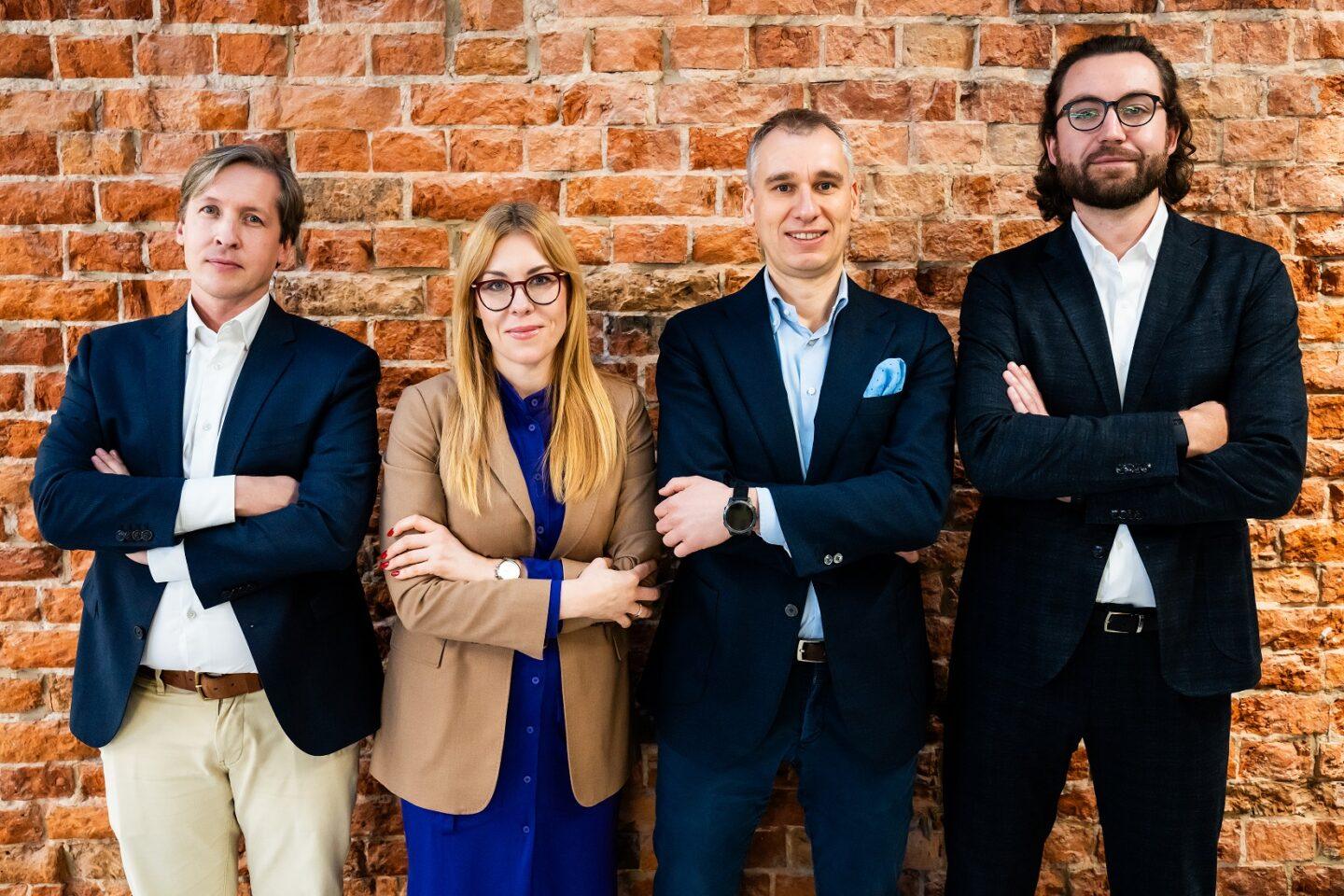
The team of four brings complementary expertise. Adam Bartkiewicz, CEO since 2022, has experience in developing digital projects such as RynekPierwotny and ProductDiscovery. Magdalena Olczak-Nowicka, who joined in 2024, comes from the VC world with backgrounds in Experior Venture Fund, mAccelerator.vc, and Orlen VC.
Piotr Widacki and Marcin Musiał add deep banking and fintech knowledge: Widacki worked at BPH, Alior Bank , BNP Paribas Polska, and Asseco, while Musiał was at Alior Bank and Santander Consumer Bank, focusing on digital development.
What Digital Ocean Ventures has in store
Magdalena Olczak-Nowicka’s departure is partly linked to financial matters, as she was an investor contributing her own capital to the fund.
“In such situations, some turbulence is inevitable, but I ensured my exit had minimal impact on the fund’s operations and was communicated properly to investors. They accepted my decision with understanding. I’m also pleased that the current management team will continue the strategy I helped develop. We are close to finalizing financial settlements,” Ms. Olczak-Nowicka explains.
Following her departure, the fund’s management had to reassure PFR Ventures and other investors that operations would continue smoothly.
“Fund managers must present a plan – either find valuable successors or convince investors that despite the loss of key personnel, the team will continue to perform well. The decision rests with investors or a special advisory committee. Their evaluation focuses on whether proposed replacements have the right skills, the fund’s past performance, the portfolio’s condition, and the credibility of the plan. For funds involving PFR Ventures, the process can be more formal due to the need for public institution approval,” explains Mateusz Toruń, legal advisor and founder of LegalBee, specializing in startup law.
Suspension of a fund: What does it mean?
From the venture capital fund’s perspective, the most significant issue following the partner’s departure was the suspension of investment activities. This is a standard procedure outlined in the rules governing the PFR Starter program.
“It required a temporary pause on new investments and a formal recovery process. All these steps are conducted in close collaboration with PFR Ventures and the fund’s private investors,” explains Adam Bartkiewicz.
He assures that the changes in the team have no impact on current investments or the fund’s ongoing development.
“All portfolio companies continue to receive active support from the Digital Ocean Ventures team. The management team now comprises Piotr Widacki, Marcin Musiał, and myself, Adam Bartkiewicz. We remain committed to executing DOV Starter’s investment strategy, focusing on backing innovative startups in digital transformation and fintech,” adds the fund’s representative.
Expert's perspective
What does the suspension of a VC fund mean?
During the suspension, the fund is not permitted to make new investment or divestment decisions – this includes acquiring shares in startups, executing exits, or issuing capital calls (requests for payment from investors). Management fees are reduced during this time and adjusted after the suspension ends. Nevertheless, the fund’s management board remains responsible for managing existing investments and making important decisions, such as those related to supervisory boards of its portfolio companies.
The suspension lasts until the relevant fund authority, with PFR Ventures' involvement, approves a recovery plan proposed by the fund managers. This plan may involve finding a replacement partner or continuing operations with a smaller, competent team, provided there is a solid plan to “buy out” the departing key member. If approved, the fund is reinstated. If not, PFR Ventures may either liquidate the fund or replace its management team. Liquidation is the least desirable outcome, so all parties have a strong incentive to resolve key personnel issues quickly.
Suspensions like this have happened before and were resolved with the fund successfully resuming operations. Nobody benefits from dissolving the fund, and investor agreements include mechanisms to protect invested capital and portfolio companies regardless of the situation.


What’s next for Digital Ocean Ventures and Magdalena Olczak-Nowicka
Representatives of the Digital Ocean Ventures Starter fund are keeping the details of their recovery plan confidential but confirm that, formally, the fund can now resume operations.
“The fund’s strategy and capitalization remain unchanged,” assures Adam Bartkiewicz.
The Digital Ocean Ventures team does not plan to bring in a new partner to manage the fund but intends to strengthen its staff. Over the coming months, they aim to bolster the operational team with administrative roles.
“These new hires will support day-to-day fund operations, so we do not expect to publicly announce them,” adds Mr. Bartkiewicz.
While the “new start” does not signal a deep strategic shift, it may bring changes in how the strategy is implemented.
“After several months of investing, we have developed our perspectives – for example, on evolving fintech definitions and AI’s impact on market development,” explains the fund partner.
Asked about her future plans, Magdalena Olczak-Nowicka says:
“For now, I’m staying in the VC industry, leveraging my knowledge to advise companies and investors on M&A transactions among other areas. But life beyond venture capital has many opportunities, so I remain open to different professional paths.”
Fund suspensions are rare, but they matter
The story of Digital Ocean Ventures Starter is one of the few cases where an investment fund has suspended its operations. Such decisions are rare but can have an outsized impact – both on new investments and on the companies already in a fund’s portfolio.
There are no public statistics on how often this happens. These situations are usually handled confidentially. “We’re talking about isolated cases here, not a market norm,” explains Mateusz Toruń. “However, key-person-event clauses are standard in fund agreements. They serve as a safeguard: if key members of a management team leave, investors can halt new investments. It’s only logical – they’ve backed specific people and their expertise.” – says Mr. Toruń.
Toruń adds that in funds backed by PFR Ventures, such clauses carry even more weight because public capital is involved.
“It’s worth noting that the details differ widely between funds,” he says. “In some cases, the departure of a single person can trigger a suspension; in others, most of the team would have to leave. Managers naturally try to reduce these risks, but they can’t eliminate them entirely. It’s simply part of doing business.”
How the procedure works
“Suspending investment activity may sound alarming, but in practice, it has a clearly defined scope,” explains Mateusz Toruń. “The fund cannot make new investments or participate in additional financing rounds for companies in its portfolio. However, it continues to operate as usual when it comes to existing investments.”
In other words, fund representatives remain active on supervisory boards, keep monitoring the performance of portfolio companies, make day-to-day corporate decisions, and can still execute exits – that is, sell shares in companies they already hold. “The fund may also defend its positions, for instance, against dilution in later funding rounds, or take part in restructurings or conversions,” Mr. Toruń adds.
Fund managers are also allowed to close binding commitments, such as deals that have already been signed. The suspension only applies to the period when the fund is actively sourcing new investment opportunities and deploying capital.
What happens when a fund fails to complete the recovery process?
Mateusz Toruń notes that, globally, the unfreezing process for a fund typically takes between three and nine months. In most cases, approval is eventually granted. But what happens when it isn’t?
“Here, international statistics are unforgiving. According to research by Goodwin Law, in 92% of cases, the absence of a resolution means the fund’s active investment phase ends automatically and permanently. The fund switches to what’s known as a ‘harvesting only’ mode. It can manage existing assets and sell its holdings, but making new investments is off the table. Some agreements allow limited financing for current portfolio companies – usually up to 15% of liabilities – but such clauses are rare and require explicit contractual terms,” Mr. Toruń explains.
A fund’s failure also creates serious consequences for its management team. They lose their right to share in profits from new deals, and raising capital for a subsequent fund becomes extremely difficult. In the investment fund industry, reputation is everything -and word of failure travels fast.
“For startups in the portfolio, this means that their fund will no longer support them in future financing rounds. They can, of course, seek funding elsewhere, but the fact that a current investor can’t step in often raises red flags for others and may negatively influence the company’s valuation,” adds Mr. Toruń.


Key takeaways
- The Digital Ocean Ventures fund was temporarily suspended following the departure of one of its key managers. Magdalena Olczak-Nowicka's resignation triggered the formal "key person event" procedure mandated by PFR Ventures regulations. This resulted in the automatic suspension of new investments and required the team to present a recovery plan for approval by both private investors and public institutions. While serious in its implications, the suspension ended with the fund resuming operations after securing the required approvals.
- The reason for Olczak-Nowicka's departure was an internal conflict among the fund's managing partners. According to her former partners, it stemmed from diverging values and visions. Although neither side has disclosed details, the decision also carried financial implications, as she was both a co-founder and investor in the fund. The settlement agreement enabled a smooth transition to a new phase of Digital Ocean Ventures' operations without requiring changes to its investment strategy.
- Fund suspensions are rare in Poland. However, the procedures mandated by PFR Ventures ensure security and continuity in investment portfolio management. During the suspension period, the fund cannot execute new investments but continues to manage its existing portfolio. The absence of an effective recovery plan may lead to fund liquidation or a transition to "harvest mode," which negatively impacts financing opportunities for portfolio companies and damages the management team's reputation.