
Poland Unpacked week 47 (17-23 November 2025)

Welcome to this week’s edition of our Poland Unpacked, where we deliver key insights and trends shaping the economic, corporate and political landscape. Catch the most important insights from Poland in this week’s briefing.

Loading the Elevenlabs Text to Speech AudioNative Player...
WELCOME
Poland Unpacked and explained.
Grzegorz Nawacki

Welcome to Poland Unpacked.

Your weekly English briefing on the country everyone's watching. We deliver sharp analysis of Poland's economy, politics, society, and innovation - distilled by top Polish journalists and analysts who live and breathe this story from the inside out.

For 36 years, Poland has been Europe's quiet juggernaut. Now a top-20 global economy, it's impossible to ignore. We're here to decode what's really happening - and why it matters.

Topic of the week
Sabotage strikes Poland’s rail network amid rising tensions with Russia
Michał Szcześniewski

Last week Poland experienced multiple sabotage attacks targeting critical railway infrastructure, notably on the Warsaw–Lublin line. These acts included explosions that severely damaged rail tracks, one incident forcing an emergency stop of a passenger train carrying 475 people. The Polish government attributed the attacks to Russia, identifying two Ukrainian nationals allegedly recruited by Russian intelligence as the culprits. The suspects reportedly fled to Belarus immediately after the attacks, complicating extradition efforts. Prime Minister Donald Tusk described the sabotage as an unprecedented threat to national security and emphasized the importance of the affected railway line for transporting aid to Ukraine.​

In response, Poland launched a comprehensive military and security operation named “Horizon,” mobilizing up to 10,000 soldiers alongside police and other state agencies to protect vital infrastructure from further attacks. This operation includes enhanced surveillance, joint patrols, risk assessments, and the deployment of a citizen-reporting app aimed at increasing public vigilance against potential sabotage. Officials stressed the need for coordinated action and closer cooperation between security services to prevent similar incidents, highlighting the sabotage campaign as part of a broader strategy of hybrid warfare by Russia against European states.

Business
A Polish winemaker's global ambitions, high-altitude consolidation, and the plight of seasoned managers
Grzegorz Nawacki

Jakub Nowak’s business journey is a remarkable case study. He started 25 years ago as a sales rep at JNT Group, Poland’s second-largest wine company, and climbed the ranks to become CEO in 2017. That same year, he orchestrated an MBO with private equity firm Enterprise Investors. Seven years later, he bought the fund out entirely. Now he’s setting his sights on international expansion. JNT has just acquired one of Spain’s oldest cava producers – its second acquisition of 2024, following the purchase of Romanian vineyards. This deal opens doors to dozens of new markets. And Nowak isn’t done yet.

“I dream of building an international business. It's a great time for Polish entrepreneurs,” says Jakub Nowak.

PZU, Poland’s largest insurer, has its third CEO in two years – the previous two fell victim to political turbulence. Even by state-controlled company standards, this is an unusually rapid turnover. Bogdan Benczak, a PZU veteran who surprised many by landing the top job, has outlined his strategy for the coming quarters: recapture market share in mass property insurance, expand healthcare services, and overhaul the claims handling system.

LOT, Poland’s national carrier, is reportedly in the final stages of acquiring Czech airline Smartwings. The move reflects a broader wave of consolidation sweeping European aviation: Air France-KLM has expressed interest in Portugal’s TAP, while Lufthansa has already snapped up stakes in several carriers this year.

Poland’s plant-based food market (meat and dairy alternatives, tofu, hummus, etc.) is worth PLN 1.1 billion annually (approx. EUR 260m). After explosive growth between 2020 and 2022 – sales more than doubled – the sector cooled dramatically, forcing many players out. Karolina Kubara, VP of market leader Dobra Kaloria, shared insights on current trends, forecasts, and her company’s expansion plans.

Poland’s unemployment rate has hovered around 3.2% for years – among the EU’s lowest. Yet the job market harbors a troubling blind spot: managers over 50 who’ve lost their positions face extraordinary difficulty finding new roles. Decades of experience and proven track records mean not much. These men increasingly report age discrimination. We spoke with affected executives and labor market experts about this growing problem.

Despite falling interest rates, the ten banks listed on the Warsaw Stock Exchange continue posting robust profit growth. Which institutions are thriving, which are lagging, and how exactly are they making money? Six charts reveal the state of Poland’s banking sector.

Economy & Markets
Poland’s economy accelerates to 3.7% growth – leading the EU outside Ireland
Marek Skawiński

Poland’s GDP grew 3.7% year-on-year in real terms during Q3 2025, accelerating from 3.3% in the previous quarter. This marks the fastest expansion since mid-2022, when the economy was rebounding from COVID-19 and benefiting from an influx of Ukrainian refugees who bolstered the labor supply.

Excluding Ireland - whose statistics are skewed by multinational profit transfers - Poland is the EUs growth champion. The 3.7% Q3 figure outpaces Bulgaria (3.2%), Spain (2.8%), and Czechia (2.7%). By comparison, the EU averaged 1.6% growth, while the eurozone managed just 1.4%.

Polands inflation stood at 2.8% year-on-year in October. Since early Q3 2025, it has remained within the National Bank of Poland's target range of 1.5–3.5%, though still slightly above the 2.5% medium-term goal. Viewed regionally, Poland is among the few Central and Eastern European countries combining moderate inflation with robust growth. The IMF projects Polish GDP will expand 3.2% in 2025. Only Poland and Czechia are forecast to deliver both sub-3% inflation and above-2% real GDP growth by December.

Last week, the European Commission released its autumn macroeconomic projections through 2027. Poland's 2025 GDP forecast was trimmed slightly from 3.3% to 3.2%. However, the EC significantly upgraded its 2026 outlook from 3% to 3.5%, citing an expected investment surge. Poland is projected to remain among the EU's fastest-growing economies through 2027. Inflation (measured by the HICP index) should ease to 2.9% in 2026 from an average of 3.4% in 2025.

Polands budget outlook is more concerning. The EC forecasts deficits of 6.3% of GDP in 2026 and 6.1% in 2027—potentially the highest in the EU. After fiscal expansion in 2025, some modest tightening is expected (0.2 percentage points in structural terms), assuming the tax increases in the 2026 budget bill survive without a presidential veto. As a result, Polands debt-to-GDP ratio is projected to approach 70% by 2027. While still below the EU average (85%), this represents a sharp increase—roughly 25 percentage points since 2019, driven largely (though not entirely) by military expenditure. For context, EU debt rose just 5 percentage points over the same period. Households will face a dilemma.

Economic data releases were light this week, though Poland Statistics' (GUS) November survey shows consumer sentiment remains very positive. Next week brings a fuller slate of short-term indicators: retail sales, industrial and construction output, employment, wage growth, and inflation data.

Startups / VC / Tech
No more excuses: Poland unleashes billions for tech innovation
Cezary Szczepański

In technology and startups, there's no such thing as too much capital - especially amid breakthrough advances in AI and deep tech. This is particularly true for Poland, which still ranks among the EU's least innovative countries. That's why this week's announcements about substantial new tech investment pledges dominated Polish business headlines.

Finance and Economy Minister Andrzej Domański officially launched the Innovate Poland platform, designed to mobilize private investors in the PE and VC markets. The initiative will deploy PLN 4 billion (EUR 945m) across up to 250 Polish entrepreneurs or companies with Polish ties - from startups to mature businesses. Founding partners backing the platform include the Polish Development Fund, Bank Gospodarstwa Krajowego (BGK), the European Investment Fund, and PZU (Poland's largest insurer). The partnership remains open to additional participants.

The European Investment Fund and its parent, the European Investment Bank, are significantly expanding their Polish operations. This week, Kraków-based startup Synerise secured over PLN 105 million (EUR 25 million) in venture debt financing from the EIB Group - a specialized loan structure for high-growth startups. The capital will fuel international expansion. But Synerise is just the beginning. The European Investment Fund will allocate PLN 500 million (EUR 118m) to support Polish innovation and manage the new Future Tech Poland (FTP) fund of funds.

Bank Gospodarstwa Krajowego also made waves by investing EUR 20 million in Future Energy Ventures (FEV), an international VC firm focused on energy, digital infrastructure, and low-carbon solutions. The funds are earmarked specifically for Polish growth-stage technology companies.

BGK announced structural changes as well, creating two new funds - Vinci Venture Capital and Vinci Private Equity - each with PLN 550 million (EUR 130m). They'll replace three existing investment vehicles: HiTech Asi, IQ Asi, and Da Gamma Asi.

Not all news was positive. We broke the story of internal conflicts at Polish VC fund Digital Ocean Ventures, which led to the departure of a managing partner and the fund's temporary suspension.

Polish biotechnology had a stellar week. VAXiCAN, a University of Gdańsk spin-out developing cancer vaccines, raised PLN 10.5 million (EUR 2.5m) from DeepTech Capital - a newly formed consortium of two funds and private investors with over PLN 500 million (EUR 118m) in total capital dedicated to Polish technologies.

Pikralida closed a PLN 13.3 million (EUR 3.15m) round to advance therapies for stroke, brain injuries, and venomous snake bites. The company sees the defense sector as a key customer and has its sights set on the US market.

Proteine Resources, which combines biotech with alternative food production, raised EUR 9.5 million to build what it claims will be the world's first fully autonomous alternative protein factory.

Politics & Policy
Poland's Hitchcock moment: when sabotage meets political theater
Krzysztof Figlarz

Alfred Hitchcock's films famously open with an earthquake - after which the tension only escalates. Polish politics works much the same way.

This inaugural edition of our political newsletter launches against the backdrop of a shocking railway sabotage incident. Authorities uncovered acts of sabotage on Polish rail lines that, by sheer luck, caused no casualties — though they easily could have. Prime Minister Donald Tusk confirmed that two Ukrainian citizens working on behalf of Russia were responsible. The case has dominated Polish political discourse in recent days, as we've covered extensively.

On the purely political front, the main story has been the changing of the Sejm Speaker. Formally this is Poland's second-highest office (though the reality is more nuanced). When President Lech Kaczyński died in the 2010 place crash in Smoleńsk, it was Mr. Komorowski - the then Speaker of the Sejm - who took over. And later won presidential elections. Also, the Speaker organizes parliamentary proceedings and wields significant, if not decisive, influence over legislation. No wonder than that emotions are high.

The outgoing Speaker was Szymon Hołownia of the center-right Polska 2050 party, which he founded. Before entering politics, Mr. Hołownia was a prominent journalist (covering primarily, though not exclusively, Church affairs) and hosted the Polish version of "Got Talent." As a political newcomer in 2020, he placed third in the presidential race, and it was an open secret that his ultimate goal was winning the 2025 presidential election. The Speaker role was meant to raise his profile enough to realize that ambition.

Reality proved brutal. Mr. Hołownia captured less than 5% of the vote, dragged his party's ratings to rock bottom, and saw his own approval plummet after mysterious negotiations with the main opposition party, Law and Justice (PiS).

Yet his mid-term departure as Speaker had little to do with these political failures. The governing coalition - spanning left to center-right - had agreed to rotate the position even before taking power. The successor was always meant to be Left party leader Włodzimierz Czarzasty, and so it came to pass.

The 65-year-old politician sparked controversy among right-wing opposition figures due to his communist-era past (Mr. Czarzasty belonged to the Communist Party until its 1990 formal dissolution). Though his biography has long been public knowledge, the Speaker transition rekindled old grievances among the post-Solidarity right. Cries of "Down with communism!" echoing through the chamber transported observers back three decades.

The author of these words doesn't remember the communist era, so for those equally historically distant, I recommend comparing government productivity under the new and former presidents.

Current president Karol Nawrocki promised to "put the lazy government to work." The government shot back that it would do its job and the president should mind his own business.

Yet it appears the pressure is having an effect. How? We explore this in our analysis.

After hours
Big city or cosy coutryside?
Michał Szcześniewski & Jakub Szymanek

Music and art. Sounds like a perfect combination? “Ghost Rider” by Christelle Oyiri is an immersive exhibition that pays tribute to overlooked pioneers of club music whose work shaped today’s global dance culture. It reframes electronic music history by spotlighting the emotional and cultural impact of these innovators, rather than treating them as dry, archival figures.

Oyiri blends sound, moving image and sculpture to build a space that feels closer to a club or a ritual than a traditional white-cube show. Visitors are invited to experience the story physically and sensorially, becoming part of a living, constantly shifting soundtrack.

So if you're in Warsaw, you have the chance to see how the city’s leading national gallery experiments with club culture, technology and diasporic memory under one roof. “Ghost Rider” positions Zachęta as a place where contemporary art, nightlife and new forms of storytelling meet, making it a compelling stop for anyone curious about how today’s music scenes are being written into cultural history. Enjoy.

Or maybe you're looking for an inspiration for a weekend get-away? The Land of Open Window Frames (Kraina Otwartych Okiennic) in Podlasie, just a 2-hour drive from Warsaw. Why? Because it is a charming and lesser-known area in northeastern Poland, made up of several villages. You’ll get a glimpse into a place where traditional Eastern Slavic culture, wooden architecture with decorative window carvings, and a peaceful way of life still thrive. The region is rich in history and folklore, with stunning Orthodox churches and truly local communities.
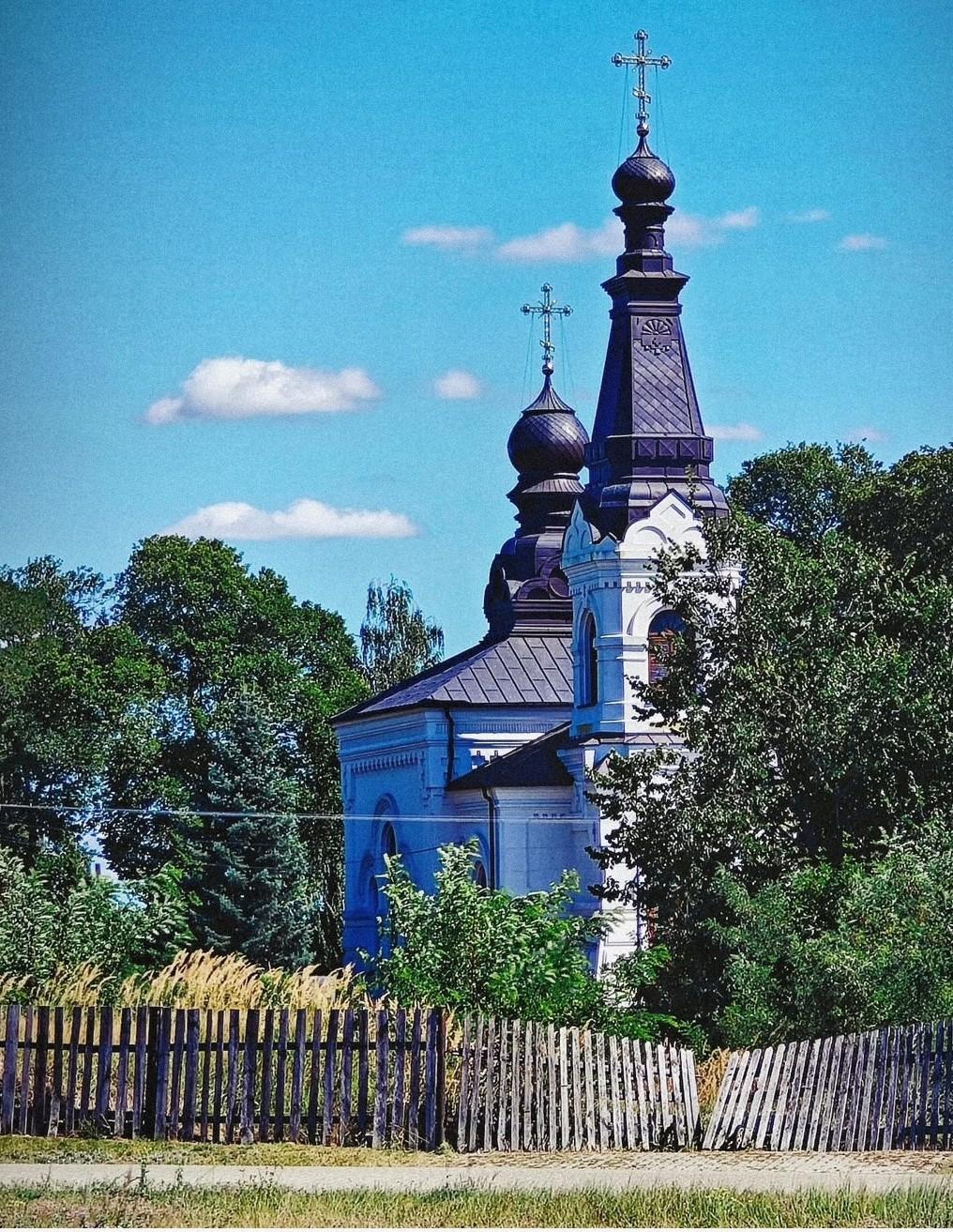
Now add some snow for winter magic. Photo: Michał Szcześniewski

So, if you’re looking to escape busy city life, this area provides quiet rural landscapes, minimal tourist crowds, and authentic encounters with local traditions. Driving or walking through these villages reveals beautiful wooden huts, religious sites, and untouched nature. Works fine for cultural immersion and relaxation. Nearby spots like the village of Narew with its historic buildings and museum, as well as the Orthodox hermitage in Odrynki, add to the route’s appeal.

You'll find plenty of windows to peek into. Or count cats. Photo: Michał Szcześniewski

Podlasie is the perfect spot to enjoy slow travel, heritage tourism, and outdoor activities in a serene, picturesque setting far from the usual tourist trails. You’re welcome.

FUN FACT ABOUT POLAND
We like to have it our way
Michał Szcześniewski

You might have heard that Polish is... specific. And easy to learn, right?

But before you take your first lesson, just know that we are very proud of it and that we like to take Polish seriously. This is how serious we are:
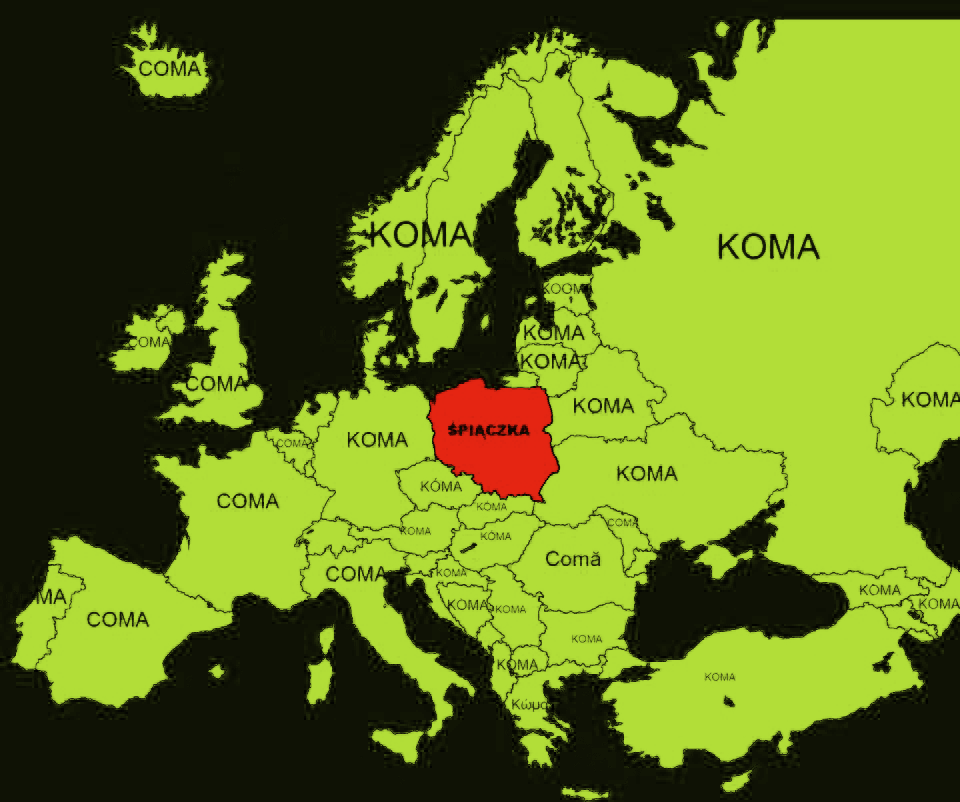
Coma across Europe. Poland knows best.