

Poland Unpacked week 49 (1-7 December 2025)
Welcome to this week’s edition of our Poland Unpacked, where we deliver key insights and trends shaping the economic, corporate and political landscape. Catch the most important insights from Poland in this week’s briefing.
This is Poland Unpacked. Weekly intelligence for decision-makers
Poland's cryptocurrency market lurched into legal limbo this week when President Karol Nawrocki vetoed the government's crypto-assets bill — legislation designed to implement the European Union's Markets in Crypto-Assets Regulation (MiCA). The decision has cleaved the country's political establishment in two. Finance Minister Andrzej Domański warned darkly that the veto would leave consumers exposed to fraud, noting that twenty percent of crypto customers are already losing money to abuses. Prime Minister Donald Tusk suggested darker forces at work, hinting at mysterious links between the industry and the political right.
Yet beneath the political theatre lies a genuine regulatory mess: the bill was supposed to have been law months ago, and a June 30 deadline looms when Polish crypto businesses must be licensed or face illegality under EU rules. The president's three formal objections - government power to shut down websites "with a single click," excessive regulation compared to Czech or Hungarian alternatives, and supervisory fees crushing small firms - resonate with industry voices but alarm consumer-protection campaigners bracing for chaos.
The government and Mr. Nawrocki's office are reportedly negotiating a revised bill, this time developed with industry input rather than imposed upon it. Experts hope the next draft strikes a genuine balance: clear rules that invite investment rather than punish innovation, while genuinely protecting users through education and oversight. For now, Poland's crypto entrepreneurs -among Europe's largest - face an agonising wait. So do the Poles holding crypto assets, counting on their government to build coherent rules before the legal framework collapses entirely.
Poland’s consumer-electronics market is shrinking. Yet Media Expert, owned by the family-run company Terg, is growing at breakneck speed. Its revenues have already reached PLN 21.5bn (around EUR 4.95bn), making it the market leader in Poland. And it seems hungry for more: it is investing PLN 0.5bn (EUR 115m) in a logistics centre, buying entire retail parks to expand its store network, and pushing into new e-commerce categories through the launch of its own marketplace. “It is on track to become Poland’s dominant retailer,” says one expert, noting that the chain is gearing up for a head-on clash with Allegro, the country’s leading e-commerce platform.
Rafał Brzoska, the founder and chief executive of InPost - the logistics giant behind Poland’s ubiquitous parcel lockers - is the country’s most energetic entrepreneur (for transparency, he is also an investor in XYZ). Alongside InPost’s rapid international rollout, he has lately thrown his weight behind Polish innovative business. First, he announced he was ready to invest EUR 100m of his own money in a Polish AI gigafactory. And on Friday he became one of the new backers of ICEY, a Polish-Finnish space-tech startup. In its latest round, the satellite manufacturer raised EUR 200m from a roster of prominent European investors, at a valuation of EUR 2.4bn.
Polish Post, wholly owned by the state, has been loss-making for years. It faces global headwinds—especially the collapse in letter volumes - as well as internal problems: a massive technology backlog, unfavourable regulation and chronic overstaffing. Since 2024 the company has been led by Sebastian Mikosz, who between 2013 and 2015 carried out a deep restructuring of LOT Polish Airlines, secured state aid, avoided bankruptcy and renegotiated key contracts. In an interview he explains where Polish Post’s troubles came from, how he plans to transform the company and how he intends to raise the PLN 1.5bn (EUR 345m) needed to execute the plan. The conversation opens with a blunt question: “Will Polish Post survive - and does its survival even make sense?”
Elemental Holding is one of the few Polish firms that compete at the global frontier. It specialises in “urban mining” - recovering metals from recycling. The company is now carrying out a USD 1bn investment in Zawiercie that will determine its future. If the project succeeds, revenues could rise to USD 4–5bn. Paweł Jarski, one of Poland’s most intriguing entrepreneurs, speaks about the project, a possible stock-market listing, and the preparations under way.
But Polish entrepreneurs are not focused solely on business. A group of them raised - within less than 15 minutes - the funds needed to launch one of the most important archaeological missions in the history of Polish excavations. “Aside from the Valley of the Kings, this is considered the most prestigious archaeological site in all of Egypt. The research potential spans many years, perhaps generations,” says Dr Krzysztof Radtke of the Polish Academy of Sciences. A year later, they travelled to see how their money was being used.
The key macroeconomic event of the past week was a 0.25-percentage-point interest-rate cut. The central bank’s main policy rate now stands at 4%. It was the fifth cut this year, bringing the cumulative reduction to 1.75 percentage points. The move reflects rapidly easing inflation, driven by both domestic factors (slower wage growth and moderating service prices) and external ones (lower commodity prices and a strong złoty). According to preliminary data from the statistics office, inflation in November stood at 2.4% year-on-year — almost exactly at the central bank’s 2.5% target, within the permissible ±1-point band.
At the post-decision press conference, central-bank governor Adam Glapiński declared victory in the fight against inflation, adding that “it is time to open the champagne”. In practice, the bank’s anti-inflation campaign has indeed proved effective—something far from guaranteed. In the first half of 2023 inflation had reached nearly 20%, initially fuelled by disruptions in global supply chains and later by the energy shock triggered by Russia’s war in Ukraine.
To contain price growth, the central bank had raised rates from 0.1% to 6.75%. Even so, unemployment did not rise, and the economy continued to expand at a solid pace. GDP is now 17% higher than just before the pandemic. Poland is the fastest-growing large developed economy not only in Europe but globally.
Crucially, growth remains brisk. In the third quarter of 2025 GDP expanded by 3.8%. Private consumption was the main driver, accounting for more than half of total growth. Public consumption contributed another 1.5 percentage points, while investment added 1.1 points. A welcome sign is the first positive contribution from net exports since early 2024—despite weak demand among Poland’s main trading partners, especially Germany.
Strong October data reinforce the upbeat picture. Retail sales continued to grow robustly, boosted by higher purchases of durable goods such as home equipment and cars. Industrial output also increased, driven by a revival in investment and stronger demand for intermediate goods. There are finally signs of improvement in the construction sector as well.
It is worth noting that Poland’s economic performance has won recognition from the International Monetary Fund. The Fund nonetheless warns against an overly high budget deficit and urges Poland to engage more deeply in European integration. “Poland will not catch up to Western levels of development without a stronger EU,” it said.
The past week in Polish politics began with intergovernmental Polish-German consultations in Berlin. Prime Minister Donald Tusk called on Germany’s chancellor, Friedrich Merz, to provide compensation to surviving Polish victims of the Second World War. The visit by cabinet members also led to the return of additional cultural objects, including medieval documents and a fragment of a sculpture looted during the war from the former Teutonic castle in Malbork. Following these meetings, the Bundestag urged the German government to build a monument honouring Polish victims of German war crimes.
As the year drew to a close, hospitals began cancelling scheduled procedures. At a government medical summit, the prime minister ruled out plugging the deficit by raising the health-insurance contribution. His voters expect him to cut the contribution, as he promised during the election campaign. President Karol Nawrocki convened his own medical summit on Friday. He signed a bill that will reduce the deficit by PLN 3.6bn (around EUR 830m).
Other decisions by President Nawrocki stirred more emotion. He signed a bill banning fur farming - a move that angered politicians from Confederation (Konfederacja), a party linked to the industry and competing on the right with Law and Justice (PiS). PiS, the main opposition party, governed for eight years and now backs the president.
By contrast, the president vetoed a bill banning dogs from being kept on chains (yes, it still happens), even though 49 PiS MPs had voted for it. Although he has prepared his own draft law on the matter, the veto infuriated the government. The ruling coalition is considering an attempt to overturn it, though PiS MPs - whose votes would be essential - may not vote the same way as before.
Polish politicians love to talk up “economic patriotism,” but how well do they understand the challenges domestic firms actually face? A new survey of MPs, senators, and mayors exposes a mix of enthusiasm, blind spots, and legal blind alleys. From tax myths to protectionist impulses, the gap between rhetoric and reality has never been clearer - an eye-opening read for anyone watching Poland’s business scene.
OpenAI is set to acquire the Polish company Neptune, which will strengthen the training process behind ChatGPT — arguably the biggest news in Poland’s startup ecosystem in recent days. Neptune was founded in 2017 by Piotr Niedźwiedź. The company has built a tool for monitoring, analysing and comparing experiments in machine-learning model training. In recent years it has worked closely with OpenAI. A deal of this scale underscores that Polish startups are finally being noticed by the global tech community. It also fuels hopes among local venture-capital investors, who have been patiently financing the growth of innovative firms in the country.
The Polish economy still needs home-grown, breakthrough innovations — and has considerable catching up to do both in creating them and in bringing them to market. In recent years it has grown - profitably, to be sure - mainly by importing technology and outsourcing services, including IT. But that model is running out of steam. Sustaining rapid economic growth will require a much stronger focus on innovation. Crucial to this will be higher investment, especially from the private sector, in research, development and innovation.
Speaking of innovation. Innovation and technology financing are important pillars of the government’s economic-development strategies. Yet, as we have learned, the number of patents filed in Poland has plunged. There were more applications during the pandemic than in 2024 and 2025. Ewa Skrzydło-Tefelska, president of the Polish Patent Office, argues that the number of patents is not a measure of innovation—what matters is their actual use in the economy. Notably, the largest group seeking patent protection in Poland consists of universities, due in part to the structure of academic promotions, where commercialisation plays a secondary role.
December 13 will mark two years since the change of government. The opposition Law and Justice (PiS) party - the one that lost elections 2 years ago - has announced a conference on the challenges facing the health-care system. A major matter that many governments have been trying to sucessfully address. And a matter that is still the reason of jokes and frustration among Poles.
Also, on 13 December 1981, Poland’s communist authorities introduced martial law to crush the independent Solidarity trade union and social movement and to halt demands for democratic change.
The regime sent the army and riot police into the streets, imposed a nationwide curfew, cut phone lines and closed borders, censored the media and banned most public gatherings. Thousands of opposition activists, including Solidarity leaders, were arrested overnight, many people lost their jobs or were repressed, and several dozen were killed in clashes and crackdowns. Martial law formally lasted until mid‑1983, and today many Poles remember 13 December as a symbol of both state violence and the resilience of society under communism.
Back to current matters. In the coming days, it will become clear whether Szymon Hołownia will be appointed UN High Commissioner for Refugees. A former television host and journalist, he has served for the past two years as the Speaker of the Sejm. His party, Poland 2050, is part of the governing coalition. If he does not secure the post, he may run for the party leadership, a race in which five contenders are already competing.
Netflix's "Heweliusz", a five-episode miniseries dramatizes Poland's worst peacetime maritime disaster: the 1993 capsizing of the MS Jan Heweliusz ferry in the Baltic, which claimed 56 lives in a ferocious storm. What you get on Netflix is a gripping blend of survival horror at sea and gritty onshore intrigue, as bereaved families battle bureaucracy, cover-ups, and corporate lies to honor the dead. Released on November 5th, it shot to number two in Poland's viewership rankings and fourth globally among non-English shows, with over 3.3 million views and top-10 placements in 65-74 countries from Sweden to Mexico. Polish storytelling can hold its own with the best.
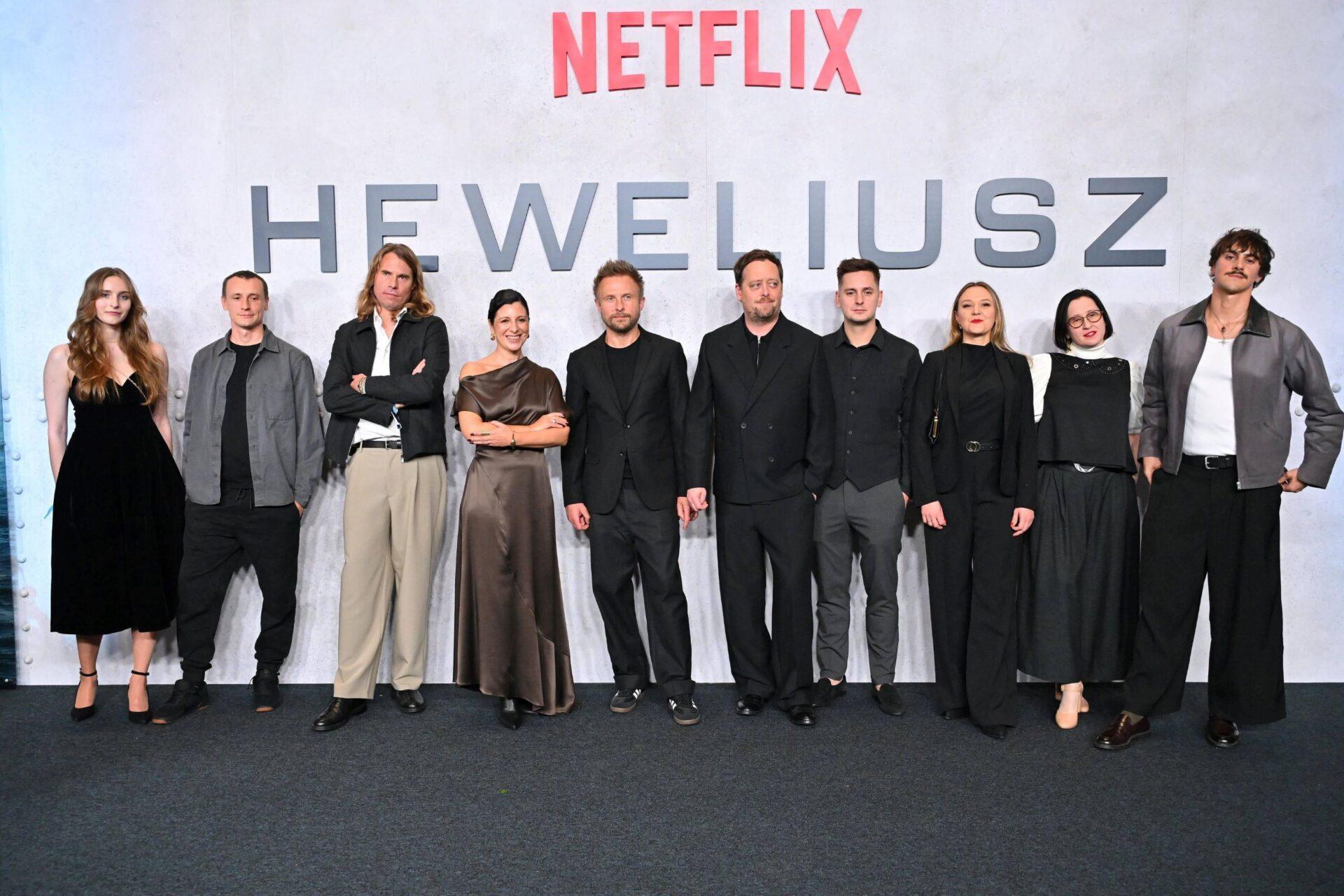
What lifts "Heweliusz" above standard disaster-movie fare is its emotional authenticity. It is drawn from survivor testimonies and real-world scandals - the scapegoated captain Andrzej Ułasiewicz, mysterious tapes, thwarted justice. And Netflix's budget delivers cinematic production values and F/X storms that once lay beyond local reach.
For visitors exploring Warsaw's winter streets or Gdańsk's ports, it adds depth to contemporary Poland, revealing the post-communist grit. At under six hours, you can get a glimpse of Polish modern history.
You might have read about the best Christmas markets in Europe and seen them on your IG feeds. The ones in Kraków and Warsaw are sometimes among them. But winter in Poland is actually quite different than the one you'll see on social media.
