

This article is a part of Poland Unpacked. Weekly intelligence for decision-makers
The investment would support the Baltic AI Gigafactory, Poland’s answer to a European Commission initiative designed to accelerate the AI race against the United States and China. The plan envisages sprawling data centres in five EU locations.
For now, Brzoska remains cautious. “At the moment, this project is more a PR exercise than a concrete plan. But Polish business is very open to supporting it. As a private investor, I am ready to commit up to EUR 100 million if there is a clear, quantifiable business model showing that the investment can deliver a return,” he said.
The move signals an important shift in Poland’s technology landscape. Private capital could bridge the gap between ambitious government plans and viable commercial models, potentially positioning the country as a regional hub for AI innovation. For executives and investors, it underscores that AI is no longer just a matter of policy or prestige - it is fast becoming a test of economic foresight.
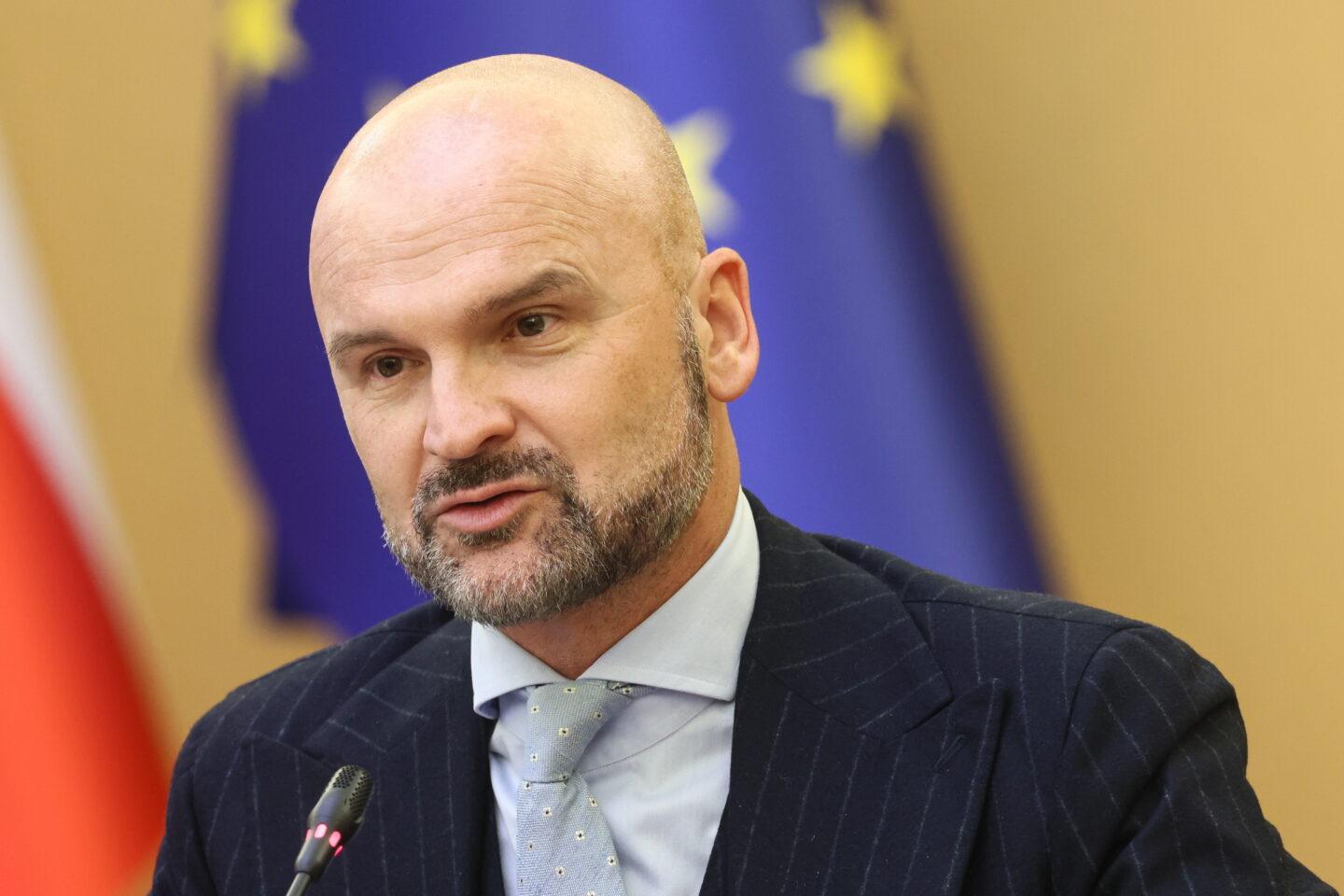
Rafał Brzoska pushes for AI investment in Poland
The Polish Ministry of Digital Affairs has reportedly received ten proposals for the location of the planned AI gigafactory, with five currently under serious consideration. Among them is Kraków, particularly the area surrounding the former steelworks.
“Of course, I have a company in Kraków, so my heart is 100% behind that location. The former steelworks site could be revitalised, and it already has access to electricity and essential infrastructure. But the most important thing is that the project actually happens,” said Rafał Brzoska, founder and CEO of InPost.
Brzoska identifies a lack of a single, central coordinator as the main obstacle to progress. “Just as the CPK [a Polish state-owned special purpose vehicle responsible for delivering strategic national transport infrastructure investments] eventually got the green light, the gigafactory needs strong backing. The CPK has a clear agenda, with various ministry projects subordinated to it. That is what makes implementation possible. The same structure is needed for the gigafactory,” he explained.
Political consensus is equally crucial. “It would be ideal if the prime minister and the government appointed a council or a dedicated representative, ideally supported by the Sejm, to lead the project. Look at the deregulation projects - they require sprints and full commitment. We should approach the gigafactory in the same way,” Brzoska added.
Business eyes investment in Poland’s AI gigafactory
The second crucial factor for the gigafactory is a clear, actionable business plan.
“This is a project worth PLN 14 billion (around EUR 2.9 billion). That’s a significant investment. Yet, it is hard to imagine a project more important for Poland’s future than this gigafactory. It simply has to happen,” said Rafał Brzoska, founder and CEO of InPost.
Brzoska points out that private companies could fully leverage the gigafactory’s potential. “InPost could absolutely relocate operations to the gigafactory, and we would be happy to do so. But this project needs a private component. Polish entrepreneurs are ready to invest capital—this cannot be exclusively a government endeavour,” he explained.
For Brzoska, the gigafactory is pivotal for Poland’s technological sovereignty and national security. “It would create an entire ecosystem, allowing independence from large global corporations. It must be done. The real questions are: with whom, when, and who will lead this project. The worst outcome would be for it to stall in a bureaucratic dead end,” he said.
Choosing the right location and defining the financial framework are now the most urgent tasks. “The costs are enormous, but with private support, this project can be realised. And we need to start immediately,” Brzoska added.
Rafał Brzoska takes the helm at Bielik AI
Rafał Brzoska, founder and CEO of InPost, is deepening his engagement in the development of Polish artificial intelligence. At the Bielik Summit conference, he was appointed chairman of the Business Council, a new body within the Bielik.AI project, Poland’s homegrown generative AI initiative. He also pledged his support for AI development and Polish tech ventures more broadly.
“As Poles, we have an exceptional ability to spot opportunities that others overlook. That is why we want to back Polish technologies - not just through InPost, but as a community of entrepreneurs,” Brzoska said.
He stressed that private-sector support is critical for Poland’s technological independence. “This must come from private businesses and, potentially, from companies with State Treasury ownership. We must do everything possible to ensure independence across as many areas as we can—so that no one can ‘pull the plug’ if we need to defend our sovereignty. It is in our national interest,” he added.
The Business Council has already welcomed its first members. “It will grow over time, but these individuals are part of Bielik’s core network,” said Sebastian Kondracki, head of the Bielik.AI project. Current members include Piotr Dorosz (Devinity), Katarzyna Starosławska (Speakaleash Foundation), Magda Dziewguć (Google Poland), Piotr Mieczkowski (Digital Europe), and Marek Magryś (Cyfronet).
Europe plans AI gigafactories to boost innovation
The European Commission unveiled plans for AI gigafactories in February 2025, as part of its broader “InvestAI” initiative, which aims to channel EUR 200 billion (around PLN 960 billion) into artificial intelligence across the continent. Of that sum, EUR 20 billion (roughly PLN 96 billion) is earmarked for so-called AI gigafactories - massive data centres with high-performance computing capabilities designed to support AI development projects.
Under the InvestAI programme, five gigafactories are planned in selected EU countries. Each facility is expected to handle 100,000 advanced chips. The goal is to catalyse both public and private investment, with EU funds intended only as a supplement.
Joining the initiative is a strategic priority for Poland’s Ministry of Digital Affairs. The ministry confirmed its application to the programme on 20 June 2025 and had earlier held meetings with potential business partners to explore participation.
Poland leads Baltic AI GigaFactory amid fierce European competition
In June 2025, Poland’s Ministry of Digital Affairs estimated that the national AI gigafactory would ultimately house up to 30,000 graphics processing units (GPUs), implying an investment of around PLN 5 billion (EUR 1.05 billion). After submitting its application to the European Commission, the project’s value increased to EUR 3 billion (approx. PLN 12.75 billion), with 65% expected from private capital and 35% from EU funds. The initiative was subsequently rebranded the Baltic AI GigaFactory, with Poland leading a consortium that includes Lithuania, Estonia, and Latvia.
Competition is intense: the European Commission received 75 applications from 16 countries, but only five projects will be selected.
Since mid-August, the Polish Ministry of Digital Affairs has been in negotiations with the Commission to finalise the project details. The talks aim not only to advance Poland’s application but also to coordinate agreements among member states, ensuring multiple viable projects can be financed.
Poland is also exploring cross-border collaboration. “I am meeting with the Czech Minister for Artificial Intelligence to discuss the expansion of the Baltic AI Gigafactory and a potential joint project,” said Dariusz Standerski, Deputy Minister of Digital Affairs. He noted that some submitted applications were purely exercises without genuine intent to build a gigafactory. “In Poland, two such cases involved a company and financial investors. There was also a foreign company just entering the market, likely hoping for media attention,” Standerski added.
Poland moves forward on AI Gigafactory
The Ministry of Digital Affairs estimates that the European Commission could realistically receive around 15 fully developed applications for AI gigafactories. The timeline, however, remains uncertain. According to the Commission’s schedule, the application process may open between late 2025 and early 2026.
“The goal is to submit the final proposal at the beginning of next year,” said Dariusz Standerski, Deputy Minister of Digital Affairs.
In early October, the ministry proposed allocating part of the National Recovery Plan’s funds - PLN 426 million (EUR 100 million) - to support the construction of AI factories and gigafactories. This injection of capital could serve as a crucial step in bridging public and private investment, enabling Poland to advance its position in the European AI landscape.
Expert View:
Expert's perspective
The Polish AI Gigafactory as an opportunity
Nevertheless, the expert highlights potential pathways for value creation. “It makes sense to focus on building models for narrower applications or to collaborate with large laboratories. This is particularly relevant when working with sensitive data,” they said.
The gigafactory could also serve as a training ground for local talent. Carefully selected partners for the design and operation of the facility would allow Polish experts to gain hands-on experience in cutting-edge AI infrastructure.
It is also worth noting that the hardware in such data centres has a finite lifespan. Graphics cards, for instance, need replacement after a few years to remain energy-efficient relative to newer generations, underscoring the need for ongoing investment and planning.


Private sector engagement key to Poland’s AI Gigafactory
The private sector will be essential to bringing Poland’s AI gigafactory to life, particularly in terms of financing. Overall, business sentiment toward the project is positive - but a lack of clarity remains a barrier. Companies are still uncertain about funding rules, participation requirements, and the benefits of involvement.
“During one event, company representatives told me they wanted to join the gigafactory project but didn’t know the specific conditions. I explained that it was up to us to define those, because that is what the European Commission requires. Their response was: ‘Oh, we didn’t know that. In that case, we’ll submit a proposal.’ And indeed, they did,” said Dariusz Standerski, Deputy Minister of Digital Affairs.
The ministry actively recruited private partners for the consortium, receiving 275 applications in total: 148 from Poland, 72 from Lithuania, 24 from Latvia, 15 from Estonia, and a handful from elsewhere in Europe. The consortium is beginning to take a formal shape. A steering committee is being established, alongside working groups tasked with overseeing different aspects of the gigafactory’s implementation.


Key Takeaways
- Rafał Brzoska, founder and CEO of InPost, has declared his readiness to invest EUR 100 million (around PLN 480 million) of private capital in the Baltic AI Gigafactory project. He stressed that his involvement hinges on the development of a realistic business model. For Brzoska, the project’s success depends not only on sound economic foundations but also on strong state support. While he favours locating the gigafactory in Kraków, he emphasised that the most important factor is the project’s implementation, regardless of the city. His declaration aligns with a broader government ambition to position Poland as a leader in European artificial intelligence.
- The Baltic AI Gigafactory is Poland and the Baltic states’ response to the European Commission’s “InvestAI” initiative, which plans to establish five high-performance data centres across the EU to support AI development. Poland faces stiff competition: the Commission received 75 applications from 16 countries. The total project cost is estimated at EUR 3 billion (around PLN 12.75 billion), with 65% expected from private investors. Yet challenges remain: there is no central coordinator, political consensus is incomplete, and participation rules for business partners are still unclear, raising concerns about implementation consistency and effectiveness.
- Experts argue that the gigafactory could be pivotal for Poland’s technological independence, but its success will require careful public-private cooperation and operational realism. Beyond its financial scale, the project involves strategic decisions on international partnerships, infrastructure, and long-term technology maintenance. Brzoska’s involvement in the Bielik.AI Council and his call for broader private-sector support highlight the growing willingness of Polish businesses to engage in ambitious AI initiatives - provided they are managed transparently and have a clear path to execution.
We have covered this topic due to its significance and interest to our readers. For full transparency, we note that the RiO Fund, owned by Rafał Brzoska—president and shareholder of InPost—is an investor in XYZ.