

This article is a part of Poland Unpacked. Weekly intelligence for decision-makers
A recent survey of parliamentarians, senators, and city mayors reveals a surprising mix of consensus, conviction, and blind spots when it comes to economic patriotism, taxation, and the role of foreign competition. For decision-makers navigating Poland’s business landscape, the results are as revealing as they are unsettling.
So how do Polish parliamentarians view the state’s treatment of domestic versus foreign companies—and who really benefits from tax breaks? Are politicians aware of the conditions in which entrepreneurs operate? OGB investigated this, and XYZ is the first to report the findings.
Should Polish firms enjoy preferential treatment over foreign competitors? How far should the state’s protectionist hand reach? And how well do politicians understand the taxation of domestic and international companies?
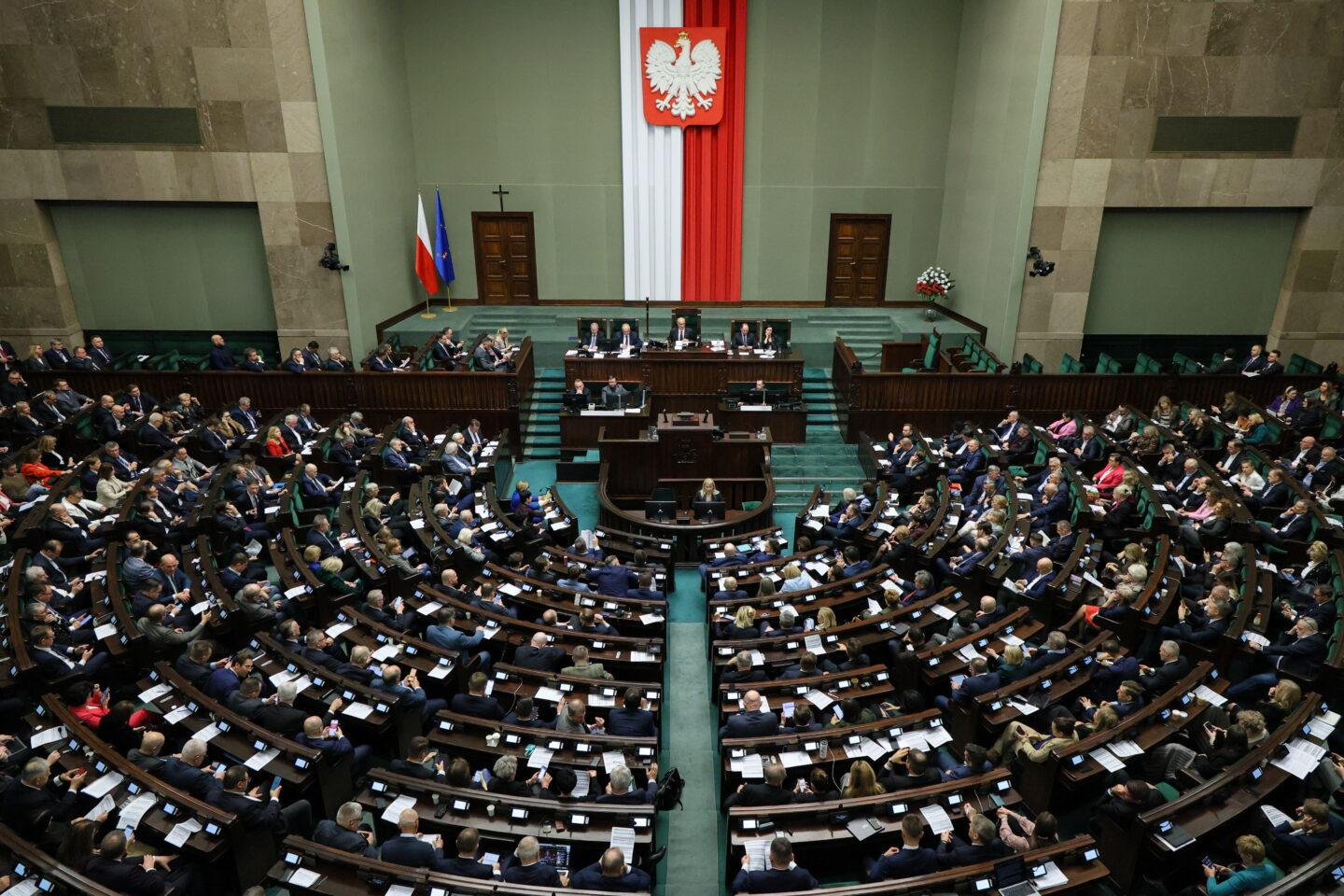
The Survey of Parliamentarians’ Opinions – Foreign Companies, conducted by the National Research Group, sheds light not only on political intentions toward Polish entrepreneurs but also on respondents’ understanding of economic realities. A total of 187 MPs, senators, and city mayors were asked about market competition affecting Polish businesses, including the role of foreign companies.
 Interactive chart
 What do politicians know about business?
Politicians were asked whether the state should give preferential treatment to Polish companies over foreign competitors. The majority said yes: 47.5% answered “definitely yes,” and 34.5% chose “rather yes.” Among the most experienced politicians - those who have served at least six terms (one term is 4 years) - no other answers were recorded.
Interactive chart Support for state backing of Polish companies is strongest among right-wing parties, particularly Law and Justice and Confederation, though members of the current governing coalition also expressed support.
Economic patriotism and the law
Łukasz Pawłowski, President of OGB, notes that the survey reveals little variation along party lines.
“This does not significantly affect the responses we might expect based on Polish political alignments. Take economic patriotism, for example: one might anticipate clear differences between right-wing, left-wing, and liberal politicians. Yet this study shows otherwise. At least in terms of declarations, there seems to be a broad consensus. Actual voting records might tell a different story, but as far as what politicians say, differences are minor—and generally in favor of economic patriotism,” Pawłowski explains.
He adds that the slogan “economic patriotism” is now heard across nearly the entire political spectrum.
“This partly reflects what we saw during the presidential campaign. Rafał Trzaskowski, for instance, began emphasizing economic patriotism, even though he had not done so previously. This suggests that support for economic patriotism and preferential treatment for Polish companies may be broader than public statements alone indicate,” Pawłowski adds.
Piotr Oliński, an analyst at the Civil Development Forum, cautions that the term “economic patriotism” can be misleading. “Choosing products from Polish suppliers is one thing,” he notes, “but legally mandated preferences for domestic businesses could run afoul of the law.”
Preferential treatment for Polish companies? “That would be discrimination”
“Polish companies cannot receive preferential treatment from the state—at least not compared with entities from other EU countries. Such a move would constitute discrimination against other Member States, violating EU law and the principles of free movement of goods, services, and capital,” explains Piotr Oliński.
Oliński points to case law from the Court of Justice of the European Union, which deems any attempt to hinder intra-EU trade, directly or indirectly, unlawful. He also notes that Article 20 of the Polish Constitution could pose a domestic barrier.
“It establishes the concept of a ‘social market economy’ as the foundation of Poland’s economic system. This principle protects free competition and open markets, opposing not only monopolies but also protectionism. Intentionally favoring companies based on nationality would be inconsistent with the Constitution,” Oliński concludes.
Kamil Sobolewski, chief economist at Pracodawcy RP (Employers of Poland), echoes this view. Referring to EU law, he notes that “there is no reason for Poland to be holier than the Pope.” Rather than erecting barriers against foreign companies, Poland should focus on attracting investment that boosts GDP and tax revenues.
“In particular, it is in the national interest to ensure tax revenues stay in the country rather than leaking abroad. This is best achieved through a simple, stable tax system with competitively low rates compared to the rest of Europe. Ireland offers a clear example of the benefits of this approach—precisely the opposite of protectionist barriers,” Sobolewski adds.
Does geopolitics justify inequality?
Our interviewee distinguishes between preferential treatment and legitimate public support. “Giving Polish companies an edge is one thing,” they note, “but providing state assistance in justified cases—such as during sudden economic shocks—is another. Economic policy must respond to changing conditions, like rising energy prices.”
Kamil Sobolewski adds that geopolitical considerations may justify differential treatment of foreign companies. Sanctions against Russia offer a clear example.
“We have the right to treat non-EU companies differently from those within the EU and to adjust this treatment based on geopolitical context. For instance, firms from allied countries such as the US can be treated on equal terms with EU companies, provided conditions are reciprocal—Polish companies should enjoy similar treatment in the US. Conversely, companies from nations with conflicting interests, particularly Russia, can be treated less favorably. Ideally, these policies should be coordinated at the EU level, though, unfortunately, that coordination often falls short,” Sobolewski explains.
Equal opportunities? According to politicians, foreign businesses have the edge
Politicians were asked: “Do Polish companies have equal opportunities when competing with foreign firms that shift profits abroad and pay lower taxes in Poland?” The responses were largely negative: 32.4% said “rather not” and 30.5% said “definitely not.” These views were most common among members of Law and Justice and Confederation.
Interactive chart Interactive chart “In my view, the real dividing line is company size, not ownership,” explains Kamil Sobolewski. “Large corporations can navigate the constant flood of new regulations and absorb economic shocks, such as fluctuations in financing costs or market conditions, thanks to diversified operations. Their situation is more predictable, allowing them to make long-term investments and build lasting competitive advantages.”
Small companies, by contrast, are at a disadvantage. “The state should support their growth and investment, using criteria like size to guide assistance,” Sobolewski adds.
Michał Borowski, a BCC tax expert and chairman of the BCC Tax Committee, emphasizes that large multinational corporations naturally have greater market power and expansion opportunities, including in Poland. “This advantage is often less about the tax system and more about scale. In today’s environment, where international competition and geopolitics can shape entire economies, it is crucial to consider how best to support Polish companies,” Borowski concludes.
Who pays how much? Politicians’ opinions are divided
The final question posed to politicians was: “Do you know the difference in taxes paid in Poland by foreign companies versus Polish firms relative to their revenues?”
Responses varied widely. One in five respondents believed Polish companies pay five times more tax than foreign firms, while over 43% said domestic companies pay twice as much. Around 27% thought taxes were equal, and just over 3% believed foreign companies pay either twice or five times more. Only among KO and PSL politicians was there unanimous agreement that Polish companies pay the same or more tax than their foreign counterparts.
Interactive chart “Foreign companies, thanks to their often complex international structures, can optimize tax settlements more easily,” explains Michał Borowski. “However, mechanisms such as compensatory taxation (Pillar 2) or anti-tax avoidance clauses help level the playing field in Poland.”
Borowski adds that investors can access tax incentives, including reliefs for innovation, robotization, R&D, IP Box, and prototype development. “The problem is that the system is extremely complex and often unclear. Attractive incentives can turn into traps if the tax authorities later question the amounts claimed,” he warns.
Data from XYZ’s ranking of the largest CIT payers provides a partial picture of tax contributions. Polish banks top the list with relatively high payments, alongside both domestic private companies and foreign firms. According to our experts, the main issue is not the level of taxation itself, but the complexity of the law.
“Poland has one of the most complex tax systems in Europe. This inevitably favors large firms that can afford costly legal and accounting services and exploit loopholes. For SMEs, complexity is more a source of risk, triggering burdensome inspections and proceedings rather than offering savings. Compounded by strict economic criminal law, this creates extremely challenging conditions for smaller businesses,” concludes Piotr Oliński.
Common feature: ignorance or inconsistency?
Experts see a degree of political inconsistency in the survey results.
Even within parties where one faction, such as New Hope, defines itself as liberal, there is support for protectionism and favoring Polish companies over foreign competitors. Moreover, the desire to shield domestic businesses appears widespread across the political spectrum.
“I get the impression that the reality inside parties often differs from what we perceive externally,” says Łukasz Pawłowski. “For example, more than a third of Civic Coalition voters identify as left-wing, yet only 15% of the party’s MPs share those views—most are centrists. I was surprised to find no major differences between parties on these issues.”
Piotr Oliński of FOR points out that the responses also reveal a lack of awareness among parliamentarians about the constitutional and treaty frameworks that govern economic policy. “This is worrying for Polish economic policy. Openness to foreign trade, enshrined in both the Polish Constitution and EU treaties, is beneficial—not just for lower prices and greater efficiency, but also for limiting monopolies, fostering international cooperation, and reducing the risk of conflict. Historically, protectionist eras have often coincided with more repressive political systems,” Oliński concludes.


Key Takeaways
- The study shows that politicians’ statements on economic policy often diverge from their party programs. Experts suggest this inconsistency may stem from limited knowledge of constitutional and EU treaty frameworks.
- Interviewees agree that giving preferential treatment based on nationality would be discriminatory and violate EU law. Rather than erecting barriers to foreign investment, experts emphasize the need for a simple, stable tax system and targeted support for SMEs, which are most vulnerable to competition from foreign companies.
- The level of taxation is less important than the complexity of the Polish tax system. This complexity favors large companies - both domestic and foreign - that can optimize their tax settlements effectively, while SMEs face the greatest risk of audits and the biggest obstacles to doing business.