

This article is a part of Poland Unpacked. Weekly intelligence for decision-makers
At the government’s final meeting before the end of the year, the Council of Ministers adopted the draft bill on the status of a close person. The text was released for public consultation even before Christmas. Its full title is “Provisions Introducing the Act on the Status of a Close Person in a Relationship and a Cohabitation Agreement.”
“For me, this is very important. We have reached a final stage that stands a chance of securing a parliamentary majority. What matters to me and to the entire government is achieving practical changes for the better. We can – if only for a moment – set aside turbulent ideological disputes in order to focus on what is feasible and what can at least slightly raise the civilizational standard of the relationship between the state and informal couples who choose this status. No one will be fully satisfied, I am aware of that, but this is the minimum civilizational standard that Poland must be able to meet. Our task is to make life lighter,” Prime Minister Donald Tusk said ahead of the cabinet meeting.
Civil partnerships were originally planned
The draft has come a long way. It initially envisaged the possibility of forming a civil partnership for both heterosexual and same-sex couples. During the 2023 election campaign, this proposal was championed by the New Left and the Civic Coalition.
However, the more conservative wing of the coalition did not support civil partnerships. They argued that allowing such unions could equate the rights of same-sex couples with those of a marriage between a man and a woman.
New Left negotiates with the Polish People’s Party (PSL)
In mid-October, an agreement between the Polish People’s Party (PSL) and the New Left was announced. Katarzyna Kotula, Minister for Equality, together with Włodzimierz Czarzasty, Władysław Kosiniak-Kamysz, and PSL MP Urszula Pasławska, presented the main provisions of the draft bill on the status of a close person in a relationship and a cohabitation agreement.
During the legislative process, PSL politicians submitted comments at the government level. In one suggestion, Deputy Minister of National Defense Paweł Bejda of the PSL proposed that the provisions on the status of a close person in a relationship should come into effect only one year after a cohabitation agreement is signed. He argued that equating a person entering a cohabitation agreement with someone in a marriage overlooks the key distinguishing feature of marriage, which, according to the deputy minister, is its permanence.
Following the cabinet meeting, Katarzyna Kotula held a press conference alongside government spokesperson Adam Szłapka.
“This is a step toward the security and legal protection of people in same-sex relationships. It also applies to heterosexual couples who, for whatever reason, have not formalized their relationship. This is a historic moment. Never before has a law concerning informal unions secured a majority in both the Sejm and the Senate. I would like to thank Deputy Prime Minister Władysław Kosiniak-Kamysz and MP Urszula Pasławska (both from PSL – ed.), who worked with me for many weeks to develop a version of the bill that could be adopted by the Council of Ministers,” Katarzyna Kotula said.
Green light from the government. What does the draft include?
Ms. Kotula also expressed hope that the first reading of her draft could take place during the Sejm’s second January session (January 21–23), allowing representatives of LGBT organizations to be present in the parliamentary gallery.
“The draft bill on the status of a close person, as the name suggests, establishes the legal status of a close person. Today, two people in a same-sex relationship – or heterosexual couples – can go to a notary, but many rights cannot be acquired through such an agreement. This law regulates those issues,” Katarzyna Kotula explained.
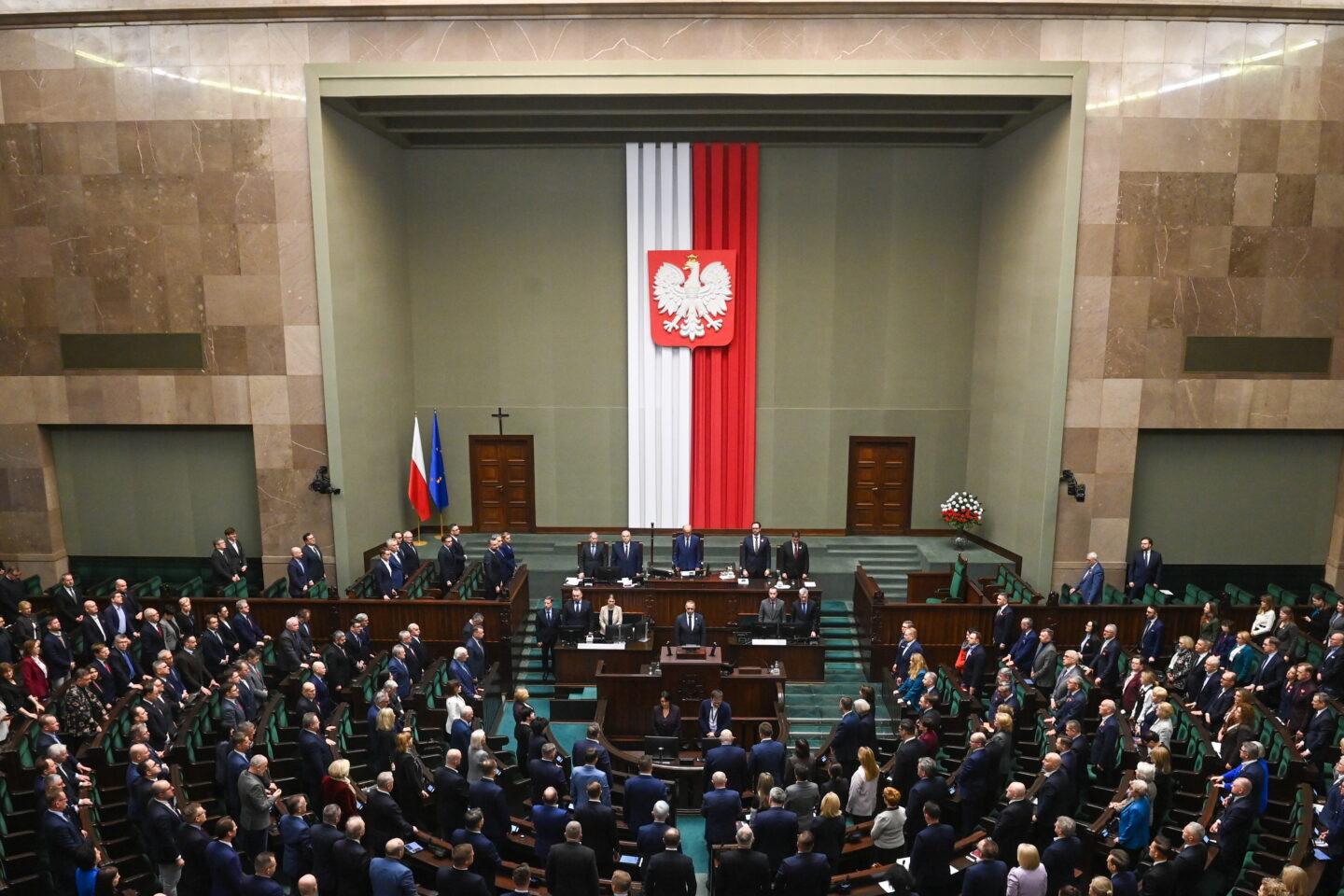
Sejm Speaker Włodzimierz Czarzasty announced that the draft bill on the status of a close person had officially been forwarded for parliamentary proceedings.
According to government data, the draft could affect approximately 162,000 people living in same-sex couples and around 2.207 million cohabiting men and women. It may also apply to roughly 34,600 individuals with intellectual or mental disabilities or with a disability certificate.
During public consultations, a total of 5,800 comments were submitted. The Prime Minister’s Office reported that about 95% criticized the draft for providing too narrow protection for same-sex couples. When the draft concerned civil partnerships rather than the status of a close person, commentators highlighted limitations such as the inability to adopt a partner’s child.
Good to know
Key provisions of the draft
- Two adults, regardless of gender, will be able to enter into a civil cohabitation agreement.
- The agreement can be concluded not at the civil registry office but with a notary. It will then be registered at the civil registry office, granting both partners the status of a “close person” in a relationship.
- Allows joint PIT tax filing.
- Exemption from inheritance and gift tax.
- Right to use shared housing.
- Testamentary inheritance rights.
- Right to arrange a burial.
- Grants entitlements including survivor’s pension, care allowance, and health insurance.
- Right to access medical information and documentation.
- Power of attorney to represent the close person before courts and public administration.
- Obligation to provide maintenance in the event of termination of the cohabitation agreement.
- Termination of the agreement will be possible via declarations made before a notary; no court proceedings are required.
- The cohabitation agreement does not allow for joint adoption of children.
- The agreement also does not permit adoption of a partner’s child.
Cohabitation agreement – impact on the state budget
Government calculations indicate that joint PIT filing by couples entering into a cohabitation agreement could reduce state revenues by PLN 15.2 million in 2029. That would be the first year couples could file jointly if the law comes into effect at the start of 2027. By 2030, the projected shortfall rises to PLN 31.3 million and is expected to increase annually, reaching an estimated PLN 1.183 billion by 2039.
These projections are based on a maximum scenario in which all non-married couples would enter into civil cohabitation agreements.
Revenue losses from inheritance and gift tax could be felt as soon as the law comes into effect. In 2027, the shortfall could amount to PLN 1.2 million.
State expenditure for implementing the law prior to its entry in 2027 may reach PLN 53.2 million, with annual spending of PLN 4.6 million in 2027.
Expenditure by the National Health Fund (NFZ) for joint health insurance of couples under a cohabitation agreement could reach PLN 7.286 million in 2027, rising to PLN 13.821 million the following year.
What will the president do?
During the election campaign, Karol Nawrocki said that as president he would be more willing to discuss a law on the status of a close person than a law on civil partnerships.
He addressed the issue again in October, when the main provisions of the bill were presented. The president declared that he would not sign any law “that undermines the unique and constitutionally protected status of marriage.” Right-wing politicians emphasize Article 18 of the Polish Constitution, which provides special state protection for marriage as a union between a man and a woman.
After the cabinet approved the bill, Paweł Szefernaker, head of President Nawrocki’s office, commented on the matter. Speaking to Polsat News, the presidential minister said that the law on the status of a close person would be vetoed if corrections were not made. He added that the government side is aware of which elements of the bill are unacceptable to the presidential office.
When asked by the media about the president’s support for the bill, Katarzyna Kotula said that she and PSL MP Urszula Pasławska had expressed willingness to engage in discussions with the president.
ECJ ruling on same-sex marriages
At the same time, the government is working on implementing a November 2025 ruling by the European Court of Justice (ECJ). The court ruled that Poland is obliged to recognize same-sex marriages concluded in other EU member states. The case concerned a Polish male couple who married in Germany and sought recognition of their marriage in Poland.
Interior and Administration Minister Marcin Kierwiński stated before the Christmas holidays that work is underway to clarify the regulations allowing the ECJ ruling to be applied. An inter-ministerial team, including representatives from the Ministry of the Interior and Administration, the Ministry of Foreign Affairs, the Ministry of Justice, and the Prime Minister’s Office, is handling the process.
The bill on the status of a close person is not related to the ECJ ruling on the recognition of same-sex marriages concluded in other EU countries. If the bill is passed by parliament and signed by the president, it could come into effect at the beginning of 2027.
Poland is currently one of five EU countries where same-sex couples cannot enter into an institutionalized union. The others are Bulgaria, Lithuania, Slovakia, and Romania. Same-sex couples can also enter into civil partnerships in European countries outside the EU, including Norway, Iceland, Switzerland, Montenegro, Liechtenstein, and San Marino.
The first country to introduce civil partnerships for same-sex couples was Denmark, in 1989. The most recent is Latvia, which enacted such legislation in 2024.


Key Takeaways
- In parallel, the government is working on implementing the ECJ ruling that requires Poland to recognize same-sex marriages concluded in other EU member states.
- The draft bill allows people in informal relationships to enter into a civil cohabitation agreement with a notary. It aims to provide couples with the ability to file taxes jointly, rights to use shared housing, access to benefits, inheritance rights, and burial arrangements.
- A cohabitation agreement will not be concluded at the civil registry office like a civil marriage. It also does not grant couples the right to adopt children or for one partner to adopt the other’s child.