

This article is a part of Poland Unpacked. Weekly intelligence for decision-makers
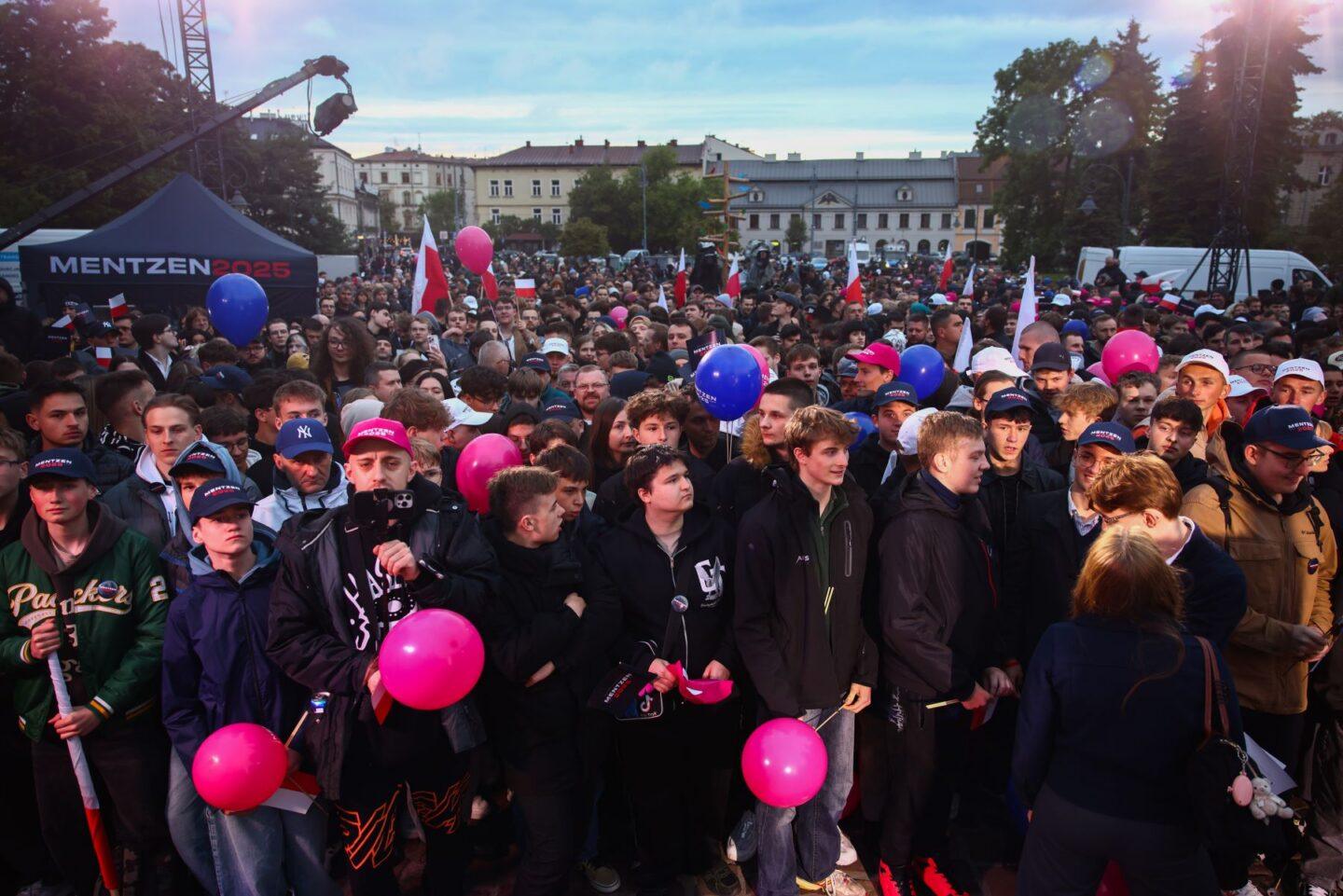
Much is said about young people; less often are they listened to. Yet the latest survey of young voters’ preferences paints a picture that departs markedly from established political templates. In this group, the clear winner is the “I don’t know yet” candidate. Poland remains in the European Union, migration should be limited, and there is openness to cooperation with China.
The economy is the least settled issue. Here, polarization persists – but it takes a very different form from that seen in the political mainstream.
In mid-January, the Generacja Innowacja (Generation Innovation Foundation) published a report based on a broad survey of young voters’ preferences. The research was conducted during the 2025 presidential campaign.
Explainer
Fundacja Generacja Innowacja (Generation Innovation Foundation)
Fundacja Generacja Innowacja (Generation Innovation Foundation) is a young Polish NGO focused on political education and civic engagement, particularly among young people.
The report depicts an electorate markedly different from that known in the political mainstream. Among the youngest voters, the so-called grand polarization between Civic Coalition (KO) and Law and Justice (PiS) has largely ceased to exist.
This is also borne out by exit-poll data from the first round of the presidential election, in which Sławomir Mentzen and Adrian Zandberg enjoyed the strongest support in this age group.
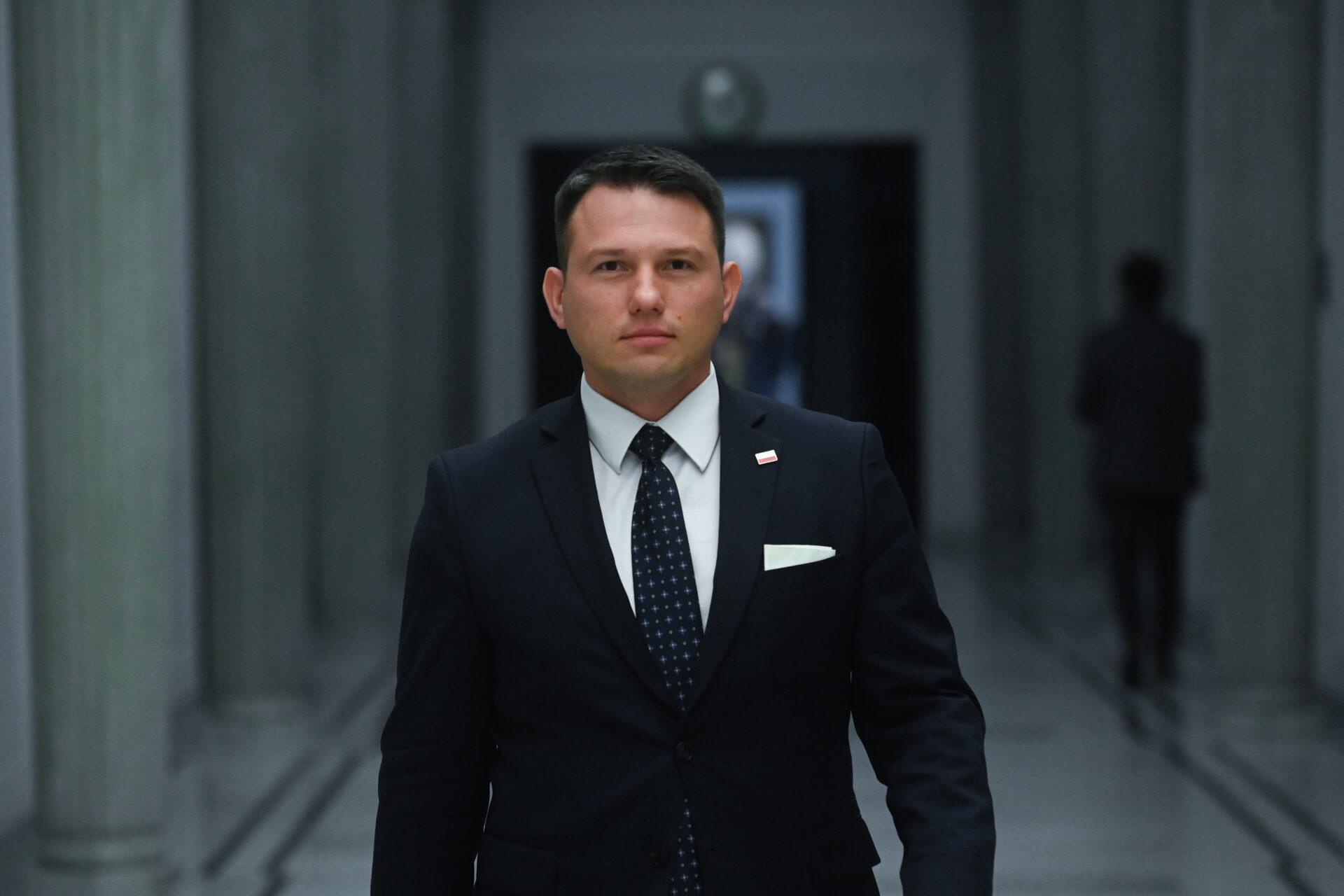
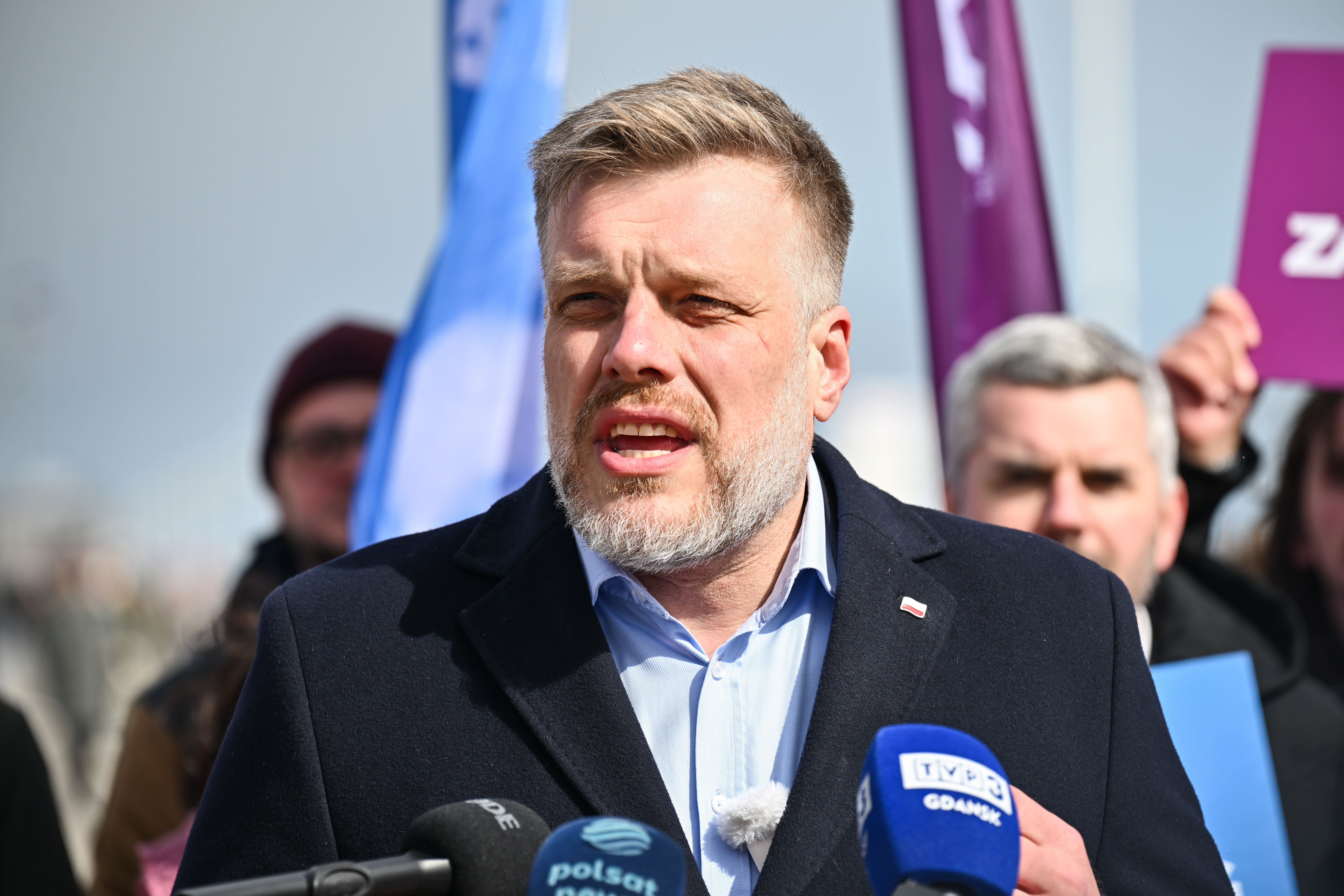
The foundation’s pre-election survey points to a similar distribution of sympathies: Mr. Mentzen received 19.4% of indications, Mr. Zandberg 16.5%. What stands out, however, is the very low level of support for the main protagonists of the presidential race.
Only 5.4% of respondents declared an intention to vote for Rafał Trzaskowski (KO), and just 2.4% for Karol Nawrocki (PiS).
Yet another result is even more telling. The decisive “winner” of the survey turned out to be the “I don’t know” candidate. As many as 44% of young voters, on the eve of the election, were unable to say whom they would vote for.
 Interactive chart
 Careful observers of political-preference research will recall a report published in the summer by Professor Przemysław Sadura and Sławomir Sierakowski, “A New Duopoly Will Overturn the System.” The authors argued that among the youngest electorate, classic polarization is giving way to a new divide, in which the key roles are to be played by Confederation (Mr. Mentzen’s party) on the right and Razem (Mr. Zandberg’s party) on the left.
Does the Generacja Innowacja Foundation’s report confirm this diagnosis? The answer turns out to be more complex.
The political collage of Generation Z
The picture that emerges of the youngest voters goes beyond familiar ideological templates and ready-made “bundles of views.” A telling example is young Poles’ attitude toward European integration.
As many as 80% of respondents oppose adopting the euro. At the same time, 70% believe that Poland should remain in the European Union. Support for deeper integration, however, is clearly weaker: only one in four respondents declares backing for it.
Interactive chart A similar caution is evident in attitudes toward international politics. Young voters do not have a clear, unified vision of the direction Poland should take on the global stage.
Geopolitical moderation and migration skepticism
The survey suggests a stance of restraint. Seventy percent of respondents support Poland’s participation in a potential peacekeeping mission in Ukraine. At the same time, only 20% favor sending weapons, and just 4% support deploying troops as well. This is far below the level seen in the population as a whole: according to a March 2025 poll conducted for the Polish Press Agency (PAP), the figure stood at 26%.
Interactive chart In the view of 40% of respondents, NATO remains Poland’s key security partner. For 30%, the primary partners are European countries, while one in five points to the United States.
Interactive chart On migration, clear skepticism prevails. Nearly two-thirds of respondents oppose a common EU migration policy – a share similar to that found in surveys of the general population. One in two believes migration to Poland should be restricted, and 12% support the introduction of a points-based system. In total, 33% of respondents are in favor of accepting migrants.
Interactive chart The last bastion of polarization: The economy
There is, however, one area in which young voters still fit a familiar pattern of political division: the economy. Despite their more ambivalent positions on other issues, economic views split the young almost evenly. This applies to debates over shorter working hours, progressive taxation, Sunday trading, and the role of the state in price regulation and redistribution.
Interactive chart Interactive chart Interactive chart Against this backdrop, one shared conviction stands out. As many as 70% of respondents believe that the position of employees in Poland is too weak relative to that of employers.
Interactive chart It is therefore difficult to speak of a single, coherent profile of the young electorate. Their attention is being courted primarily by smaller parties offering a clear and distinctive worldview. What unites these forces is opposition to the more than two-decade-long PO–PiS duopoly, now operating in the form of the KO–PiS rivalry. In this sense, the report lends support to Mr. Sadura and Mr. Sierakowski’s thesis about the waning of so-called grand polarization among the youngest voters.
So what comes instead of KO (Civic Coalition) and PiS (Law and Justice)?
At first glance, it may seem that the old divide is being replaced by a new axis of conflict: Razem (Together) versus Konfederacja (Confederation). There are arguments to support this view – especially in the economic sphere, where young people do indeed split into two clearly defined camps: social-democratic and libertarian.
That would, however, be an oversimplification. In other areas, the views of the young electorate are far more ambiguous. A majority supports Poland’s membership in the European Union, yet relatively few favor deeper integration. An overwhelming majority also opposes adopting the euro.
A similar dissonance appears on energy and climate issues. More than 80% of respondents back the energy transition – toward nuclear power and renewables – while at the same time 60% believe that economic growth is more important than combating climate change.
The picture is further complicated by skepticism toward the EU’s migration policy, support for Ukraine combined with reluctance to send Polish troops there, and openness to cooperation with China. This bundle of views fits neither the logic of Confederation nor that of Razem.
It is therefore no coincidence that more than 40% of respondents were unable to name a candidate on the eve of the presidential election.
Not ideology, but everyday life
As Zuza Karcz from the Ministry of Digital Affairs emphasizes, this uncertainty does not stem from a lack of political interest, but from everyday experience.
“As a generation raised in the European Union, we grew up believing that the state would be efficient, caring, and modern. Today, that trust increasingly collides with reality. This is not the problem of a single government, but the result of years of neglect,” says Ms. Karcz.
In her view, young people today are defined not by ideology, but by the functionality of the state.
“What older generations call ‘ideological issues’ are, for us, part of everyday life. If the state cannot provide housing, stability, or real rights, the natural response is distance – not from Poland itself, but from institutions that fail to fulfill their role,” our interlocutor adds.
Elections as a lens on tensions
Zuza Karcz was one of the panelists at the January launch of the foundation’s report. The expert emphasizes that the context of the presidential election played a significant role in the results.
“From an analytical perspective, this is crucial, because presidential elections – held least frequently in the Polish system – are moments of peak polarization. That’s when the ‘heavy artillery’ comes out. Attacks are directed not only at candidates, but at the very foundations of identity and social status. It is precisely during the presidential campaign that we see the most complete, though often extreme, picture of Polish society. This is the moment when political narratives reach their limits, and young voters are forced to take a side in a world deliberately divided by politicians. The role of civil society is to show that beneath this layer of polarization lie real needs, stripped of party colors,” Ms. Karcz concludes.


Key Takeaways
- As Zuzanna Karcz emphasizes, the high level of indecision stems not from apathy but from disappointment. The younger generation increasingly perceives the state as ineffective in fulfilling basic functions – from housing policy to the protection of civil rights. It is precisely this deficit of efficacy, rather than a lack of political interest, that underlies their distance from elections and party offerings.
- The traditional political divide between the Civic Coalition (KO) and Law and Justice (PiS) is losing relevance among the youngest voters. Surveys conducted during the 2025 presidential campaign show only minimal support for candidates from the main parties. Politicians with distinct, outspoken views – such as Sławomir Mentzen and Adrian Zandberg – garnered far greater attention. Yet the most striking phenomenon remains the scale of uncertainty: 44% of respondents, on the eve of the election, could not name a candidate. This points to a lack of political offerings that resonate with this age group.
- The worldview of young voters defies simple ideological categorization. A clear majority support Poland’s membership in the European Union, while simultaneously opposing the adoption of the euro and further integration. A similar duality appears in security policy: young people support aid to Ukraine, yet do not endorse sending weapons or troops. The only area of pronounced polarization remains the economy. Views are almost evenly split, although one conviction transcends the divide: that employees’ position in Poland is too weak relative to employers.