

This article is a part of Poland Unpacked. Weekly intelligence for decision-makers
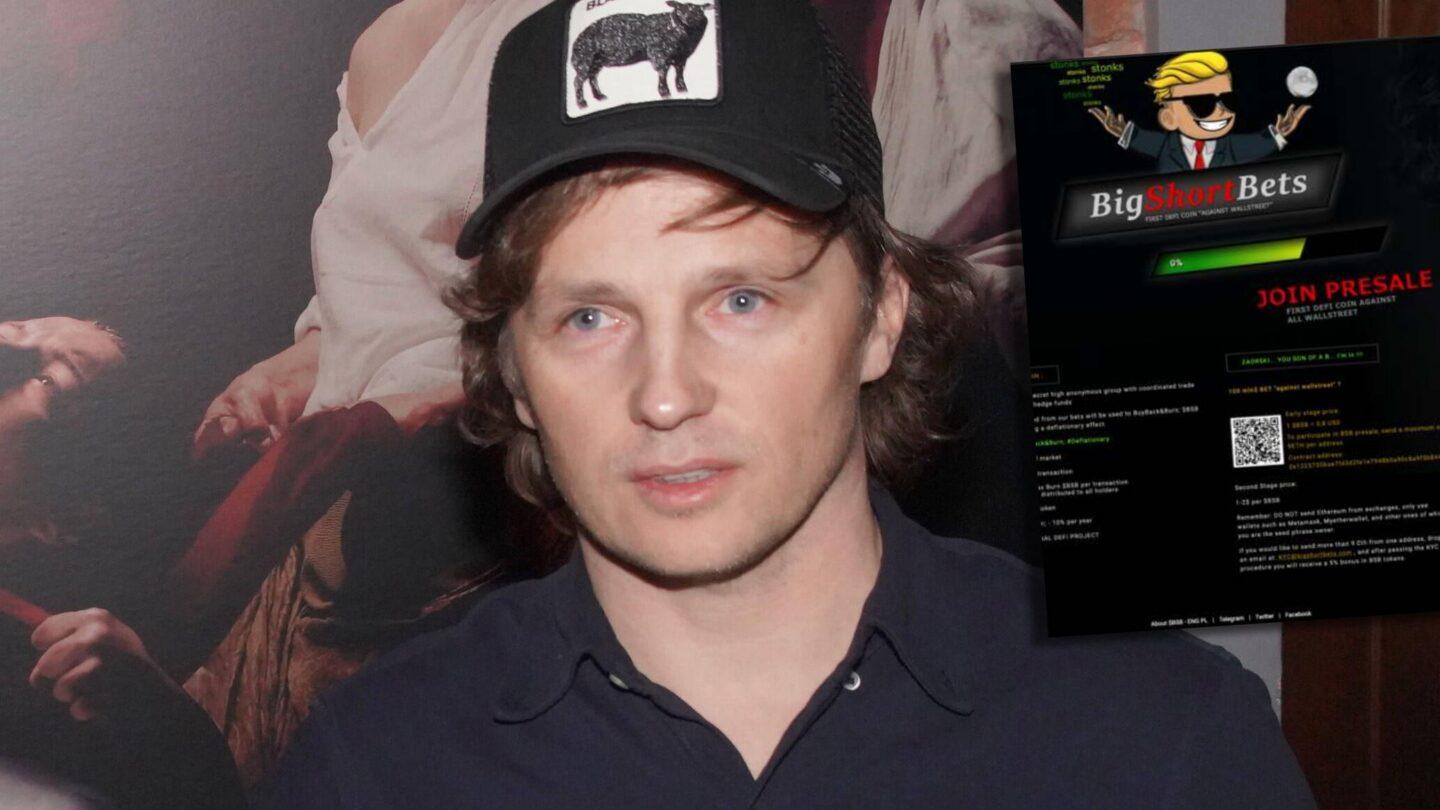
Rafał Zaorski is a stock-market investor and influencer, often dubbed the “king of Polish stock-market speculators” and one of the most recognizable figures in that world. People from his inner circle, however, paint a different picture: a man focused on trading and staying at the centre of attention who — when money from a joint venture “evaporates,” as they say happened with the BSB token — distances himself from collaborators.
The list of their accusations is long, although prosecutors have found no grounds to conclude that funds were misappropriated. Mr. Zaorski himself says he intends to “return to the project.”
The creator of the BigShortBets (BSB) token, has tens of thousands – and by some estimates even hundreds of thousands – of followers. All of them track his stock-market moves on social media. In this respect, he is an outlier in Poland. It is hard to point to anyone else who has built such a large audience while focusing almost exclusively on equity markets.
Rafał Zaorski: Poland’s best-known stock-market player and media pundit
Mr. Zaorski is also a frequent presence in the media. Beyond commenting on stock-market speculation, he weighs in on macroeconomic issues, including the future of the world’s largest economies and Poland’s own prospects. Invitations continue to come even today, despite the fact that he has one non-final conviction for insider trading on his record. Other allegations are also well known, particularly those relating to the BSB token.
He built his position over many years, strongly engaging – by his own account – in activities meant to expose irregularities in the community of market players. He cast himself as a spokesman for the market’s “little guys,” claiming to reveal practices by “big fish” – large funds and brokers – that were unfair to retail investors.
At the same time, on social media he chronicled both spectacular gains and – especially after 2020 – painful losses. By his own account, those losses reached tens of millions of PLN over the course of just a few days.
Our interviewee says he lost about EUR 350,000 on the BSB token
The BSB token – a private cryptocurrency created by Rafał Zaorski, work on which began in 2021 – was intended as a tool for “taking down the big fish”. At the same time, the project was meant to gain in value thanks to its creator’s popularity and his – professed – above-average investment skills. That, however, did not happen.
We discussed the BSB token, Mr. Zaorski’s proprietary crypto project, with one of its earliest investors, a former associate of Mr. Zaorski’s, and someone who knows him, among other things, from their cooperation within the Trading Jam Session foundation. These conversations paint a picture very different from the one familiar from the media. What emerges is a man capable of promising a return of roughly EUR 23,000, while at the same time losing millions on the stock market. When funds “evaporate” – as they did in the case of the BSB token – he avoids contact with collaborators. The list of allegations against him is long.
Our interviewee says that, by his own calculations, he lost about EUR 350,000 on the BSB token. He estimates the combined losses of all investors at several million US dollars. The debt he incurred for this purpose – taken on through a company he was developing – continues to weigh on his business to this day.
What makes people decide to entrust money for the development of a cryptocurrency associated with Rafał Zaorski?
Rafał Zaorski himself warned against stock-market fraudsters
The BSB token investor we spoke to remains convinced that his decision was not wholly irrational. As he points out, since he first became interested in the stock market in 2017, Rafał Zaorski had been an authority figure for him. Nearly a generation older – born in 1978 – Mr. Zaorski was widely seen as someone who had made millions on the market. He was a star of the investor community and a figure present in the mainstream media as well.
Our interviewee recalls Mr. Zaorski delivering a lecture to students at SGH Warsaw School of Economics [a top school for future financial and management professionals – ed.], as well as photographs showing him alongside well-known public figures.
“I simply couldn’t imagine that someone like that could cheat me,” our interlocutor says. “Mr. Zaorski came across as a genuinely decent guy – a companion in a shared fight against the market’s big players.”
“Today the market is full of hucksters who sell their dubious ‘revealed truths’ for money. Or who convince people they’ll become millionaires overnight. That’s nonsense – but there will always be naïve believers,” Rafał Zaorski himself said in a 2018 interview with money.pl financial news portal.
“Over the years, I’ve met many people who entered into joint projects with Rafał and committed money alongside him. I can’t point to a single case where anything good came out of it,” says one representative of the investment community in a conversation with XYZ.
The interviewee himself came to know Mr. Zaorski well during their cooperation at the Trading Jam Session foundation, which focused on publicizing unethical practices in the world of investing. The community was founded in 2015 by Rafał Zaorski himself.
Mr. Zaorski admits to massive losses – and suggests he has recouped them
On the foundation’s YouTube channel and across other media platforms, numerous recordings are available – many of them highly popular. They show Rafał Zaorski speaking for hours about trading on the stock market. He talks openly about both wins and losses. On social media, he also posts screenshots intended to confirm the authenticity of the profits and losses he presents.
“I sometimes give presentations and speak at industry events, so I simply have to be credible. What kind of trust can you have in someone who talks about techniques but doesn’t show their results?” he asked an interviewer in 2018.
“Certainly not all of those profits and losses are genuine,” a former associate of his claims in a conversation with XYZ.
According to the BSB token investor, the “decent guy” changed only later. Looking back, he sees the turning point in the heavy losses Mr. Zaorski is said to have suffered in 2020 while speculating on the oil market. At the time, Zaorski suggested that he had “lost everything”. A few days later, however, he broadcast a live stream during which – he claimed – he turned about EUR 23,000 into roughly EUR 300,000 in a short period of time. During the broadcast, he thanked “an important person who made this possible” and advised viewers that “the most important thing is not to think”.
“Admitting to losses is the most important step to getting out of them. If I were to hide them or pretend everything was fine, that would be the biggest mistake,” Rafał Zaorski said.
BigShortBets as a “risk-free” tool for making big money
An investor in the BSB token who, at one point, found himself within Rafał Zaorski’s close circle says he saw with his own eyes how, during a party, Mr. Zaorski was trading amounts running into the millions of dollars. In 2021, the online community gathered around the WallStreetBets forum on Reddit was breaking popularity records. Among other things, it triggered a sharp surge in the share price of GameStop.
The slogan that successfully drew even people with no prior connection to financial markets into stock-market speculation was the idea of “sticking it to” Wall Street funds betting on GameStop’s decline. Some participants did indeed succeed; others lost money if they failed to sell their shares in time. Speculation, in other words, carried a very real risk of losses.
It was in the midst of the covid-era bubble in so-called meme stocks – companies whose share prices depend largely on internet popularity – that the idea for the BSB token was born. A proprietary cryptocurrency was meant, as the investor recounts, to “level the playing field against large funds”.
“I believed that Rafał was someone who would deliver on those promises,” our interviewee says.
As he explains, Mr. Zaorski “decided to create his own cryptocurrency that would grant access to a closed group and dedicated communication tools. These were meant to enable coordinated moves against hedge funds, in order to ‘equalize’ market odds.” Profits from such transactions were also supposed to be used to buy back tokens.
The project also had – our interlocutor stresses – one key principle: it was “100% secured against the funds raised”. Mr. Zaorski presented this as a mechanism under which, even if all participants wanted to exit the project at the same time, the token’s price would not fall below a predefined level. This was to be guaranteed by the existence of a special reserve – the so-called pool. Recordings are also available in which Mr. Zaorski explains the mechanism in exactly these terms.
Expert's perspective
There is no such thing as a risk-free investment – risk must be managed
When investors en masse begin to view certain assets – including government bonds – as “very safe”, the system tends to degenerate. At the same time, hard-to-measure tail risk increases. An unfortunate sequence of events – even many years later – can expose the fragility of such a system. Investors use various metrics in an attempt to gauge risk and the probability of destructive events. None of them is perfect, and none offers a guarantee of avoiding losses. It would therefore be inappropriate to state, for instance, how many times riskier an investment in cryptocurrencies is than one in bonds. As a rule, these are not fully measurable quantities.
Each asset class carries its own specific risks. In the case of cryptocurrencies, risk stems not only from volatility (which in itself is not inherently dangerous – the danger lies in how human psychology and traders’ portfolios react to it). It also arises from systemic instability, rapid technological upheaval (stronger projects can displace weaker ones), the pace of user adoption, and the scale of fraud and lack of regulation.
In short, investing in cryptocurrencies is highly risky. That does not mean it should be avoided for that reason alone. Rather, it is a signpost indicating that such investments should be made consciously and in appropriate proportion.


Additionally, those who invested in the BSB token early were said to enjoy a privileged position. The first series of tokens was priced at USD 0.80, with subsequent series selling for USD 1–2 each. Mr. Zaorski also lowered the price for the earliest investors to USD 0.65.
“Rafał surprised us and said that, following the principle of under-promise, over-deliver, he was rewarding us in this way,” our interviewee recounts.
Investment in the BSB token took place without a written agreement
“I thought, what could possibly go wrong? I’m in,” our interviewee recalls.
He joined – and he was not alone. Over the course of a few months, Mr. Zaorski reportedly raised more than USD 3.5 million from investors in three rounds. Yet, as our interviewee admits, no written agreements were ever drawn up. All arrangements were purely verbal. What leads someone to entrust a project with a sum equivalent to roughly EUR 350,000 without any formal security?
“I’ve had many counterparts from around the world and sent them money. Of course, I’d occasionally been deceived before. But I simply couldn’t imagine that my money would be misappropriated by someone whose whole persona is about exposing the frauds of others. Someone who – as I saw with my own eyes – was trading millions of dollars,” our interviewee recounts.
There was a shared group, there were parties – today the BSB token is worth a few cents
According to our interviewee, the BSB token initially rose in value in line with the project’s assumptions and development.
“However, the secret forum – a smoothly functioning information-exchange tool that Rafał had envisioned – was never created. He changed the plan and steered the project toward creating an anonymous crypto exchange. That, too, never materialized,” says the anonymous investor.
Although he was enthusiastic at the time, he now views it differently.
“These were fairy tales and stories. He misled us and promised things that were never going to happen,” our interviewee says today.
In January 2022, the BSB token fell below USD 0.50. In May 2022, however, the BigShortBets token briefly traded above USD 2 (data from dropstab.com). At that moment, investors may have felt wealthy. The price implied a market valuation of roughly USD 20 million for the cryptocurrency created by Rafał Zaorski.
According to our source, the most heavily involved participants had access to the “Government” group on Telegram.
“We were in constant contact with Rafał and were meant to hold him accountable for the project’s work. Everything was supposed to be consulted with us. Later, in 2023, a second group was created for the top 250 holders. Rafał appeared there often, feeding us positive information, outlining visions for the project’s growth, planned international partnerships, marketing… He’d talk about who he knew and who he was speaking with. It was music to investors’ ears,” the unlucky investor recalls.
He also reports that joint events called Art of Speculation were held regularly. Initially in Rafał’s apartment on the 39th floor at Złota 44 in Warsaw [a distinctive mixed-use skyscraper in Warsaw – ed.], later in larger venues, including the Norblin Factory [a revitalized industrial complex in Warsaw that's been transformed into a modern mixed-use development – ed.]. During the period when the token price approached USD 2, Mr. Zaorski also claimed he “had a few ideas to push the token to USD 5 or higher.” That never happened. Today, a single token can be purchased for roughly USD 0.11.
Expert's perspective
Speculation is not investing – most stock-market players lose money
It is hard to disagree. Speculation primarily benefits brokers, increasing commission revenue and the number of client transactions. For the vast majority of “players,” however, it is detrimental. Data from the KNF [Polish watchdog – ed.] on client performance in the forex market confirm this. In 2024, clients who are Polish residents recorded nearly EUR 280 million in losses, compared with gains of just EUR 65 million, resulting in a net loss approaching EUR 215 million. The average result per client was a loss of more than EUR 1,700, with 70–80% of market participants losing money year after year.
In the short term, market movements are largely random, making them impossible to predict.
Rather than wasting time and money attempting to “play the market,” it is better to invest. The simplest route is through ETFs (exchange-traded funds) – passive funds designed to track a specific stock-market index. Those who can and are willing to devote at least a few hours per week to investing might also consider buying shares in individual companies.
Why the prosecutor declined to open an investigation into the BSB token
A loss of around 90 percent is hardly surprising in the so-called “shitcoin” market – cryptocurrencies of dubious value. This is a recurring pattern and, as critics of the market emphasize, often a deliberate one, particularly common among various internet celebrities. The typical play is to inflate a token’s value and then flood the market with the assets they hold. For the organizer, this translates into realized profits; for others, losses, as prices collapse under the sudden surge in supply.
Such a practice, known as pump-and-dump, is prohibited in stock markets. However – as highlighted in warnings issued by Poland’s Financial Supervision Authority (KNF) – the cryptocurrency market is not subject to the same regulations. Cryptocurrency bankruptcies are far from rare. According to CoinGecko, whose data were last updated in January 2026, 53 percent of all cryptocurrencies listed on the platform have failed. The year 2025 set a record in this respect, with as many as 11.6 million token bankruptcies – equivalent to 86 percent of all cases recorded between 2021 and 2025.
CoinGecko’s report links this phenomenon both to the market crash in October 2025, which triggered a so-called liquidation cascade, and to the rapid surge in popularity of memecoins. In 2021, 428,000 projects were listed on GeckoTerminal; by 2025, that number had soared to 20.2 million. In the previous year, even U.S. President Donald Trump and his wife launched their own cryptocurrency. The tokens issued by the American presidential couple also suffered significant losses.
There is no hard evidence that the BSB token involved fraud – at least, none sufficient to convince the Warsaw District Prosecutor’s Office, which reviewed the report alleging a criminal offense. In its statement to us, the prosecutor’s office, which declined to open a preparatory proceeding regarding the BSB token, emphasized that any investment carries the risk of both gains and losses. Investors, it argued, were not victims of fraud.
Expert's perspective
According to the prosecutor's office
As the victims testified, after initially reviewing the offer posted online by the issuer, they made investment decisions and purchased varying amounts of Big Short Bets tokens. These tokens were indeed delivered to them.
It was established that, at the time of their investment decisions, they were motivated purely by speculation, expecting the value of the tokens they acquired to rise in the future. According to the issuer’s claims, this increase was to be driven by the introduction of new functionalities for the cryptocurrency by a team appointed by him. No expiration date for the cryptocurrency was specified; however, timelines for rolling out successive features were provided, which – as it later emerged – were not adhered to.
From the moment the victims joined the project, the token’s value rose for a time before beginning a steady decline. Some victims, responding to the drop, chose to sell their tokens. These decisions resulted in losses, but at the same time protected them from further losses in the event the value continued to fall.
Other victims did not sell, making it impossible to determine the actual extent of their losses. In such cases, the losses are subjective, based on the victims’ own perception. Without an actual exit from the position, it is not possible to quantify the loss or to conclude whether the negative balance might change in the future and potentially generate gains if the project’s value – and thus the value of the acquired tokens – were to increase.
The prosecutor’s office notes that “an analysis of the Big Short Bets cryptocurrency price chart indicates that, from February 26, 2021 – the date of the victims’ initial investments – the value of a single token was approximately PLN 3 and, with occasional corrections, rose steadily, reaching a peak of PLN 9.38 on August 20, 2022. This represented a potential return of 312 percent over an 18-month period.”
In the prosecutor’s assessment, this suggests that “it is difficult to speak of a premeditated intent to cause detrimental disposition of property, (…) since, as is widely acknowledged, investing always involves risk.”
Where did the money from the BSB token pool go?
The BSB token investor we spoke with, like other sources we consulted, disagrees with this assessment. According to our sources, they possess records of private conversations, as well as publicly available recordings, which – in their view – support the claim that Rafał Zaorski used funds held as collateral for the collective investment for his own stock market speculation, or that he withdrew them without the investors’ knowledge or consent. They also emphasize that when the first doubts arose, Mr. Zaorski did not comply with a decision jointly made by the investor community aimed at safeguarding the project.
According to him and other aggrieved parties, cryptocurrency wallet records indicate that approximately 3,600 ETH – equivalent to around USD 3.5 million – were withdrawn from the pool.
Our interviewee is certain that Mr. Zaorski used these funds for trading on the stock market and lost them. Two other sources who have seen the evidence share the same view and confirm the authenticity of his account.
When did investors first suspect something was wrong?
“One of the users discovered that 700 ETH had mysteriously disappeared during the presale. Was Mr. Zaorski trading those 700 ETH on a private account? These were funds from the collective pool,” admits our source. “At the time, Rafał offered a seemingly logical explanation.”
Although Mr. Zaorski did not consider that he had done anything wrong, he decided – in his own words – to “be more fair.” He reportedly planned to hold a vote among the community, which, he assured, he intended to respect.
“If you want to decide on this, I’m giving the decision to you (…)” he said during a livestream on June 12, 2022, broadcast on a channel run by a YouTuber popular within the community.
On that day, according to his own statements, the pool contained 3,600 ETH, which at the time was worth as much as USD 5.2 million.
“The vote took place, but Rafał did not comply with its outcome,” emphasizes our source.
Mr. Zaorski allegedly promised to return the money “privately”
Cracks began to appear in what had seemed a thriving, risk-free investment.
“The project started slowing down, the token price gradually fell, and users began holding Rafał accountable for his actions on the project. Concerns were raised about the lack of marketing in Western markets, and questions surfaced over repeated delays in delivering promised features. Rafał would deflect these issues smoothly, but he appeared less and less on the channel and was increasingly reluctant to engage with everyone,” recounts our source.
When it became clear that the situation was serious, he managed to persuade Rafał to meet regarding the funds at Złote Tarasy shopping mall. Mr. Zaorski reportedly promised that, in line with his earlier assurances, he would return the money – but “privately.” At the meeting, he allegedly committed to transferring the first PLN 100,000 soon. Despite repeated requests and reminders, the money was never transferred.
During the weeks of negotiations over the refund, Rafał – according to his own statements – lost approximately PLN 53 million on the stock market.
“I went big. Very big – almost PLN 53 million. This time it wasn’t a single trade, like with oil in 2020, but many bad market decisions, culminating in the Chinese tariffs during Trump’s trade war with the rest of the world,” he wrote on platform X.
He added that he was “stepping away from the trading table.”
“I trade aggressively, which some may see as gambling. I understand that perspective,” he wrote.
Expert's perspective
Investing in cryptocurrencies carries a risk of addiction
Due to the absence of dedicated registries and a specific diagnostic category, it is currently impossible to determine whether the scale of problems reported by stock market players, traders, and cryptocurrency investors within addiction treatment systems is increasing or decreasing. Even when individuals seek help, they are likely recorded in treatment statistics simply as “gamblers.”
Should there be a legal obligation to warn about the risk of addiction, similar to gambling warnings? Based on the study’s findings, there are compelling arguments for considering such a requirement, particularly for speculative forms of investing, because:
There is a real risk of addiction.
The psychological mechanisms underlying both phenomena are nearly identical, including the tendency to increase risk after losses, emotional decision-making, compulsive behaviors, and the pursuit of rapid, high returns.
Warning mechanisms could raise awareness of these risks, especially among young investors.
“I couldn’t understand how someone could lose PLN 53 million in just a few weeks, yet be unable to transfer PLN 100,000 to a friend,” notes our source.
“In the report, such facts were indeed mentioned, but they were not considered materially relevant to the analysis of the case,” explained Piotr A. Skiba, spokesperson for the Warsaw District Prosecutor’s Office. “On September 16, 2025, the District Court for the Capital City of Warsaw, reviewing the appeal, decided to uphold the prosecutor’s June 30, 2025, decision to refuse to initiate an investigation. The court also noted that the complainants had raised concerns about the lack of transparency in the actions taken; nonetheless, when making their investment decisions, they were aware of the possibility of losses – especially since the investments had initially generated gains.”
The BSB token is not an isolated case
“For the prosecutor’s office, statistics matter, and economic cases – especially those involving cryptocurrency investing – are not easy,” says a former colleague of Rafał Zaorski.
He notes that this is not an isolated incident. In his view, the prosecutor’s office was also not particularly inclined to pursue the Merlin case.
“And there is an outcome. Rafał has been convicted. The accountant has been convicted as well,” our source asserts.
In July 2025, Rafał Zaorski was sentenced for insider trading. According to the court, he used confidential information about negotiations between himself – as CEO of Krypto Jam – and the management of Merlin Group to purchase shares before the partnership was publicly disclosed. The court imposed a fine of PLN 250,000. The verdict is not final.
As stated by Poland’s financial watchdog in a written response sent to us, “the Office of the Polish Financial Supervision Authority (KNF) has undertaken activities in matters concerning initiatives linked to Rafał Zaorski that fall within the remit of the Financial Supervision Authority, in particular with respect to Merlin Group.”
“At the time the BigShortBets (BigSB) token was issued and offered, tokens were not subject to regulation, as the relevant token regulation only came into force on December 30, 2024. Regardless of this, the BigShortBets project was also reviewed by the Office of the KNF,” said Jacek Barszczewski, Director of the Communications Department at KNF in a comment to XYZ.
As Mr. Barszczewski emphasized, the KNF Office is not authorized to disclose detailed findings or actions taken in specific cases – unless, in justified circumstances, the KNF adopts a formal resolution permitting such disclosure.
“Rafał is a pathological gambler – a man who borrows from one person to repay another. He is also an extreme narcissist who feels no guilt. I saw firsthand what his management style looked like: intimidation, blackmail, deceiving his closest collaborators,” claims a former associate we spoke with.
In his assessment, Rafał Zaorski is someone who “has to lie even about what he ate for breakfast.” He was also said to have delayed salary payments and even threatened to withhold them unless further assignments were completed.
A similar picture is drawn by another source. While he never entrusted Mr. Zaorski with large sums, he did lend him smaller amounts. He never recovered the money.
The Prosecutor’s Office faces a difficult task as well
In his view, in the case of the BSB token the prosecutor “confused investment risk with the misappropriation of funds.”
As Adrian Rycerski – an attorney, PhD in law, assistant professor at SWPS University, and author of the Instagram profile @gieldowy_prawnik – emphasizes in a comment to XYZ, without referring to this specific case, “today, potential investors are confronted with a flood of tempting offers and investment opportunities which – depending on the circumstances – may turn out to be a misunderstanding, a trap, an investment mistake, or even fraud.”
“Determining what we are actually dealing with in a given case,” the expert adds, “is by no means straightforward.”
As he notes, the task becomes significantly more difficult – though not impossible – when, instead of a written contract, communication setting out arrangements with investors was conducted orally or via online messaging platforms. Does this mean that when we feel someone has acted improperly or unfairly, we should simply let it go?
“Absolutely not. The law provides tools to fight injustice. What matters most is a calm and thorough assessment of the situation, proper legal qualification, and the selection of the appropriate legal pathway,” the expert emphasizes.
As he adds, the prosecutor’s task is not an easy one either. The prosecutor must demonstrate that all elements of a given criminal offense have been met, rebut the presumption of innocence before the court, and prove that no irremovable doubts exist that would weigh in the defendant’s favor.
Adrian Rycerski recalls that Article 286 of the Penal Code, which concerns fraud, allows for criminal liability only where the act is committed intentionally, with direct intent. The Penal Code “(…) requires that the perpetrator’s conduct be directed toward a specific objective, which in the case of fraud is the attainment of a financial benefit. When undertaking the action, the perpetrator must have a mental image of the situation desired by him, which is to constitute the result of his conduct” (Supreme Court judgment of January 14, 2004, file IV KK 192/03).
Even if criminal proceedings do not result in a conviction, this does not preclude pursuing claims through civil law channels.
“Civil liability may arise from a breach of obligations undertaken by an issuer toward investors in connection with the issuance of crypto-assets. It may also relate to the improper management of a crypto-asset portfolio, mismanagement of assets entrusted by investors, or the provision of defective investment advice,” notes Adrian Rycerski.
“In theory, even a breach of an oral undertaking may give rise to civil liability. One must bear in mind, however, that establishing the grounds for such liability before a court is often extremely difficult – and in some cases virtually impossible,” our source adds.
For this reason, he emphasizes, in the case of crypto-assets it is particularly important to define mutual obligations precisely in a contract, terms and conditions, or an information document.
NOTE
Rafał Zaorski did not respond to our requests for comment
We contacted Rafał Zaorski asking him to address the allegations raised in conversations with his former colleagues.
In particular, we asked:
- Whether he misappropriated funds intended to secure the investment in the BSB token (the so-called pool), including by using them for his own stock market trading.
- Whether he privately promised to return part of the funds but failed to honor those commitments, while at the same time publicly reporting multi-million-zloty losses on the stock market.
- Whether he was in arrears with salary payments to close collaborators, threatened to withhold compensation, or treated them improperly.
- How he would respond to allegations concerning a lack of credibility, a propensity for gambling, or suspicions that subsequent projects were intended to repay earlier obligations and raise funds for further trading.
Life after life for Rafał Zaorski’s project
When former collaborators resumed their social-media campaign against Mr. Zaorski at the turn of the year, Rafał Zaorski responded – indirectly, via their channels.
“Since you’ve called me out over BigSB. After a six-month break due to family matters, I’ve returned to bring the BigSB project back to working order, along with my personal token. I don’t yet know exactly how I’ll do this. I have several ideas. I’m giving myself all of 2026/27 to do it. Most likely – as always – purely through the market and speculation. (…) I’ll immediately answer any potentially stupid questions: I have no intention of selling anything to you. I’ll lift it myself. This will be my last comment on the matter. P.S. Only those who give up lose,” he wrote in a post on X.
It was not, however, Mr. Zaorski’s final comment on the matter.
A few days later, he remarked that when prices were rising, investors called him a genius, and now they call him an idiot – solely because, in his assessment, the price had fallen.
Days later still – much like in the “good old days” – Mr. Zaorski announced that he was betting on falling prices of gold and silver.
“If this doesn’t work, we’ll meet under a bridge,” he wrote.
Despite repeated attempts to contact him, no direct comment from Mr. Zaorski had been obtained by the time of publication. He did, however, publish one more post about the BSB token, boasting that its price had risen to 25 cents and claiming, among other things, that the project had previously failed because he had “pumped too much money into IT,” and that he now “treats the token as a personal one.” In this post as well, he did not address the allegations made against him.


Key Takeaways
- The prosecutor’s office classified the massive losses as part of investment risk, finding that they did not meet the legal threshold for fraud. In practice, proving fraud in crypto projects that lack robust documentation is exceptionally difficult. Zaorski himself remains convinced that he is capable of “restoring the project to working order.” At the beginning of the year, he also announced that he had returned to stock market trading, despite having previously incurred multi-million losses.
- Rafał Zaorski’s public image as an expert was a key factor that enabled him to gain investors’ trust and attract their capital. He was perceived as an authority figure, a successful trader, and someone fighting the market’s “fraudsters.” This trust was built over many years through media activity, public lectures, and the publication of recordings allegedly showing profits and losses.
- Individuals who invested in the BSB token project suggest that funds may have been diverted from the project in ways inconsistent with prior arrangements. Even if this was not the case, Mr. Zaorski’s project was characterized by, among other things, the absence of written agreements, shifting declarations, undelivered functionalities, and changes in the narrative regarding the project’s strategic direction.