

This article is a part of Poland Unpacked. Weekly intelligence for decision-makers
The acquisition of a luxury fashion retailer for PLN 80 million (about EUR 18 million) was meant to be a landmark deal in the history of Poland’s fashion and capital markets. Instead of swiftly rising profits, however, the company slid into multi-million-zloty losses. First, support was expected from the founder of 4F; later, a planned acquisition of Braughman for PLN 100 million (around EUR 23 million) was supposed to turn the business around. Neither transaction ultimately materialized.
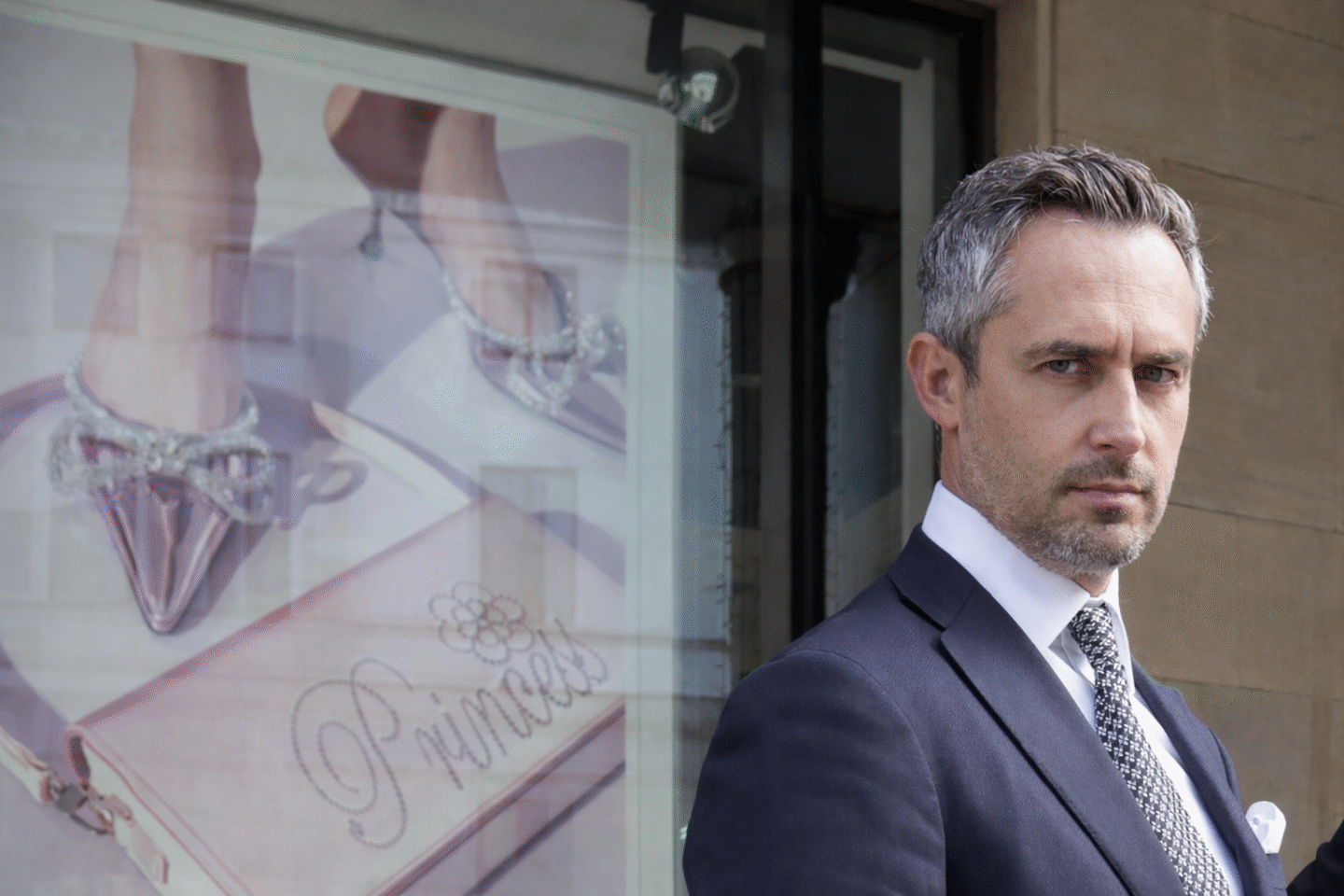
The project’s initiator – an investor with a proven track record – has not given up. “I will not rest until the company regains profitability and reaches an appropriate valuation,” says Marcin Michnicki, chief executive and largest shareholder of Moliera2.
The takeover of Moliera2 in 2021 attracted exceptional attention, because the transaction itself was extraordinary in two respects. First, Modern Commerce initially offered PLN 100 million (about EUR 23 million), with the sellers later agreeing to lower their expectations to PLN 80 million (around EUR 18 million). No acquisition in the history of NewConnect, Poland’s so-called junior exchange, had ever commanded such a price.
Second, nothing of this scale had previously occurred in Poland’s luxury fashion retail market. The only real point of reference was the 2019 acquisition of Showroom.pl by Denmark’s Miinto. The other most recognizable domestic players are Gomez and Vitkac, and – to a degree – Answear.com with its PRM concept, as well as Modivo from the CCC group.
In line with the targets set by the merged companies, analysts forecast revenues running into the hundreds of millions of zlotys and profits in the tens of millions – implying a valuation in the several-hundred-million-zloty range. Instead of growth, however, sales contracted by several dozen per cent, annual losses reached the low tens of millions of zlotys, and Moliera2’s market capitalization today stands at about PLN 60 million (roughly EUR 14 million). The company’s chief executive and main shareholder, who controls more than 50% of the stock, nevertheless believes a reversal of fortunes is imminent.
“It is hard to deliver positive results if, due to insufficient working capital, you cannot take delivery of goods on time and are forced to sell them at lower-than-expected margins. Last year was still a year of decline for us, but this year – especially after opening the flagship store – the effects of the changes will become visible. We have optimized every element of the company, down to the smallest detail. There is no more room to cut costs if we want to maintain our operating model. For us, 2026 will be a clear breakthrough,” says Marcin Michnicki, chief executive of Moliera2.
“Too many wealthy individuals have invested too much money in this company for it to fail now. I assume it will still bounce back,” comments an entrepreneur from the sector, speaking on condition of anonymity.
Bright prospects for the Moliera2 acquisition
Moliera2 takes its name from the address of its first boutique in Warsaw, which opened in 2008. In the years that followed, the chain expanded to seven stores with a combined retail space of 2,500 square metres across five cities – beyond the capital, also in Poznań, Katowice, Sopot and Zakopane. Since 2017, the company has also sold online, both directly and through a marketplace model with external partners. Three years later, e-commerce already accounted for the majority of sales.
Between 2018 and 2020, the company increased revenues from PLN 60.7 million (about EUR 14 million) to PLN 76.8 million (around EUR 18 million), while EBITDA rose from PLN 1.7 million (roughly EUR 0.4 million) to PLN 3.4 million (about EUR 0.8 million), according to a report by DM BOŚ prepared when Modern Commerce announced plans to issue shares to finance the acquisition of Moliera2. The new owner was expected to put the company on a fast growth trajectory.
At the time, Modern Commerce was a shareholder in Złote Wyprzedaże (Golden Sales), a now-defunct platform operating as a members-only shopping club. It offered products from well-known brands at steep discounts through multi-day sales campaigns. The investment in Moliera2 was driven by the strength of the brand, the appeal of a rapidly growing sector, and the generally strong condition of the e-commerce market.
“The environment was conducive to raising financing for this transaction; the outlook seemed almost dazzling. During the pandemic, virtually all online businesses were growing rapidly, and in our segment valuations reached as much as five times revenues. In the years that followed, however, reality set in. Some of our competitors in other countries – such as Farfetch, even after restructuring and a change of ownership, or Matchesfashion – were unable to withstand it,” says Marcin Michnicki.
Expert's perspective
Moliera2 has a chance – but it will not be easy
For a multibrand player to succeed in Poland today, three areas are critical:
Inventory efficiency. The era of “freezing” capital in unsellable wholesale stock – an approach that nearly sank the industry’s biggest names – is over. The future lies in an agile marketplace model and close advisory work with brands, ensuring that inventory turns in line with the fashion calendar.
Quality over quantity. In the luxury segment, excess choice leads to decision paralysis and erodes prestige. Tight curation matters; the battle for volume should be left to discounters such as HalfPrice.
Harnessing the potential of local brands. Polish affordable-premium labels – such as Bizuu, Muuv, La Mania, or The Odder Side – are today often a stronger growth engine than fashion houses from Paris or Milan. Moliera2 understands this well, building a strong position and healthy margins on local assortments that sell through efficiently.
A long history and strong brand recognition now account for only half – if not less – of success. That is why Moliera2’s investment in a flagship store will pay off only under one condition: the new location must become a lifestyle destination, not merely a place to shop.
In the age of e-commerce, a physical boutique has to offer a distinctive experience - something that cannot simply be clicked through online.


WP Holding among key investors
One of the largest investors backing the takeover of Moliera2 was Wirtualna Polska Holding (WPH). It committed PLN 10 million (about EUR 2.3 million), hoping to leverage its experience with Domodi, a platform that aggregates offers from multiple online fashion retailers. Although WPH had the option to increase its exposure in subsequent years, it chose not to do so.
As a result of later share issues by Moliera2, WPH’s stake fell below the 5% threshold, to around 4%. At the end of 2024, it valued its holding on its books at just PLN 1.1 million (roughly EUR 0.25 million), rising to PLN 2.6 million (around EUR 0.6 million) by the end of September 2025.
“We have not worked closely with WPH so far, apart from a few minor initiatives. At present, there is nothing to suggest that this will change,” says Marcin Michnicki.
An investor with more than one success to his name
Among the key investors financing the transaction was also Marcin Michnicki, the largest shareholder of Modern Commerce. Over the years, he has been involved in numerous companies across a range of industries. Today, he sits on the supervisory boards of, among others, DL Invest Group, a developer of logistics and office properties, and SprintAir. He had not planned to take the helm at Moliera2.
“From the outset, I was meant to be a passive investor, serving on the supervisory board. I had no intention of joining the management board. But when it became clear that the forecasts would not be met, I took responsibility for the project as one of Moliera2’s largest shareholders,” explains Marcin Michnicki.
With a background in economics, he has always felt close to the capital markets. While still a student, he invested in equities – sometimes speculatively – with a friend from his dormitory. He remembers IPOs on the Warsaw Stock Exchange (GPW) in the 1990s that delivered several-hundred-per-cent returns in a short time. One of his most successful investments turned out to be shares in Kielce-based Poligrafia.
“Already at the beginning of the century, I started investing the money earned on the stock market across various sectors, including real estate and technology companies. Together with my partners, we looked for businesses at an early stage of development with strong growth potential. We supported them in building sales, raising capital in subsequent funding rounds, and ultimately selling to strategic investors. That was the case, for example, with MyBenefit, the Socializer agency, and more recently eFitness [companies valued at several tens of millions of zlotys—ed.],” says Marcin Michnicki.
Good to know
What’s happening in luxury?
Key findings from KPMG Poland’s 2025 report, “Luxury in Transformation: How the Polish Luxury Goods Market Is Coping with Global Slowdown”:
- Prices of leading brands’ products rose 54% between the end of 2019 and September 2024.
- 80% of market growth from 2019 to 2023 was driven by price increases.
- Only 20% of growth came from higher volumes of products sold.
- For 57% of luxury goods companies, innovation plays a key role in their strategy; the remainder focus on strengthening brand DNA and iconic products.
- 53% of firms cite increasing customer loyalty through personalized experiences as a priority.
- 90% of luxury market participants believe AI will play a key role in the future, yet only 31% feel fully comfortable with the technology, while 64% are using it -mostly at an early stage.
“The industry faces significant challenges today – whether the current slowdown is cyclical or structural is still unclear. What matters is how brands use this transitional period to reinforce operational foundations and prepare for the next growth phase. In the short term, companies need to rethink pricing strategies, which in recent years have been one of the main drivers of growth,” comments Tomasz Wiśniewski, partner in deal advisory and head of valuation teams for Central and Eastern Europe at KPMG.
“The Polish luxury goods market continues to show stable growth, attracting new brands and investments. The experiential luxury category is expanding at over 9% per year. At the same time, a community of informed and demanding consumers is emerging. This dynamic is driven by relatively lower market penetration compared with Western Europe, a steady increase in the wealthiest consumer segment, and an expanding middle class, which increasingly has access to luxury through the affordable-luxury segment,” adds Andrzej Marczak, partner, head of tax advisory for Central and Eastern Europe, and head of the PIT team at KPMG Poland.
Declining revenues and multi-million losses
The investment in Moliera2 was intended to be another that would generate significant returns. In 2021, the combined group posted revenues of PLN 115.8 million (about EUR 26 million), operating profit of PLN 1.9 million (around EUR 0.4 million), and net profit of PLN 1.2 million (roughly EUR 0.3 million). The following year, sales increased to PLN 124.3 million (about EUR 28 million), but significant losses appeared: PLN 10.2 million (around EUR 2.3 million) at the operating level and PLN 11.9 million (approximately EUR 2.7 million) net.
The years 2023–2024 saw a deepening drop in sales to PLN 77.7 million (roughly EUR 17.5 million) and further annual losses in the low tens of millions of zlotys. The negative trend continued into 2025.
“The company was acquired in an overheated, fast-moving market that ‘forgave a lot.’ After many brands withdrew from Russia [following its attack on Ukraine in February 2022], a flood of heavily discounted goods – especially online – arrived in Poland. Large firms managed somehow, but for us the effect was devastating. We couldn’t achieve the necessary sales margins,” says Marcin Michnicki.
He emphasizes that the market has contracted, while larger competitors have huge marketing budgets that Moliera2 could not match. Whereas competitors spend up to 20% of revenues on marketing, Moliera2’s budget has been only 5–6%.
“Our problems stemmed primarily from having to carry out a major transformation under extremely unfavorable circumstances. We have repaid almost all bank loans – only about PLN 1 million (around EUR 0.23 million) of the PLN 12 million (roughly EUR 2.7 million) debt remains, and by April it will be gone. It’s widely known that the past few years have been the toughest in the history of this sector,” asserts Moliera2’s CEO.
 Interactive chart
 The failed deal with Igor Klaja and Braughman
In recent years, the company came close to signing two agreements that could have radically changed its situation – yet neither materialized. First, in 2022, Igor Klaja expressed interest in investing in Moliera2. The founder of OTCF (owner of, among others, the 4F brand) had ambitions to create a regional leader in luxury clothing and accessories. Within two months of signing a letter of intent, however, both parties decided to halt further discussions.
“Negotiations with Igor Klaja coincided with growing problems in the sector, and he ultimately chose to focus on his own company. We left the table by mutual agreement. Investments are like life – you need a bit of luck. Even if everything is planned well, unforeseen external factors can derail the strategy. We recently experienced this with the unsuccessful attempt to acquire Braughman,” explains Marcin Michnicki.
Braughman is a leading player in the Polish out-of-home advertising market, managing a network of large-format screens across the country. For years, it was built by Łukasz Fabisiak and Sławomir Pawluk, who also created Moliera2 but have been in conflict for several years.
Last year, Moliera2 had an investment agreement to acquire 80% of Braughman for PLN 100 million (about EUR 23 million). However, Digital Network, operating in the same sector, stepped in and purchased the entire company for PLN 131.5 million (roughly EUR 30 million).
“This transaction was supposed to elevate us to the next level, so we did everything we could. But someone else was willing to pay significantly more. We couldn’t afford to continue the bidding, and we also did not want to get involved in the dispute between Braughman’s shareholders. I am optimistic and believe that the immense work we have done will ultimately translate into increased company value and shareholder satisfaction. I am also still working on options that could deliver a leap in value,” says Marcin Michnicki.
Interactive chart Letting go of Złote Wyprzedaże was a mistake, selling Mamissima the right move
One factor that hindered Moliera2’s recovery was the underestimation of the support long provided by the ownership-linked Braughman. It offered premium advertising space in top locations at minimal cost, which had a significant impact on the fashion brand’s sales and visibility.
Sales in recent years were also affected by the decision in April 2022 to withdraw from Złote Wyprzedaże. In retrospect, Marcin Michnicki considers this a mistake.
“Their further development could have significantly supported the group’s outlet sales operations. The best proof is the huge success that the CCC achieved with the HalfPrice chain. Our decision was driven by the fact that we could not manage two projects requiring capital and attention simultaneously. At the time, it seemed the most rational choice,” explains Moliera2’s CEO.
Just before acquiring Moliera2, Modern Commerce took a controlling stake in Mamissima, an online store for premium children’s products, aiming to offer customers a complementary product range. A year later, however, it sold the business as an organized part of the enterprise.
“Mamissima did not generate a loss – we bought and sold the shares for PLN 3 million (about EUR 0.7 million). The reason for the decision was similar: we wanted to focus on the core business. In hindsight, it seems the right move, as the children’s products market—including the premium segment – is particularly challenging,” says Marcin Michnicki.
Interactive chart An additional PLN 30 million was needed
The acquisition of Moliera2 was made possible through a share issue, for which investors paid PLN 0.54 per share. The price remained above PLN 0.40 until early 2022, but in November 2022 it permanently dropped below PLN 0.20. For several months, it has not exceeded PLN 0.10.
This decline reflects, among other things, several subsequent share issues priced at PLN 0.10 – the minimum possible, equal to the nominal value. They have not yet restored the company to profitability, leaving little interest in trading its shares at higher levels. Turnover is minimal: the annual average per trading session is just over PLN 9,000 (roughly EUR 2,000).
“Since acquiring Moliera2, about PLN 30 million (around EUR 6.7 million) in recapitalization was required, which I organized myself. I believe in the strength of this brand, thanks in part to its loyal customer base. Its golden years are still ahead. We have solid foundations to build a strong player in high-premium and luxury fashion in this country. The past few years have been extremely challenging, but thanks to the determination and perseverance of our shareholders – for which I sincerely thank them – we have established a strong foothold ready for scaling,” says Marcin Michnicki.
In recent years, however, a group of dissatisfied shareholders has emerged, who have so far been unable to limit their losses.
“Every project of this kind carries elevated risk. I understand that nobody likes losing money. To date, I have borne the greatest costs associated with this investment. I am not giving up because I have a fantastic team supporting me. I impose the greatest pressure on myself. All my attention is focused on Moliera2. Other projects in which I am involved are being managed by my partners,” assures Moliera2’s CEO.
Interactive chart Moliera2 remains (for now) listed on the stock exchange
A block of shares worth approximately PLN 30 million (around EUR 6.7 million) at the current price remains beyond the reach of the largest shareholder – roughly the same scale as the total recapitalization to date.
Marcin Michnicki acknowledges that he has received proposals to delist the company, which would involve buying out shareholders at a premium of anywhere from several to several dozen percent.
“All such proposals I have rejected, even though I had the means to finance the process. I take seriously my obligation to the investors who joined me in acquiring Moliera2. Many of them are close friends. I will not rest until the company regains profitability and achieves an appropriate valuation. That will probably take some time. I want to give everyone the opportunity to profit,” declares Marcin Michnicki.
Changes in stores, product range, and e-commerce
The company is counting on a radically restructured product range and sales channels to secure a better future. In recent years, it has closed five boutiques. At the time of the acquisition, all were profitable. However, following market shifts, they no longer delivered sufficient profitability or branding benefits. Only the 200-square-metre store in Poznań and the historic Moliera 2 location remain.
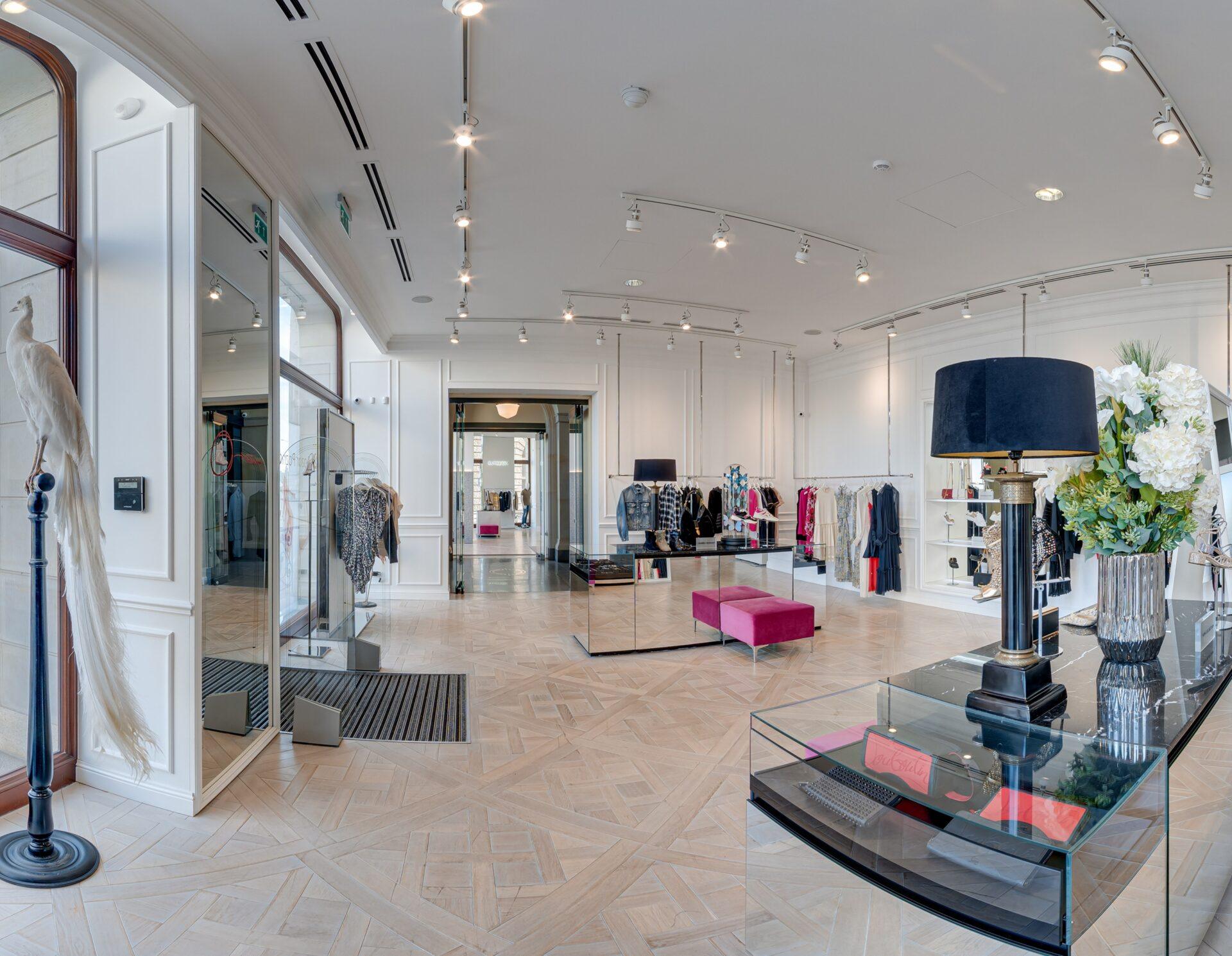
“It will primarily showcase emerging brands. Meanwhile, we will open a flagship store of more than 600 square meters between September and October in the Warsaw Metropolitan office building – where we also moved our offices [estimated rent over 10 years is around PLN 30 million, roughly EUR 6.7 million]. The building is undergoing a comprehensive renovation. For us, this is an investment worth close to PLN 20 million (around EUR 4.5 million). We are still securing financing for this, and have several options. Our physical stores account for roughly one-third of sales, and this is unlikely to change in the near future,” says Marcin Michnicki.
The product offering has been reduced from about 350 brands to the 200 most profitable. The portfolio reduction was driven by the need to lower inventory expenditure – suppliers often require prepayment due to the company’s losses.
“We plan to bring in additional partners primarily through the marketplace model. We currently have around 120 external sellers and probably will not exceed 150 this year. We select partners very carefully based on the quality of their offerings. Additionally, we are preparing to launch our own luxury brand, planned for later this year. It will cover multiple fashion categories. We are working on strategic solutions to make this possible,” concludes Moliera2’s CEO.
Fireside chat
Competition in Polish luxury is rising fast, profits are getting harder to earn
XYZ: You manage an online luxury fashion platform across multiple countries. How does Poland compare in terms of potential in this segment?
Marcin Winkler, managing director of Breuninger in CEE and the EU cluster (Benelux and Southern Europe): Central and Eastern Europe – Poland in particular, due to its population size and growth rate – is an attractive market for so-called designer brands. This term covers upper-premium, affordable-luxury, and luxury segments. Expected average growth rates over the coming years are 10% per year for upper-premium, 12–14% for affordable luxury, and around 6–7% for pure luxury.
Many luxury brands do not sell online. The highest price segment remains a niche in Poland, and the wealthiest clients have numerous shopping opportunities in global metropolises. Consequently, growth in Poland is largely driven by the middle and upper-middle classes.
XYZ: What have you learned from several years of expansion in Poland? Is competition rising quickly?
Poland’s fashion e-commerce market is entering a phase of “mature growth,” with single-digit growth rates much lower than in previous years. While the post-pandemic expansion has stabilized, the structural shift toward premiumization continues. Consumers increasingly move away from mass-market brands toward higher-quality offerings.
For us, this trend is both an opportunity and a long-term challenge. As a company with 145 years of tradition and experience in luxury fashion retail, we draw on our expertise from the German market. This allows us to offer Polish clients brands and assortments unavailable from domestic retailers.
When we launched our Polish e-shop 4.5 years ago, we offered the widest selection of premium and luxury brands, which drove rapid growth. Today, we present carefully curated collections from nearly 1,500 designer brands. However, the acceleration of premiumization is attracting competition. For the past two years, we have observed more companies, previously associated with mass-market brands, extending their offerings into higher segments. This creates price pressure, as customers expect frequent and deep promotions.
This trend is confirmed by executives of fashion retailers listed on the Warsaw Stock Exchange. On one hand, they see great potential in higher price segments, but on the other, they complain about low margins and price wars across e-commerce.
XYZ: How do Polish luxury customers compare to “Western” ones?
Certainly in their expectations for an exceptional shopping experience, high quality, and prestige. Poles look to global runways and fashion houses for trends and inspiration. The “quiet luxury” trend – minimalist rather than ostentatious – which has been gaining ground in Western Europe for several years, has reached Poland and will play an important role. For now, however, broader segments still favor visible designer logos.
XYZ: And the differences?
There are many, ranging from economic and historical to cultural factors. Poland is still a young capitalist economy and largely a market in development. For historical reasons, we have few representatives of “old money” [families with fortunes built over generations].
As a result, visible social consumption of luxury and signaling status and prestige through clothing, handbags, and accessories remains dominant. Compared with Western Europe, products with visible logos or recognizable design elements sell better here. Poles work hard, and when they succeed, they want to display it.
Differences also stem from purchasing power. Spending several thousand or tens of thousands of euros is rare among Polish clients – mostly women, who form the majority of luxury shoppers. Typically, one or at most three luxury items are purchased per order, whereas in Western markets, the average basket contains three to five items.
XYZ: Are there demographic differences as well?
Yes. In Western Europe, the 60-plus and even 70-plus segments are growing strongly, while in Poland, buyers are predominantly 30–50-year-olds from large cities. There is also a notable overrepresentation of younger, Gen Z clients, which drives the popularity of the luxury streetwear segment. Additionally, wealth in Western Europe is less concentrated in a few major metropolitan areas than in Poland.
The final notable difference is sensitivity to prices and promotions. In the West, discounts in luxury segments are rare and, in some countries, even counterproductive – they are perceived as devaluing the product.
In Poland, the situation is different. Even in designer fashion, customers expect promotions and loyalty programs, and the off-price luxury segment [known from chains like HalfPrice and TK Maxx] is growing dynamically. Promotional campaigns by local players – often contrary to brand positioning strategies – reflect both customer expectations and intense competition.


Key Takeaways
- Adding millions to save the company. Since the acquisition, the company required roughly PLN 30 million (around EUR 6.7 million) in recapitalization to continue operations. Marcin Michnicki emphasizes that he organized this funding himself and has so far borne the largest outlay among all investors. He has rejected proposals to buy out the remaining 50% of shares and delist Moliera2, intending to ensure a return for the other shareholders. “The greatest pressure I impose on myself. All my attention is focused on Moliera2. Other projects I am involved in are run by my partners,” assures Moliera2’s CEO.
- Ambitious plans after a major acquisition. Modern Commerce acquired Moliera2 in 2021. It initially offered PLN 100 million in tranches, but the sellers eventually agreed to reduce expectations to PLN 80 million (about EUR 18 million). This was the largest transaction in NewConnect history and likely the largest on the Polish luxury fashion market. Analysts, in line with the combined companies’ targets, expected revenues and profits to multiply in the following years to several hundred million PLN and tens of millions PLN, respectively. Not only the sales but also the stock market capitalization was projected to reach hundreds of millions.
- In the shadow of itself: transformation in an unfriendly environment. Since 2022, Moliera2 has posted annual losses of several million PLN, and revenues have dropped by tens of percent (to PLN 77.7 million, about EUR 17.5 million, in 2024). This is the result of multiple factors, including the need to implement a deep transformation in a challenging environment. Radical changes occurred in the product range (reducing brands from around 350 to 200), the physical store network (closure of five boutiques and plans to open a flagship store in Warsaw in 2026), and e-commerce (growing importance of the marketplace channel). The current year is expected to be pivotal for the company.