Poland Unpacked week 8 (9-15 February 2026)
Welcome to this week’s edition of our Poland Unpacked, where we deliver key insights and trends shaping the economic, corporate and political landscape. Catch the most important insights from Poland in this week’s briefing.
This article is a part of Poland Unpacked. Weekly intelligence for decision-makers
The hottest business news of the week was the offer to acquire 100% of InPost, Poland’s largest logistics company. The investor consortium includes FedEx, the world’s third-largest logistics operator; the private equity fund Advent International; the Czech investment holding PPF; and Rafał Brzoska, InPost’s founder. They have valued the Polish firm – which is performing strongly in foreign markets as well - at EUR 7.8 billion. This is a highly unusual transaction: although FedEx is taking a significant stake, it cannot be called a takeover. Who wants to buy InPost and why, what the offer looks like, and what the roles of Rafał Brzoska and FedEx will be after the deal.
While some Polish entrepreneurs are conquering global markets, others are trying to lift their companies off the mat. The acquisition of Moliera2, a luxury clothing retailer, for PLN 80 million (EUR 19m) was meant to be a major success, but ended in multimillion-zloty losses. After years of difficulties, the company is still struggling to get back on its feet. Initially, the founder of 4F was supposed to help; later, a purchase of Braughman for PLN 100 million (EUR 24m) was planned – but neither transaction materialized. “I will not rest until the company regains profitability and reaches its true value,” declares the CEO and largest shareholder. Here is his plan.
Ozempic and Mounjaro are drugs that were introduced to the market in 2017 and 2022, respectively, heralded as revolutionary treatments for diabetes. Their development stemmed from research into hormones that regulate appetite and blood sugar levels. As a result, they quickly began to be used by people struggling with obesity. Several years after their debut, they were officially approved for this category. They soon reached Poland – and quickly became a sensation. In 2025, Poles spent nearly PLN 3.4 billion (EUR 0.8bn) on drugs in this category, according to data obtained by XYZ. The sum is impressive yet we examine whether this is a medical revolution or the rise of a dangerous trend.
Rafał Zaorski is a stock market investor and influencer, often called “the king of Polish stock speculators,” and one of the most recognizable figures in the market. He is also a frequent media guest. Beyond commenting on market speculation, he weighs in on macroeconomic topics, such as the economic future of the world’s major powers and prospects for Poland. He is also the creator of the BigShortBets token, which promised investment profits. Instead of gains, losses appeared. Those close to Zaorski, however, paint a different picture than the one seen on social media: a man focused on the game and being in the spotlight, who – when the money from a joint venture “evaporates,” as with the BSB token – disappears. Our feature of the week reveals the uncomfortable truth about this well-known investor.
This week also saw intense developments in two state-owned companies. At Grupa Azoty, Poland’s largest chemical group, which produces fertilizers among other products, talks to refinance its massive debt are reaching the final stage. At such a critical moment, half of the management board was dismissed. The new board will be tasked not only with concluding negotiations with banks but also with restoring the group’s overall financial health. The future of JSW, Europe’s largest coking coal producer (55% state-owned), was also on the line. Employees voted on suspending some benefits; without approval, the company was effectively facing bankruptcy. By Friday around midday, it emerged that 97% agreed to the benefit cuts, offering hope for saving the company.
The EU SAFE program dominated Poland’s political agenda last week. Among other discussions, it was the focus of a session of the National Security Council, the president’s advisory body, which brings together representatives from the government, the military, and all parties represented in parliament.
President Karol Nawrocki was the only speaker during the session’s public segment. In his remarks, he expressed doubts about SAFE. He warned that the fund could suffer the same fate as the National Recovery Plan, from which the European Commission released funds to Poland only after Donald Tusk’s government took office, even though the plan had been negotiated under the previous Law and Justice (PiS) government - the conservative party that supports President Nawrocki. The ruling coalition continues to defend the fund. On Friday, it passed legislation implementing the SAFE program, but the president’s signature remains uncertain.
The second major topic was the Peace Council, which President Nawrocki intends to join despite Prime Minister Tusk’s reluctance. He hopes to attend its inaugural meeting scheduled for February 19. Nawrocki represents Poland in relations with Donald Trump, who supported him during his election campaign.
The National Security Council also discussed the Sejm Speaker Włodzimierz Czarzasty, who in the past had business dealings with a Russian citizen. The issue has raised concerns for the president and Law and Justice (PiS), although intelligence services have assured them that the speaker does not pose a security risk. This continues the tension between Poland’s right-wing parties and the Sejm speaker, following his refusal to support a nomination of Donald Trump for a peace Nobel, an action that led the U.S. ambassador to Poland to sever relations with him.
On the sidelines of defense discussions, former president Andrzej Duda sought to discredit the current head of the Warsaw embassy in US, Bogdan Klich - whose ambassadorial nomination President Nawrocki opposes - by claiming that more generals died under Mr. Klich’s tenure as defense minister (2007–2011) than during World War II. Fact-checks by XYZ have shown this to be false. PiS also criticizes Mr. Klich for his negative remarks about Donald Trump.
President Nawrocki also vetoed several bills, a decision that was widely expected. These included legislation on the Silesian language and on cryptocurrencies. The Silesian language bill had previously been vetoed by President Duda. Approximately 500,000 individuals in Poland in the region of Silesia know and speak the language - or dialect - locally. The veto on the cryptocurrency bill is a repeat: the parliament submitted to the president a bill similar to one he had vetoed at the end of last year. To date, Mr. Nawrocki has vetoed 25 laws.
One law he signed will allow signatures on support petitions to be collected electronically.
Same-sex couples are awaiting legislation on the status of a “closest person.” On Friday, parliament began work on this bill. While it does not introduce registered partnerships or same-sex marriage, it would guarantee couples a range of rights related to taxes and benefits.
More positive news from the Polish economy. In Q4 2025, GDP expanded by 4%. The acceleration in growth is clearly visible on the chart: in Q3, growth was 3.8%, while a year earlier, in Q4 2024, it stood at 3.5% year-on-year. Private consumption remains the main engine of growth, supported by rising investment and public spending.
Crucially, this strong expansion is occurring in an environment of low inflation. In January, inflation stood at just 2.2% year-on-year. This is slightly below the National Bank of Poland’s target of 2.5%, but still within the permissible ±1 percentage point range. Inflation has remained within this range since July of last year. Low inflation opens the door for the Monetary Policy Council to consider cutting interest rates in March; the current rate is 4%.
An increasingly common question is whether – and when – Poland will catch up to Western European income levels. Between 1995 and 2024, GDP per capita in purchasing power parity terms rose from 44% of the EU average to 79%. According to our calculations, parity could be achieved by 2040, with Poland overtaking countries such as Italy, Spain, and France.
One potential challenge for the Polish economy is the development of artificial intelligence, which could compete with the IT sector and business services – two key areas that have driven economic growth over the past decade, mainly through exports. The nominal value of exports in both sectors, measured in euros, continues to rise, but relative to GDP, it has plateaued. Could this be an early sign of AI-related disruptions?
Sustaining rapid growth will require further innovation. Large-scale innovation typically comes from domestically owned companies, but such firms are relatively few in Poland. Our analysis of ownership structures across selected industries shows that foreign companies dominate many key sectors. Where domestic firms do lead, it is often thanks to the extensive operations of state-owned enterprises. While foreign competition is beneficial, the lack of large domestic firms may increasingly limit the economy’s ability to grow quickly.
Recently, a report was published showing that by 2025, 99% of public tenders for office software favored Microsoft, sometimes effectively excluding competitors. Moreover, the tender requirements used by public administration often rely on non-technical criteria, which further entrenches Microsoft’s monopoly. The Ministry of Digital Affairs therefore aims to reduce dependence on specific tech companies, and concrete solutions are already in preparation. The ultimate goal is to build open-source software. Experts support this direction and call for swift action.
Asseco, one of Poland’s largest IT groups with an international presence, seeks to expand into the domestic defense segment. The company already has experience in this area: it supplies IT systems to NATO and Frontex. Among other offerings, the group provides systems for the analysis of imagery and visual data related to territorial defense, field unit management, and threat identification. Israeli subsidiaries within the Asseco Group also product- and service-wise support the operation of Iron Dome, the so-called “iron dome” air defense system. However, the company points to challenges in integrating private software providers into projects run by public administration. Poland still lacks a clear strategy and a well-defined stance on whether, in matters of defense, the administration prefers to operate independently, rely solely on state-owned enterprises, or involve external companies. Consequently, there is no fully developed structure for public procurement in this sector.
What is the current state of the domestic IT market, which has noticeably weakened in recent years? Experts describe a gradual recovery from a correction that, between 2023 and 2024, shook the sense of stability for many companies and employees. Businesses – especially smaller ones – underwent a rigorous test. Many closed 2024 with weak financial results, sometimes even losses, but 2025 showed a clear improvement. Importantly, the euphoria and belief in “easy” contracts have not returned; instead, the focus is on profitability and predictability. Artificial intelligence is now a major factor helping many companies regain momentum. AI effectively acts as a project generator: clients seek to automate processes, increase productivity, organize data, and shorten production and service cycles. This creates a flywheel effect: demand drives implementation and work. Yet the market has not returned to the results seen in previous years.
Poland is also beginning to attract foreign startups. The Spanish unicorn Factorial has announced its entry into the local market. The company offers digital solutions for business and HR management to small and medium-sized enterprises. Factorial is drawn by Poland’s large market and the digital gaps in its companies. According to its founders, Poland is a rapidly growing business ecosystem that readily adopts new technological solutions, including those powered by artificial intelligence. Factorial expects to achieve annual recurring revenue (ARR) of EUR 10 million in Poland within a few years.
Coalition leaders may meet this week for the first time in their new lineup. It is possible that it will be decided whether Katarzyna Pełczyńska-Nałęcz, minister of European Funds and the new head of Poland 2050 party, will become deputy prime minister.
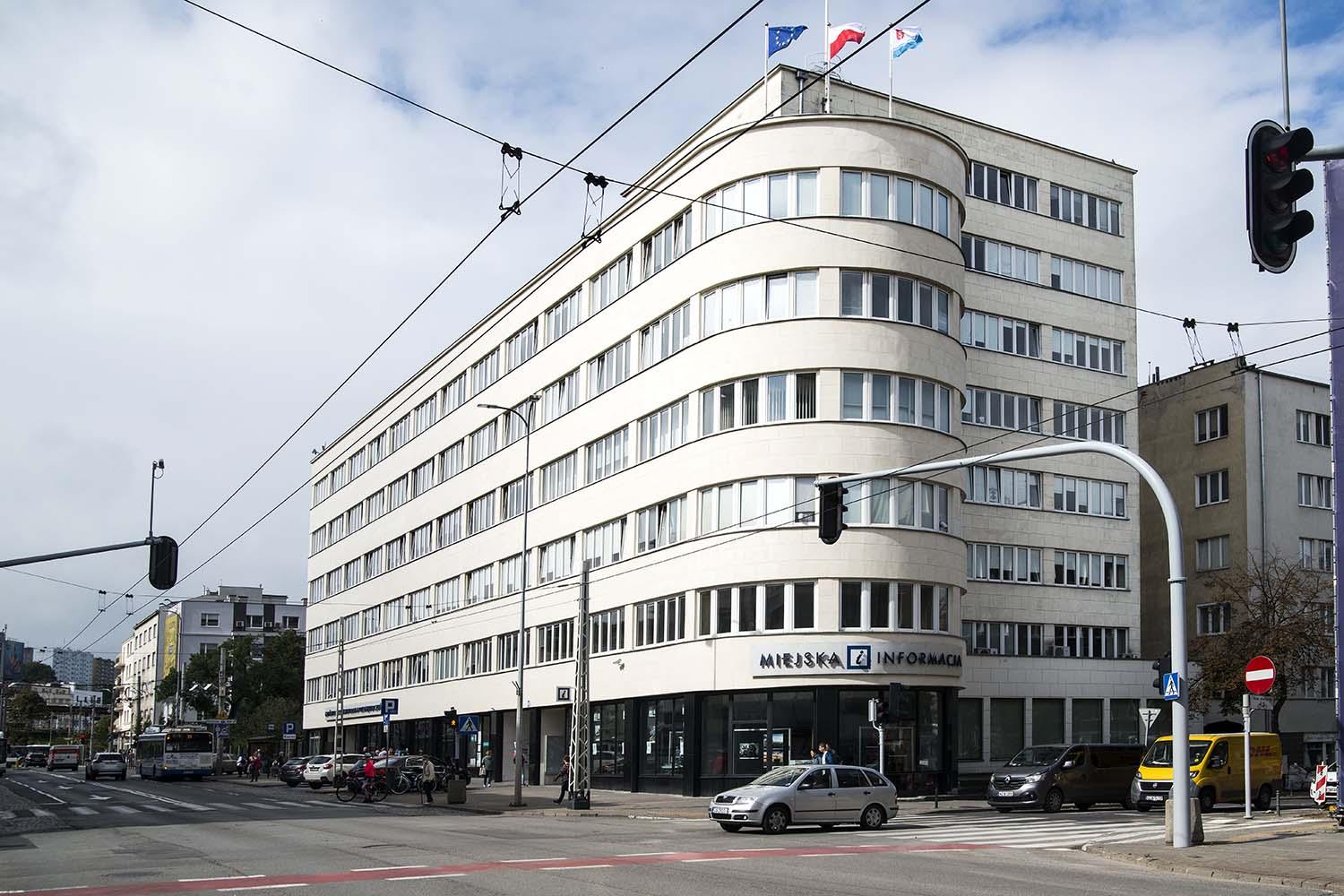
Gdynia is one of those rare cities that can literally claim to have been engineered into existence. A century ago, on 23 September 1922, the Polish parliament signed off on a bold plan: to build a brand‑new seaport on the Baltic and, with it, a “city from the sea and dreams.” Powered by the vision engineers like Eugeniusz Kwiatkowski and the sheer determination of thousands of workers, a sleepy fishing village turned into interwar Poland’s poster child for modernity, openness and ambition. Within a few short years the temporary naval and fishing harbor welcomed its first deep‑sea ship, and on 10 February 1926 Gdynia was granted full city rights – today it is a vibrant urban home to nearly a quarter of a million people and the country’s symbolic “window to the world.”
What makes Gdynia especially attractive is how clearly its architecture tells this success story. Much of the center was built in the 1920s and 1930s in sleek, white “Polish modernism,” with rounded corners and ship‑like balconies that earned it the nickname “the white city”. So, grab a coffee and stroll down 10 Lutego or Świętojańska streets and feel like walking through a living design museum. You can also hop between the waterfront icons - the ORP “Błyskawica” destroyer and “Dar Pomorza” tall ship – before heading into the Emigration Museum, climbing Kamienna Góra for sunset over the port, or café‑hopping around the marina and beach in Orłowo.
This Saturday we'll be celebrating the International Mother Language Day. So, a little linguistic fun fact.
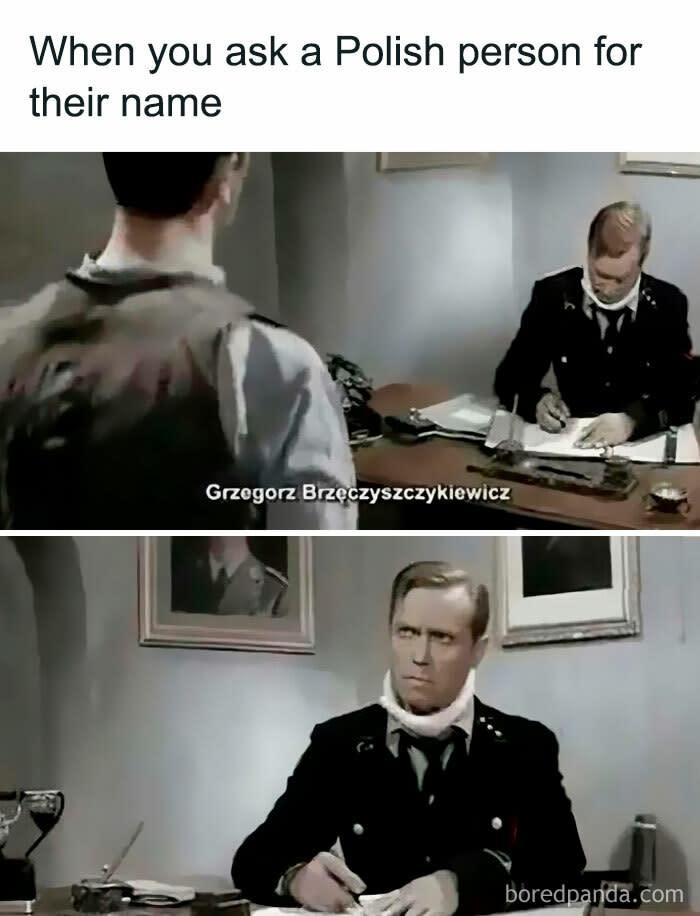
Polish has 32 letters, but it often feels like they all crash‑land into our surnames. Polish surnames sound like a tongue‑twister exam, and Grzegorz Brzęczyszczykiewicz is the full Olympic version. International Mother Language Day is a great moment to admit that our consonants can be merciless - but they are also wonderfully unique.