
Poland Unpacked week 9 (16-22 February 2026)
Welcome to this week’s edition of our Poland Unpacked, where we deliver key insights and trends shaping the economic, corporate and political landscape. Catch the most important insights from Poland in this week’s briefing.
This article is a part of Poland Unpacked. Weekly intelligence for decision-makers
On Wednesday, at the Warsaw Stock Exchange, Prime Minister Donald Tusk declared that 2026 would be a “year of acceleration”. Poland, he argued, has become an oasis of stability and growth. The evidence, in his view, includes a strong currency, robust demand for Polish government bonds and sustained wage growth. GDP growth in 2025 reached 3.6%. Investment rose by 4% last year and is expected to expand by 10% this year. Within five years, the prime minister pledged, Poland will catch up with the United Kingdom.
A year earlier, at the same venue, the government convened a conference at which PM Donald Tusk dubbed 2025 a “year of breakthrough”. He publicly challenged Rafał Brzoska, chief executive of InPost, to identify areas ripe for deregulation. The government committed to enacting 100 deregulatory measures in 100 days. Thus was born the “SprawdzaMy” initiative, bringing together businesses, experts and citizens. The results are tangible. The initiative received more than 16,000 submissions. It produced 522 proposals, of which the government’s deregulation task force accepted 354. So far, 193 changes have been implemented, with 126 already in force. Maciej Berek, the minister responsible for deregulation, says the effort will continue and promises a shift in the administrative mindset. Representatives of SprawdzaMy speak positively of the cooperation. A new quality of policymaking, perhaps?
Polish chief executives are also more upbeat about the economic outlook than their peers elsewhere, according to the latest survey by PwC. A majority of managers are confident their companies will increase revenues over the coming year. They believe in continued economic expansion. Their chief concern? Geopolitics.
Ambitious plans are also being sketched by BLIK, a Polish payments system with 21m active users at home. The company is expanding abroad. Pilot projects have been conducted in Portugal and Spain; Italy is next. Germany and France remain question marks, as both markets are tightly closed. Meanwhile, the European Payment Initiative, operator of the Wero payments scheme, has signed an agreement with four other EU payment systems to create a common hub for instant cross-system transactions in the euro zone.
Some wry commentators on Poland’s political scene have long joked that “the Polish right (and sometimes the left) grows stronger through division.” Until recently, that quip did not apply to the relatively stable governing coalition. That, however, is now history. The past week began with an earthquake inside Poland 2050 – a junior partner in the ruling coalition – triggered by the departure of several prominent politicians. It quickly became clear that this was only the beginning.
From Poland 2050’s 31-strong parliamentary caucus, a group of more than a dozen MPs broke away to form a new parliamentary club, Centrum (Center). As a result, the two groups now number 15 MPs each – precisely the threshold required in the Sejm (lower chamber) to form a parliamentary club with real leverage: influence over committee work, the right to introduce bills, and access to funds from the Chancellery of the Sejm to support political activity.
Poland 2050 was always a conglomerate of politicians with a conservative-liberal bent. Its former leader, Szymon Hołownia, known for his strong social conservatism, simultaneously championed Poland’s membership of the European Union and NATO and advocated a liberal economic agenda. Over time, however, the party failed to develop a clear, distinctive ideological profile and steadily lost public support – more sharply than any other member of the governing coalition.
The breakup of Poland 2050 may generate some turbulence within the coalition. Prime Minister Donald Tusk now faces a dilemma over how to redistribute ministerial posts. Even so, the overall stability of the coalition does not appear to be in serious danger. Both the breakaway Centrum group and the MPs who remain in Poland 2050 have declared their intention to stay in government.
We have written repeatedly in XYZ about the background to Poland 2050’s slow disintegration. In short, the main source of the growing conflict lay in personal rivalries. The split followed recent internal elections, won by Katarzyna Pełczyńska-Nałęcz, the minister for funds and regional policy and a close ally of the movement’s founder, Szymon Hołownia.
Ms. Pełczyńska-Nałęcz has argued that Poland 2050 should move toward a “distinctive center” representing the middle class rather than the interests of entrepreneurs. She has called, among other things, for raising the second income-tax threshold for salaried employees and abolishing the preferential flat-rate tax regime for the self-employed. She also successfully blocked a government program of mortgage subsidies, arguing that it would ultimately push up housing prices. Nor was it a secret that her relationship with Prime Minister Donald Tusk was far from cordial.
The course set out by Ms. Pełczyńska-Nałęcz was opposed by the breakaway faction led by Paulina Hennig-Kloska, the minister for climate and environment. In her view, Poland 2050 should have pursued a more cooperative, alliance-minded approach toward the Civic Coalition (KO), the dominant force in government. Ms. Hennig-Kloska and her allies also favored a liberal, pro-business economic policy. Yet regardless of the differences between the old and the new formations, both camps will have to continue operating within a single governing coalition. How will Donald Tusk reconcile fire and water? We will be watching closely – and keeping you informed.
Last week brought a raft of fresh data from Poland’s economy. This Monday, Statistics Poland (GUS) will publish retail sales figures.
The most important release concerned wages in the enterprise sector for January 2026. Average pay rose by 6.1% year on year, down from 8.6% in December 2025. This marks a sharp deceleration in wage growth at the turn of the year.
Analysts had expected wages to increase by 7.2%. Such a pronounced slowdown relative to expectations strengthens the case for the Monetary Policy Council to end its two-month pause and resume interest-rate cuts. For context, headline inflation in January stood at 2.2%. Moreover, the enterprise sector covers only part of the economy – companies employing more than nine people. Elsewhere (the public sector and micro-firms), wage dynamics are shaped primarily by public-sector pay rises and the minimum wage. In both cases, increases amount to 3%, suggesting that economy-wide wage growth is likely below 6.1%.
Data on construction and industrial output struck a colder note. Construction activity was hit particularly hard by exceptionally harsh weather in January. Temperatures fell to their lowest level in 16 years, with the average temperature fully three degrees Celsius below the January average for 1990–2020. As a result, construction output was down a striking 12.8% year on year.
Industrial production, meanwhile, cooled expectations after a strong December 2025, when output had risen by 6.9%. The January 2026 reading came in at –1.5% year on year. After seasonal adjustment, industrial output still grew by 0.4% year on year. To speak of a durable recovery in industry, however, several consecutive strong months will be needed.
In the European Commission’s projections, Poland’s public debt rises to nearly 107% of GDP by 2036. This stems from a “no-policy-change” assumption, which in practice implies freezing a high structural deficit. The approach, however, overlooks deficit-limiting mechanisms already in place in Poland – such as the lack of indexation of tax thresholds and certain benefits – as well as obligations arising from EU fiscal rules. We discuss the Commission’s projections in more detail in our analysis.
Between 2020 and 2025, Poland recorded average annual GDP growth of 2.8%, placing it among the EU’s top performers and well above the euro-zone average. In our analysis, we seek to unpack why Poland has been outperforming much of the rest of Europe economically.
The prime minister’s declared “year of acceleration,” alongside massive investment in the defense sector, also with stronger support for the technology sector. Andrzej Domański, Poland’s finance minister, pointed not only to efforts to stimulate the financial market but also to the recently announced creation of a 'Council for the Future', designed to support startups. In its initial phase, the council is to focus on the space and AI sectors. Mr. Domański also said that Poland plans to increase its contribution to the European Space Agency from EUR 250m in 2023–2025 to EUR 550m in 2026–2028.
Ambitious plans for the startup market are also being developed by the Ministry of Development, which is preparing a new strategy dedicated to the sector. From the outset, the ministry has been consulting needs and ideas directly with the market, through a series of workshops. Three such meetings took place in February.
“We are working on a strategy for startups and want to present it later this year. We are developing it through an open dialogue with all stakeholders. In three to four weeks we will have conclusions from the workshop meetings with participants from the startup ecosystem, which will feed into the strategy,” said Zbysław Ziemacki, director of the newly established Department of Innovation and Space Policy, in an interview with us.
The sector is also expected to benefit from a new initiative aimed at mobilizing capital investors. This involves the so-called Qualified Investment Fund, designed to simplify how funds operate and to bring Polish regulations closer to Western standards. The new structure is to be based on committed capital and capital calls, making it easier, among other things, to invest and to distribute proceeds. It could offer a cheaper alternative to registering funds in jurisdictions such as Luxembourg or the Netherlands.
As for the ecosystem itself, the past week saw several funding rounds, with Polish investment funds also active. For example, Market One Capital invested in Rizon, a neobank headquartered in Delaware. It is a relatively new venture – a neobank that, broadly speaking, focuses on financial management using stablecoins and allows users to deposit and transact in a digital dollar. Operating for just five months, the company raised USD 2 million in a pre-seed round to support its growth. Market One Capital itself harbors ambitions for large, international investments.
Global expansion is also firmly on the agenda at Zen.com, which already operates in 32 markets. The company plans to launch Hong Kong as its Asian hub and to enter Ukraine. Its goal is a tenfold increase in its customer base over five years and to equalize the share of Europe and Asia in revenues within three years – while keeping costs under control and avoiding risky financing.
Turning to technologies closer to everyday users, in Poland – as across Europe – Meta is sticking to its long-standing strategy of countering manipulation and propaganda. A year ago, Meta announced plans to end cooperation with fact-checkers. According to our information, however, there are still no concrete plans to wind down the information-verification program in Poland or in other European markets.
If you’re in Kraków and looking for something a little different, drop by the Museum of Photography (MuFo), where glass meets the camera lens in a surprisingly elegant way. The show, “In Commemoration... Photographic Tableaux by Konrad Brandel and Jadwiga Golcz”, brings back a 19th‑century trend – large, hand‑crafted photo collages made to mark anniversaries and company celebrations. These tableaux capture the people, places, and sparkle of the “Czechy” Glass and Crystal Factory. Blending art, memory, and a bit of industrial pride.
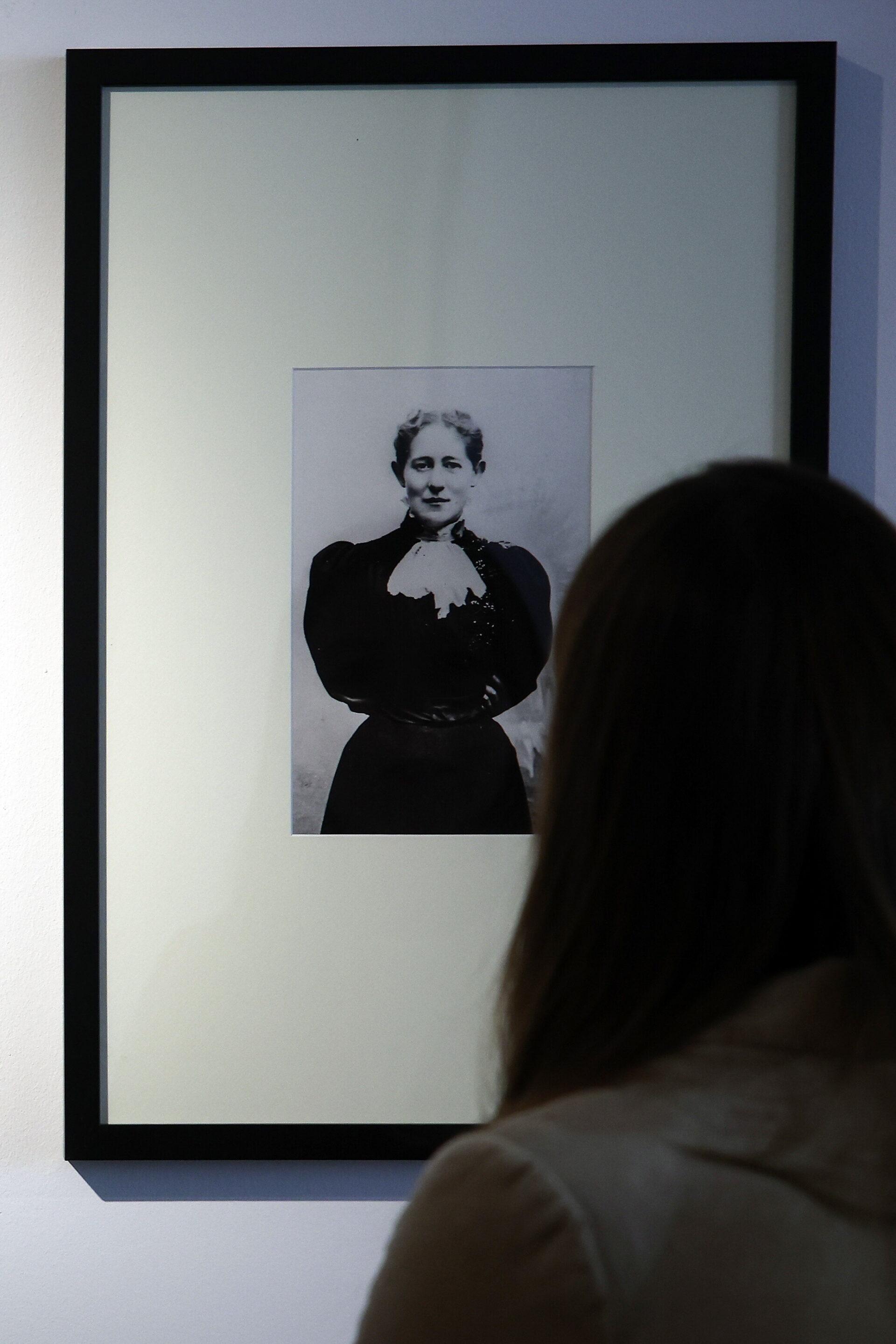
Alongside the photos, you’ll find original glass pieces and modern reproductions that make the images feel three‑dimensional. It’s part photography show, part design story, and a glimpse into how people a century ago turned work and craft into art.
Where: Kraków, MuFo, ul. Rakowicka 22A
When: until 12 April 2026
https://mufo.krakow.pl/
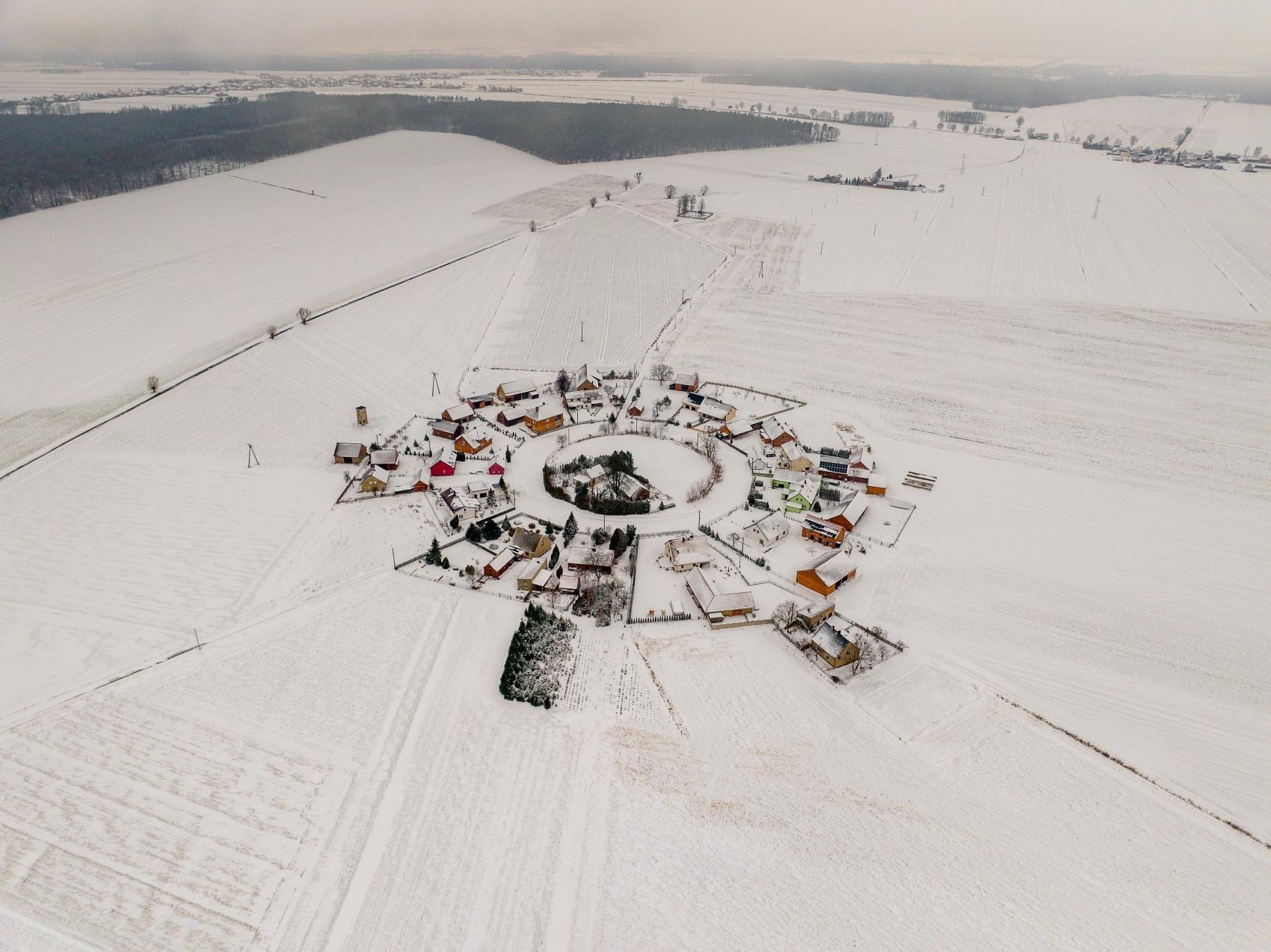
Nestled in southern Poland’s Opole region, the hamlet of Czerwona in Gronowice transforms into the Millennium Falcon under a snowy drone lens – hats off to hobbyist Tomasz Matusiak for spotting the galactic doppelgänger.
Shared in the ‘Star Wars Ships’ Facebook group on January 18, 2024 it blasted to 8,000+ likes and 400 global comments, proving Polish plowland can out-hyperspace Tatooine any day.