

This article is a part of Poland Unpacked. Weekly intelligence for decision-makers
As Europe’s push toward a single payments system gathers pace, BLIK is opting for independence and regional alliances. Dariusz Mazurkiewicz, the company’s chief executive, talks about politics in finance, advanced talks with major banks abroad, and whether the firm needs fresh capital.
Piotr Sobolewski, XYZ: How do you view the new pan-European competition? On February 2, the European Payments Initiative (EPI)—owned, among others, by major French, German, and Spanish banks—the operator of the Wero payments system, and four other EU payment schemes signed an agreement to create a shared hub for fast mutual transactions.
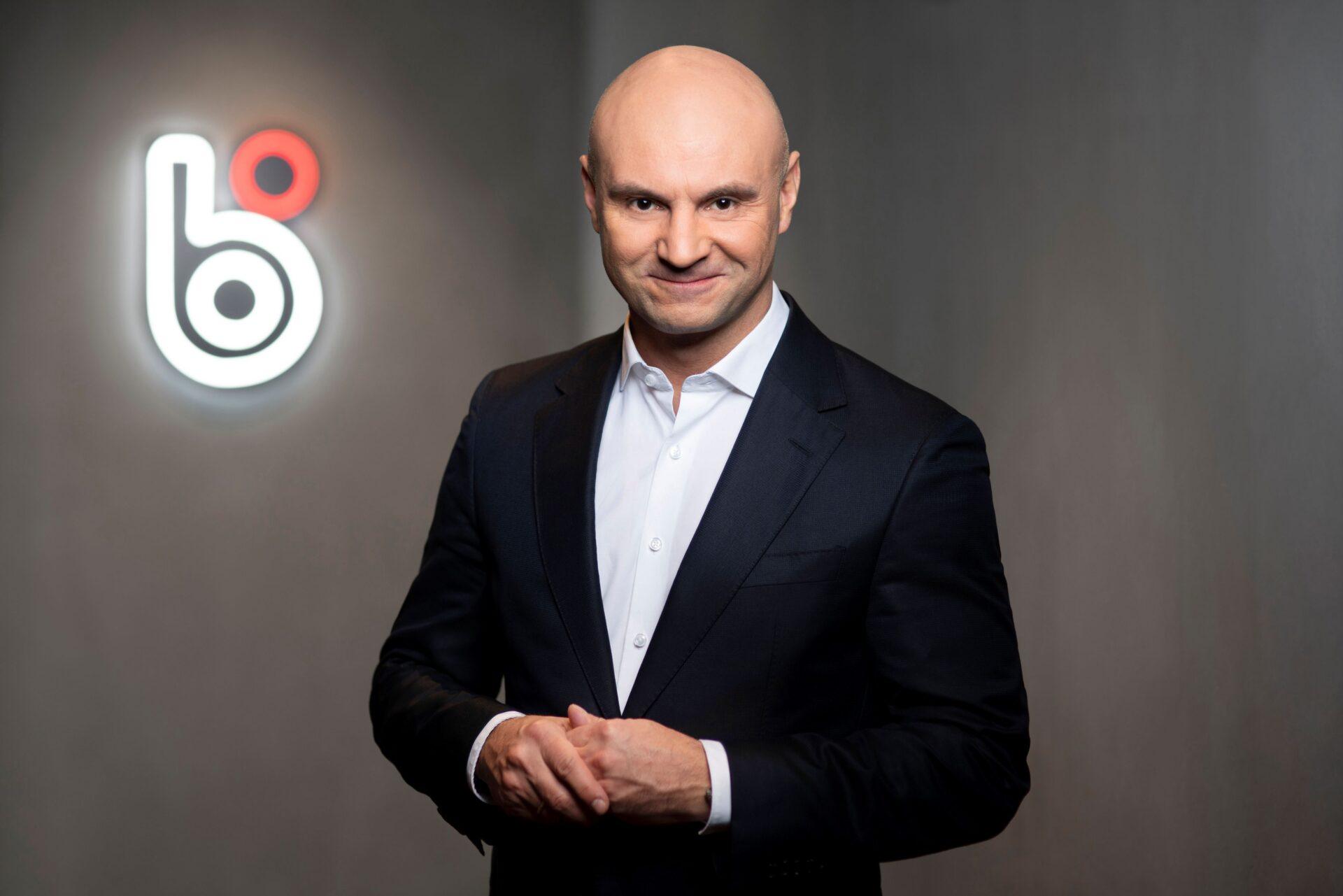
Dariusz Mazurkiewicz, chief executive of Polish Payment Standard (PSP), the operator of the BLIK mobile payments system:
At present, no new initiative in pan-European digital payments is taking shape without BLIK’s active involvement. Since May 2025, the discussion has focused on a specific market – person-to-person (P2P) transfers at a European scale. In my view, the market for providers of this service is becoming increasingly competitive.
There are providers in this market – such as BLIK – whose solutions have gained traction, won locally, and are widely recognized. In Poland, our solution is a European leader by number of transactions and by share of domestic retail trade. Yet there are still places in the region where comparable, scaled solutions do not exist.
Who's who
Dariusz Mazurkiewicz
He has led Polish Payment Standard, the operator of the BLIK system, since June 2017. Over that period, PSP has reported rapid business growth in Poland, rolling out new services such as buy now, pay later and recurring payments. The company has also expanded abroad – among other moves, acquiring Slovakia’s Viamo, entering the Romanian market, and broadening its shareholder base to include Mastercard, which is expected to support the system’s international expansion.
Before becoming chief executive of PSP, he served for two years as the company’s deputy CEO. Earlier, he spent more than four years at the helm of SkyCash, a mobile payments platform used, among other things, for public transport tickets, parking fees, and rail travel.
BLIK tested Spain and Portugal – Italy is next. Germany and France remain an open question
You’re dodging the question.
Our international expansion is a mix of cooperation with leading digital-payments players in local markets and rolling out our own solution. We are working on interoperability with mobile payment systems in Western Europe, while at the same time offering our own solution in new markets across Central and Eastern Europe. Together with other European payments providers, we agreed that phone-to-phone transfers are the functionality users most want in these markets. We concluded that this is where we should connect – and with that in mind, we joined the EuroPA alliance [in May 2025—ed.].
We have already completed the first such transactions – initially a test transfer from Portugal to Poland, and in early February from Spain to Poland. This means the solution is now technically feasible; what remains is to scale it. Italy is next in line.
That raises the big question of whether the same will be true for Germany and France. Several years ago, we realized that the French and German markets are very tightly sealed and closed to our solution. Wero is their latest initiative, aimed at scaling their own independent solution across Europe.
Western banks oppose the digital euro
Why are they doing this?
Because of the digital euro. In Poland, the issue does not loom as large, but in Western Europe it is a major challenge. Western banks are opposing it and launching initiatives to demonstrate that an alternative path to the digital euro is possible. The aim is to discourage the European Central Bank from continuing to push this project forward. A legislative process is under way in the European Parliament. For its purposes, another ad hoc subgroup has emerged, declaring that it wants to work on interoperability not only for P2P transfers, but also for everyday payments – across a much broader scope than we were discussing less than a year ago.
Why is the digital euro a threat?
The digital euro itself is not a “threat” in any straightforward sense. It is a central-bank project and therefore, by definition, operates according to a different logic than market-based payment systems. The problem arises when it is designed as if it were meant to replace what already works today, or when it absorbs banks’ attention and resources for years in the process of implementation.
Europe already has its own systems – developed locally, trusted by users, and deeply embedded in banking infrastructure. If the digital euro is not well integrated with them and is instead built alongside them, it risks further fragmenting payments. And this market is already highly fragmented.
There is no need to rebuild a common system from scratch
And BLIK clearly opposes broader cooperation beyond P2P?
Our position is clear. We account for more than 70 percent of payments in Poland’s e-commerce market and have a service trusted by 21 million active users. We are the most transaction-intensive digital payments system in Europe fully integrated with mobile banking. I cannot imagine a solution designed to ultimately replace national systems.
We have stated that P2P is the common denominator and that we are open to such transactions. But there is no need today to create a single, common European payment method and offer it as a “new button” in e-commerce. Such a project would require many years of work. From today’s perspective, it would simply be another solution competing with already scaled local ones.
As BLIK, we are focusing on expanding with the products we know from Poland. This is a different approach from that taken by several systems that announced an agreement in early February. The intended outcome of that agreement would be a solution allowing work on the digital euro to be abandoned – or at least delayed. An initiative limited to a “narrow club” within the euro zone does not satisfy us.
Could the lack of an invitation to that inner circle be the result of institutions assuming from the outset that you would not join anyway?
We are working within all initiatives focused on so-called interoperability in payments. We take an active part in all initiatives related to digital payments in Europe. At the center of our actions and decisions, however, we always place the user. Political discussions often take place in isolation from the perspective of the people for whom we are actually building payment solutions.
A voice from Central and Eastern Europe matters, too
Are you giving a firm “no” to deeper cooperation with EPI and other Western systems?
You cannot organize digital mobile payments without taking into account the voice of Central Europe – and that voice exists and will be heard. We do not take part in purely political events aimed solely at delaying the rollout of the digital euro. We are engaged in substantive work on interoperability among mobile payment systems in Europe. Bringing Germany and France into the group of countries that enable international P2P transfers for their residents is important for Europe as a whole.
Perhaps a second subgroup should be formed – a Central European one?
We certainly have no interest in creating additional market fragmentation. In the long run, that serves no one. For BLIK, what matters is taking concrete business steps. Ultimately, it is users who decide whether they will use a given solution or not. No policy can force them to do so.
BLIK’s strong position stems precisely from this “social mandate of popularity.” None of the Western European systems that recently signed the agreement has yet achieved in its domestic retail market the level of adoption BLIK enjoys in Poland. They look at us with admiration.
Central and Eastern Europe remains the priority
From their perspective, however, the decision-making center is not where it should be. It would have to be in Germany or France.
Indeed, the prevailing mindset is still that these countries are large and therefore should decide on their own, rather than draw on proven solutions.
What does this mean in business terms? Will you focus more strongly on Central Europe?
We have been focusing on this region for around three years, and the agreement announced in early February is merely further proof that our strategy is sound. Our priority is Central and Eastern Europe. In May 2025, speaking at the Impact conference, I said it was time to tear down the Berlin Wall in payments. We are genuinely doing that – though not everyone is happy about it.
P2P could open access to as many as 130 million new citizens
You mentioned cooperation on P2P. How would that work?
To execute the first transactions with real money, systems need to be formally connected and regulatory barriers overcome. The next step will be scaling the solution and communicating it to the market.
Is that a major challenge?
It is not easy – but it is easier than proving that the technical capability exists in the first place. No BLIK user traveling for holidays, work, or Erasmus should face any difficulty sending money across Europe via BLIK. We want customers to know that BLIK from Poland is sufficiently well integrated to make this possible.
With Western Europe, we are connecting specifically on P2P, and work to enable these transactions technically is under way. I expect that within two years we will have a combined total of around 130 million new citizens who will be able to send funds via phone-to-phone transfers, with numbers also registered in BLIK. We are talking about countries with which we are already building system interoperability – but we are thinking more broadly than that.
We envision a Europe in which we can freely send money to a phone number and receive transfers without barriers – from friends in Rome, Madrid, Lisbon, or Stockholm. That is the point of these efforts: to ensure that phone-to-phone transfers no longer stop at national borders but work across the entire continent.
Along the way, funds still need to be converted. Wero, as a euro-zone standard, does not face that challenge.
We make sure that exchange rates are not a barrier. We have almost forgotten about visiting exchange offices before traveling abroad. When paying with BLIK contactless abroad, users already benefit from competitive exchange rates—and the same will apply to transfers in another currency.
mBank could make BLIK available in Slovakia in 2026
What is the current plan for the Slovak company BLIK SK, formerly Viamo? It was meant to be responsible for expansion into euro-zone markets.
In practice, it is our Slovak operating company rather than a separate project. From the outset, its role extended beyond Slovakia alone. We integrated it not just to serve the local market, but to build a euro-zone backbone for settlement and for rolling out BLIK in other markets. Today, it is a team focused on bank integrations, infrastructure development, and scaling acceptance.
Slovakia illustrates well the model we want to replicate. There, four banking groups account for around 90 percent of the sector. BLIK operates at Tatra Banka, part of the Raiffeisen Bank International (RBI) group, and the number of merchants and transactions is steadily growing. We assume that mBank will make BLIK available in Slovakia in 2026, which will be another important step in building scale.
At the same time, we have been focusing on Romania, where implementation required more time. First, we had to obtain regulatory approval; then, for another year, we integrated with local banking systems. In the meantime, the same regulator created a competing payment system, RoPAY, and required banks to join it. In the coming quarter, we will gain the operational ability to connect banks to our system, thereby opening up a market-based alternative in the Romanian market.
Countries in the region are pursuing payment sovereignty
So politics has come into play here as well?
There is a lot of politics involved. Across Europe – including Central Europe – there is much talk of so-called payment sovereignty. Payments are seen as an element of national security. No one wants to find themselves in a situation where being cut off from the U.S. infrastructure of Visa and Mastercard would force a return to cash-only settlements. As a result, the expansion of Poland’s BLIK is not necessarily welcomed by everyone.
But building domestic solutions would take years.
Achieving the right scale for such a solution cannot be done in a few months. There is no shortcut. We needed over ten years of consistent effort to reach the position we occupy today.
We are aware that Central Europe is very different from Poland itself. Our banking sector is highly locally empowered; it does not need the approval of an international majority shareholder. In Central Europe – perhaps excluding Hungary – gaining support for an initiative requires earning the trust of multinational bank management teams. From the perspective of countries smaller than Poland, BLIK is now a hegemon – we have transaction volumes that are unattainable elsewhere in the region. Decisions to cooperate with a giant are not made in Prague, Bratislava, or Ljubljana, but in Vienna and Milan.
PSP could benefit from the ambitions of Erste and UniCredit
Erste and Raiffeisen are headquartered in Vienna, and UniCredit and Intesa SanPaolo in Milan. Put simply: does big have to agree with big?
We realized that for these banking groups, the ability to offer services in Romania and Slovakia alone was insufficient. Erste, for example, operates in eight markets across the region. We had to consider whom we truly wanted to encourage to cooperate with us and how to launch across all the region’s markets at once. So we take our experience from Poland and assume it can be implemented in markets where the largest banking groups operate. Our infrastructure is ready, operational activities are about to start in Romania, and we can immediately integrate Slovakia. That is what counts now.
Such discussions can drag on for months – or even years.
We understand the dynamics. Certain factors work in our favor – for example, two of these groups are actively expanding in Poland. There has long been talk of major consolidation in the Polish banking sector, and it is possible that some groups will not want to expand further. The “big six” may remain, but their shareholders could become significant players across the wider region.
Erste has already announced at a press conference that it will implement BLIK wherever it operates. UniCredit, on the other hand, cannot function on the Polish market without BLIK. Wojciech Sobieraj – currently chairman of UniCredit’s supervisory board – was one of BLIK’s founders when he was still with Alior Bank. We have all the pieces of this puzzle in hand.
Two groups are enough for the first phase of expansion
So when will you announce the first agreements with these players?
We would very much like to share positive news before the end of this quarter. We are actively working on it and want to signal to the market that we are executing our strategy. Even just two banking groups would give us substantial growth opportunities – and that, in turn, would encourage other players to collaborate.
Do you need all four for this to succeed?
Not at all. You can start with some and gradually expand to include other institutions. They need to believe that we can compete with the big tech players – Google Pay and Apple Pay. That is exactly what BLIK is for. Our task is to instill that confidence across eight other markets simultaneously. We want to show that Poland is not a one-off, and that this model can be implemented in other countries. We want to prove that it is not about some unique conditions in Poland. This technology can be scaled across the region, especially in e-commerce.
Today, we are focusing in parallel both on work in individual markets – Romania and Slovakia – and on actions aimed at becoming part of the payment strategies of banking groups across the entire region.
BLIK will need recapitalization
Will you need additional capital for expansion? Will new share issues be offered to new investors?
We will, but everything depends on agreements with potential new investors, as we are talking about capital involvement. I would note, however, that investor engagement does not always have to take the form of cash – it could also involve providing technology, which could be highly valuable for our international expansion.
Would this require creating a holding structure? A separate company in Poland and another for foreign expansion?
Yes, that is the approach we are working on.
So the ownership structure of an international entity – let’s call it BLIK International – would be completely different from PSP in Poland?
Exactly. Polish banks would participate indirectly, by being shareholders in PSP, which is expanding abroad.
And is a PSP IPO possible? This topic has been circulating for several years.
It cannot be ruled out. Everything will depend on the shareholders. In my view, beyond the capital aspect, such an IPO could increase brand recognition, including among foreign investors.
BLIK benefits from a growing acceptance network
So far, we are still focusing on banks that would enable BLIK payments, but there is another side to the story: the acceptance network. BLIK needs to be available in payment gateways and e-commerce stores. How is that progressing?
Our huge advantage is that we enter new markets carrying a wealth of existing integrations. We do not need years to establish partnerships or organize new ones. So we tell banks: BLIK today is not just a technology – it is also a vast acceptance network that we can activate in large parts almost immediately.
Is this about the presence in the region of platforms like PayU, Stripe, Adyen, and PPRO?
These are the players we cooperate with and who are already active in the region. A growing BLIK is good news for them – they even ask us when we will enter new markets, because they want to include us. E-commerce is becoming increasingly international. BLIK payments are already available in globally popular services such as Uber, Bolt, Airbnb, and Amazon. We leverage all of this in our expansion.
First the core service, then the rest
Entering new markets, will you need to apply for licenses?
In Romania, we had to obtain a payment system license, as that is specific to the Romanian market. In the Slovak model, we operate as a payment institution passported across multiple European markets.
The goal is eight markets, right?
That is our ambition. The first markets are Slovakia and Romania.
And how will people know you are entering? Are you planning major campaigns?
Activation of BLIK in each market will definitely be accompanied by appropriate marketing activities.
Initially, will customers abroad be able to use only BLIK payments? Without buy-now-pay-later or recurring payments options?
At first, we need to implement the core BLIK model. Ultimately, we will offer all our products, but we recognize that full integration may take time. I would note that only these four banking groups collectively operate 26 domestic banks in the region. They do not all use the same platforms, so some integrations may take longer than others.
There is still growth potential for BLIK in Poland
We have been focusing on international expansion. But at the same time, in Poland, BLIK is likely to announce another record-breaking year in just a few days. Is there still room for growth in the domestic market? With 21 million active users, it might seem difficult to convince the next millions.
We will continue to strengthen the habit of paying with BLIK among existing users – there is still significant potential to increase engagement across nearly 35 million banking apps. We know that there are payment scenarios in the market that do not yet use BLIK. A clear example is the automation of bill payments in Poland, which largely remains outside the system. In this area, standards and speed are lacking, and I believe BLIK can change that.
We also see the service e-commerce market growing very quickly – covering various subscriptions, hotels, and entertainment services.
And there is another battle ahead: entry onto Apple devices. We are talking about enabling contactless payments outside of Apple Pay. I expect this to launch in mid-2026. I am confident we will surprise the market with how convenient payments on iPhones will be. This is another area where consumers will benefit the most.
In Poland, there are still payment scenarios not yet served by BLIK – for example, bill payments. The market lacks standards and speed, and BLIK can make a difference.


Key Takeaways
- IPO and ownership: To support further expansion, PSP will require additional capital. A stock market debut is not ruled out, and the company is considering a holding structure for its international operations, in which Polish banks would participate indirectly as shareholders of PSP.
- BLIK’s response to the February 2 initiative: PSP has no plans to create a single European payment method or participate in projects aimed at politically blocking the digital euro. Instead, it focuses on P2P interoperability and its own product expansion, citing its 70 percent share of Poland’s e-commerce market and 21 million active users as a market mandate.
- Challenges of international expansion: When planning expansion across Central and Eastern Europe, key decisions rest with four banking groups that together operate 26 banks in the region. PSP is actively negotiating potential cooperation with them. The situation in individual markets is further complicated by “payment sovereignty” policies, aimed at reducing dependence on external systems – a challenge BLIK has already encountered in Romania.