

This article is a part of Poland Unpacked. Weekly intelligence for decision-makers
The dispute over the largest road contract in Poland’s history has just reached its conclusion at the National Appeals Chamber (KIO). The controversy centered on the participation of companies from outside the EU. Adding a layer of intrigue, the plaintiff was a Poland-based company that is, however, owned by a Turkish construction group. On the other side stands the winner: a consortium led by a Polish firm with a Turkish partner. The ruling in the case was delivered on Wednesday, February 25.
At the end of 2024, the General Directorate for National Roads and Motorways (GDDKiA) announced tenders for the construction of three sections of the Western Bypass of Szczecin along the S6 expressway. This is one of the most important and expensive road projects in recent years, with a total value of around PLN 8 billion (EUR 1.7 billion).
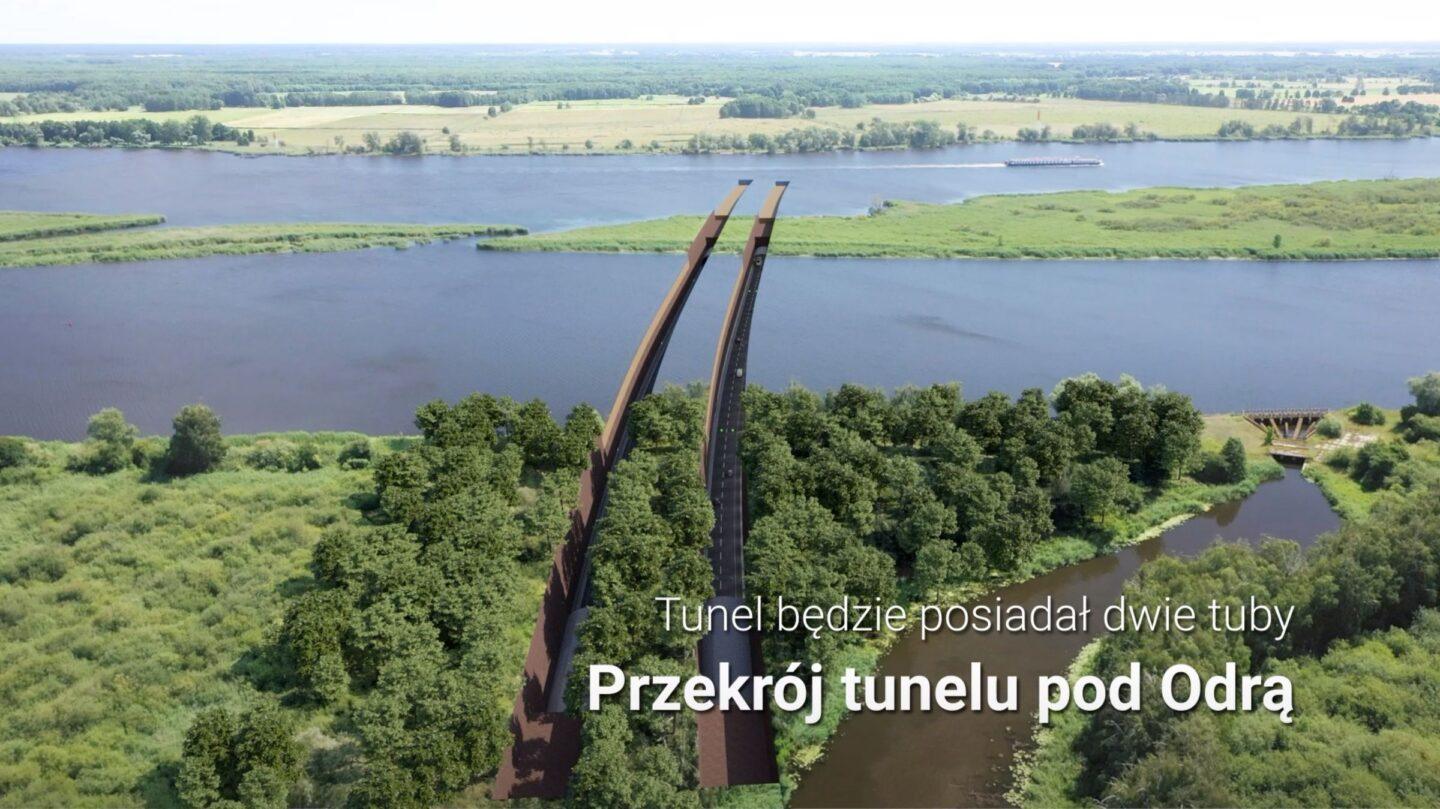
Of the three sections, the most spectacular is undoubtedly the Police–Goleniów segment, which involves constructing a five-kilometer, twin-tube tunnel under the Oder River. Each carriageway will run through a separate tunnel, excavated using a Tunnel Boring Machine (TBM). The tunnel is scheduled to open in 2033.
In October 2025, GDDKiA selected a consortium of the Polish company NDI and the Turkish firm Doğuş as the contractor for this section. The winning bid amounted to PLN 5.3 billion (EUR 1.13 billion), nearly PLN 300 million (EUR 64 million) lower than the next offer, submitted by the Turkish-Austrian consortium of PORR and Gülermak.
The Police–Goleniów S6 contract is now the most expensive road construction contract in Poland’s history. The battle among contractors for this colossal project has already begun: the Gülermak–PORR consortium filed an appeal against GDDKiA’s decision with the National Appeals Chamber (KIO).
Legal complications
During the proceedings in Poland, the legal landscape shifted. An amendment to the Public Procurement Law (PZP) came into effect, defining the conditions under which companies from so-called third countries – that is, outside the European Union and without appropriate market-access agreements with the EU – may participate in tenders.
The legal change in Poland followed rulings by the European Court of Justice (ECJ) in cases involving Kolin and Qingdao, contractors from Turkey and China. The ECJ ruled that contractors from third countries do not have an automatic right to participate in EU tenders and cannot invoke the EU principle of equal treatment. They may only participate if the contracting authority explicitly allows them and specifies this in the tender documentation.
Who decides on participation
“Prior to the amendment, a literal reading of Polish law could suggest that any contractor, regardless of its country of incorporation, could bid for a contract and access legal remedies. It did not matter whether the company was from the EU, Turkey, or China. The European Court, however, confirmed that EU law does not see it this way. It is the contracting authority in each procedure that decides whether to allow such a contractor,” says Dr. Wojciech Hartung, attorney at Domański Zakrzewski Palinka law firm.
He adds that, under the current rules, the contracting authority must determine whether contractors from third countries may participate in a given tender. If this option is not explicitly stated, these contractors are effectively barred from bidding.
GDDKiA: No grounds to exclude the bid
In the tender for the construction of the tunnel under the Oder, GDDKiA did not explicitly state whether contractors from third countries could participate. However, under the law - and as clarified in the amendment – the contracting authority was bound by transitional provisions. These apply to procedures initiated before September 9, 2025, the date the amendment entered into force.
“There were no grounds to exclude this bid. The tender preceded the amendment to the Public Procurement Law. The nature of this procurement is such that we did not want to exclude any companies from the process,” says Jędrzej Puzyński of GDDKiA.
Gülermak: we are a Polish company
The losing consortium sees things differently. Gülermak accuses the General Directorate of violating the Public Procurement Law, arguing that the winning contractor should have been excluded due to the involvement of a third-country entity – namely, from Turkey. Adding an intriguing twist, although Gülermak S.A. is registered in Poland, it belongs to the Turkish construction group Gülermak.
In Poland, the brand is well known. Gülermak has been, among other projects, a contractor for the second line of the Warsaw metro and has experience with TBM tunneling. Currently, together with Budimex, it is building the longest railway tunnel in Poland, located in Limanowa in the mountainous southern Poland.
“Gülermak has been present in Poland since 2009, when we worked on the central section of the second Warsaw metro line. At that time, we were indeed operating as a branch of the Turkish company. However, since 2015, Gülermak has been a Polish company – well before any discussion about company origin, the ECJ ruling, or the amendment to the law,” says Bartosz Sawicki, the company’s spokesperson.
He adds that since 2017 all resources – materials, TBM shields, and personnel – have been transferred to the Polish company. In the following years, until 2023, the company participated in tenders in consortia with the Turkish Gülermak. Why? According to Sawicki, despite the expertise of the engineers and staff, the company lacked the necessary references. Formally, it was considered a new entity.
“For about two years now, we have been participating in tenders exclusively as the Polish Gülermak – Gülermak S.A. It is worth noting that 90% of our workforce is Polish. The CEO of the Polish company, Bülent Özdemir, is Turkish by origin but holds Polish citizenship, has lived in Poland for 26 years – longer than in Turkey – and speaks fluent Polish. We consider ourselves fully Polish,” emphasizes Mr. Sawicki.
Although Gülermak initially participated in consortia with its Turkish partner in Poland, the company remains steadfast in its appeal to the National Appeals Chamber.
“The amendment to the law applies to all market participants and clearly defines the rules of the game. If, under the law, we have grounds to appeal to the National Appeals Chamber, we will pursue that procedure. The country of origin does not matter to us,” concludes Gülermak’s spokesperson.
NDI: No comparable know-how in Europe
The Polish company NDI also entered the tender with a Turkish partner, Doğuş, for clearly defined reasons.
“Due to the specialized nature of the tunneling market, the possibility of securing a European partner was significantly limited. That is why we decided to collaborate with Doğuş, a company with global experience in tunnel construction. At the same time, NDI holds the decisive vote within the consortium and will be the main entity responsible for executing the entire contract,” says Marta Kosacz-Sobotka, Vice President of NDI.
NDI, the leader of the winning consortium, is headquartered in Sopot and has been active in the construction market since the early 1990s. Its partner, Doğuş, based in Istanbul, carries out major infrastructure projects including metro tunnels, highways, and rail lines. The company has also established a Polish branch to participate in future tenders.
Ms. Kosacz-Sobotka explains that NDI partnered with Istanbul-based Doğuş to leverage their reference resources. Such a Polish-Turkish “marriage” allows NDI to acquire the necessary experience and know-how. In the future, it could also enable Polish companies to execute similarly large-scale tunneling projects independently.
Fireside chat
Jan Styliński: The PZP amendment ends tender asymmetry
Why was the amendment to the Public Procurement Law (PZP) so significant?
The European Court of Justice ruled in two cases that an entity headquartered outside the EU is considered non-European. As such, it cannot invoke the principle of equal treatment if it comes from a country that does not recognize the equal treatment of EU entities. In other words, non-European companies are those based in countries that are not parties to the GPA (Agreement on Government Procurement) under the World Trade Organization. The GPA ensures reciprocal, equal access to markets for firms from member countries – but Turkey is not a party.
For years, it was difficult to accept a situation in which European companies could not compete on certain markets, while companies from those non-European countries could bid in Europe on equal terms – and even defend their rights in court.
What difference does it make if a company is registered in Poland while its capital comes from a “third country”?
We have always supported limiting participation in Polish tenders to companies with real execution capacity on the Polish market: the right equipment, personnel, and reliable subcontractor support. The situation is very different for a foreign contractor without an established presence in Poland versus a company with international, listed, or foreign capital. We see many such cases.
Gülermak, as a joint-stock company under Polish law, possesses real execution capacity in Poland. It has the equipment, staff, know-how, procedures, and financing in Poland. It is also subject to Polish jurisdiction, which means Polish tax authorities, judicial bodies, and even special services have stronger oversight over an entity registered in Poland.
Could this situation lead to a Polish company, such as NDI from Sopot, being excluded from the contract?
The desire to exclude NDI is indeed a unique situation. Under today’s legal framework – i.e., after the PPL amendment entered into force – the Polish-Turkish consortium would be excluded from participation. However, these rules do not apply to the current case. At the same time, the contracting authority did not limit the tender to Polish entities. Therefore, the argument that a consortium involving a Turkish company should be excluded – particularly one led by a large, experienced, and reputable Polish firm with proven resources in the Polish market – is highly debatable.


KIO issues ruling
Attorney Wojciech Hartung confirms that the amendment to the Public Procurement Law does not apply to companies that are headquartered and actively operate in Poland – regardless of the origin of their capital. Under both EU and Polish law, Gülermak is therefore considered a Polish company, even if the parent company’s capital comes from a so-called “third country.”
A separate question was whether the National Appeals Chamber (KIO) would recognize that the General Directorate could rely on the previous rules at the time the tender decision was made.
The ruling in the case was issued on Wednesday, February 25. KIO dismissed Gülermak’s appeal, meaning that the earlier decisions selecting contractors for the Police–Goleniów section remain in force. Consequently, GDDKiA can soon sign a contract with the winning consortium: the Polish-Turkish partnership of NDI and Doğuş.
“The Chamber rejected all allegations. It noted that the ECJ ruling does not automatically require the exclusion of third-country entities and that the decision to admit such entities rests with the contracting authority. It also emphasized that, during the proceedings, the amending law entered into force, giving the contracting authority discretion regarding tenders initiated before its enactment,” says attorney Łukasz Gembiś of DWF Poland, one of NDI’s legal representatives, in an interview with XYZ.
He adds that, at the time the selection was made, there was no regulation obliging the contracting authority to exclude a contractor that included a third-country entity. The Chamber also dismissed all other technical objections, confirming that the selection of NDI’s consortium was valid and lawful.


Key Takeaways
- The contracting authority, the General Directorate for National Roads and Motorways (GDDKiA), concluded that there were no grounds to exclude the winning bid. The Gülermak–PORR consortium argues that the rules were breached and is seeking a reassessment. The KIO ruling in the case was scheduled following a hearing on February 25.
- The tender for the Police–Goleniów section of the S6 expressway was won by a consortium of NDI and Doğuş with a bid of PLN 5.3 billion (€1.13 billion). A competing consortium of PORR and Gülermak filed an appeal with the National Appeals Chamber (KIO). The dispute centers, among other issues, on the participation of a third-country company. Adding an intriguing twist, Gülermak, while headquartered in Poland for several years, is owned by a Turkish corporate group.
- During the proceedings, an amendment to the Public Procurement Law (PPL) came into effect, altering the rules for the participation of non-EU companies in tenders. Under the new law, contractors from third countries do not have an automatic right to compete in EU tenders. At the same time, tenders initiated before the amendment entered into force are subject to transitional provisions.