

This article is a part of Poland Unpacked. Weekly intelligence for decision-makers
Amid geopolitical tensions in many regions, defense solutions and dual-use technologies – those with both military and civilian applications—are gaining strategic importance. Government contracts are flowing to companies in this sector, drawing the attention of venture capital funds and investment vehicles seeking projects with high potential for international scale. As a result, an increasing volume of investor capital is reaching these firms.
USD 60 million series A for Vatn Systems
American defense startup Vatn Systems announced it has raised USD 60 million in a Series A round (formally completed at the end of 2025).
The financing structure was dominated by U.S. and Asian capital, with Bravo Victor Venture Capital leading the round. Other investors included Lockheed Martin Ventures, Hanwha Systems, Geodesic Capital, and Airbus Ventures.
Poland’s R+ Family Office – founded and managed by Mateusz Bodio – also joined, becoming the only European participant in this round.
Earlier, in November 2024, the company reported raising USD 13 million in an oversubscribed seed round, bringing its total capital raised to USD 16.5 million.
Submersibles and scalable production
Nelson Mills, co-founder and CEO of Vatn Systems, says his goal is to redefine naval warfare by building low-cost, fast, and autonomous underwater vehicles that can be deployed at scale.
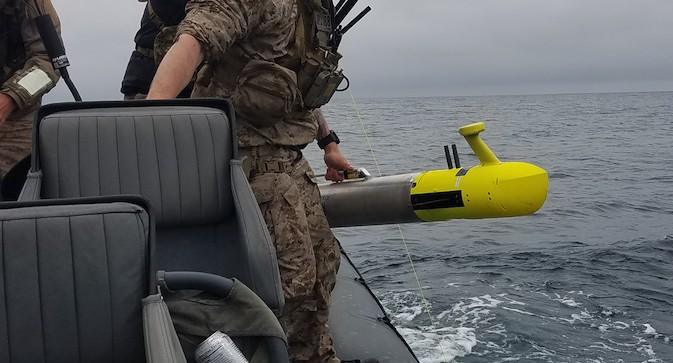
The company is developing autonomous underwater vehicles (AUVs) for maritime operations and the protection of critical infrastructure, including energy and telecommunications assets.
According to Mateusz Bodio, Vatn Systems – founded in April 2023 – quickly tested its AUV prototypes. By July 2025, it had already delivered 12 vehicles to government clients. The company plans to scale production to tens of thousands of units per year by the end of 2026.
Vatn Systems currently employs around 80 people, mainly engineers, operates a factory in Rhode Island, holds three patents, and has orders totaling tens of millions of dollars. In 2026, it acquired Crewless Marine.
Good to know
Rising demand for deeptech and dual-use
The report “Transactions in the Polish VC Market 2025”, prepared by PFR Ventures and Inovo.vc, notes that the value of deeptech technology deals between 2019 and 2025 approached PLN 5 billion.
Jarosław Pilarczyk, partner at Balnord and cited in the report, clarifies that this figure comes from roughly 200 transactions. He also observes that Poland’s broadly defined deeptech sector has the potential for international success, with around 30% of this capital directed toward technologies unavailable elsewhere in Europe.
“Looking at the mega-rounds, strategic technologies dominate—and it’s no coincidence. Dual-use connects the commercial and defense markets. This is a growing segment that cannot be outsourced outside NATO,” Mr. Pilarczyk notes.
International support for technology
Vatn Systems is building a fleet of scalable, modular UAVs. Rather than relying on single, very expensive platforms, the company focuses on large numbers of autonomous underwater drones capable of swarm operations, designed to function at scale and cost-effectively.
A key element of the technology is the proprietary INStinct inertial navigation system. In GPS-denied environments, precise positioning is one of the greatest challenges. The solution, based on motion analysis, delivers high accuracy at lower costs than traditional systems, paving the way for scalable underwater networks.
The company is also developing a strategic partnership with Palantir Technologies for operational data integration and analytics, enhancing autonomous capabilities in complex operational environments.
Vatn Systems is a member of NATO’s DIANA program – an initiative supporting dual-use and defense companies in allied states. Participating firms are those whose technologies are considered potentially promising for transatlantic security.
The capital raised by Vatn Systems will be used to increase production capacity, develop autonomy and navigation systems, and support international expansion.
Good to know
Foreign deals by Polish investment teams
Few Polish investment teams participate in rounds led by foreign investors, especially those outside Central and Eastern Europe. At the same time, both the number and value of investments by Polish-managed funds in foreign startups are growing year on year.
According to the report “Transactions in the Polish VC Market 2025”, prepared by PFR Ventures and Inovo.vc, in 2025 Polish teams invested PLN 546 million in foreign companies. The funds went to 86 firms, representing a marked increase compared with previous years.
The report’s authors also highlight that space technologies were particularly prominent among Polish foreign investments. A total of eight transactions involved SpaceTech companies, accounting for around one-tenth of all investments. The drone technology segment received funding in five transactions. This distribution of investments reflects the growing interest in projects with dual-use potential – technologies applicable in both military and civilian contexts.
R+ focuses on deeptech and the U.S. market
Polish-managed VC funds and investment vehicles still participate relatively rarely in foreign rounds, particularly in the U.S. and Western Europe. R+ - described by its founder as a European multi-family office – focuses on investments in deeptech, dual-use, and defense technologies.
The vehicle is heavily oriented toward U.S. investments, supporting local companies in development and expansion, including in Central and Eastern Europe.
“Geopolitics is no longer a peripheral risk; it has become a permanent driver of public capital allocation, creating long-term, structural demand and high entry barriers for new players. Over the next 5–10 years, it will be deeptech dual-use that builds European–American champions with real strategic strength,” says Mateusz Bodio.
According to him, the R+ vehicle has executed several investments – mainly in the U.S., but also in Europe and Australia. Most transactions were private. Co-investors include the Wallenberg family (owners of SAAB), Sequoia, a16z, Nvidia, Lux Capital, Gradient Ventures, and Founders Fund. R+ investment tickets range from USD 1 million to USD 5 million.


Key Takeaways
- R+ focuses on deeptech and dual-use beyond Poland. R+, described as a European multi-family office, primarily invests outside Poland, with a particular focus on the U.S. The vehicle targets projects in deeptech and dual-use technologies, with investment tickets ranging from USD 1 million to USD 5 million.
- Vatn Systems’ USD 60 million Series A highlights defense and dual-use appeal. The USD 60 million Series A raised by Vatn Systems underscores growing investor interest in the defense sector and dual-use technologies. The company develops autonomous underwater vehicles (AUVs) with both military and civilian applications, including the protection of critical infrastructure. The scale of funding and participation of global funds signal that such solutions are viewed as strategically important amid ongoing geopolitical tensions.
- Rising engagement of Polish teams in foreign tech deals. Although domestic teams still participate relatively rarely in foreign rounds, data show a clear increase in engagement with international technology projects. Strategic sectors such as SpaceTech and drone technologies are particularly prominent, reflecting a broader global trend of strengthening technological security.