

This article is a part of Poland Unpacked. Weekly intelligence for decision-makers
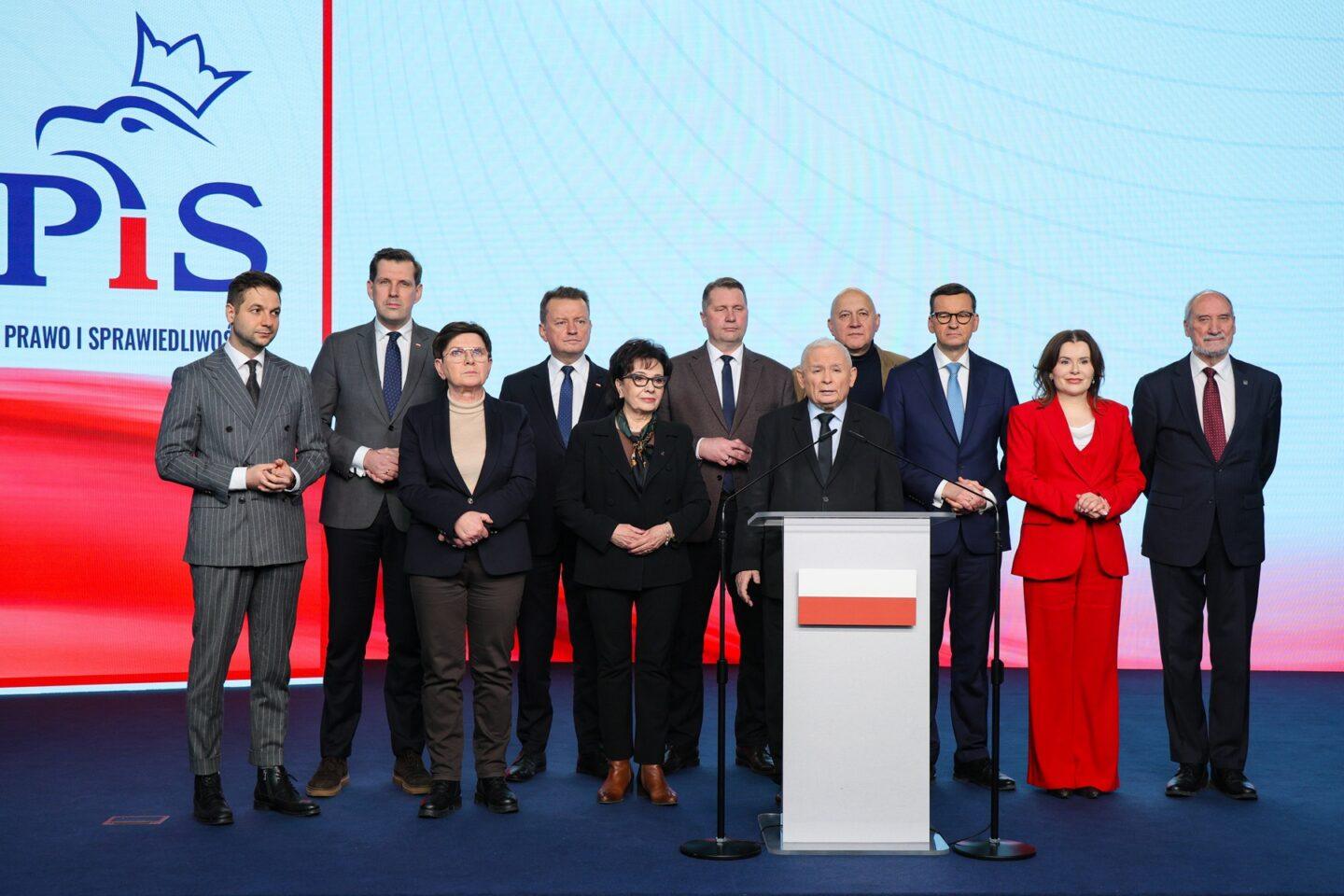
Amid internal party disputes, Law and Justice (PiS) is set to present its candidate for prime minister. The choice is expected to be someone who will not only serve as an electoral locomotive but also help ease factional tensions within the party. Will Jarosław Kaczyński opt for a widely recognized political figure, or instead back a younger face with roots in local government? We review the names that have surfaced in unofficial speculation.
Law and Justice is abuzz following an announcement by its chairman, Jarosław Kaczyński. On February 21st the PiS leader said on Radio Maryja, a catholic radio station, that he had already decided who would be the party’s candidate for prime minister ahead of next year’s parliamentary elections.
Jarosław Kaczyński’s announcement
This was how he responded to the host’s question about the disputes currently affecting the party. He stressed that the future candidate must not only be well prepared to serve as head of government, but also capable of leading the election campaign.
“I have the impression that not everyone in the party understands that today various kinds of achievements – whose value I do not question – as well as genuinely outstanding abilities cannot be the sole criterion for the choice. I will not hide that in my own mind – or, as the saying goes, in my heart – I have already made the decision. Of course, I want to present it to a large party gathering and then carry out the procedures required by the party’s statute. I will not say now who it is, but the choice has already been made,” Jarosław Kaczyński said.
The PiS chairman’s announcement has clearly stirred speculation within the party. For weeks, the grouping has been engaged in a tense internal debate over its strategy for the parliamentary elections. Last Saturday the party leader again lifted the veil slightly, signalling a new stage in preparations for the campaign.
“The march begins on March 7th, 2026,” Jarosław Kaczyński wrote on social media.
PiS has scheduled the presentation of its prime-ministerial candidate for the coming Saturday. The venue is no coincidence. The announcement will take place at the Sokół Hall in Kraków – the same location where Andrzej Duda’s presidential candidacy was unveiled in 2014 and where Karol Nawrocki was presented as a candidate in 2024.
Who will be PiS’s candidate for prime minister? The names in circulation
The more time passes since the PiS chairman’s interview on Radio Maryja, the longer the list of potential candidates has become. One notable absence is Mateusz Morawiecki. As recently as last year, Jarosław Kaczyński mentioned him as a possible returnee to the post of prime minister should PiS win the next elections. Later, however, he began pointing to other potential contenders.
Mr. Morawiecki does not meet one of the basic criteria that – according to unofficial information – the PiS leader is said to be considering. The issue is age.
The prospective candidate for prime minister is expected to be someone who has not yet turned 50. Mr. Morawiecki, by contrast, will turn 58 in June.
XYZ recently reported that the former prime minister may have different ambitions. Mateusz Morawiecki is said to be aware that Jarosław Kaczyński may not designate him as the party’s candidate for prime minister. His longer-term goal, however, remains the position of PiS chairman – though not in defiance of the current party leader’s wishes.
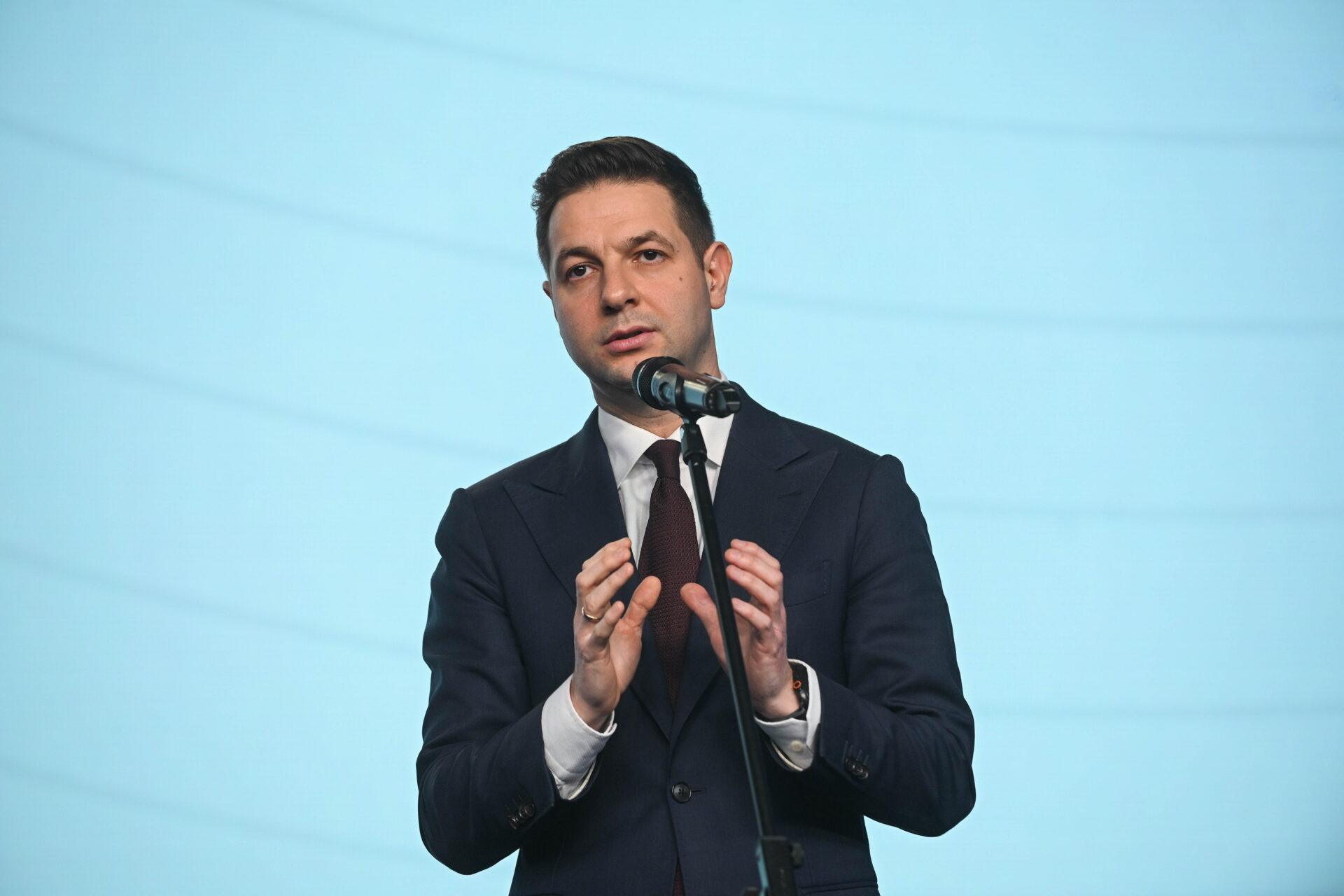
Patryk Jaki – an MEP and a PiS vice-chairman – also does not feature among the names in circulation. In the past he was one of the more prominent politicians of Sovereign Poland. Today he is seen as closer to the so-called “butter boys” faction, which competes with Mateusz Morawiecki’s camp, known within the party as the “boy scouts.”
The “butter boys” faction
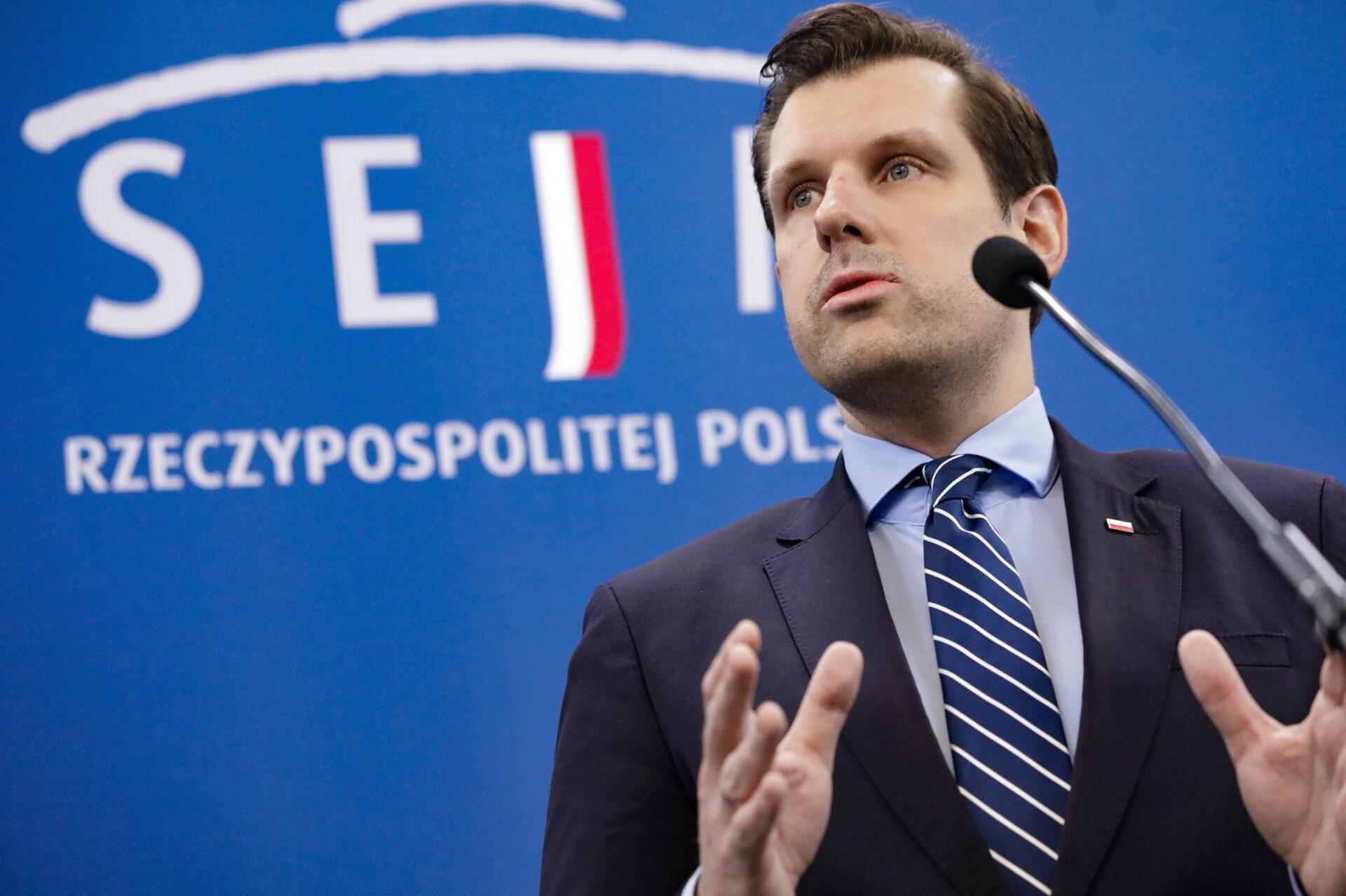
Several names associated with the so-called “butter boys” faction – linked to figures such as Jacek Sasin and Mariusz Błaszczak – have appeared in the speculation. One of them is Tobiasz Bocheński. For years he was a close associate of Zbigniew Rau, a PiS MP and former foreign minister.
Explainer
Butter boys
Butter boys (maślarze) are nicknamed after an incident on board a Polish LOT airlines plane when one of these politicians was served German-branded butter and loudly complained about it in the social media.
From 2019 to 2023 he served as the voivode of Łódź in central Poland, and in 2023 became the voivode of Mazovia in central Poland. A year after PiS lost power, he ran for mayor of Warsaw but lost to Rafał Trzaskowski. In the same year he won a seat in the European Parliament and joined PiS. After just a year in the party, he was appointed one of its vice-chairmen.
Mr. Bocheński gained experience as one of the youngest voivodes in Poland. He is relatively active in the media and tends to react calmly to political confrontation. However, the speed with which he has risen within the party works against him, as it has raised doubts among some party activists.
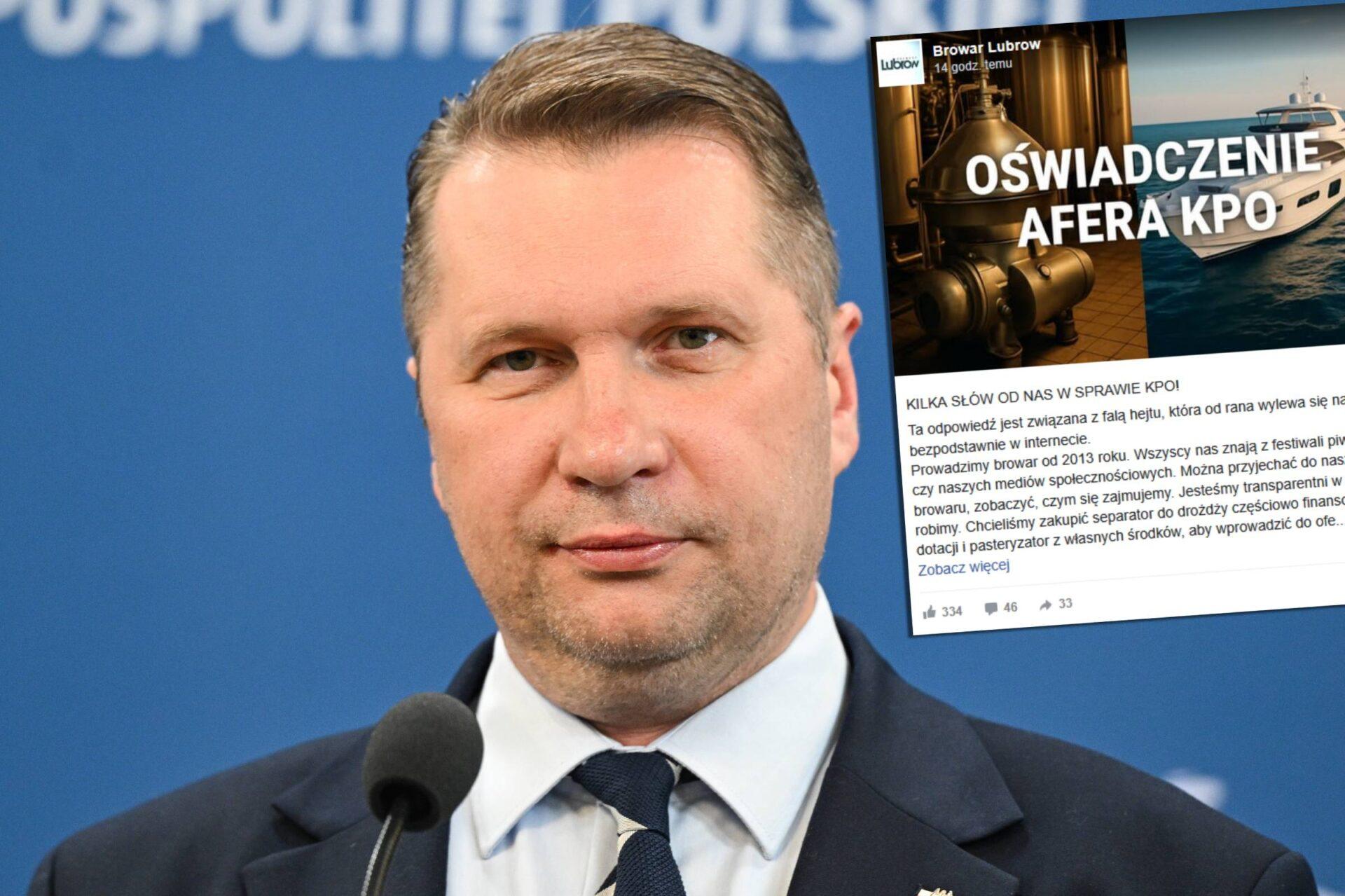
Another name from the same faction circulating in speculation is Przemysław Czarnek – the former minister of education and science, previously the voivode of Lublin in eastern Poland, and now also a PiS vice-chairman. His potential candidacy is said to face resistance from parts of the camp associated with Mateusz Morawiecki.
Mr. Czarnek enjoys considerable popularity among PiS activists and a segment of the party’s electorate. At the same time, he provokes strong negative reactions among voters and politicians from parties that currently make up the governing coalition. This stems both from his policies while heading the education and science ministry and from his confrontational style of public statements. For that reason, his candidacy could make it harder for PiS to compete for centrist voters.
Both Mr. Bocheński and Mr. Czarnek were mentioned in 2024 as potential PiS candidates for president. In the end, however, the party chose Karol Nawrocki, who went on to win the election.
Mr. Bocheński, Mr. Czarnek and Patryk Jaki have recently begun a joint tour across Poland. As part of a series of debates under the banner “Change Our Minds,” they have been meeting with university students.
A presidential aide
Among potential candidates from outside that faction, Zbigniew Bogucki is frequently mentioned. Since the start of Karol Nawrocki’s presidency, he has headed the Presidential Chancellery. Previously he served for two years as a PiS MP, held the post of voivode of West Pomerania, and worked as a lawyer.
Mr. Bogucki is among the more outspoken ministers in the president’s circle. He regularly clashes with Donald Tusk’s government and, on behalf of President Nawrocki, criticizes the cabinet’s actions from the parliamentary podium as well. The president himself, however, is said to be skeptical about Mr. Bogucki entering the race. He values their cooperation highly, and a nomination by Jarosław Kaczyński would mean turning Mr. Bogucki into the public face of PiS’s campaign. Under such circumstances, it would be difficult for him to continue running the Presidential Chancellery at the same time.
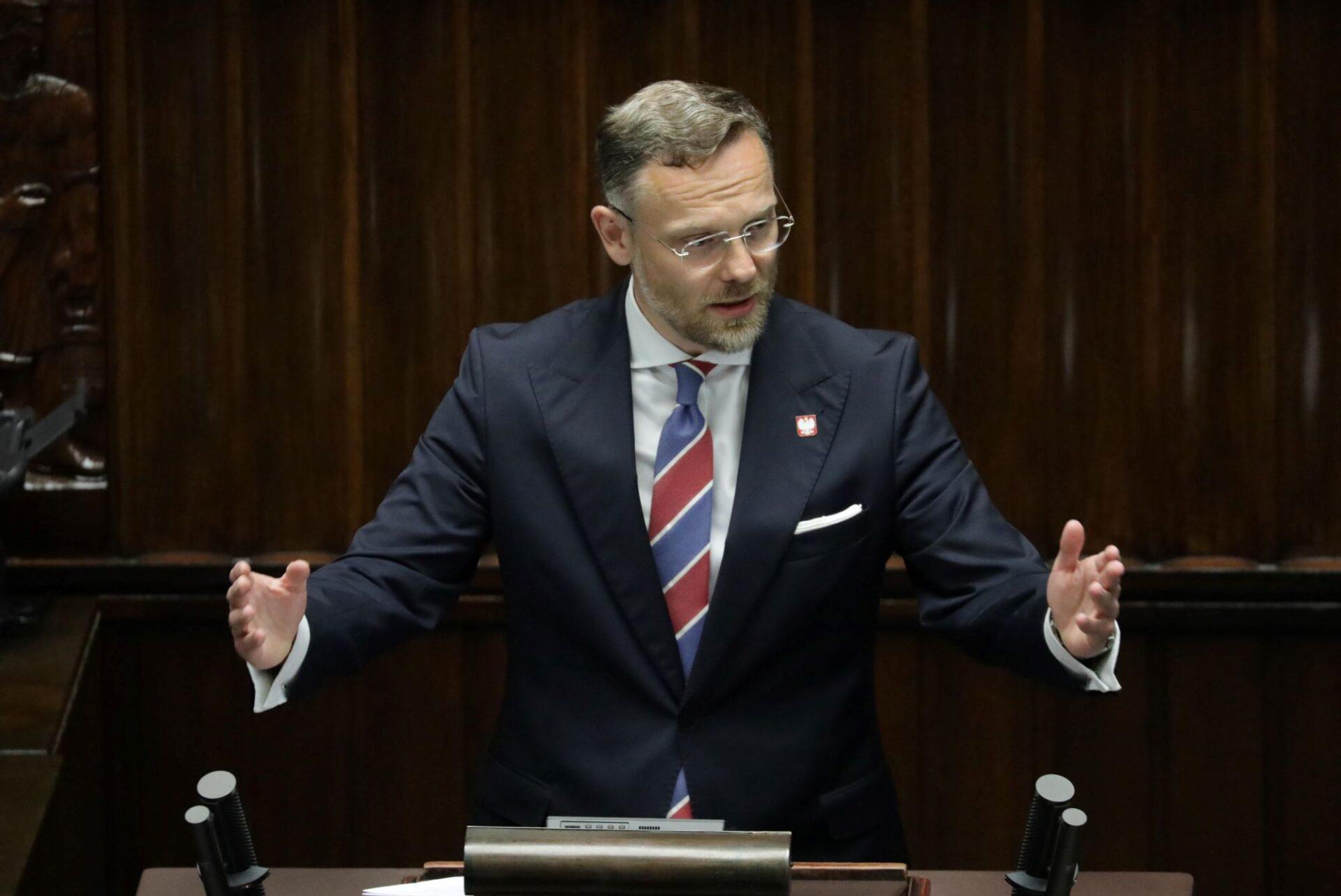
Like Tobiasz Bocheński and Przemysław Czarnek, Mr. Bogucki had previously been mentioned as a potential PiS candidate for president.
According to sources cited by the Polish Press Agency (PAP), another name circulating among possible PiS candidates is Anna Krupka – a PiS vice-chairwoman and former deputy minister of sport. She also leads the party’s regional structures in the Świętokrzyskie region in central Poland. It was in this region that Jarosław Kaczyński ran in the most recent parliamentary elections.
Of all the figures mentioned, however, her chances are considered the slimmest. Ms. Krupka is less widely recognized than the other potential candidates, and her standing within the party – despite good relations with the chairman – remains limited. In an interview with Wirtualna Polska portal, she herself admitted that she treats the PAP reports with some distance.
Young local-government leaders
In recent days, another scenario has increasingly gained traction: that PiS could nominate one of three local-government leaders associated with the party as its candidate for prime minister. The figures in question are mayors of smaller cities.
Such a choice would offer several political advantages. First, it would allow the party to place greater emphasis on non-provincial cities and more easily target voters in smaller urban centers. Second, it would mean putting forward new faces unburdened by years of disputes in national politics. Third, it could help reduce tensions between the party’s internal factions.
The name mentioned most often is that of Lucjusz Nadbereżny, 41, who has served as mayor of Stalowa Wola in south-eastern Poland since 2014. For years he has supported PiS in election campaigns, including by hosting campaign events with Jarosław Kaczyński. He is also not clearly aligned with any of the party’s factions, which in this context is seen as an advantage.
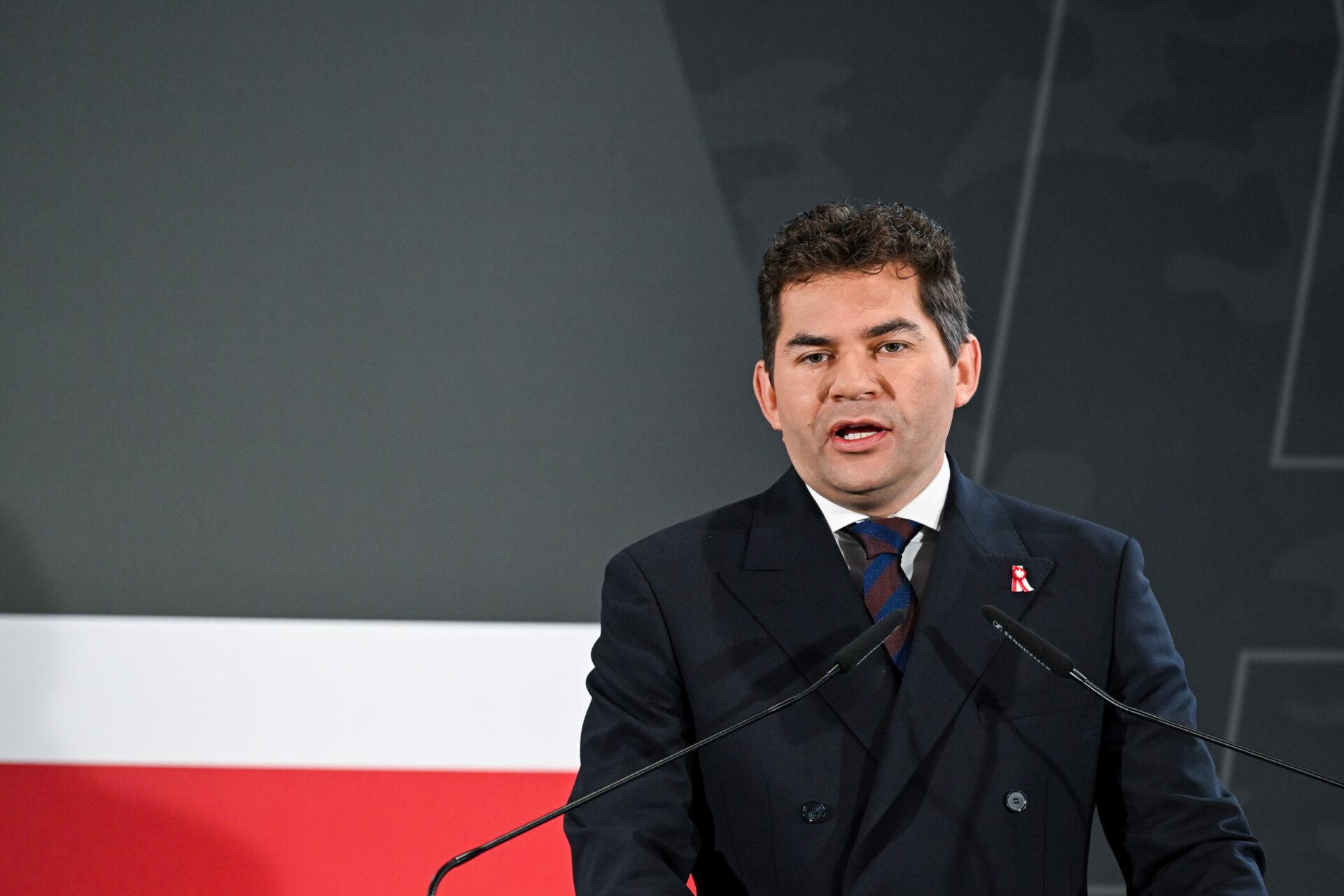
Mr. Nadbereżny previously cooperated with President Andrzej Duda. In recent days he was appointed chairman of the newly established Local Government Council attached to President Karol Nawrocki. It was in Stalowa Wola that PiS recently held a policy conference devoted to defense, during which the city’s mayor criticized the SAFE program.
City mayors advising President Nawrocki
Another potential candidate is Jakub Banaszek. Since 2018 he has served as mayor of Chełm in eastern Poland, taking office at the age of just 27. He is the son of PiS MP Anna Dąbrowska-Banaszek.
Both were previously associated with Jarosław Gowin’s Agreement party and later with Marcin Ociepa’s Od Nowa association. Mr. Banaszek himself also had a brief stint in the Young Democrats, the youth wing of the Civic Coalition (KO). During the PiS government he worked closely with Jarosław Gowin and Jadwiga Emilewicz. He currently serves as vice-president of the Association of Polish Cities. Since December he has also been a social adviser to President Karol Nawrocki and frequently represents him in nationwide radio broadcasts and television programs.
PiS presents Mr. Banaszek as an example of an effective local-government leader. In Chełm the city has introduced, among other things, free public transport and a municipal petrol station offering fuel at prices lower than those at commercial chain stations. During PiS’s time in government the city also received substantial grants from the state budget. Mr. Banaszek was also the initiator of the construction of the Volhynia Massacre Museum and the President Lech Kaczyński Center for Truth and Reconciliation.
The third local-government figure mentioned is Jarosław Margielski. The 39-year-old politician has been mayor of Otwock near Warsaw since 2018. In October 2022 he became the first local-government leader to respond to an appeal by state-assets minister Jacek Sasin for municipalities to become involved in coal distribution.
Since 2024 Mr. Margielski has no longer been a member of PiS. In the most recent local elections he ran from his own electoral committee. Like Mr. Banaszek, he has served since December as a social adviser to President Karol Nawrocki.
What’s next?
The day before Saturday’s convention, Mr. Mateusz Morawiecki announced his own event. The former prime minister is scheduled to present a report on economic strategy. The timing has not pleased politicians from rival factions within PiS.
Following the PiS chairman’s announcements, some party figures have unofficially suggested that the candidate revealed on Saturday (March 7) may not necessarily become prime minister, even if PiS wins next year’s elections. He could serve as the public face of the campaign, while after the vote Jarosław Kaczyński could appoint someone else as head of government. In this context, the example of Piotr Gliński is often cited: between 2012 and 2014 he was twice presented by PiS as a candidate for prime minister of a caretaker government.
PiS currently has no realistic chance of governing alone. In a CBOS poll published on February 28, the party received 18.3 percent support. This is not only PiS’s weakest result in surveys since the last parliamentary elections, but also lower than the combined support for Confederation (Konfederacja) and Confederation of the Polish Crown (Konfederacja Korony Polskiej). If PiS were to form a government after next year’s elections, it would be possible only in coalition – with a potential partner likely to have its own demands.
This also carries additional risk for the PiS candidate for prime minister. If the party fails to win or is unable to form a government, the candidate could become the face of electoral defeat and bear both political and reputational responsibility for the outcome.


Key Takeaways
- PiS currently faces a difficult polling situation. In a recent CBOS survey, Jarosław Kaczyński’s party recorded its lowest support since the last parliamentary elections. With these ratings and the current strength of right-wing competitors, PiS has no realistic chance of governing alone. A coalition partner may therefore be necessary, and the prime-ministerial candidate will also need to secure the approval of potential allies. If, however, PiS fails to win the elections, much of the responsibility for the outcome could fall on that candidate.
- Jarosław Kaczyński recently acknowledged that factional disputes within PiS concern the choice of a candidate for prime minister. The revelation that he has already made a decision has reignited emotions within the party. The name is set to be announced on Saturday (March 7) in Kraków – the same venue where Andrzej Duda and Karol Nawrocki launched their presidential campaigns. The selected politician is expected to serve as PiS’s electoral locomotive ahead of the 2027 parliamentary elections. At the same time, factional rivalry continues, and some party figures unofficially suggest that the candidate announced on Saturday may serve as the face of the campaign but not necessarily as the future prime minister.
- Names circulating within the party include Tobiasz Bocheński, Przemysław Czarnek, and Zbigniew Bogucki. In recent days, young city mayors have joined this group: Lucjusz Nadbereżny of Stalowa Wola, Jakub Banaszek of Chełm, and Jarosław Margielski of Otwock. Mr. Nadbereżny is currently considered the strongest contender. All three local-government leaders work closely with President Karol Nawrocki. Choosing one of them could help ease factional tensions within the party while also signaling to voters that PiS is promoting politicians from smaller urban centers.