Poland Unpacked week 11 (2-8 March 2026)
Welcome to this week’s edition of our Poland Unpacked, where we deliver key insights and trends shaping the economic, corporate and political landscape. Catch the most important insights from Poland in this week’s briefing.
This article is a part of Poland Unpacked. Weekly intelligence for decision-makers
On March 10–12, Carl XVI Gustaf, the King of Sweden, and Queen Silvia of Sweden will visit Poland accompanied by a government and business delegation. It is the most significant visit of its kind in 15 years and we have covered the Polish-Swedish ties extensively here.
The deepening of ties between the two countries reflects the war in Ukraine, Sweden’s accession to NATO, and the need to defend the Baltic states. Cooperation in the defense sector therefore comes as little surprise. Poland is purchasing, among other things, submarines from Sweden worth PLN 20bn (about EUR 4.6bn). A Polish shipyard, working with Saab, is building a signals-intelligence vessel. The Swedes, for their part, may buy a rescue vessel from Poland.
Among Swedish investors, IKEA and AstraZeneca dominate – but they are just two of roughly 700 Swedish-owned firms operating in Poland, employing 109,000 people. The balance is far from even: only 46 Polish companies operate in Sweden, employing 712 people.
There has also been a setback in foreign investment. Northvolt, once touted as Europe’s answer to Asian dominance in electric-vehicle batteries, went bankrupt, leaving two factories in Poland behind. One has been acquired by Scania, the Swedish truckmaker, and the other by Lyten, an American battery technology firm. The balance sheet still comes out positive: one Swedish investor has replaced another – and an American one has joined the mix.
Foreign investors present in Poland’s banking sector, meanwhile, can look forward to dividends from their Polish subsidiaries. In 2025 Polish banks earned PLN 48.7bn (about EUR 11.3bn) – the highest profit in their history. According to estimates by XYZ, they could distribute as much as PLN 25bn (about EUR 5.8bn) in dividends.
The biggest beneficiary will be the Polish state treasury, receiving PLN 2.61bn (about EUR 605m). Other major recipients include ING Group (PLN 2.61bn / about EUR 605m), Erste Group (PLN 2.46bn / about EUR 570m), Nationale‑Nederlanden’s pension fund (PLN 1.3bn / about EUR 301m), Allianz’s pension fund (PLN 1.18bn / about EUR 273m), Generali’s pension fund (PLN 700m / about EUR 162m), Banco Santander (PLN 490m / about EUR 113m), BNP Paribas (PLN 1.13bn / about EUR 262m) and Citigroup (PLN 917m / about EUR 212m).
The state treasury, however, earns less than one might assume from fines imposed by Office of Competition and Consumer Protection (UOKiK) on dishonest companies. Of PLN 3.6bn (about EUR 834m) in penalties imposed between 2021 and 2025, only PLN 909.4m (about EUR 211m) has actually made its way into the budget. Read how it works here.
Matters look even worse at the State Fire Service of Poland (PSP), which spent PLN 15m (about EUR 3.5m) on fire detectors that do not work. XYZ reported on the case and published recordings documenting that smoke and carbon-monoxide detectors distributed under a government program for civil protection and civil defense – 56,800 devices have so far been handed out free of charge – fail to react to smoke or fire. Who is to blame remains unclear.
Last week in Polish politics was dominated mainly by further disputes over the SAFE program, under which Poland would borrow EUR 45bn (around PLN 195bn) on preferential terms. The funds would be used to strengthen the Polish armed forces, primarily through purchases from domestic and European manufacturers.
A revised version of the bill - incorporating amendments proposed by the Senate, the upper chamber of parliament — has now reached the desk of the right-wing president, Karol Nawrocki. His party, Law and Justice (PiS), along with many of his close allies, has openly criticised the EU program. Mr. Nawrocki has until March 20 to decide whether to sign the bill. The president has stressed that he will make his decision free from external pressure. Some commentators interpret this as a signal of dissent from the dominant narrative on the right, which portrays Poland as becoming dependent on the European Commission. It remains unclear, however, what decision the president will ultimately take.
Last week Mr. Nawrocki also made an unexpected public appearance alongside Adam Glapiński, the governor of the National Bank of Poland (NBP). Mr. Glapiński is the only head of a major state institution still in office from the previous PiS governments, and his term extends beyond the tenure of Donald Tusk’s centrist coalition. Together, the president and the central bank governor proposed their own alternative, dubbed “SAFE 0%”, the details of which are discussed in the economic section of this newsletter. Politically, the move allowed the president to seize the narrative initiative from Prime Minister Tusk, who had called for the SAFE bill to be signed without delay.
Meanwhile, Deputy Prime Minister and Defence Minister Władysław Kosiniak-Kamysz of the centre-right Polish People's Party (PSL) suggested that the president’s proposal could serve as a useful complement to the EU’s SAFE funds. How the saga surrounding the programme — now effectively two programmes — will end remains to be seen. What is known for now is that on Tuesday President Nawrocki will meet with Prime Minister Tusk, Defence Minister Kosiniak-Kamysz and NBP governor Glapiński. The agenda, unsurprisingly, will focus on SAFE.
There have also been notable developments on Poland’s right. Law and Justice (PiS) has announced its candidate for prime minister ahead of the 2027 election: Przemysław Czarnek, a PiS MP and former minister of education and science. Mr. Czarnek is a well-known figure in Polish politics. Even before entering the cabinet he became notorious for offensive and controversial remarks about sexual minorities. As minister he also attempted to introduce legislation — known as “Lex Czarnek” — that would have reduced school autonomy. The bills never came into force: they were vetoed twice by the then president, Andrzej Duda, himself also a PiS figure.
The party’s leader, Jarosław Kaczyński, had signalled weeks earlier that the new prime-ministerial nominee would represent a fresh start for the party. Media outlets and commentators speculated (and we have covered these speculations here) that PiS might choose a lesser-known local government figure unburdened by the controversies of its years in power. Instead, the party opted for Mr. Czarnek. His strongly right-wing stance is expected to help PiS compete for the most conservative voters, many of whom have drifted to parties further to the right. At the same time, the decision represents a setback for former prime minister Mateusz Morawiecki, who had advocated a more centrist course.
Who will prove right? The election is still a year and a half away, but one thing is already clear: the battle for right-wing voters will be fiercer than ever.
Last week, the headline event was the joint press conference of President Karol Nawrocki and National Bank of Poland (NBP) Governor Adam Glapiński. They unveiled an alternative to the EU’s SAFE program, dubbed “SAFE 0%.”
Recall that SAFE (Security Action for Europe) is an EU financial instrument designed to provide member states with long-term loans for defense investments and procurement. Poland’s allocation under SAFE would amount to EUR 44 billion. Repayment would span 45 years, with the possibility of a 10-year grace period on principal. The European Commission would manage the loan, and its credibility means that, in most scenarios, the interest rate would be lower than if Poland borrowed independently, given the scale and currency risks involved.
To understand the context of the president’s proposal, it is worth examining the NBP’s reserves. In recent years, the share of gold in Poland’s central bank reserves has risen sharply: from 10% in July 2023 to 30% in January 2026. Two factors drove this increase. First, systematic purchases of gold by the NBP. Second, the rise in the price of gold itself. Against the dollar, gold has gained roughly 77% over the past year and about 180% over three years.
The press conference did not include details of the president and NBP governor’s proposal. The most likely scenario for how “SAFE 0%” would operate appears to involve selling the NBP’s gold holdings and simultaneously arranging to buy them back. In simple terms, this would convert unrealized paper gains into actual accounting profit, 95% of which would then be transferred to the state budget. We analyze the advantages and drawbacks of such a program here, comparing it with the original SAFE scheme.
On Wednesday, the Monetary Policy Council (RPP) – the NBP’s decision-making body on monetary policy – cut interest rates by 25 basis points. The reference rate now stands at 3.75%. The decisive factor was a new NBP inflation forecast. Expected inflation was sharply revised downward for this year, from 2.9% (November 2025 projection) to 2.3%. At the same time, projected GDP growth was raised by 0.2–0.3 percentage points, to 3.9% in 2026 and 2.9% in 2027. The decision was made amid geopolitical uncertainty following a U.S. and Israeli strike on Iran, which pushed up global oil and gas prices. Domestic factors, however – low inflation and slowing wage growth – prevailed.
Earlier in the week, Statistics Poland (GUS) released GDP data for Q4 2025. The economy grew 4%, up from 3.8% in the previous quarter. Full-year GDP growth reached 3.6% in 2025. Private consumption remained the largest contributor to Q4 growth. Public consumption also played a significant role, reflected in Poland’s high budget deficit of around 6–7%. Investment, however, remained flat throughout 2025, at 17.03% of GDP – virtually unchanged from 17.04% in 2024.
In structural terms, Poland’s productivity per hour worked lags behind most EU countries. GDP per hour is just 69% of the EU average, placing the country fifth from the bottom. By contrast, GDP per capita reached 81% of the EU average in 2025. The gap largely reflects longer working hours in Poland: 1,990 hours per year versus 1,610 in the EU.
The European tech industry has been abuzz with the Mobile World Congress in Barcelona, and our editorial team was on the ground. We examined which companies represented Poland’s tech sector at one of the world’s most important telecommunications events, as well as how the Polish public sector sought to showcase domestic innovations such as the PLLuM language model and the mObywatel app, which translates as mCitizen and is basically a one-stop smartphone portal for life and interaction with administrative matters in Poland.
Polish companies were also active on the investment front. Startup Metashift Labs announced the closing of a pre-seed round totaling nearly PLN 1 million (EUR 210,000). The funds will be used to develop a next-generation RPG. Among the investors are a group of Polish business angels.
Even larger sums were raised by Mimira. The Polish startup is developing a platform designed to automate the entire public procurement process and lower the entry barrier to a market worth more than EUR 2 trillion annually across Europe. In Poland, public administration spends over PLN 330 billion (EUR 70 billion) on procurement, yet the company’s representatives estimate that 80–90% of firms do not participate in tenders due to complex procedures and the risk of formal errors. The startup promises to remove this obstacle by offering comprehensive support – from identifying tenders to submitting complete bids – combining AI-powered automation with expert guidance. Mimira has just secured substantial funding from the UK fund Elder Gull and a Polish entrepreneur active in the contracting sector, with international expansion firmly in its sights.
Meanwhile, discussions in Poland are increasingly focused on the impact of artificial intelligence on programming jobs. For years, Polish talent has flowed in large numbers to U.S. tech companies, working on some of the most high-profile projects. At the same time, the IT sector remains one of the country’s economic cornerstones. So what is happening in the Polish labor market? Data from Just Join IT show that AI and machine learning specialists are seeing record salary increases – up to 15% year-on-year. Demand for AI-related skills is enormous: in 2025, the number of job postings in the AI category quadrupled. AI, it seems, is simultaneously taking some jobs while boosting salaries for others.
If you’re in Warsaw and looking for something that feels both cultural and cinematic, treat yourself to Leonardo da Vinci versus Michelangelo. This immersive exhibition uses large‑scale 2D and 3D projections, interactive installations, and a 360° VR experience across roughly 800 sq.m. of space to stage a vivid “duel” between two Renaissance titans who shaped how we think about art and humanity.

The narrative lets you walk through their contrasting visions, soak up the historical context, and then make your own symbolic choice between them at the end. It works especially well for anyone drawn to art history, cutting‑edge visual storytelling, or simply a stimulating evening out that feels more like a show than a museum visit.
Where: Warsaw, Fabryka Norblina, ul. Żelazna 51/53
https://fabrykanorblina.pl/en/a-duel-of-two-renaissance-geniuses-a-new-immersive-exhibition-at-art-box-experience/
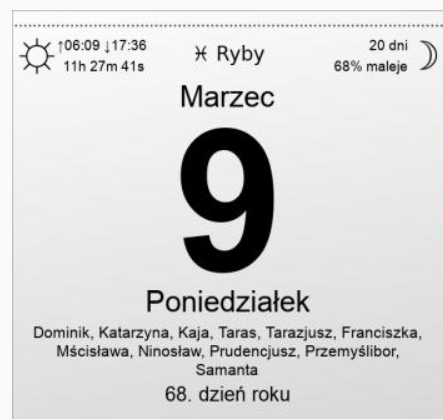
In Poland, name days – or imieniny – are like birthdays. You just need to remember that it’s always someone’s name day around you. Offices suddenly turn into cake committees, phone alarms buzz with “remember to text Kasia,” and radio hosts inform you which day of the year is it and whose imieniny to celebrate.
Failing to acknowledge a name day is a social sin. Only slightly below forgetting a birthday, but with more pressure to bring a cake.