

This article is a part of Poland Unpacked. Weekly intelligence for decision-makers
We paid the price for being the first on the market to introduce dog insurance. Today the product is already profitable and sales are growing by 30 percent. We are now starting to sell it through cooperative banks as well, reveals Roger Hodgkiss, CEO of Generali Polska. We talk about an irrational price war, losing 40 percent of policies in order to protect the profitability of the portfolio, about people whom AI will not replace, and about the insurance sector’s lag behind banks.
Piotr Sobolewski, XYZ: It has been a year since Generali began implementing its strategy, whose name – like the previous one – starts with the phrase “Lifetime Partner.” I understand why an insurer would want to be my lifetime partner. But I am not sure why I, as a consumer, should want that. After all, I can easily buy a product from any insurer.
Roger Hodgkiss, CEO of Generali Polska: Because with deeper knowledge about the client, we can find policies that are better tailored to their needs and ensure coverage for their key risks. We can also offer appropriate discounts and price reductions that result from a better understanding of their risk profile. But that is probably the kind of answer you would hear from other insurers as well.
Yes, that is why I am asking.
There is no single magic answer. The entire industry is working to better understand customers and their needs, and on that basis to offer, for example, an easier process for policy renewal, claims handling, and purchasing new products.
Generali Polska, as one of the few companies in the market, offers a broad range of solutions: property, life, health, investment, and pension insurance. These are products for customers at every stage of life – from school students all the way to later life. As a result, we can accompany clients throughout their lives, supporting them at each stage.
Who's who
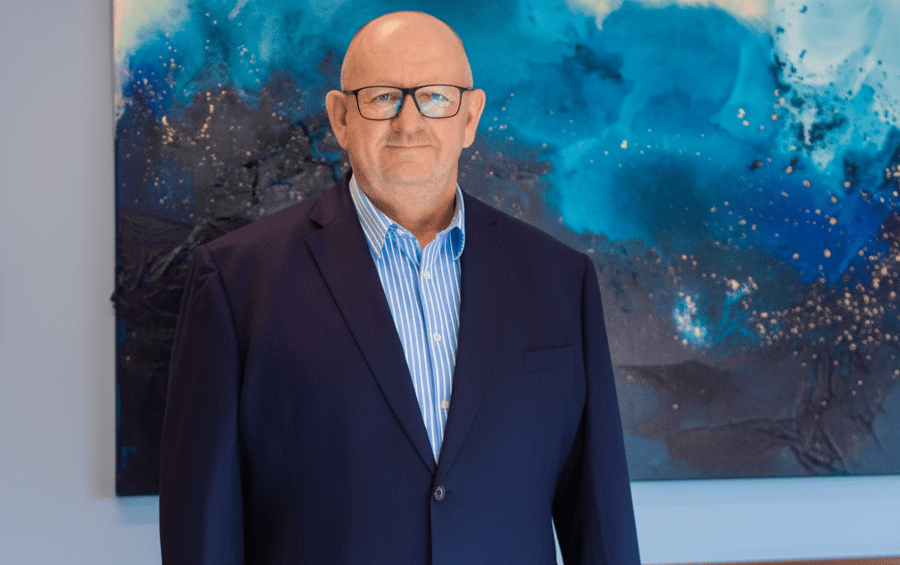
Roger Hodgkiss
Since November 2020 he has led Generali’s business in Poland, overseeing both the life and non-life companies. Earlier, for three and a half years, he served as a member of the management board of PZU responsible for the property and casualty segment. Since 2009 he also headed Link4, a company specializing in the direct sale of motor insurance.
He began his professional career in the United Kingdom, where he worked, among other roles, as an auditor at the consulting firm Deloitte.
Generali aims to offer comprehensive online service
And do you know your customers better than if they simply walked in off the street?
Today we are not yet where we would like to be. But we are working to change that.
We are developing our CRM system – customer relationship management – to better understand our clients. We are also working on an integrated customer account, My Generali. We want clients not only to see all their products in one place but also to manage them fully and handle claims there. This is a big step for us. Thanks to this platform, we will be able to maintain closer contact with customers, protect them better, support them and educate them.
What stage is the project at now?
At the moment, customers using My Generali can see both their property and life insurance policies. They can check the scope of coverage, the insured sum, the policy period, and download their policy documentation. They can also report a claim and monitor its status. In the next phases of development, they will be able to pay for policies and, for example, view the history of their instructions. By the end of the year we plan to launch full online servicing of pension and investment products on the platform (OFE, DFE, IKE and IKZE).
Is this a group-level solution or a local one?
We are developing it as part of the group’s Mobile Web Hub platform. We are among the first countries to use it. Poles are keen users of digital solutions, so we want to provide the missing value. In total, we are talking about 2.7 million clients across our life and non-life businesses.
Not emotional bonds, but the number of customer interactions
Do you really believe customers will log in to this platform regularly?
Encouraging them to do so is a major challenge. We may feel the need to log in to our bank several times a day, but with an insurer we often interact once a year – unless we file a claim. It is easy to forget your password in that situation. We are well aware of how it works.
At Generali, we want to take advantage of the fact that we offer a broad range of products, which gives customers a reason to log in more often. We can show them which additional risks they could insure with us. The more interactions there are, the more satisfied the customer ultimately becomes – and the policy renewal rate is higher. I am not going to say we want to build an emotional bond with the customer. That is probably what the marketing people would tell you. In my view, what matters are interactions and customer satisfaction.
You have already tried to increase loyalty with the Generali Vitality program, which promoted a healthy lifestyle. It seems it did not work out, since the program is no longer in place.
Everyone tries different things. Unfortunately, Generali Vitality did not turn out to be a major success. Still, I believe that giving customers access to information about all their products – and to our offer, which they can use easily – will encourage them to interact with us more often.
The new platform will not threaten agents, but support them
Won’t agents push back against stronger competition from online sales? If I can see the risks on the platform and buy a policy there, why would I go to an agent?
My Generali is a service platform for customers. Ultimately, we want to add the agent’s details there as well. From the platform, the client will be able to move to their agent’s e-Shop page – provided the agent has one. We certainly do not want a conflict between sales channels. The e-Shop I mentioned already allows agents to create personalized online stores offering Generali policies. Customers also enter a special agent code when they purchase through the website. So the agent’s commission is still taken into account.
Do many agents build these online stores?
At the moment, 6,500 intermediaries are already using the e-Shop. In terms of gross written premium, we are seeing quite solid growth dynamics and clear interest from our partners in this new sales channel. So it will certainly continue to develop. At the same time, I want to stress that we will keep supporting our agents in other areas as well – for example through partner branches, of which we already have 500.
Generali is not racing PZU in bank distribution
Let us move to another sales channel – banks. Bogdan Benczak, CEO of PZU, recently told XYZ that he sees strong potential to sell more policies through bancassurance not only in Pekao and Alior, but across all nine banks that PZU works with. Generali seems to lag somewhat in this channel.
For us it is a more complicated matter. It is easier for the CEO of PZU to talk about bancassurance when the group itself owns two banks. We operate at a different level. We cooperate with BNP Paribas, Credit Agricole, Citi and Santander on various products. In the first two banks, our cooperation focuses mainly on agricultural products. We are in discussions to expand our presence in the sector.
Our cooperation with cooperative banks is very important for us. At present, we have exclusive partnerships with more than 50 percent of the sector. That means our agricultural, property and life insurance products are available in those banks – both as protection linked to certain loans and as standalone products. Employees of these banks know their clients well, understand their needs and can advise them on which risks are worth insuring. For us, this is also a good opportunity to reach small and medium-sized enterprises more often.
What share of Generali’s premiums currently comes through banks?
It is close to 10 percent. But in bancassurance we are the market leader in agricultural insurance.
Is there still room to deepen cooperation with cooperative banks?
We see that banks which already offer, for example, agricultural insurance are interested in expanding their insurance offering. We also see potential to bring additional banks on board as our partners. We now plan to offer cooperative banks the possibility of selling dog insurance as well. We also provide banks with tools to sell insurance – many of them already have the e-Shop I mentioned, which allows them to offer policies to clients online.
Direct? At Generali it accounts for only 6 percent of non-life sales
What about sales through the Bezpieczny.pl website or the 4Life Direct call center, which specializes in life insurance? Will the direct channel grow dynamically?
I came to Poland 18 years ago to run Link4. At the time, I assumed the market would quickly move toward the direct channel. Today, that channel accounts for less than 10 percent of total market sales, and at Generali it represents just 6 percent of non-life insurance sales. For various reasons, some markets simply do not shift toward this channel. In Poland, customers are happy to check insurance online and calculate the price, but they complete the purchase offline.
PZU and Warta are also investing in direct. Will we see stronger competition for customers in this channel?
We see significant potential in online customer service. Our clients already handle many of their matters online, and our competitors are observing the same trend. Overall, as an industry, we are somewhat behind other sectors – banking, for example – when it comes to digital development.
Integrating group companies is mainly about formality and savings
At the same time, you are integrating the direct companies 4Life Direct and Bezpieczny.pl. Will this affect the way you sell insurance?
It is primarily a formal integration. We no longer need to maintain separate companies. However, both brands will remain on the market. The brand, the people and the technology will stay. What will no longer be necessary is having two separate management boards and supervisory boards.
What kind of savings will this move generate?
Operating in the financial sector involves many obligations, including legal and formal requirements – even for smaller entities. We also have our own group-level regulations. Now we will be able to implement them within a single entity rather than across three. The goal is to simplify and streamline the management of our operations in Poland. Both the Bezpieczny.pl team and the 4Life Direct team will remain unchanged. The formal change will take place at the end of April.
Insurers are expanding their offerings with additional coverage
Let us turn to the product offering. Across the industry there is strong interest in building out core policies with additional riders. Is Generali moving in the same direction?
Indeed, everyone is focusing on ensuring that clients add more of these supplementary covers. This provides a higher premium and better profitability, but it also gives customers better protection. In 2025 we expanded our individual life insurance offering to include the possibility of treatment abroad in cases of serious illness.
And people are buying it?
Twenty-seven percent of life policies concluded since June 2025 – when we introduced treatment abroad – now include either the oncology package or the treatment-abroad option. In other words, one in four clients applies for this type of coverage.
This is particularly important in the context of an aging population, challenges within the healthcare system and the high incidence of diseases such as cancer. Almost everyone has had the experience of someone in their circle developing cancer. That is why we give our clients the option of adding insurance that, in the event of a serious illness, allows them to obtain a second medical opinion from international experts and to receive treatment abroad at a specialist center focused on that condition.
Generali sees strong demand for pet insurance
Are you introducing this in group policies as well?
We are focusing on adding this product to individual insurance, not group plans. The latter is a challenging market in terms of profitability, because it is marked by a price war driven by the largest players seeking to scale up. Beyond health, we want to complement individual policies with assistance offerings.
In other lines, we aim to maintain our position in agricultural insurance, particularly crop coverage. Here we hold nearly a 40 percent market share. We also insure horses, and for the past three years we have offered dog insurance. We are considering offering cat insurance as well.
Aren’t these quite niche products?
Today, a dog is an important member of the family for its owner. We see strong demand for this product. Conversations about a dog and the fact that the client loves their pet also give agents a chance to discuss other needs.
People are willing to pay a higher premium for dog insurance than for their home. This is interesting because, for example, in Italy dog insurance is sold as a rider to home insurance. In Poland, we sell it as a standalone product.
The insurer paid the price for breaking new ground in the market
There is also the risk of adverse selection – where mainly owners of sick pets, with higher claims risk, buy such a policy, isn’t there?
At the beginning, that was indeed a problem, but over time we learned and began collecting more information. We paid the price for being first on the market and for building knowledge and statistical data. Today, dog insurance is already profitable.
In 2025 we sold 30 percent more of these policies than the year before. This year we expect further dynamic growth, especially as we expand our distribution network. We will sell dog insurance across the entire agency network and, as I mentioned, through cooperative banks.
Which products are now the most important for increasing premiums?
Essentially all of them. We are focusing primarily on non-motor insurance, because that segment is exceptionally challenging. The price war is still ongoing. The market behaves completely irrationally – there will always be someone who wants at all costs to increase market share or become the largest player.
In Motor Third Party Liability (MTPL), scale matters – Generali struggles to compete with PZU
Some players claim they offer low prices because they have the best underwriting process in the market.
Over the years, I’ve learned that even the best underwriting technology can reduce the loss ratio by 2–3 percentage points. But it cannot suddenly improve it by 20 points. I remember when we acquired Proama and were told they had the best methodology. They claimed this allowed them to offer policies 20 percent cheaper. That is nonsense.
Today, the largest players also benefit from their scale and wider sales networks. The three biggest insurers account for two-thirds of the MTPL (OC) market in Poland. The rest of the market cannot leverage scale to the same extent, which makes it harder for us to be equally competitive and profitable in this segment. I do not want to comment on competitors’ actions. I can only say that at Generali we have small – but still positive -technical profits in MTPL insurance.
In recent years, for this reason, we reduced the number of these policies by around 40 percent, prioritizing profitability in this segment. Last year marked our return to the market and an attempt to rebuild lost market share – though still not at the expense of profitability. Our goal is profitable growth. That is how shareholders hold me accountable.
As people get wealthier, they buy more insurance
How can you promote other types of insurance so that the portfolio gradually approaches MTPL, which everyone must have because it is mandatory? Is this primarily a matter of low awareness or low income? Paweł Kacprzyk, CEO of NN, recently told XYZ it’s mainly the latter.
I think it’s both. There are significant differences in wealth between regions, as well as between large cities and smaller towns. I see the challenges faced by entire social groups for whom life, health, or even home insurance is often not critical.
Many people in Poland rely on group insurance because individual coverage is still relatively expensive compared with their income. On the other hand, Poland is changing. People are becoming wealthier, which we see in record inflows into investment funds and in rising sales of non-mandatory insurance.
So, as a country, we just need time?
I think we do need time. As personal wealth grows and assets accumulate, the need to insure that wealth emerges – and over time, the need for life insurance as well, alongside the financial means to pay the premiums.
Education from the entire market plays an important role, but so does personal experience. We observe that after a house fire, neighbors in the area start showing interest in policies, and a serious illness affecting someone close encourages preventive health checks as well as seeking the right insurance coverage.
AI is a bubble – what really matters is automation and robotics
We started with strategy, and we could stop there. The second part of the strategy’s name talks about driving excellence. Does that include efficiency supported by automation and artificial intelligence?
Everyone is talking about it, that’s for sure. We can certainly use artificial intelligence to enhance the customer journey and gather more information about clients. But today, AI is a bit of a bubble. I would rather talk broadly about technology and automation – for example, in our processes we use 72 robots that allow us to serve customers automatically.
What exactly do they do?
Robotics takes over a whole range of repetitive tasks that previously engaged employees and slowed processes down. The robots handle routine data processing, support registration of claims, communication in service processes, and administrative tasks that can be fully automated.
This relieves our teams from the most time-consuming activities, speeds up the flow of information, and ensures greater operational predictability. In turn, this allows our employees to focus on what truly creates value.
Robots from Poland will complement Generali platforms abroad
Do you plan to deploy more robots this year?
In implementing the group strategy, this year we are focusing on moving our robots onto a unified platform shared across the entire group. This will allow us to fully leverage solutions and experiences developed in other Generali countries. We will consider new automations after completing this process – when they can genuinely support our goals and operational efficiency. Right now, the key is to build a shared, group-level foundation for further development.
You haven’t mentioned AI-powered chatbots.
Banks and airlines use many chatbots, but I don’t like them. Maybe I’m a dinosaur, but I want to speak with a human being. I am not alone in this – there is a group of clients who will always prefer personal contact. That is why, as an industry, we must be very cautious and avoid losing these unique customer relationships.
I see more potential for AI in data collection, analysis, and process automation.
Insurance sales will always require a human
So a person selling policies will always be needed?
I believe so. We invest in people, and they have strong ties to local communities. Automation will help serve customers faster, and AI will support agents.
Two decades ago, banks said something similar – and now, apart from mortgages (which are increasingly digital anyway), most retail lending products are sold digitally. Won’t insurance go the same way?
In the UK, when I want to talk about my money, I go to a branch of the bank I am a client of. I want personal contact, to speak with a human being, not a robot. I know younger generations are different – they have everything on their phones.
Still, I believe insurance sales must be based on client interaction, because for many people insurance products still seem complex, and customer needs are very diverse. When you sell policies only online, the renewal rate is about 30 percent. But when you engage with the client directly, that rate jumps to 80 percent. That is a huge difference.


Key Takeaways
- Premium growth will come mainly from non-motor policies and supplementary products. MTPL (OC) segment remains in a price war, and strong competition persists in group life insurance. As a result, Generali focuses on individual life, health, and niche products, such as pet insurance. At the same time, the company is expanding add-ons – like treatment abroad – which increase both premiums and profitability.
- Generali focuses on customer relationships driven by frequent interactions, not marketing “bonds.” The cornerstone project is the My Generali platform, designed to consolidate all of a client’s products and increase engagement with the insurer. The company expects that more frequent logins will translate into higher sales of additional policies and improved renewal rates.
- Insurance sales in Poland remain dependent on people and traditional channels. Despite technological advances, direct sales account for less than 10 percent of the market – and only 6 percent of Generali’s non-life business. While clients often check offers online, they complete purchases offline through agents or banks. Generali envisions coexistence of digital channels with the agency network, with AI primarily supporting processes and data analysis rather than replacing advisors.