

This article is a part of Poland Unpacked. Weekly intelligence for decision-makers
In the United States, student-run investment funds manage hundreds of millions of dollars. In the United Kingdom, there are around thirty such funds. For years, Poland had none. That is now changing: students in Wrocław, having navigated legal hurdles and raised several tens of thousands of zlotys, are beginning to invest on real markets.
The idea is not new. The first Student Managed Investment Fund (SMIF) was established in 1946 at Lafayette College in Pennsylvania. American students started their investment journey with just USD 3,000. Today, the United States has over six hundred SMIFs, with the twenty-five largest managing assets totaling more than USD 460 million. Record holders are students at the University of Dayton, who, by the end of 2024, were trading USD 75.5 million.
In Europe, student-run investment funds are far less common. The largest number – roughly thirty – operate in the United Kingdom. Individual SMIFs also exist in Ireland, Spain, Belgium, Denmark, Sweden, and Italy, as well as in Lithuania and Latvia.
The size of assets under management, the organizational structures, and investment strategies vary widely, but all share the same goal: preparing students for professional careers. This same vision inspired students at Wrocław University of Economics and Business (UEW) when they decided to create their own investment fund.
“No one believed it would work”
It all began in early 2024, when members of the Hossa ProCapital Capital Markets Student Club first encountered the idea of a student-managed investment fund. Hearing that such an organization existed at the University of Notre Dame, they initially planned a trip to Paris to learn from their French counterparts. They soon discovered, however, that despite the French-sounding name, the university was not in Paris but in Indiana, USA. The trip was quickly abandoned – but it did not discourage them.
“At that point, no one believed it could succeed. Former club members told us they had already considered it and concluded it was impossible: you need to build a team, draft statutes, develop an investment policy…” recalls Bartosz Kocjan, the fund’s co-founder and originator of the idea.
Despite their seniors’ doubts, work on the fund began in the autumn of 2024. It was named after the student club – Hossa ProCapital. After gathering a group of interested students and organizing a series of training sessions, they started investing virtual money in January 2025. Both the development of the investment policy and the valuation process were supported by university professors. These faculty members serve on the fund’s Audit Committee and Scientific Council, act as club mentors, and advise students on complex decisions.
The fund’s team also established ongoing contacts with similar student initiatives in Vilnius and Tallinn. This time, the planned visits went ahead. As they recount, they learned a great deal from their Lithuanian and Estonian peers – and in turn shared valuable insights with them.
An investing fund, not an investment fund
In April 2025, the fund’s members established the Hossa ProCapital Association with the goal of eventually working with real money. But before they could achieve this, a significant obstacle arose.
“We were using the name ‘Investment Fund,’ not realizing it is a legally protected term. Then the Polish Financial Supervision Authority (KNF) reached out with a friendly reminder: they support our initiative, but we cannot call ourselves that,” explains the fund’s co-founder.
To avoid legal consequences, the students renamed the organization “Hossa ProCapital Fund” and added a disclaimer to their website stating that, under Polish law, they are not an investment fund but a student-run fund investing in capital markets. As they proudly note, they are the first of their kind in Poland.
Expert's perspective
Who can use the name “Investment Fund”?
Under the law, an investment fund can only be created by an investment fund company, which manages and represents it. Its establishment requires completing numerous actions, all precisely specified in the Act. The scope of these requirements varies depending on the type of fund being created. In every case, however, setting up an investment fund requires registration with the court register maintained by the District Court in Warsaw.
The term “investment fund,” its abbreviation, and the abbreviations “FIO” (open-end investment fund), “SFIO” (specialized open-end investment fund), and “FIZ” (closed-end investment fund) may only be used by investment funds established in accordance with the law.


A partial success
“Our idea is to seek undervalued companies listed on the Polish stock exchange. We invest based on value, aiming for a portfolio of companies whose intrinsic value clearly exceeds their market price,” explains Kacper Bok, a member of the investment committee and a broker for over a year.
Throughout 2025, the students practiced investing with a virtual portfolio worth PLN 100,000 (EUR 24,000). They focused on companies in the mWIG40 and sWIG80 indices. By the end of the year, their virtual holdings included shares in Benefit Systems (+24%), Answear (+28.5%), but also Text (–32%) and Wittchen (–21%). All investment decisions were based on their own valuations. Over the course of 2025, they published ten valuations, each taking three months of work by a small team.
The results, however, left room for improvement. After a promising start, the portfolio’s return quickly diverged from the benchmark. By year-end, it had fallen to –0.89%, compared with a 30% benchmark. Why?
“The simple answer is: a few weak companies. But the real issue was our risk management policy, which allowed us to deviate so far from the benchmark. Now, investing with real money, we will build a safer portfolio,” assures Bartosz Kocjan.
Among the fund’s members, there is a shared sense that 2025 was fruitful, teaching humility and providing valuable experience. Under the new risk management model, students plan to allocate 30% of their funds to bonds, investing “only” the remaining 70% in equities.
The fundraising effort launched by the fund over the summer was also a partial success. The goal was to reach PLN 100,000 (EUR 24,000), enabling real-money investing in 2026. After more than six months, they had collected just under PLN 45,000. Support came from individual donors and the National Depository for Securities (Krajowy Depozyt Papierów Wartościowych), which became the fund’s first partner. The students expect the total raised to grow significantly in the near future.
To the stock market with funds from Warsaw Stoch Exchange (GPW), Beta ETF, BNY, and Trade Republic
At the end of 2025, the fund signed a donation agreement with the GPW Foundation. In January, Beta ETF became the next donor, followed in February by Trade Republic – which also became a partner of the student club – and BNY. The grant from Trade Republic is the largest, totaling several tens of thousands of zlotys. Altogether, the four donations will allow the students to surpass PLN 80,000, with additional funds still on the way.
“This is a huge motivation for us, because it’s not just financial support – it’s also substantive. It gives us the sense that what we are doing makes sense,” says Bartosz Kocjan.
On Wednesday, March 4, the Hossa ProCapital Association received confirmation from the brokerage house that their submitted documentation had been approved and their account opened. Thanks to this, on Monday, March 9, the Wrocław students can begin investing the funds they have raised. As they emphasize, the brokerage house is only an investment platform; all decisions will continue to be made based on their own valuations.
Next goals: Consolidation, PLN 100,000, and strategic partnerships
“Our short-term goal is to raise PLN 100,000, and in the long term, to train future analysts,” says Kacper Bok, outlining the fund’s plans.
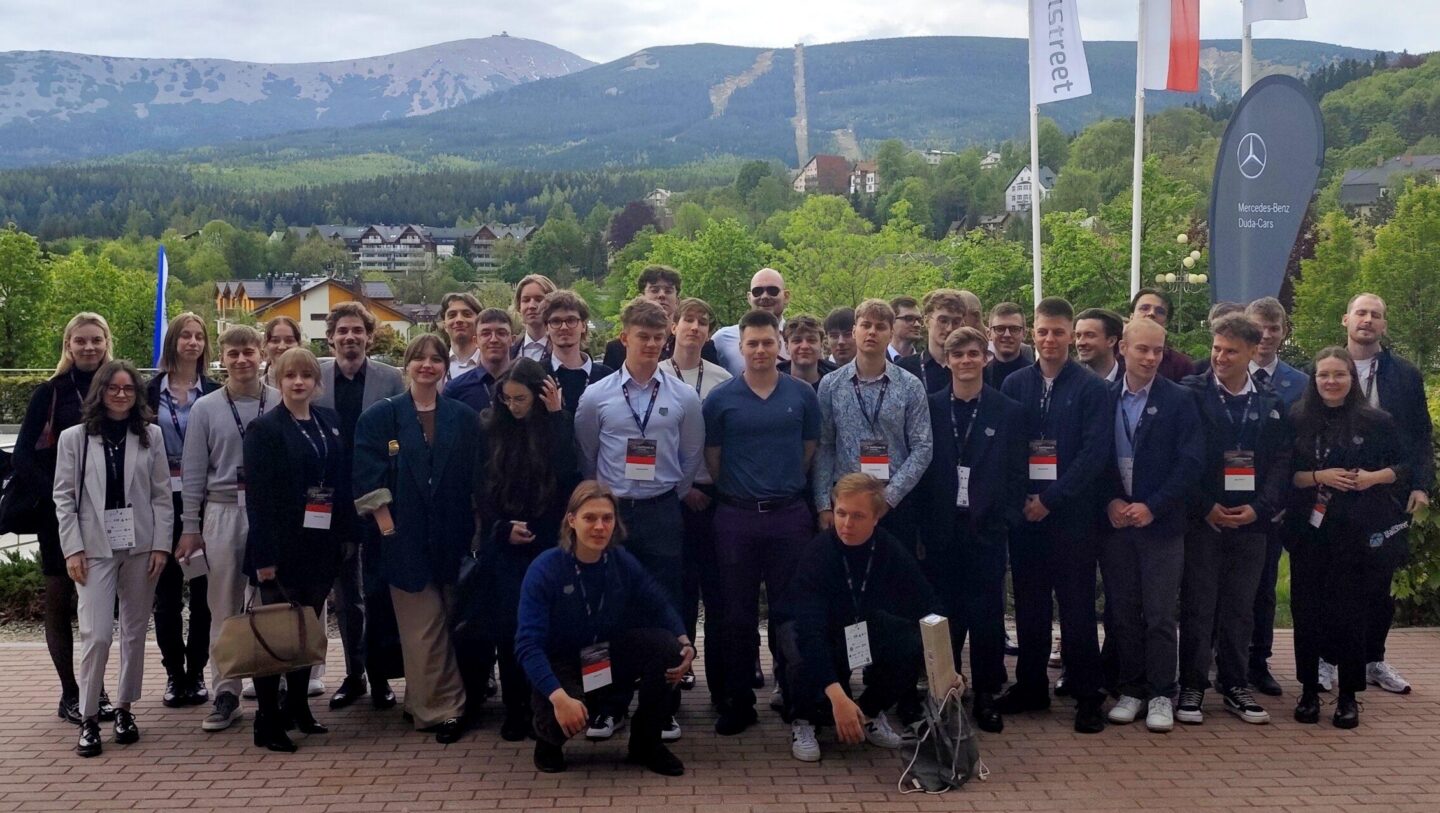
Currently, around 50 students are actively involved in the fund, including 15 analysts and 15 junior analysts. Their training is intended to lay the foundation for consolidating the project and ensuring its continuity.
In the coming months, the students also plan to establish contacts with funds in Madrid, Copenhagen, and Stockholm. The Game Forum – a conference in the United States this March, attracting investment-minded students from around the world – could help facilitate these connections.
The fund is also seeking further partnerships to support its growth.
“We are looking for a partner – a brokerage house or investment fund company – that would sponsor us and provide support not only financially but also in developing our careers, offering internships and potentially future employment opportunities for our analysts. We see this as a win-win collaboration and are already in discussions,” announces Bartosz Kocjan.


Key Takeaways
- In early March 2026, the students completed the formalities required to invest real money on the stock market. Their current goals are to achieve a respectable return, consolidate the project, and establish new partnerships.
- The Hossa ProCapital Fund is not an investment fund. Students from Wrocław in south-western Poland invest through an association, drawing inspiration from the Student Managed Investment Funds popular in the United States and the United Kingdom, which collectively manage hundreds of millions of dollars.
- In 2025, while practicing with virtual money, the students recorded a negative return against a 30% benchmark. At the same time, they raised just under PLN 45,000 (EUR 9,500) of their planned PLN 100,000 (EUR 24,000). By early 2026, donations from GPW, Beta ETF, BNY, and Trade Republic brought the total to PLN 80,000 (EUR 17,000).