

This article is a part of Poland Unpacked. Weekly intelligence for decision-makers
Katarzyna Mokrzycka, XYZ: “We switched the entire company to this tool, and people are competing to present new use cases.” With that single sentence, the well-known entrepreneur Rafał Brzoska stirred up a huge debate. The “tool” in question is the AI agent ClaudeCode.
Just a few days earlier, the owner of Anthropic, the company behind Claude, said he believes artificial intelligence will eliminate 50 percent of lawyers, finance specialists and various consultants within 12 months. On the same day, the founder of the technology platform Block laid off 4,000 employees with a single online post. Late last year, Amazon announced it would cut 30,000 jobs. All of these workers are expected to be replaced by AI solutions.
Has the process we were warned about for the past several years suddenly accelerated?
Piotr Wielgomas, founder and CEO of BIGRAM:
Yes, it has accelerated – but these announcements, and even those layoffs, are not a verdict on the labor market. The trend may still be tested.
Something similar happened in the electric-car market. Two or three years ago, the world declared that mass electrification of vehicles was coming and that the internal combustion engine was finished. Yet the past year has brought something close to a backlash against that approach – a retreat on many fronts. Companies are writing off enormous losses linked to their shift toward electric-vehicle production because the market simply did not buy into it.
When the push for electromobility was announced, human mindsets were not taken into account. Social processes do not unfold simply because the creator of a technology – or the promoter of an idea – wants them to. There has to be a bottom-up demand.
The AI trend, too, may yet be tested. The same thing happened with electric vehicles. Two or three years ago, the world declared that mass electrification of cars was imminent and that internal combustion engines were finished. The past year, however, has brought something close to a revolt against that approach.
Anthropic is speaking about these changes more in the context of its own needs – somewhat projecting demand. To be fair, it does have a very interesting project called “Cobalt” – a system designed to eliminate companies that service banking IT systems. Put bluntly, it has pulled the stool out from under IBM and Accenture, the big consulting firms, because artificial intelligence has managed to master a process that until now seemed impossible to automate.
Who's who
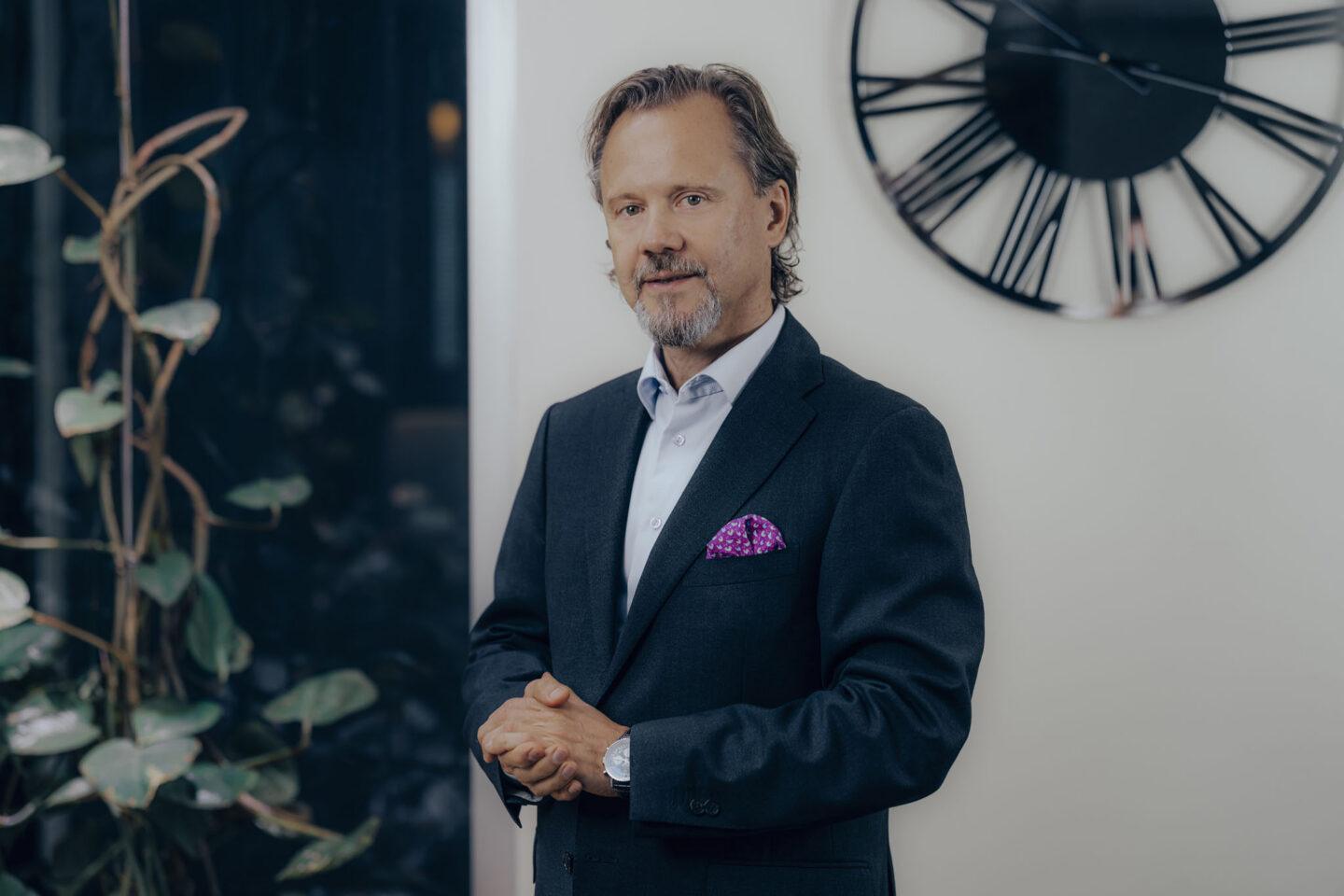
Piotr Wielgomas
Founder and CEO of the BIGRAM Group, which he established 30 years ago. The firm provides executive search and leadership advisory services. Its activities focus on three areas: recruitment, leadership potential assessment, and outplacement support.
For many years, he has also supported young talent in developing their careers through the Enactus project, helping connect them with employers.
Of course, there is much talk about entire marketing departments being replaced in the future, along with advertising and film production, legal professions, and the work of auditors or accountants. That may well happen – and probably will. But I do not believe the pace of change in the labor market will be as rapid as technology creators would like it to be.
These processes inside companies are managed by people, and they will not artificially accelerate them. They will move forward as needed and within the logic of business processes.
Anthropic has effectively pulled the stool out from under IBM and Accenture, because artificial intelligence has managed to master a process that until now seemed impossible to automate.
Katarzyna Mokrzycka, XYZ:
Until recently, layoffs were mainly carried out by companies facing financial trouble: if car sales were weak, headcount had to be cut. Today, however, mass layoffs are also happening at companies generating strong revenues and profits. Is this trend spreading beyond the technology sector?
Piotr Wielgomas:
Of course it is, but this simply reflects business rationality. From a social perspective it may be difficult to accept, yet for companies in the age of AI solutions this kind of calculation is becoming normal. If there are processes that can be handled by automation, they will be automated.
People will have to upgrade their skills – not to compete with AI, but to use it. Or to move into something else: work that requires a human contribution. Today it is clear that artificial intelligence will first target repetitive processes where human involvement is no longer essential.
Katarzyna Mokrzycka, XYZ:
You mentioned repetitive tasks – a phrase that comes up frequently in these discussions. But when we talk about repetitive tasks performed by lawyers, consultants or finance specialists, we usually mean people with university degrees, regarded as well-educated professionals and experts.
Piotr Wielgomas:
Take lawyers as an example. They are not a uniform group. Some of their tasks involve preparing opinions based on data research – that is a repetitive process and AI can easily handle it. It is different, however, when we talk about litigation lawyers or those involved in negotiations – professionals who must engage in creative problem-solving.
Such lawyers will keep their positions and may even develop further by using artificial intelligence. Their role will be to draw on advantages available only to humans in the material prepared by AI – such as local specificities, knowledge of a community’s mindset, or an understanding of various constraints. People often grasp certain things intuitively, and artificial intelligence still cannot do that.
People will need to upgrade their skills – not to compete with AI, but to use it. Or to move into something else: work that requires a human contribution.
More often, however, these “repetitive tasks” fall to younger employees. Typically, it is junior staff at the beginning of their careers who handle data entry, basic analyses, and similar work. These are tasks that can easily be replaced by artificial intelligence.
Katarzyna Mokrzycka, XYZ:
But where are these juniors – the youngest employees – supposed to gain or upgrade their skills now? Until recently, when entering the labor market, they were the ones performing repetitive tasks inside companies. Now, when they graduate from university, they may find there is no place to gain experience, because the stage where they used to build practical skills – while the company benefited from their work – may largely disappear.
Piotr Wielgomas:
This will not happen quickly or suddenly – there will be time for these processes to stabilize at the macro level. Several very interesting megatrends overlap here, above all the demographic challenge: there will be less work for people, but also fewer people in the labor market.
Still, everyone will have to find their own niche – some area in which they can develop. To be attractive to a company, you need to show what added value you can bring to the organization. In which areas can the company benefit from employing you, or from keeping you on the team despite the implementation of AI tools?
Sometimes it may seem that a simple rule applies: either a human or AI. In practice, it is often different. AI needs validation, oversight, and a human factor. Even young people, in various opinion surveys, increasingly say they are experiencing AI fatigue online. Soft skills will be crucial – in this area, artificial intelligence has no chance of competing with humans.
Living with AI, hand in hand
How important is the choice of a university major?
You definitely need to pay much closer attention to the field of study you choose. If someone graduates in medicine or engineering, they will not have to worry about finding a job – or about being displaced by AI – for many years. Either AI will not replace them, as in the case of doctors, or it will become a tool and a partner for them, as in areas such as developing new technologies and products, or building houses and infrastructure.
Young people often find it difficult to assess trends from a historical perspective. Yet it is worth showing that trends come and go, and the popularity of any profession is never guaranteed forever. I have been running BIGRAM for 30 years and have had the opportunity to observe the labor market at many different moments.
In the 1990s there was a period of “overproduction” of sociologists, philosophers and archaeologists – everyone wondered where they would find jobs. In the end, however, the labor market absorbed most of them.
Earlier still, there was a problem with engineers. There was a moment of deindustrialization when many of them had to retrain and moved, for example, into technical sales. Later they returned to their professions as the market shifted again.
This shows that instead of following fashions, it is better to choose a field aligned with one’s own strengths and aptitudes. At the same time, it is worth considering how those strengths can be matched to the needs of the market.
For example, if large energy investments are under way or planned in your region, it may be worth considering a field of study connected to that sector. And, of course, we must accept that having one job for life is becoming increasingly unlikely. Mobility will be one of the key features of the modern labor market.
Rather than following trends, it is better to choose a field aligned with your own aptitudes – while also considering how your strengths can meet the needs of the market.
“Human capital means skills – not ‘M.A.’ after your name”
Will the kind of university education we have known for the past hundred years still matter?
The quality of education – the quality of the university – does and will continue to matter. If not for the education itself, then for the need to build networks. In theory, every young person studies alongside future social, political or business leaders – people with ambition who will climb the ladder in different fields. That can become extremely valuable relational capital.
I also believe that future employers will pay attention to which university a candidate graduated from. The best universities will develop their own strategies for growth and survival – meaning strategies to adapt to the market. Their offer to students must be grounded in the needs of the labor market. Otherwise they will be ignored, and that will not serve them well.
A university’s offer to students must be aligned with the needs of the labor market. Otherwise it will be ignored.
Wouldn’t it be more practical to support vocational schools in a more systematic way – both at the secondary and tertiary level – focused on teaching specific skills? AI tools do not always need people with master’s or engineering degrees, and Poland still faces a shortage of technicians.
I completely agree. The ambition we have as a society – the belief that everyone should have a university degree – leads in practice to the pauperization of higher education. Many universities provide fairly mediocre training, which means that such diplomas carry little weight in the labor market.
In many European countries, the center of gravity in vocational education is placed at the secondary level. Technicians operating complex electronic equipment, nurses or physiotherapists do not always need to complete full university studies.
In the past, Poland had company-run vocational schools attached to industrial plants. Today this idea is returning in a new form. Many of the largest industrial and mining companies – as well as emerging sectors such as the space industry or nuclear energy – are investing in building their own talent pipelines. They train specialists tailored to their needs. Companies cooperate with vocational schools, create specialized classes, and work with universities to develop new programs.
Human capital means skills – not “M.A.” or “Eng.” after your name.
The AI revolution will be slowed by human mindsets
Have you ever seen studies focused specifically on the Polish labor market that account for changes in qualifications, retirement, mortality, lower birth rates, and the fact that anyone can retrain for anything – that is, continuous learning – and that attempt to show how many people might be left without work after mass automation? Or that might challenge this trend?
I haven’t come across any such comprehensive studies. The problem is that this process is advancing very quickly, and today it is further fueled by the euphoria around technological change. We watch videos of Chinese robots and expect that in a year the world will look completely different. That will not happen. In certain areas, the labor market will change fundamentally, but I would not assume a total revolution. As I said before, the AI revolution will be slowed by human mindsets.
Every person has what I call a “learning index” – a measure of how quickly they can acquire new skills. Not all of us learn at the same pace. On a large scale, it may turn out to be very difficult to switch to a model of functioning in a society dominated by automation.
Resistance often appears in companies when completely new systems are introduced. Pushback against changes that are not chosen by employees is normal. Digitization and automation are far more than just using a chat tool when it’s convenient. People find it hard to adapt. A huge amount of work is still needed before AI can operate at a truly mass scale.
You can see this clearly in the services sector, where customers prefer to deal with a human on a call rather than a bot. From my own experience, our clients going through outplacement processes also prefer talking to a live consultant rather than using an interactive portal. They want to discuss, ask questions, reach agreements, and resolve doubts. Human-to-human interaction is encoded in our DNA.
The market under pressure – but not a labor market crisis yet
What currently brings more profit to your company – hiring people or helping companies lay them off? Which processes are more intensive in Poland?
Recruitment and executive assessment processes still dominate. But outplacement support is also significant. In Poland, this is largely driven by solidarity with what is happening in Western Europe. When the CEO of a large corporation announces EUR 50 million in savings in Amsterdam or London – savings that come from employee layoffs – Polish subsidiaries are often affected as well, or get caught in the ripple effect as part of the supply chain. It’s a system of interconnected vessels.
There are few sectors in Poland facing purely local difficulties, but some are under greater pressure, such as retail. Competition is fierce, as evidenced by last year’s layoffs at Makro, Carrefour’s announced exit from Poland, and the closure of the Delikatesy Centrum retail chain.
When Statistics Poland (GUS) data came out: market shock or seasonal correction?
When GUS released January data, the media reported a plunge in the labor market, rising unemployment, a shock, and the biggest crisis in years. The finance minister, however, called it just a correction, citing the harsh winter that halted construction. Which version is correct?
The truth is what the finance minister said. Construction doesn’t operate in winter. But if all the announced public investments are launched this year – nuclear power plants, the Central Communication Port (CPK), high-speed rail, or the Eastern Shield project – there will simultaneously be huge demand for workers in the construction sector. The problem may turn out to be the exact opposite of unemployment.
Are you inclined to downplay these GUS statistics?
Not downplay, but also not panic. The Polish labor market is broad and multi-sectoral, which means that even if one sector struggles, other industries can absorb those workers. We are in a far better position than Czechia or Slovakia, where the automotive sector, going through a difficult period, represents such a large part of the economy that displaced workers are hard to redeploy elsewhere.
New trend: quiet reassignments
Sometimes a company chooses a path other than layoffs – for example, quiet hiring: rehiring the same people under different terms, in new positions, in different forms, or even on a different market. Kamil Sobolewski from the Employers of Poland called work below one’s qualifications “a new era of unemployment.” Do you agree?
It’s a new phenomenon – too early to draw definite conclusions. We don’t yet know whether it will stick or what its effects will be. We focus on executive recruitment and outplacement, and I haven’t seen this happening in Poland on a visibly significant scale.
So far, we also haven’t seen a wave of new professions or positions driven by AI. It’s therefore difficult to say which jobs are or will be eliminated. The one thing I am certain of is that AI will have to be monitored and controlled by humans. For some, this may feel like work below their qualifications, but there’s no point in taking offense – technology is not going away.
What worries me more is competition driven by lower production costs through mass industrial automation. More than AI itself, I fear the global dominance of Chinese industry, which will use AI extensively. If China invests in so-called dark factories – factories that run entirely with robots in total darkness, around the clock – no European industry employing humans will be able to compete.
Here, industrial policy in the European Union is crucial. I am a liberal, but I believe it is necessary to limit access to the EU market for goods from Asia, the U.S., or South America. This includes tariffs, enforcing quality and safety certifications, respecting ESG standards in production, and using green energy. We need to start protecting our market.
We still do not see a wave of new professions or positions driven by AI. It is therefore difficult to say which jobs will be eliminated. One thing I am certain of is that AI will have to be monitored and controlled by humans.
Future-proof professions and industries
Who is hiring in Poland today? Which sectors will be attractive over the next 10–15 years?
Broadly defined e-commerce is growing. The renewable and nuclear energy sector – including production, transmission, and supporting technologies – will also absorb new employees. Engineering disciplines will certainly remain important, along with cybersecurity and space technologies.
The healthcare sector is gaining in attractiveness across the board – from diagnostics to biotechnology. In addition, professions where humans are difficult to replace will remain in demand: nurses, caregivers for the elderly or animals, and teachers.
The approval of the SAFE program will also trigger a surge in investment – and therefore production – in the defense industry.
Have defense companies already approached your firm seeking new managers or cybersecurity and IT specialists specifically to expand production under the SAFE program?
We have had such conversations. And we would have many excellent specialists to offer them from the automotive sector, which is currently laying off employees. That sector has a large pool of skilled engineers, production directors, and so on. They could easily transition into the defense industry, where comparable quality procedures and processes are in place.
Managers with experience – a new beginning
Managers over 50 complain that no one wants to hire them, that they fall into a professional limbo. Why does the labor market in the world’s still-growing 20th-largest economy seem to reject experienced professionals?
Simply put, the market doesn’t know them. This problem affects not only Poland but much of Europe.
In Poland, top executive positions are most often held by people in their 50s – the generation of the country’s first wave of economic success, entering the labor market in the 1990s. In Germany, by contrast, these roles are typically occupied by people in their 60s, which allows for natural turnover: many retire at that age, opening positions for the next generation. In Poland, the system is more rigid. When a 50+ manager leaves a board-level role, a long line of younger, prepared, and well-educated 40-somethings is waiting below. They have natural advantages and have often waited a long time themselves, as the 50+ generation – still years from retirement – blocked their path to promotion. This makes it difficult for a displaced 50+ manager to return to the same level.
Many managers simply did not manage their careers as they should have. They failed to build relational capital or a personal reputation – their personal brand. They were so focused on tasks and work that for 15 or 20 years they lived in a cycle of work, home, work. The market never got to know them. When they suddenly face a “poisoned arrow” in the form of restructuring, acquisitions, or layoffs, they struggle to find their footing.
First, they confront a market that pays less than what they earned previously – a source of immediate discomfort. Second, the biological career curve works against them: their peak professional years are behind them.
Is this a good time to start your own business and take a risk?
Managers in this situation undoubtedly have strong skills, but not necessarily in running their own business. And that is a huge difference. Starting a company is risky and very individual – it requires an entrepreneurial mindset, the ability to manage not just people but yourself.
So is it better to accept a lower salary and assume the best years are behind you?
The most important thing is not to be passive. Take a sheet of paper and first make an inventory of your career: list your strengths and assets, define your next direction, and consider the opportunities the market offers. Then map out possible scenarios, reconnect with people you met at training sessions or conferences, and reach out to former clients.
Many people make the mistake of looking only for a new job, while the market offers numerous project-based opportunities. This can open entirely new career paths.
The Ego problem
Sometimes a manager’s main obstacle is their own ego. I very often hear from executives who are being laid off: “You’re telling me to meet for coffee with people I know, but most of them are my subordinates. What, am I supposed to beg them for work?”
For adults, it needs to be explained that this is no dishonor. And if it turns out that everyone turns their back on you, it usually reflects the kind of leader you have been over the years.
I often suggest considering the public sector. It’s a large area, including municipal companies, state-owned enterprises, and various institutes and institutions. Salaries aren’t as high as in the private sector, and the work is a bit different from corporate or international companies, but experience is highly valued there. The real question is how flexible a 50+ candidate is willing to be in pursuing new opportunities.
The public sector is often a viable option – covering municipal firms, state-owned enterprises, and a range of institutes and institutions. Compensation may be lower than in the private sector, but experience is very much appreciated.
How PIP inspections will affect the labor market
Do you think the new regulations on employment inspections by the State Labor Inspectorate (PIP) will change the labor market? Will they reduce hiring on civil-law contracts? According to Eurostat, 11.8% of employees in Poland work on temporary contracts, compared with the EU average of 10%. For comparison, 18.9% of workers in the Netherlands are on such contracts – the highest rate – while Lithuania has the lowest at just 1.4%.
These regulations will certainly influence employer behavior and limit the most common abuses. I don’t see the new rules as threatening – they will rather expose dishonest employers. If one company in an industry hires everyone on standard employment contracts while another does not, it’s hard to speak of fair play. So, in a sense, these changes will stabilize the market to some extent.
They will also help address Poland’s growing demographic gap. We need to safeguard human resources – ensuring people don’t migrate, and that they can form families and have children. From a macroeconomic perspective, these regulations are appropriate, provided they are implemented reasonably so as not to “throw out the baby with the bathwater.”
I’m also glad that PIP inspectors will not be given the broad powers initially discussed. Many of them do not have strong business expertise, and excessive authority could cause serious damage to companies whose business models rely on contract-based work.


Key Takeaways
- Cultivating a career path: Lifetime employment is becoming a thing of the past – mobility, continuous learning, and relational capital matter. Build your personal brand, professional network, and soft skills, advises the BIGRAM CEO, both for young employees and for managers who may face job transitions. For 50+ professionals, flexibility is key – whether taking on project-based work or moving into the public sector. The labor market can still absorb talent, provided people are willing to adapt.
- AI is reshaping the labor market more slowly than big tech predicts: While AI is accelerating layoffs – even in profitable companies like Block, Amazon, and Anthropic – by replacing repetitive tasks, the pace of change will ultimately be slower than technology creators suggest. Human mindset remains decisive, and resistance to novelty will slow the AI revolution. The human factor in AI work will remain essential for a long time. As Piotr Wielgomas of BIGRAM notes, there is currently no visible wave of new professions nor mass elimination of existing roles.
- Preparing for work in the next decade: Choosing a field of study solely based on trends is not advisable, our interviewee says. The quality of the university and building a network with future leaders also matter. Vocational schools—training technicians and service professions – are worth considering. “Human capital means skills, not just a diploma,” emphasizes Wielgomas. Among fields more resilient to AI, he highlights caregiving roles, engineering, energy, and cybersecurity. Employment demand is growing in e-commerce, energy, defense, and healthcare.