

This article is a part of Poland Unpacked. Weekly intelligence for decision-makers
Acceptance of political aggression and radicalism exists among supporters of both the governing coalition and the opposition. Yet only one side is reaping clear benefits. The other needs to rethink its methods. The report “Shameless People: The Emotional Dynamics of Populism in Poland” is a warning signal for those in power.
Successive reports by the sociologist Prof. Przemysław Sadura (University of Warsaw), produced with colleagues from Krytyka Polityczna, have offered valuable insights into political trends in Polish society. In late 2024, together with Sławomir Sierakowski, he argued in “The Hidden Crisis of Power” that Confederation was gaining strength, while the New Left and the then Third Way were in trouble. They also identified Rafał Trzaskowski as the favorite in the presidential race. The candidacy of Karol Nawrocki was announced a month after the report’s publication.
In July, the Sadura–Sierakowski duo published “A New Duopoly Will Topple This System.” It suggested that a new right was emerging, embodied by President Karol Nawrocki, and that a smaller duopoly of extremes—Confederation on the right and the Razem party on the left—would grow in importance.
“Shameless People”: a report on populism and emotions
This time, Prof. Sadura, together with Julia Szostek and Michał Sutowski of the Institute for Political Critique, examined the role of pride and shame in reinforcing political polarization. Their approach draws on the work of Prof. Arlie Russell Hochschild, a sociologist at the University of California, Berkeley, who studied the success of the Tea Party movement and Donald Trump. In analyzing political decision-making, she assigns greater weight to emotions—pride and shame—than to economic factors.
Following this lead, the Polish researchers present their findings in “Shameless People: The Emotional Dynamics of Populism in Poland.”
Fieldwork in “county Poland”
The study was conducted in a municipality in the Mazovia region, where residents measure their quality of life against Warsaw. The location was meant to reflect stereotypical “county Poland” – or even “Poland B.” Fruit farming plays a significant role in the local economy. It is also a municipality where Karol Nawrocki and Sławomir Mentzen performed better in the presidential election than they did nationwide. Beyond mapping emotional drivers of political attitudes, the researchers sought to explain these electoral outcomes.
They conducted mostly individual interviews, with two group sessions, involving 19 women and 26 men aged 18 to 81. Participants varied in education and political leanings; more than half declined to define their views. Among those who did, a slightly larger group favored Civic Coalition, while the rest had supported Karol Nawrocki in last year’s election.
Questions covered life experiences and values, then moved on to issues central to public debate: the European Union, migration, gender roles, LGBTQ+ rights, and evaluations of current politics—including the governing coalition (with Civic Coalition as the leading force) and President Nawrocki’s tenure.
The boundaries of pride and conditional tolerance
The European Union appears in local discourse as an important but ambiguous reference point. Liberal respondents see it as an opportunity for development, including financial gains. Conservatives view it as a form of external subordination.
On migration, there is broad agreement that local fruit farming would struggle without migrant labor. Both groups note the shifting status of Ukrainian migrants since Russia’s invasion. Liberals see upward mobility; conservatives accuse Ukrainians of privileged access to public services, fueling a sense of injustice. Their presence is accepted conditionally—so long as they support local production and adapt to local norms.
This conditional acceptance extends to LGBTQ+ people. Respondents argue that non-heteronormative identities should remain invisible. According to the researchers, this reflects an unequal social relationship in which “some may speak openly about their needs, while others are expected to remain silent.”
The boundaries of pride are defined by relations with perceived outsiders: migrants (not “from here”), LGBTQ+ people (a non-normative minority), and the EU (seen by many as an external actor).
Shame – directed at politicians
Local achievements are a source of pride. Shame, by contrast, tends to be projected onto others rather than oneself. National stereotypes—such as excessive alcohol consumption—are frequent sources of embarrassment, more so than negative attitudes toward others.
One shared object of shame is the political class, seen as internally divided and conflict-ridden. Respondents condemn socio-political polarization—even as they themselves are part of it.
Yet criticism of polarization is almost always directed at political opponents, without any sense of shared responsibility.
A heterogeneous working class
Questions about local sources of shame yielded more granular findings. Liberal respondents described Poland’s post-1989 transformation as superficial, criticizing the mentality of local elites—challenging the stereotype of uncritical pro-reform voters.
The other side pointed to fears of social decline and inequalities in redistribution, including in schools, where children from higher-status families are perceived to be treated better than those of workers.
Shame is associated with the political class and its incompetence, national stereotypes, and social polarization.
The broader conclusion is that “Poland’s working class is not homogeneous.” It can be liberal and pro-European, or conservative. Increasingly, the researchers argue, group affiliation is shaped less by economic status and more by political and cultural choices. Income criteria alone would place teachers—whose pay is closer to that of shop assistants than to that of executives—within the working class.
Liberal populism
The report challenges the stereotype that populism is primarily a conservative phenomenon. Susceptibility to radicalization and the coarsening of public debate can affect anyone.
Respondents with higher cultural capital—typical of the intelligentsia and consumers of liberal media—felt besieged by supporters of Law and Justice (PiS). This fostered a “fortress mentality,” which in turn fuels liberal anxieties.
Despite professed openness, they often display quiet contempt for political opponents. The siege mentality can also produce extremes, such as a compulsion to distance oneself from criticized attitudes.
The right exploits radicalization more effectively
In their earlier report, Sadura and Sierakowski argued that Karol Nawrocki’s victory was aided by the consolidation of right-wing electorates around radicalism, anti-system sentiment, sovereigntism, and acceptance of authoritarianism. The new report confirms that the right used radicalization more effectively in last year’s election.
Among Nawrocki’s voters, a tolerance for participation in football hooligan clashes is cited as evidence of authoritarian leanings—symbolizing a strong leader unconstrained by norms. Anti-system sentiment reflects a desire for change driven by a figure outside the established political scene.
Another key emotional factor is a sense of grievance toward Ukrainians and other migrants, who are perceived—regardless of the facts—as receiving preferential treatment, leaving locals feeling like second-class citizens.
Nawrocki tapped into these sentiments during the campaign, arguing, for instance, that Ukrainian refugees were treated better by the healthcare system. His messaging to Confederation voters emphasized sovereigntism and opposition to migration, in contrast to pro-EU parties.
The researchers also identify a shift in the role of shame. For years, the pro-European center shamed the provinces. Under PiS rule, the so-called social periphery gained recognition. As a result, shame has ceased to be the primary organizing force in the political thinking of working-class voters.
Shame no longer works. The coalition is trapped
In last year’s presidential campaign, attempts to shame political opponents failed. Coalition politicians and supporters highlighted Nawrocki’s alleged ties to hooligan and criminal circles. There were also insinuations about addiction (his use of snus during a televised debate) and even pimping (media reports about his past work at the Grand Hotel in Sopot). None of this deterred conservative voters. This is where the coalition’s problem begins.
“If the liberal electorate does not undergo a transformation as profound as the one PiS carried out among ‘ordinary people,’ and does not unlearn shaming, humiliating, patronizing, and lecturing, it will lose every subsequent vote. For now, there is no sign that the liberal elite is capable of such self-reflection,” the researchers argue.
They cite reactions to a recent TVN24 interview with the First Lady as an example. Liberal opinion leaders—including writer Manuela Gretkowska and journalist Natalia Waloch—used classist rhetoric, suggesting that Marta Nawrocka lacked the standing to speak on women’s issues. Such responses only strengthened solidarity with the First Lady.
The report concludes that while politics increasingly repels people, it also generates strong emotional engagement. Acceptance of political aggression is rising—on both sides.
The pre-election landscape
The findings are sobering for the governing coalition. Attacking opponents through class-based humiliation is ineffective; the right has become immune. Coalition politicians and voters must find new methods and a new language. For now, however, the authors see little sign of self-reflection.
The right has not only resisted attempts to shame it—it has developed a “shamelessness” mechanism. Its voters rally around politicians who reject the very premise of shame when liberals deploy it.
By putting forward Przemysław Czarnek as a candidate for prime minister, PiS has also embraced a more radical rhetoric. Other right-wing opposition parties—Confederation and the Confederation of the Polish Crown—do the same. Both are being considered as potential partners in a Senate pact with PiS and even in a post-2027 coalition, although PiS politicians currently distance themselves from Crown leader Grzegorz Braun. The turn toward radical messaging may be an attempt to compete with Braun and stem the outflow of PiS voters.


Key Takeaways
- After years of PiS rule, shame is no longer an effective tool against the right and its voters. PiS has bolstered the self-worth of its electorate. The liberal camp needs self-reflection and new sources of pride. Without them, populism and aggression will escalate—largely to the right’s advantage
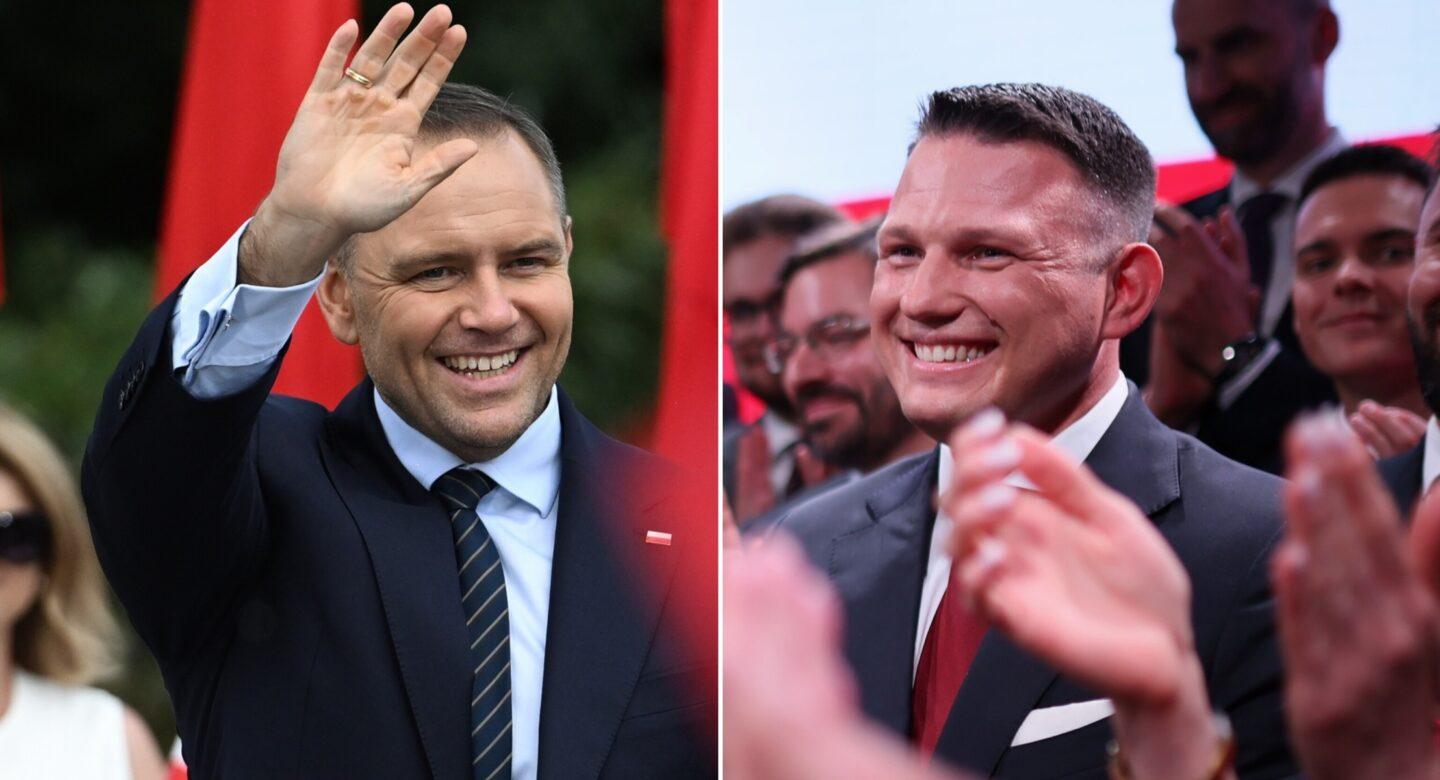
- “Shameless People: The Emotional Dynamics of Populism in Poland” is based on fieldwork in “county Poland.” Researchers from the University of Warsaw and the Institute for Political Critique sought to understand the emotions behind strong support for Karol Nawrocki and Sławomir Mentzen (both performed better locally than nationally), and how emotions shape political decision-making.
- The report highlights threatened pride and the dynamics of shame as drivers of polarization. Shame is weaponized by both sides, feeding their respective populisms. Right-wing populism features hostility toward outsiders (migrants, the EU) and varying degrees of racism and homophobia. Liberal populism is marked by classism and a sense of superiority. Radicalization is not confined to conservatives; acceptance of political aggression exists on both sides. However, the right benefits more from it.