

This article is a part of Poland Unpacked. Weekly intelligence for decision-makers
On today’s battlefield, technology determines not only who wins, but often who survives. The war in Ukraine illustrates this particularly clearly. The pace of change is such that a given solution can become obsolete within months of deployment. It is, in effect, an ideal environment for startup development.
It is in precisely this environment that Darkstar operates. The European venture capital fund does not search for “potential” in pitch decks, but instead evaluates technologies where their effectiveness has direct, real-world consequences.
— If we invest, we must be certain that the solution is already being used in combat, or will reach the battlefield within a few months, — says Ragnar Sass, founder and head of Darkstar.
The fund is among the few that tests promising startups in Ukraine – on training grounds, but in cooperation with commanders of units fighting on the front line. Some of these solutions are already being used in active operations.
War as a reference point
Darkstar has been operating since mid-2025 and is among the first venture capital funds in Europe fully focused on defence technologies. To date, it has invested in seven companies and aims to build a portfolio of 17–20 firms. It does not limit itself to the dual-use solutions that have been popular in recent years. It is also interested in systems designed exclusively for military use – from software to weapons components.
This reflects a shift that, in the founders’ view, is structural rather than cyclical. The war in Ukraine has become a real-world laboratory for technological development.
— This is the most technologically dynamic conflict in history. We have reached a point where robotic warfare is already happening, — explains Ragnar Sass.
For the fund, it is not enough for a startup to be building “something for drones” or “something with AI.” The key question is whether a given technology solves a concrete military problem and whether it can be rapidly adapted to changing conditions.
Bootcamp instead of a conference room
For this reason, Darkstar is building its own model of working with startups. Its central element is a series of bootcamps organised in Ukraine. These are closed programmes bringing together a dozen or so selected technology teams. Six such sessions have been held so far.
The companies sent to the field are not chosen at random. They are carefully selected projects from among several hundred applications from across Europe. Beyond having technology that can be deployed almost immediately on the front line, what matters is also the founders’ willingness to work in wartime conditions – physically on site. The foundation of the investment model is, after all, testing solutions by soldiers who are actively fighting on the front line.
There is no room here for traditional pitch deck-style presentations. Products are demonstrated, tested, and evaluated in conditions as close to combat as possible.
— During our most recent bootcamp, one founder made personal contact with 35 Ukrainian military units, — says Ragnar Sass.
Ukrainians are already testing
During the conversation, the fund’s head shows dozens of patches and insignia of Ukrainian battalions and brigades. Before turning to scouting startups, he supported Ukraine logistically – donating off-road vehicles and equipment. It was then that he built a network of contacts that now also feeds into his investment activity.
The results can be immediate.
— We had a case where a solution was deployed within three weeks of a bootcamp, — says Ragnar Sass.
The details of the project remain confidential.
By comparison, in a standard model, technology deployment takes two to four months. That is already a pace unattainable for traditional defense procurement systems. In Ukraine, this is possible, among other reasons, due to the high degree of autonomy granted to unit commanders. They do not have to wait for lengthy contracting procedures at the Ministry of Defense level.
Investors are on the lookout for opportunities
Expert's perspective
Who wins in business terms
These are solutions that naturally overlap with civilian markets. Autonomy, image analysis, robotics, space technologies, and infrastructure monitoring are used both in defense and in energy, industry, logistics, and the maritime sector. This is precisely why the dual-use segment is expected to be one of the strongest trends in the coming years. Companies can develop products for large civilian markets while simultaneously building their military applications. From an investor’s perspective, this is also a form of hedging – if defense markets slow down, firms can still scale in civilian sectors.
In the United States, an additional reinforcing mechanism is visible. Thousands of engineers who, thanks to ESOP programs in large tech companies such as SpaceX, have built up capital are now founding their own startups and bootstrapping new ventures, including in defense. They are often the ones driving the next wave of innovation.
In Poland, similar dynamics are still missing, particularly the transition of military veterans into venture capital, private equity, and startups – a phenomenon that strengthens the entire ecosystem in the US. However, if capital, state support, and industrial potential can be combined, Poland has a real chance of becoming a regional leader in defense innovation.


A product that is only “ready for now”
One of the key lessons emerging from Darkstar’s experience is that, in the defence sector, there is no such thing as a permanently finished product.
— A product is only ready for a given moment. In two months, the adversary may already have countermeasures, — emphasises Ragnar Sass.
For example, GPS no longer provides a stable navigation backbone in active combat zones. Companies therefore have to look for alternatives based, for instance, on vision systems or other methods of positioning. In such conditions, there is no such state as full readiness – only continuous adaptation.
For this reason, in Darkstar’s view, what matters is not only technology that works “for today,” but above all the team’s ability to iterate the product continuously. That is, to modify, test, and adapt it rapidly to changing battlefield conditions. A startup that cannot keep pace with the speed of change at the front quickly loses relevance.
An ecosystem rather than a single product
Darkstar invests in both hardware and software, but it does not view the market through the lens of isolated product categories. At its core is the entire system: from physical devices (such as drones), through navigation systems and image analysis tools, to autonomous operators.
— The best drone is an entire ecosystem, — says a representative of the fund, citing the view of a Ukrainian military officer.
One example is a portfolio company developing an AI-based system for analysing drone data. Its purpose is to automatically process imagery and provide commanders with key insights. Today, much of this analysis is still done manually, which slows down decision-making.
The system has an additional advantage: it enables data exchange between different platforms, including aerial and ground drones. In effect, it creates a kind of virtual battlefield that supports decision-making at command level.
Another company in Darkstar’s portfolio focuses on analysing weather conditions for unmanned operations. While less spectacular, the technology has a direct impact on operational effectiveness.
— Drone operations are heavily dependent on weather, — notes Ragnar Sass.
Key factors include cloud cover and altitude, air temperature, and humidity.
Darkstar’s portfolio also includes projects related to laser systems, training platforms, and missile components. What unites them is one principle: all must integrate into a larger system and respond to real operational needs.
Poland on the radar
Although the fund has not yet invested in a Polish company, Poland sits at the centre of its strategic interest. The reason is straightforward: countries closest to Russia are the fastest to adapt to the new security reality.
— Poland is a strategic location for us, where we should look for companies and help them scale, — comments Ragnar Sass.
At the same time, he acknowledges that cooperation with Polish institutions could be more advanced. Compared with Ukraine or the Baltic states, the pace of change is sometimes slower, although awareness of the need for modernisation is clearly increasing.
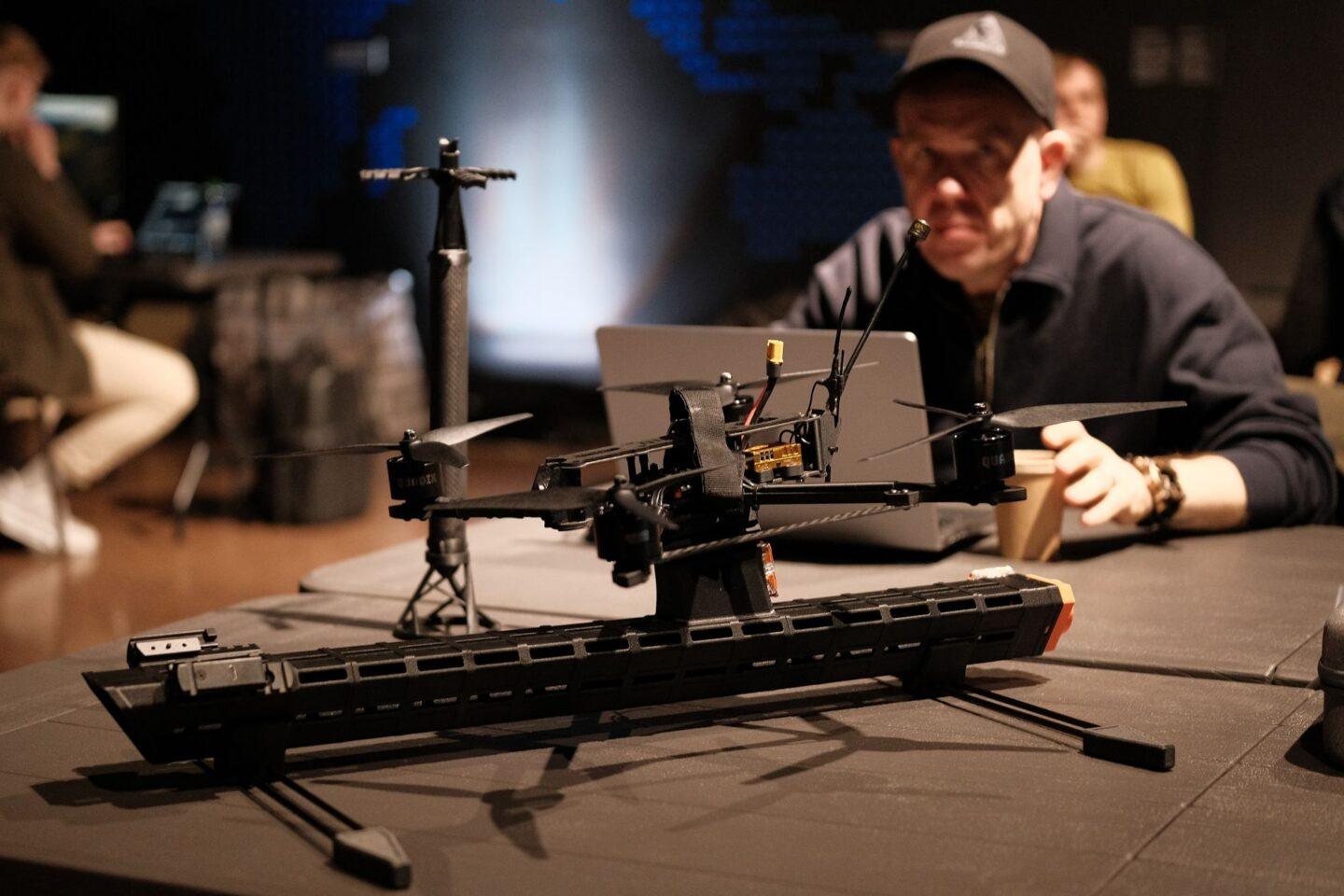
Still, Polish companies are beginning to appear within the ecosystem built by Darkstar. One example is Sentinel Eagle, a drone technology startup.
— It is a very strong team with a great product and a clear use case, — adds a Darkstar representative.
A Polish startup gains recognition
According to his account, the company received highly positive feedback during the bootcamp. Its solutions align with one of the key trends: the development of low-cost, scalable reconnaissance systems.
Expert's perspective
Sentinel Eagle is already in the air
The trials were highly practical in nature. Several military units took part, conducting flights together with the Sentinel Eagle team and verifying the system’s capabilities in scenarios closely resembling combat conditions. A key difference compared with earlier development stages was direct contact with soldiers operating at the front line; previously, the startup had worked mainly with veterans, integrators, and industry companies.
After the completion of the field tests, some units received prototypes for continued use. To date, equipment has been delivered to two brigades, while another four are in the queue. However, further deployments require additional on-site visits from the team and training sessions, as the system is not a plug-and-play solution. At this stage, these remain prototypes provided for testing rather than commercial sales.
From a technological development perspective, Sentinel Eagle is in a transitional phase between prototype and product. Final validation is expected to take place in real combat operations over the coming weeks.
In parallel, the startup is undergoing a formal process: its solutions are currently being classified as dual-use goods (with certification completed), and the company is preparing to obtain a license for the production and trade of military equipment. This is a necessary step to move from the testing phase to full commercialization.
The company is scaling with investor support. “We are working on securing additional financing. We are also actively building international sales. While Ukraine remains the key testing ground and the fastest validation environment for our technology, we are also developing relationships in other countries. Estonia is one example, where we were invited to military exercises. Markets closer to the real threat – such as the Baltic states - s how faster decision-making dynamics than countries operating in peacetime conditions. We are also trying to build a position in Poland.”
A new logic of military innovation
From Darkstar’s perspective, the most sought-after technologies today are those that increase system autonomy. This does not refer only to the platforms themselves, but also to the components that enable them to function effectively: jamming-resistant communications, data analytics, navigation systems, and training solutions.
— We are looking for anything that helps prepare for robotic warfare, — says a representative of the fund.
In practice, this means a shift away from large, expensive systems towards smaller, more flexible components. The war in Ukraine has also highlighted the growing importance of low-cost robotics, including unmanned vehicles used for logistics.
— Many logistical tasks on the front line are now being handled by inexpensive unmanned systems, — adds Ragnar Sass.
As a result, the way efficiency is understood is changing. What matters is no longer only technological sophistication, but also cost, scalability, and speed of deployment.
A new logic of military innovation
From Darkstar’s perspective, the most sought-after technologies today are those that increase system autonomy. This does not refer only to the platforms themselves, but also to the components that enable them to function effectively: jamming-resistant communications, data analytics, navigation systems, and training solutions.
— We are looking for anything that helps prepare for robotic warfare, — says a representative of the fund.
In practice, this means a shift away from large, expensive systems towards smaller, more flexible components. The war in Ukraine has also highlighted the growing importance of low-cost robotics, including unmanned vehicles used for logistics.
— Many logistical tasks on the front line are now being handled by inexpensive unmanned systems, — adds Ragnar Sass.
As a result, the way efficiency is understood is changing. What matters is no longer only technological sophistication, but also cost, scalability, and speed of deployment.
Expert's perspective
NATO armies shift tactics
A key takeaway from the current conflict is the push for technological standardization. This enables long-term production planning and strengthens countries’ technological sovereignty.
Today, the military expects contracts covering the full product life cycle – from testing, through serial deployment, to maintenance and disposal. Training needs have also evolved: static targets are giving way to force-on-force solutions that simulate the dynamic behavior of an adversary.
Military modernization is shifting towards specialized robotics and data analytics, providing soldiers with a new quality of situational awareness. As a result, companies must demonstrate significant engineering flexibility and the ability to rapidly adapt technologies to changing requirements.
The center of gravity in defense is moving towards software, which digitizes the battlefield and redefines soldier effectiveness. In this environment, innovative private companies are becoming key partners for states in building defense capabilities.
What is happening in military technology
FIreside chat
How startups should evolve
Which technologies will have the greatest impact on the battlefield over the next 3–5 years?
In my view, the most significant impact will come from the development of autonomy and automation. A clear trend is already visible: the battlefield is seeing a growing number of robots and autonomous or semi-autonomous solutions. Artificial intelligence is being deployed across an increasing range of systems – from drones, where it is used, among other things, for terminal guidance, to advanced battlefield management systems (BMS).
How does this work in practice?
Battlefield management systems allow commanders to make decisions far more quickly, based on data from multiple sources simultaneously—something that, until recently, was extremely difficult. Progress in this area is likely to be exponential.
AI is also entering less obvious domains: it improves communication within command teams, optimizes military logistics, and supports the planning of production for critical components used on the front line.
The war in Ukraine has shown how quickly such technologies mature under combat conditions – from automated reconnaissance to the coordination of drone swarms. AI is set to play a critical role. It not only drives the autonomy of new platforms, but also enhances existing weapons systems – for example, through data fusion algorithms or predictive maintenance. It also reduces costs, making technologies more accessible and scalable.
Can these be combined with civilian technologies?
Absolutely. Many of these solutions are inherently dual-use. Logistics is a good example. The problems solved daily by freight companies and e-commerce platforms – such as route planning, inventory management, and demand forecasting – are, in many respects, analogous to battlefield challenges: from distributing medical supplies and ammunition to managing deliveries across extended supply lines.
Drones are becoming the standout technology…
AI systems used in military drones often rely on the same components as their civilian counterparts: similar cameras, vision processors, navigation and obstacle-avoidance algorithms, and sometimes even the same hardware platforms. Technologies such as computer vision, edge computing, and 5G connectivity (including millimeter-wave) developed in the commercial market are now finding natural applications in defense systems. As a result, the barrier to entry into the defense sector is lower than ever before.
Does Poland have a real chance to become a regional hub for defense and dual-use technologies?
Poland has a genuine opportunity to become a regional hub for defense and dual-use technologies – but this will require a systemic approach. The key is to support Polish tech companies in entering the defense supply chain. This means both creating new ventures and improving dialogue with the military, so that these firms can work with large integrators and, ultimately, supply solutions directly to the Polish Armed Forces.
What is still missing?
In my view, Poland still lacks a framework that would provide tech companies with concrete contracts to develop products addressing real military needs – similar to mechanisms used in the United States. This is a complex challenge, spanning multiple dimensions: from establishing secure ways of conducting dialogue between startups (and larger Polish companies outside the defense sector) and the military (the General Staff, the Armament Agency, or the Ministry of Defense), to ensuring the protection of sensitive and classified information.
As a country, we need to focus strongly on this aspect. Creating an efficient mechanism for procuring innovation is, in my opinion, the best way to accelerate the development of Poland’s defense tech ecosystem. It should be treated as an absolute priority.


Key Takeaways
- The importance of cooperation between the private sector and the military is growing, as is the potential of dual-use technologies. Startups operating at the intersection of civilian and defense markets can scale their solutions more quickly and reduce dependence on military demand cycles. Poland has the potential to become a regional hub in this space, but this will require more efficient procurement mechanisms, stronger institutional cooperation, and support for technology companies in moving from innovation to deployment.
- The war in Ukraine has become a catalyst for the accelerated development of defense technologies. The conflict has turned into a dynamic testing environment, where new solutions are validated in real time and their relevance can expire within a matter of months. Darkstar leverages this reality by investing exclusively in technologies that are ready for immediate deployment or rapid testing on the front line. This marks a departure from the traditional model of evaluating startups in favor of practical validation under combat conditions.
- The logic of developing and deploying military technologies is changing. There is no longer such a thing as a “finished” product, as adversaries continuously develop countermeasures. What matters most is the ability to adapt continuously and to integrate solutions into larger operational systems. At the center are technologies related to autonomy, artificial intelligence, data analytics, and communications, which together form coherent ecosystems that enhance operational advantage on the battlefield.