

This article is a part of Poland Unpacked. Weekly intelligence for decision-makers
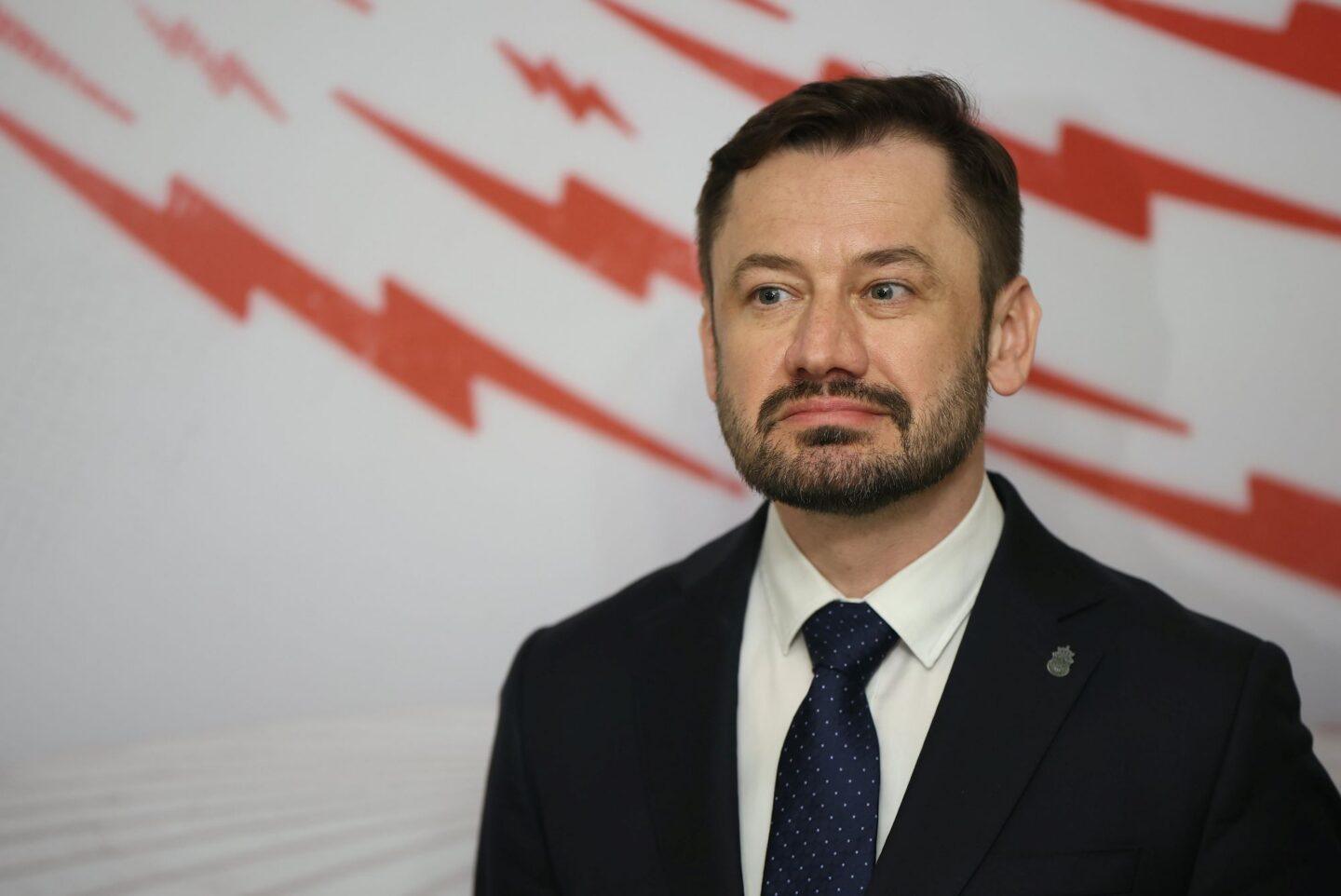
A referendum on the recall of Kraków Mayor Aleksander Miszalski and the Kraków City Council is scheduled for May 24. According to the National Electoral Commission (PKW), the petition calling for the referendum has collected the required number of valid signatures.
Under the law, a referendum initiative must be supported by at least 10% of eligible voters. In Kraków, this threshold amounted to 58,355 voters.
A strategy of boycotting the referendum
Mayor Aleksander Miszalski is calling for a boycott of the vote. “If you believe I should complete my term in office, stay at home on the day of the referendum. Our victory will be low turnout in the referendum and high turnout in every election day,” Mr. Miszalski wrote on his official social media profile.
Data show that a boycott by supporters of a city leader is often the most effective strategy for defending their position.
Under Polish law, a referendum is valid only if at least three-fifths of the voters who previously participated in the election of the recalled authority take part. In practice, it is extremely difficult to bring such a high number of voters to the polls. Those voting to recall mayors, city presidents, or councilors are typically their opponents, but there are usually not enough of them for the referendum to be valid.
11 successful referendums between 2018 and 2024
During the most recent – and unusually long, six-year – local government term (2018–2024), Poland held 78 referendums aimed at recalling local authorities during their terms in office. In each of these votes, a majority of those who turned out were opponents of the officials facing recall. However, only in 11 cases did turnout reach the threshold required for the vote to be valid.
Successful recalls included:
– mayors of: Boguszów-Gorce (Lower Silesia), Tuczno (West Pomerania), Mosina commune (Greater Poland), Miastko (Pomerania),
– commune heads (wójt): Widuchowa commune (West Pomerania), Baranów commune (Mazovia), Kunice commune (Lower Silesia), Będzino commune (West Pomerania), Jemielno commune (Lower Silesia),
– commune councils in: Niechanowo (Greater Poland) and Bałtów (Świętokrzyskie).
None of these municipalities can compare with Kraków in terms of population size.
Even fewer valid referendums in the previous term
An even smaller number of such referendums took place in the 2014–2018 four-year local government term.
Tomasz Zakrzewski, author of the 2020 analysis Local Referendum: Time for Reform, published by the Institute of Civic Affairs (Instytut Spraw Obywatelskich), estimates that 46 recall referendums were held during that period.
In 45 cases, voters decided on the recall of commune heads (wójt), mayors (burmistrz), or city presidents, while in 15 cases the future of commune councils was also put to a vote. These figures do not add up to 46, as in some cases – such as the referendum in Kraków – voters decide simultaneously on both the mayor and council, while in many others referendums concern only a single governing body.
During the 2014–2018 term, only four referendums on executive authorities and two on commune councils were deemed valid, resulting in actual recalls.
“These figures confirm that in Polish conditions, valid referendum initiatives constitute only a marginal fraction of all votes held,” Mr. Zakrzewski wrote at the time.
Attempts to recall local officials in the current term
Even collecting signatures for a referendum initiative already poses a significant challenge. In September 2025, we examined recall referendum efforts in the current local government term, which began in 2024.
We found that at the time, recall initiatives targeting commune heads (wójt), mayors (burmistrz), and city presidents were underway in 40 municipalities across Poland. Some of these initiatives were still in progress.
In 11 municipalities, referendums were held, but the results were invalid due to insufficient voter turnout.
Only in the case of Zabrze was the local leader successfully recalled.
Expert: the validity threshold for referendums should be abolished
For years, Polish law required that decisions taken in a referendum would become binding only if at least 30% of eligible voters participated. In 2006, this was replaced with a provision introducing a threshold of three-fifths of those who had participated in the election of the recalled authority.
However, experts have long been calling for a fundamental overhaul of the rules governing local referendums.
“The key question is whether any validity threshold for a referendum is needed at all,” says Tomasz Zakrzewski, a legal adviser specializing in referendum law and author of the previously cited report.
Zakrzewski points out that no turnout threshold is required to elect a commune head (wójt), mayor (burmistrz), or city president.
“The turnout threshold for referendums creates another problematic effect. It has become standard practice for commune heads, mayors, or city presidents facing recall referendums to encourage voters during the campaign to boycott the vote and stay at home,” Mr. Zakrzewski says.
In his view, this creates a fundamental contradiction.
“Before elections, citizens are encouraged to take responsibility and go to the polls in large numbers. This shows that democratic and civic attitudes are treated instrumentally, depending on the interests of a given individual or group,” Mr. Zakrzewski argues.
Is the recall of a mayor during their term a “nuclear option”?
Associate Professor Jacek Haman, a sociologist at the University of Warsaw and member of the Electoral Experts Team at the Stefan Batory Foundation, says he supports retaining turnout requirements in referendum law.
In his view, a mayor or commune head is elected for a full term, and their performance should be assessed primarily at the end of that period.
“Recall during a term should be treated as an exceptional measure. Not something driven by a temporary fluctuation in the popularity of politicians or parties, but as an option reserved for genuinely extraordinary circumstances – a deep crisis in local governance or a radical collapse of trust in the previously elected official,” Mr. Haman argues.
How to reform referendum rules
According to the sociologist, recalling mayors or city presidents during their term should remain possible, but the rules governing the process need to be changed.
Associate Professor Jacek Haman argues that the current legal framework forces an incumbent mayor defending their position to make a strategic choice: either encourage supporters to stay at home (and thus aim for invalidating the referendum due to low turnout), or call on them to participate and vote against the recall.
In the first scenario – when supporters abstain – the result is politically damaging, as almost all participating voters support the recall, yet the official retains office due to insufficient turnout. In the second scenario, mobilizing supporters to vote may increase turnout to such an extent that it leads to the official’s dismissal.
“Instead of a minimum turnout threshold, it would be sufficient to introduce a requirement for a minimum number of votes in favor of recall (and that they outnumber votes against). In such a system, both the mayor and their supporters would have only one rational strategy – to call for participation and vote against the recall,” Mr. Haman explains.
In this model, only the balance between supporters and opponents of the mayor would matter.
Both experts agree, however, that they do not believe the current rules will be changed.
“I would like to be wrong, but I see little chance of reform. There have already been several legislative proposals on this issue in the past, but none resulted in an amendment to the referendum law,” says Tomasz Zakrzewski.
In his view, elected representatives tend to treat mechanisms of direct democracy as a competitor to their own authority.
“Put bluntly, we did not elect them to now share decision-making power with us. This also applies to recall referendums. Those elected want to remain in office as long as possible, and referendums in this sense pose a threat to the stability of their mandate,” Mr. Zakrzewski notes.
He adds that abolishing referendum thresholds is not in the interest of political parties represented in parliament.
“Every major political party has local structures. If within those structures the party places one of its members as a commune head, mayor, or city president, that person inevitably gains influence over certain staffing decisions, for example in municipal offices or local companies,” Mr. Zakrzewski says.
Expert: “I am not optimistic”
Associate Professor Jacek Haman also does not believe that local referendum law will be changed.
“I am not optimistic, because unfortunately electoral law – including provisions governing local government – is not excluded from day-to-day political competition. So even if one side were willing to introduce such a rational change, the other side will likely oppose it on principle,” he says.
The expert from the Stefan Batory Foundation adds that he sees no political force in the Sejm currently interested in taking on the task of reforming the existing legal framework.
Good to know
How mayors can be recalled in Czechia and Slovakia
Neighboring countries are also debating how local leaders can be removed during their term in office.
In Czechia, mayors, commune heads, and city presidents are not elected in direct popular votes. Instead, they are chosen by municipal councilors, similar to the way county governors or regional marshals are selected in Poland. As a result, Czech city councils can decide to replace a mayor during their term.
In Slovakia, where – as in Poland – mayors and city presidents are elected directly, there is an ongoing debate about the effectiveness of recall rules. A referendum can be initiated if it is supported by at least 30% of eligible voters. The decision is binding only if more than half of voters participate. This, as the Slovak daily Sme has noted, makes it effectively impossible in practice to recall a mayor during their term.
In 2024, Sme reported unsuccessful attempts to recall local leaders in Snina (2014), Poprad (2015), Dubnica and Hlohovec (2016), Bratislava (2017 and 2020), and Trnava (2023). In none of these cases was the required number of signatures collected. The newspaper also noted that the only Slovak recall referendum of this kind took place in 2012 in the town of Veľký Šariš. It was not initiated by residents but by councilors, and ultimately proved invalid, as only 35% of eligible voters turned out.


Key Takeaways
- On May 24, residents of Kraków will decide the future of Mayor Aleksander Miszalski and members of the Kraków City Council. The initiative to recall them was supported by more than 10% of eligible voters. However, for the referendum result to be binding, at least three-fifths of Kraków residents who voted for Mr. Miszalski and the council in 2024 must take part in the vote.
- Experts argue that Poland’s referendum rules should be changed. Associate Professor Jacek Haman, a sociologist at the University of Warsaw and member of the Electoral Experts Team at the Stefan Batory Foundation, says the provision effectively encourages supporters of incumbents to boycott referendums. Tomasz Zakrzewski, a legal adviser specializing in referendum law and author of the report Local Referendum: Time for Reform, believes the turnout threshold determining the validity of referendums should be abolished.
- Both experts acknowledge, however, that they do not expect any legal changes. In their view, the current regulations suit politicians themselves. Between 2018 and 2024, Poland held 78 recall referendums during local government terms. Only 11 of them resulted in the successful removal of local authorities.