

This article is a part of Poland Unpacked. Weekly intelligence for decision-makers
After losing the 2011 parliamentary elections, Jarosław Kaczyński (the leader of PiS) declared that Budapest would come to Warsaw. A year earlier, Viktor Orbán had returned as Hungary’s prime minister and became a source of inspiration for Poland’s right.
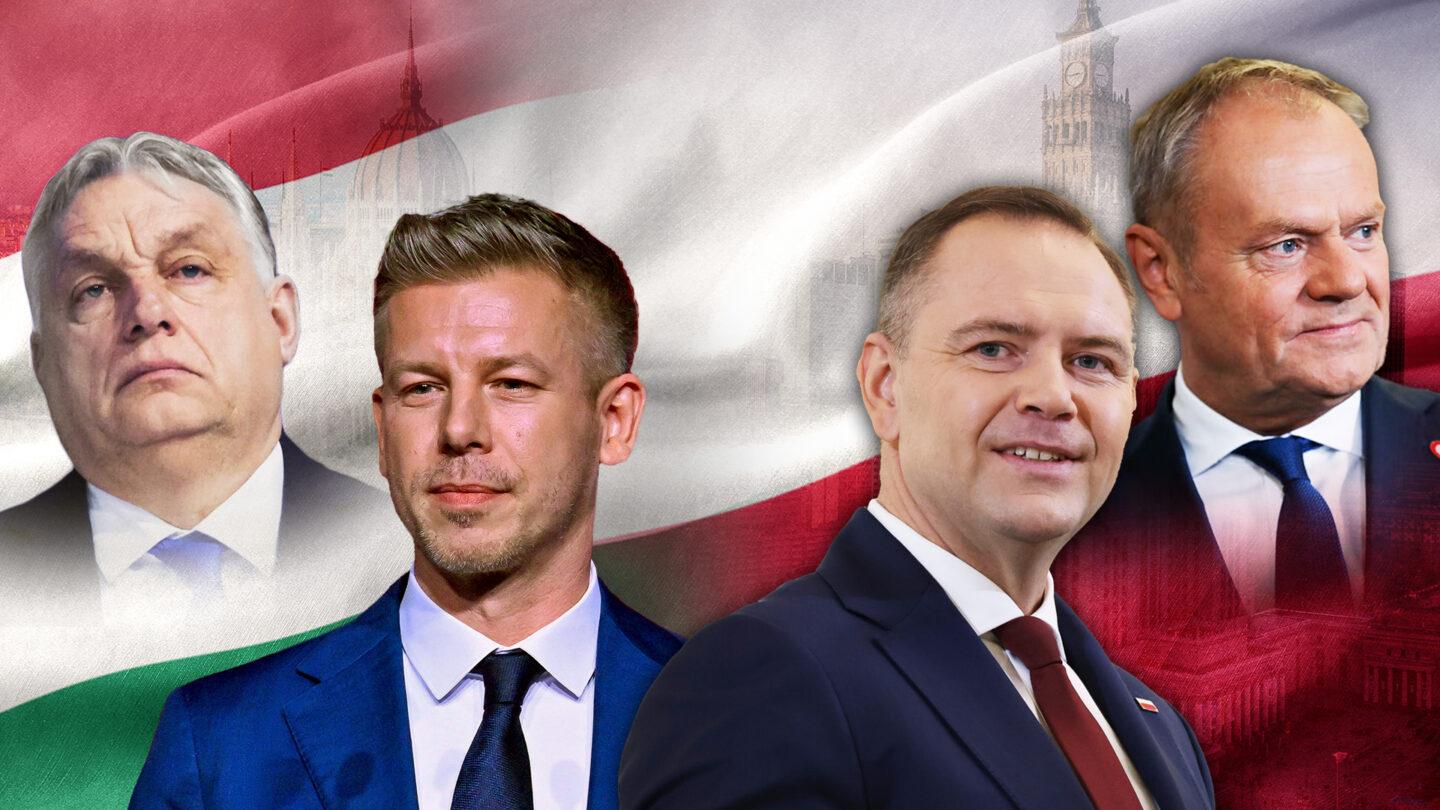
On the eve of Sunday’s vote in Hungary, Prime Minister Donald Tusk, invoking that slogan, predicted that it would instead be Warsaw coming to Budapest. Once the polls closed, it quickly became clear that after sixteen years, Fidesz was losing power. The Hungarian elections offer several lessons for Poland.
1. A reset in Polish–Hungarian relations
Fidesz’s defeat could pave the way for warmer relations between the governments in Warsaw and Budapest. Artur Lorek, a political scientist at Adam Mickiewicz University who specializes in Hungarian affairs, expects a technical reset in intergovernmental ties.
“Both leaders are well-disposed towards each other, and Donald Tusk supported Péter Magyar. The potential for cooperation could be an added value after a period of stagnation we have recently seen – one that was also present during the United Right government. A latent source of tension was Orbán’s approach to the war in Ukraine,” says Mr. Lorek.
Péter Magyar has announced that, as Hungary’s prime minister, his first foreign visit will be to Warsaw. On the Monday following the election, he said he intends to visit Poland in early May. Mr. Lorek points to the incoming Hungarian premier’s pro-EU stance as a key factor.
“An important issue will be unlocking the potential offered by the European Union. Péter Magyar – while maintaining a moderate stance on Ukraine and declaring readiness for pragmatic relations with Russia, provided Hungary’s sovereignty is preserved – is a pro-European politician from the European People’s Party. We can expect Hungary to stop acting as a brake on EU policies,” the political scientist argues.
According to the expert, it remains uncertain whether Hungary’s future prime minister will be able to provide fresh momentum to Europe’s Christian Democrats and liberal democrats. That momentum could help demonstrate that European liberal democracy can withstand anti-liberal pressures.
2. The end of political asylum
During the campaign, Péter Magyar stated that a Tisza victory would mark the end of political asylum for two Polish politicians. Viktor Orbán granted such protection to Zbigniew Ziobro and Marcin Romanowski. Polish prosecutors intend to bring charges against them in an investigation into alleged irregularities in the Justice Fund. Legislative changes may be required to secure their removal from Hungary.
“Hungary recently adopted a law under which a person subject to a European Arrest Warrant cannot be extradited if they have political refugee status,” Artur Lorek points out.
3. Trump’s support does not guarantee victory
In the final stretch of the campaign, Viktor Orbán received electoral backing from Donald Trump and American Republicans. As in the run-up to the second round of Poland’s presidential election, Americans organized a CPAC conference in Hungary (Conservative Political Action Conference). Among the attendees were Mateusz Morawiecki, former Polish PM, and Krzysztof Bosak, a politician from the right.
A few days before the election, U.S. Vice President J.D. Vance arrived in Budapest and publicly expressed support for Mr. Orbán. Donald Trump himself endorsed Mr. Orbán from a distance – through social media and by relaying words of support when J.D. Vance called him during a rally in Budapest.
Support from Mr. Trump and the MAGA movement proved insufficient to secure victory. Today, the political weight of such backing is different from what it was in May 2025. Mr. Trump’s own position is also different. In recent months, his international posture has included threats to take over Greenland, talk of toppling the government in Venezuela, and a joint strike with Israel on Iran.
This serves as a warning for Poland’s right wing, which may seek transatlantic support ahead of the 2027 parliamentary elections.
4. The defeat of Orbán-style conservatism
In MAGA narratives, Mr. Orbán was seen as the embodiment of conservative leadership in Europe. On Monday, commenting in parliament, Przemysław Czarnek – who has been appointed the future PM is PiS (Law and Justice) wins in 2027 – said that Péter Magyar had been elected by Hungary’s “leftist camp.” Mr. Magyar himself is a conservative and spent years aligned with Fidesz, only breaking with the party in 2024. What distinguishes him from Mr. Orbán is his stance on Russia and the European Union.
As Prof. Sławomir Sowiński, a political scientist at Cardinal Stefan Wyszyński University, told XYZ, until Sunday’s vote there were two dominant models of conservatism in Europe.
“The first is the model of Italian Prime Minister Giorgia Meloni – a conservative operating within the core of the European Union. The second is the MAGA-promoted model, which involves acting as a brake on the EU and creating an alternative reality. That second model suffered a deep defeat on Sunday. The question is whether Poland’s right wing will draw conclusions and follow Giorgia Meloni’s path, or the path of a political camp on the EU’s periphery that plays into the hands of Moscow or Minsk. Mr. Orbán was undone by a sense of political impunity that comes with long-term rule. All power corrupts, but prolonged power corrupts especially deeply. Orbán is now paying the price,” says Prof. Sowiński.
The second model, promoted by MAGA and based on obstructing the European Union and constructing an alternative political reality, suffered a severe defeat on Sunday.
Mr. Orbán’s defeat is also reflected in exceptionally high voter turnout, which reached 79.55 percent. By comparison, Poland’s record turnout was 74.38 percent, recorded in the 2023 parliamentary elections. Even habitual non-voters turned out against Orbán.
“One should not underestimate the silent party of apathy – people who do not participate in elections. When frustration in this group reaches a critical level, it can overturn the existing order, even after 16 years of entrenchment,” comments Artur Lorek.
When frustration in this group reaches a critical level, it can overturn the existing order.
5. Hungary and Russia: The Tightrope of Poland’s Right Wing
Viktor Orbán’s defeat places Poland’s right wing in a difficult position, having invested heavily in his political brand. At the end of March, outgoing Hungarian Prime Minister was visited by President Karol Nawrocki, who at the same time distanced himself from Orbán’s warm relations with Vladimir Putin. Poland’s right-wing camp nevertheless persisted in its support for Mr. Orbán, even after reports of close contacts between his administration and the Kremlin. Continued backing of the outgoing prime minister despite his stance on Russia appears to have brought more costs than benefits.
“Viktor Orbán’s defeat is a very bitter pill for Poland’s right wing. The Polish right has been performing a political split. On the one hand, it criticizes Vladimir Putin, while on the other it ostentatiously supports his chief client in Europe. That is now backfiring, and the Polish right is paying a considerable price. Ostentatiously supporting Mr. Orbán and vouching for his electoral success was imprudent. On top of that, there are the actions of President Donald Trump, who has recently criticized the Pope and published provocative images. All this puts the right wing in a difficult position, although it does not mean that Péter Magyar will be able to win next year’s elections in Poland for the governing coalition,” notes Prof. Sławomir Sowiński.
“The Polish right has been performing a political split. On the one hand, it criticized Vladimir Putin, and on the other it ostentatiously supported his most important European client. This is now backfiring, and the Polish right is paying a significant price.”
Artur Lorek, in turn, believes that enthusiasm for international cooperation among right-wing parties may temporarily fade. A siege mentality may also emerge.
“I expect a short period of mourning. At the same time, I anticipate a stronger message built around narratives of threats to democracy and freedom. Conservative parties often refer to freedom as something under threat from Christian democratic parties, which conservatives position as left-wing,” Mr. Lorek assesses.
“At the same time, I expect a stronger message built around narratives of threats to democracy and freedom.”
According to the expert, it remains unclear what Mr. Orbán will do in the coming months and whether his actions will resonate within right-wing circles in countries that are also heading toward elections in the near future.
6. Fidesz is not PiS
An electoral defeat for the right in one country does not mean its foreign allies will lose in the next year’s elections. Politicians from Poland’s governing coalition reacted enthusiastically to the Hungarian result. Mr. Orbán’s defeat may signal improved Polish–Hungarian relations, including at least in terms of cooperation within the European Union. Hungary could cease acting as a brake on joint EU initiatives and on support for Ukraine. However, Mr. Orbán’s defeat should not be interpreted as a forecast of Poland’s right-wing losing next year’s elections.
“The governing coalition in Poland is enjoying an hour of celebration and schadenfreude, seeing its opponents’ mistakes. In a year’s time, it will be Poles who choose the next government and parliament. No one will do the political homework for the ruling coalition,” comments Prof. Sławomir Sowiński.
Artur Lorek sees this as a lesson for Poland’s governing camp. In Poland, the right – much like Fidesz in Hungary – draws on a negative narrative about the European Union. Meanwhile, the Tisza Party leader has promoted a more pro-EU message.
“If the coalition wants to make use of this success, it should show what benefits this victory brings for Poland. It is worth considering whether to use the tools Mr. Orbán himself employed – namely history, tradition, and similar sentiments. Poland and Hungary have long-standing and intensive academic cooperation, which has been largely frozen due to the ban on Hungarian universities participating in European programs,” says Artur Lorek.
7. On-the-ground campaigning
A broader political lesson for Poland’s entire political class may lie in grassroots campaigning. Péter Magyar traveled extensively across the Hungarian countryside, reaching places that had not seen politicians for years. In Poland’s election campaign last year, intensive fieldwork produced a tangible result: Sławomir Mentzen secured third place in the first round. The Tisza leader went even further than the Confederation leader (Mr. Mentzen), who focused on county towns and small cities. Mr. Magyar reached villages. This was achieved despite the fact that his rival controlled the state apparatus and had spent over a decade entrenching influence over traditional media.
“Magyar’s journey across the country is an immense undertaking – communicative, rhetorical, and empathetic work. Direct contact shows that the essence of democracy, namely representing voters, is crucial. Even a highly developed media system controlled by the state does not guarantee victory in places such as Hungarian villages, where internet access is sometimes limited. One should not underestimate direct voter contact or what we in Poland tend to undervalue: participation in electoral debates. Viktor Orbán did not take part in any debate with Magyar, and his contact with voters was minimal,” says Artur Lorek.
Even a highly developed state-controlled media system does not guarantee victory in places such as Hungarian villages, where internet access is sometimes limited.


Key Takeaways
- Following Mr. Orbán’s defeat, the international right-wing MAGA movement may enter a brief period of mourning, coupled with a hardening of rhetoric about threats to freedom posed by the left and liberals. Poland’s right wing supported Mr. Orbán until the very end, despite his close ties with Vladimir Putin. For PiS politicians, reliance on American political support may prove to be a costly miscalculation.
- Prime Minister Donald Tusk supported Tisza Party leader Péter Magyar, who – like Mr. Tusk – belongs to the European People’s Party (EPP). Viktor Orbán’s Fidesz, meanwhile, could count on the backing of politicians from Law and Justice (PiS) and the Confederation party. In Budapest, Mr. Orbán was visited by President Karol Nawrocki, former Prime Minister Mateusz Morawiecki, and Deputy Speaker of the Sejm Krzysztof Bosak.
- A technical reset may take place in relations between the Polish and Hungarian governments. Péter Magyar has said that, as prime minister, his first foreign delegation would be to Poland. Under his leadership, Hungary may cease to act as a blocking force within EU policymaking.