

This article is a part of Poland Unpacked. Weekly intelligence for decision-makers
Several new investments have been announced on the venture capital market. Capital has flowed into early-stage startups developing innovative solutions, including those based on artificial intelligence. The latest funding rounds signal a reactivation of funds and a clear appetite for new technologies.
Recent days have brought a noticeable uptick in activity on the venture capital (VC) market. Funds have announced a series of investments in innovative early-stage startups. Capital has been deployed both into developer infrastructure projects, advanced deeptech solutions, and tools for the retail sector. In the background of these deals, artificial intelligence (AI) and its applications stand out prominently, drawing strong investor attention.
System integration in a new edition
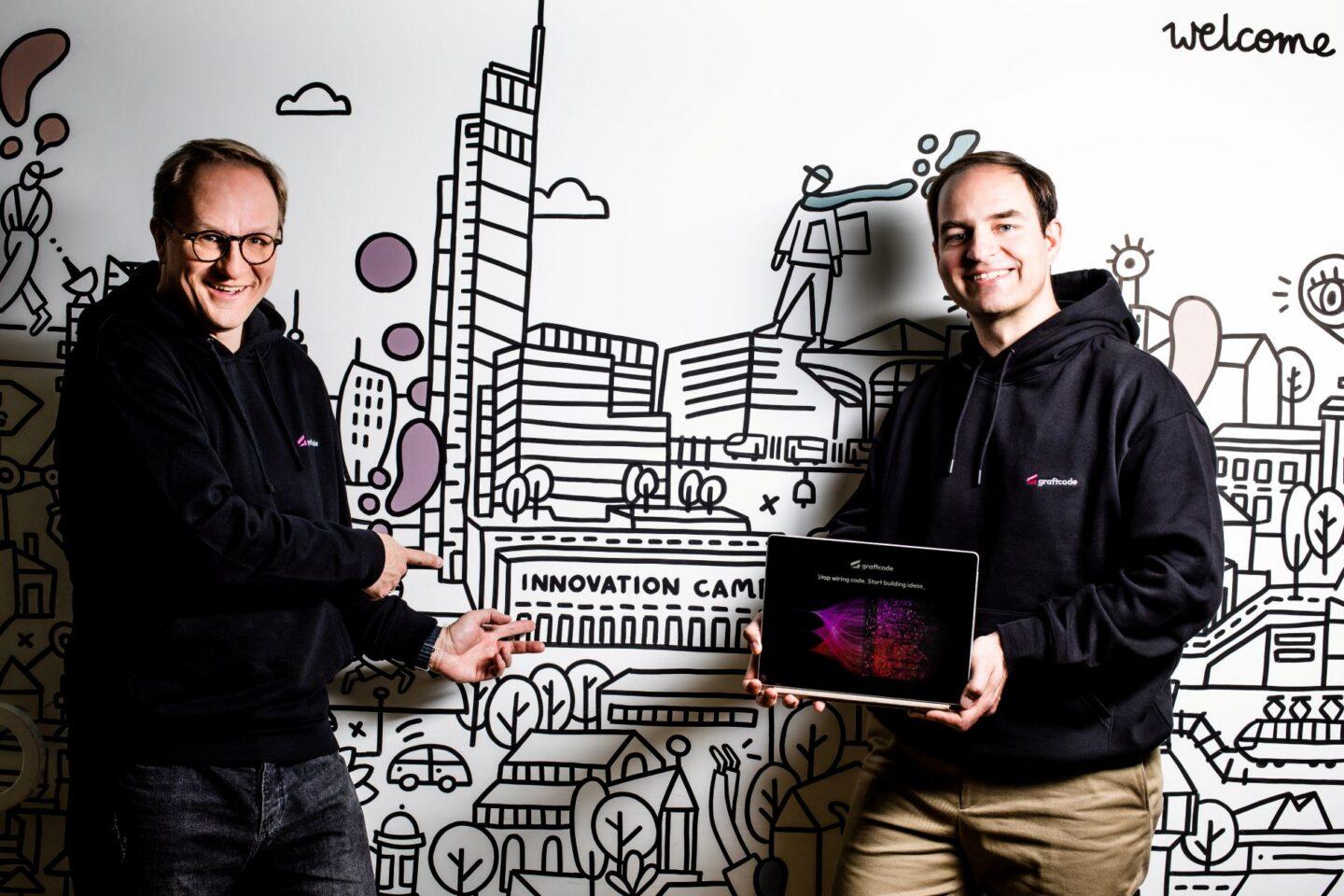
Hard2beat (lead investor in the round), together with Digital Ocean Ventures, Heartfelt Capital, and private investors, has invested in Graftcode. The company raised PLN 9 million (approx. EUR 2.1 million), bringing its total funding to PLN 28 million (approx. EUR 6.5 million) over its lifetime. Employees have also acquired equity stakes in the company.
Graftcode is a developer platform which, as the company explains, “allows applications written in any programming language to be connected with a single command, without writing additional code.” A beta version is already available, enabling the company to begin onboarding its first users.
“Over the past two decades, the IT industry has optimized how systems connect, rather than questioning whether this complexity should exist in the first place. We built Graftcode to eliminate the integration layer entirely, not to improve it. Developers can focus solely on business logic, while their systems become instantly connected in the most efficient way possible, and simultaneously ready for consumption by AI thanks to built-in support for the MCP protocol – a communication standard for artificial intelligence,” explains Przemysław Ładyński, co-founder and CEO of Graftcode.
According to Maciej Zawadziński, partner at Hard2beat, demand for simpler system integration methods continues to grow.
“This challenge becomes even more pressing as increasingly complex AI-based applications are being built. Graftcode introduces a fundamentally new approach that has the potential to change how developers build and scale modern software,” the investor notes.
The funds raised will be used to further develop the platform, including support for additional programming languages and improved integration with AI tools.
The company aims to reach 200,000 users by the end of 2026. Over the following two years, it plans to increase that figure tenfold.
Good to know
Early 2026 looks promising
In Poland, most of the available capital for startup investment comes from public sources. To a large extent, its inflow determines overall market momentum.
“In 2025, we recorded up to four weekly announcements of VC and business angel investments at most. This situation occurred three times. Compared with 2024, the picture looks weaker: back then, a maximum of four transactions was reached six times, despite a comparable total number of announcements overall (95 versus 97). The beginning of 2026 looks promising. By mid-April, we had already seen four weeks with three announced transactions,” calculates Rozalia Urbanek, acting CEO of PFR Ventures.
Among the most popular technologies, a significant number of projects are related to artificial intelligence (AI). These are often linked to the healthcare sector.
PFR Ventures reports that venture capital funds in its portfolio have capital available to finance more than 550 companies.
“Only around 40% of this capital has been deployed so far. This means that in the coming years we can expect more than 300 investment announcements. This number will continue to grow alongside new allocations from PFR Ventures and as management teams complete their preparatory administrative work and begin investing,” adds Rozalia Urbanek.
Deeptech and dual-use solutions attract capital
A transaction has also been announced by the Gdańsk-based fund Balnord, which – together with Forward.one from Amsterdam – has invested EUR 2 million in a pre-seed round of the Danish company Sapient Perception. The fund has backed a deeptech project whose technology may find so-called dual-use applications, meaning it can be used in both civilian and defense contexts.
Sapient Perception specializes in developing AI sensors for unmanned systems used in defense, public safety, and critical infrastructure protection. According to the company, its solution enables operators to monitor significantly larger areas without losing the resolution necessary for accurate field decisions. The company also claims that, with Sapient, terrain coverage can be 108 times larger per image, while detection accuracy may improve by 50%.
The funds raised will support further development of the platform and initial field deployments of the technology.
“Our technology enables continuous coverage of significantly larger and more complex areas than existing solutions, while delivering to the operator in real time only the information relevant to the specific context. We eliminate the trade-off between range and detail that is built into current ISR systems,” says Anthony Garetto, CEO and co-founder of Sapient Perception.
Technologies for defense and security
Sapient Perception is initially deploying its technology in unmanned systems, where communications are limited and situational awareness is critical. The company explains that the system is optimized for SWaP (size, weight, and power), modular in design, compliant with NDAA requirements, free of ITAR restrictions, and ready for integration with standard UAV platforms. This may make it particularly attractive for European and allied programs seeking sensor infrastructure for autonomous and semi-autonomous systems.
Jarosław Pilarczyk, partner at Balnord, argues that modern defense and public safety operations are not fully leveraging the capabilities of the most advanced sensors or the volume of data they generate.
“Sapient Perception addresses this challenge with a fundamentally different approach based on edge AI, which we believe will become the foundation of next-generation systems,” says Pilarczyk.
Sapient Perception is currently in active discussions with defense companies, systems integrators, and strategic partners in Europe and North America.
AI in retail also attracts investors
As reported yesterday, Warsaw-based startup Replenit has raised USD 2.5 million in a pre-seed round. The company develops AI-driven solutions for the retail sector.
The capital provided by investors will be used to further develop the product, expand the research team, and scale engineering operations in Poland and the Netherlands.
Among the investors are Polish funds Movens Capital and Vastpoint, which co-led the round, as well as angel investor Mati Staniszewski, co-founder and CEO of ElevenLabs. Other participants include Logo Ventures, DigitalOcean Ventures, Finberg, and Caucasus Ventures.
Automation for the pharmaceutical sector
A previously completed transaction was also disclosed by AIP Seed. The fund invested in the startup Regunaut, founded by Małgorzata Łuksza and Katarzyna Rzewuska, committing USD 100,000 so far to the project.
The company is building an AI agent-based operating system for managing drug registrations.
“Every medicine, before it reaches the market, must obtain marketing authorization and then maintain its license throughout its lifecycle in every country where it is sold. This requires continuous monitoring of regulatory changes, filing variation applications, renewing approvals, and managing documentation – often across dozens of countries simultaneously,” reads a briefing provided by the company.
This process generates significant costs and is time-consuming. Errors that may arise in the process pose a risk to pharmaceutical companies.
According to the company, within several months of launching the platform, Regunaut has already attracted users from more than 40 pharmaceutical companies worldwide.
“Regulatory affairs has been waiting for its moment. It is a field built on context, precedents, and justification – precisely where large language models are strongest. Just as legal tech has undergone transformation, pharmaceutical regulatory work is next. Our next step is new jurisdictions, new agents, and new features – from registration to business development and medical marketing,” says Małgorzata Łuksza, CEO of Regunaut, quoted in the company’s statement.


Key Takeaways
- The market structure indicates that public funding continues to play a significant role in financing startups in Poland, influencing the pace of investment activity. At the same time, a substantial portion of available capital remains unallocated, which – according to PFR Ventures – could translate into hundreds of additional transactions. Combined with growing interest in AI, this points to further market expansion and heightened investor activity.
- In recent days, several venture capital transactions involving domestic funds have been announced, covering both Polish companies and international projects. Data cited by PFR Ventures suggests that the beginning of 2026 may prove more active than the previous year, while the scale of available capital indicates a continued increase in the number of investments in the years ahead.
- Artificial intelligence remains at the center of investor interest, with applications spanning multiple areas – from developer tools and deeptech solutions to retail technologies. Examples such as Graftcode, Sapient Perception, and Replenit illustrate how AI is being used both to optimize software development processes and to power advanced analytical and operational systems, thereby increasing the attractiveness of these projects for venture capital funds.