

This article is a part of Poland Unpacked. Weekly intelligence for decision-makers
The Monetary Policy Council (RPP) decided to keep interest rates unchanged, with the reference rate remaining at 3.75%. The decision was in line with market expectations.
 Interactive chart
 The backdrop to the decision was the preliminary April inflation reading, which came in at 3.2% year on year. That marked an increase from 3% in March, despite the government’s Fuel Prices Lower (CPN - a play on words, see the explainer - ed.) program. The rise was therefore driven by an increase in so-called core inflation, which excludes energy and food prices.
Explainer
CPN: the fuel station that fueled communist Poland
If you've spent any time in Poland talking to people old enough to remember the PRL – the Polish People’s Republic – you'll eventually hear someone mention CPN with a mix of fondness and exasperation. Fun fact: some of them still call any fuel station a CPN. Simple as that.
CPN stood for Centrala Produktów Naftowych – the Central Petroleum Products Authority. In plain terms, it was the only petrol station in Poland. Not one chain among many. The only one, full stop.
In 1981, CPN employed a total of 14,200 people and 5,600 petrol station agents, and had 43 fuel laboratories operating in the country. It was, in other words, an enormous state apparatus built around the simple act of filling up a tank.
When communism collapsed and Poland began its transformation, the days of CPN as a monopoly were numbered. CPN was restructured as a state-owned limited liability company in 1995. By the end of the decade, CPN's operations included more than 1,400 service stations, 156 fuel depots, a 600-strong fleet of tanker trucks, port operations, and 22 research laboratories.
In 1999, the Polish Council of Ministers decided to partially privatise and merge CPN with Petrochemia Płock, the state firm in charge of the oil refineries in Płock. The resulting company was renamed Polski Koncern Naftowy (PKN), with Orlen added several months later as the brand name.
Inflation still within target…
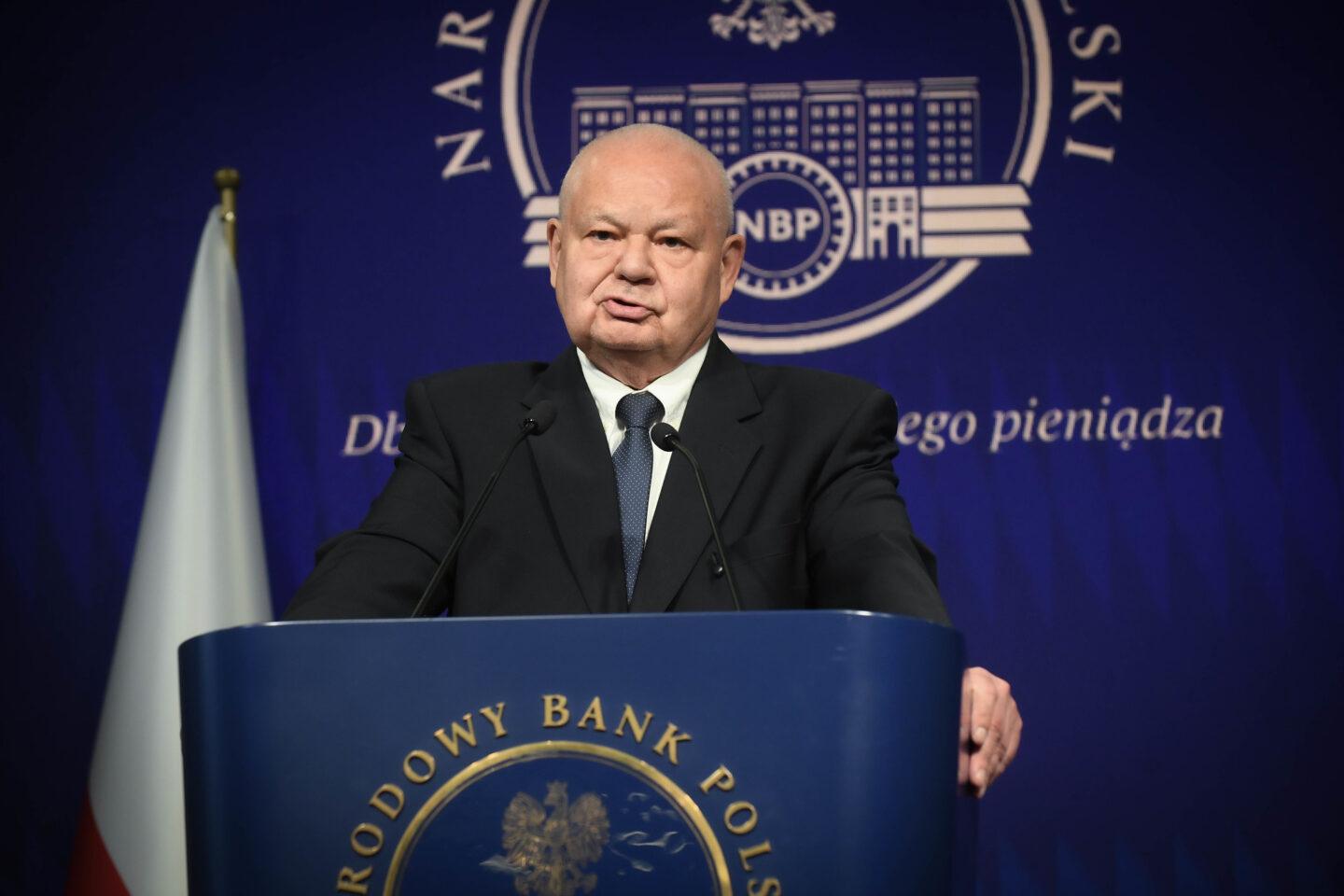
At a press conference following the meeting, Adam Glapiński, governor of the NBP, said inflation still remained within the central bank’s target range. The target is set at 2.5%, with a tolerance band of plus or minus 1 percentage point.
Mr. Glapiński presented a number of arguments suggesting that the risk of a sharp inflation spike remains limited. The most important, he said, is weaker demand pressure. This stems from slowing nominal and real wage growth. Unlike in 2021-22, the economy no longer faces pent-up demand, when consumers and companies were making purchases postponed during the pandemic. In addition, demand in 2022 was boosted by the large influx of refugees arriving in Poland. That situation no longer applies.
Among the other arguments, Mr. Glapiński noted that although oil prices remain very high, increases in gas and coal prices have been far more moderate. The zloty has also remained stable, helping to prevent import prices – including fuel – from rising further. Food prices are currently falling as well, although the ongoing drought could soon reverse that trend.
…but the risk of rate hikes is growing
At the same time, Adam Glapiński acknowledged that the risk of interest-rate hikes has increased. The key factor is higher oil prices and, consequently, fuel costs, which are feeding through into various sectors of the economy.
There is, however, a second reason: uncertainty. It remains unclear how the war in the Middle East will evolve. Such uncertainty encourages companies, for example, to build up inventories, which boosts demand and, in turn, puts upward pressure on prices.
Another separate risk factor is the possible expiration of the government’s Fuel Prices Lower (CPN) program, although that appears highly unlikely. Lost revenues from lower VAT and excise duties on fuel amount to around 0.5% of GDP. That is not a major challenge for the state budget, but scrapping the program would come at a considerable political cost. For that reason, it is unlikely to happen until oil prices return to significantly lower levels.
XYZ view
One thing now appears almost certain: further interest-rate cuts in 2026 can largely be ruled out. That would change only if the war were to end within the coming weeks, oil once again flowed freely through the Strait of Hormuz and Gulf states restored production capacity. For now, however, that looks unlikely.
Interactive chart So what is the most realistic scenario? Pricing in forward-rate agreements (FRAs) suggests that interest rates could rise to as much as 4.50% over the next year. That would imply hikes totaling 0.75 percentage points. It is therefore not a dramatic scenario. In 2022-23, rates increased by 6.65 percentage points.
Higher rates would probably weigh on economic activity, particularly the property market, although the overall impact would likely remain moderate.
The question is whether such hikes will actually materialize. Economists from banks and analytical institutions surveyed in the NBP’s “Macroeconomic Survey” expected no rate increases over the next 12 months. Admittedly, the survey was conducted at the end of March – before the latest inflation reading, though after the outbreak of the war.
The key variables will be inflation data and, of course, developments in the Middle East. If inflation begins to move significantly above 3.5%, the Monetary Policy Council (RPP) may start considering a rate increase, if only as a signaling measure. Any move would probably be limited in scale, but it can no longer be ruled out.


Key Takeaways
- The NBP governor nevertheless acknowledged that the risk of interest-rate hikes has increased, mainly because of high oil prices and uncertainty linked to the war in the Middle East. Markets are currently pricing in rates rising to as much as 4.50% within a year – an increase of 0.75 percentage points – although economists still do not see such a scenario as likely.
- The Monetary Policy Council (RPP) left interest rates unchanged, with the reference rate remaining at 3.75%, in line with market expectations. At the same time, inflation rose to 3.2% year on year in April from 3% in March, driven mainly by higher core inflation despite the government’s Fuel Prices Lower (CPN) program.
- Adam Glapiński stressed that inflation still remains within the NBP’s target range of 2.5% plus or minus 1 percentage point, and that the risk of a sustained rise above 3.5% remains limited. He pointed to slower wage growth, the absence of excessive demand and a stable zloty as factors helping to contain inflationary pressure.