

This article is a part of Poland Unpacked. Weekly intelligence for decision-makers
As recently as a decade ago, diet catering was a niche business confined to a handful of Poland’s largest cities. Today, several hundred companies operate in the market, delivery coverage extends across almost the entire country, and the sector - growing at a double-digit pace - is now worth around PLN 4bn (roughly EUR 940m), according to PMR Market Experts.
Yet half of the industry’s turnover is generated by only a few players, whose valuations have soared. In recent years Żabka retailer acquired Maczfit for more than PLN 300m (about EUR 70m), while private-equity fund MCI Capital took a controlling stake in Nice To Fit You at a valuation of around PLN 340m (about EUR 80m). That may prove modest compared with what the market leader could soon be worth.
In this year’s ranking by Forbes of Poland’s most valuable e-commerce companies, four boxed-meal providers made the top 20. Alongside the companies already mentioned were Diety od Brokuła and, in fifth place, Kuchnia Vikinga. According to the magazine, the latter’s valuation tripled over the past year to PLN 1.2bn (around EUR 280m).
An industry expert familiar with internal valuations confirms that, if the company delivers on its 2026 financial targets, Kuchnia Vikinga could become the sector’s first billion-dollar-scale business - a distinctly Polish phenomenon.
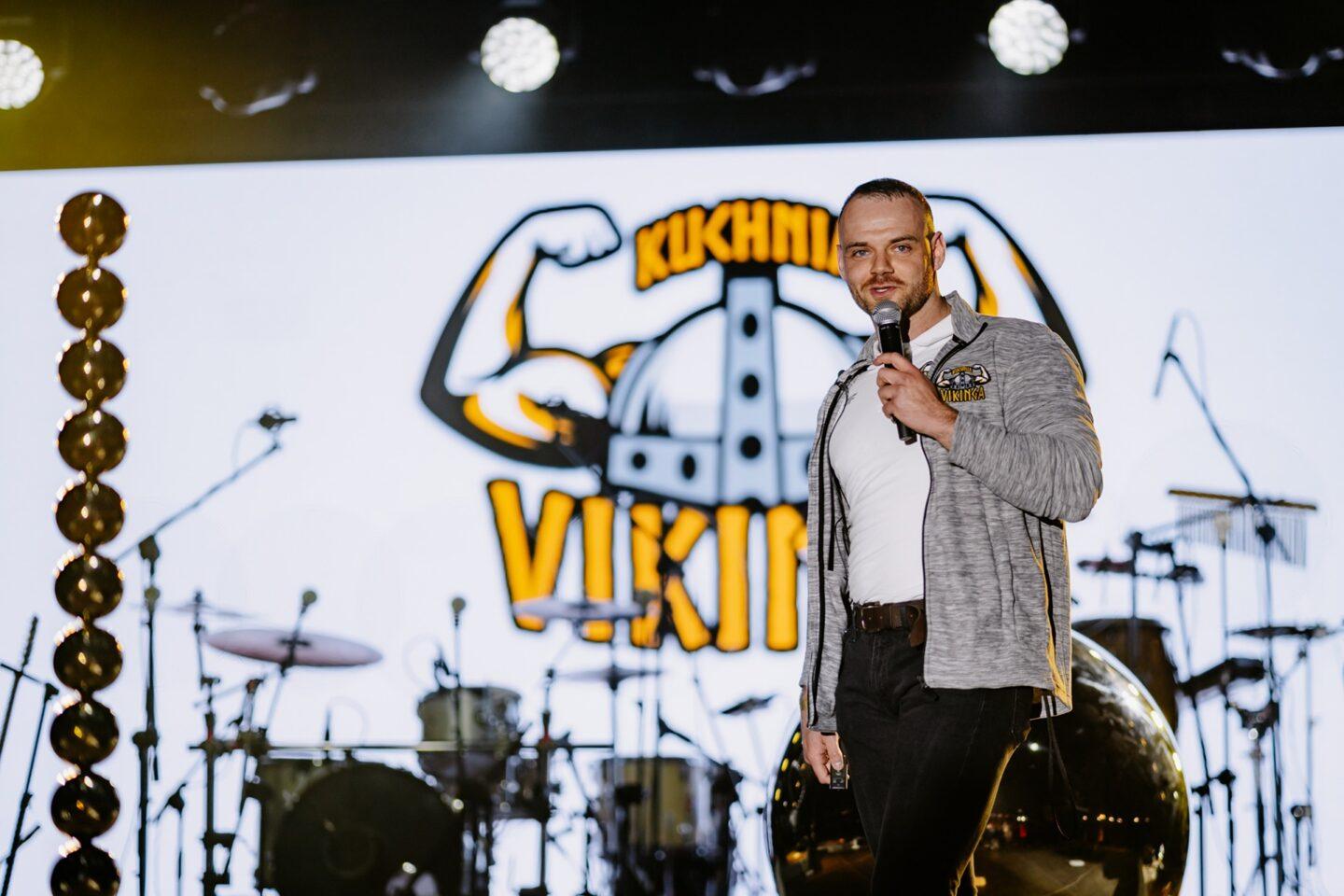
“Being among the most valuable Polish e-commerce companies is a source of pride. We are proving that large-scale businesses can be built in Poland at the intersection of technology and nutrition. But this is only the beginning. Our ambition is for the Viking brand to be recognized across Europe. We want to achieve that by expanding beyond boxed diets - being present wherever customers need healthy, fresh and convenient food, while using our own fleet and direct relationship with consumers as a competitive advantage,” says Łukasz Dawidziuk, founder and chief executive of Kuchnia Vikinga.
In recent years the company has already begun preparing for international expansion, though it is still refining its processes and infrastructure. Nearby markets - particularly Czechia and the Baltic states - are the most likely first targets. Customer profiles are similar there, while geographical proximity helps preserve product freshness.
Extraordinary growth and strengthening the foundations
In 2023 the company generated PLN 267m (around EUR 63m) in revenue, with an EBITDA margin of 18%. A year later, while maintaining similar profitability, revenues approached PLN 490m (roughly EUR 115m), allowing it to overtake Maczfit as market leader. Despite that rapid increase in scale, growth did not slow. In 2025 sales rose by more than 40% to PLN 695m (around EUR 163m).
This year’s target is to exceed PLN 1bn (roughly EUR 235m) in revenues while maintaining an EBITDA margin of 13-15%, implying profits of around PLN 130m-150m (EUR 30m-35m). Less than two years ago, Kuchnia Vikinga expected to reach that revenue level only in 2027. A new business line, Pan Viking, is expected to accelerate progress.
“This is our response to the rapidly expanding office-catering market. We already deliver meals directly to more than 1,000 companies. This year we also refreshed our range of party sets and began serving accommodation facilities and large-scale events. We are now preparing a dedicated offer of hot meals and lunchboxes for pupils and students. We also see substantial potential in recovery meals, functional foods, and supplementary products such as vitamin packs, snack bars and beverages,” says Mr. Dawidziuk.
He admits that such rapid expansion has come at a price. Maintaining customer satisfaction amid a surge in orders at times created internal organizational chaos. But the company, he says, has now entered a different phase.
“We are strengthening the foundations: repaying our technological debt, building scalable processes and reinforcing the team. We are attracting experts and managers from across Poland to Białystok, north-eastern Poland [where Kuchnia Vikinga’s HQ are located], while giving them considerable autonomy. At the same time, we are preserving a flat and agile organizational structure,” the entrepreneur explains.
Fireside chat
The industry’s first billion-zloty valuation is already on the horizon
XYZ: What stands out most to you when you look at the development of diet catering in Poland?
Dominik Smykla, managing partner at Resource Partners fund: We exited the sector in 2021, when we sold Maczfit to Żabka, but we continue to watch the market with interest. It is undoubtedly going through a fascinating phase and is still growing at a double-digit pace. It is a uniquely Polish phenomenon that people abroad struggle to understand.
The industry’s rapid expansion has been driven above all by the growing number of meal sets sold. When we were still involved in Maczfit, the prices of diet catering were similar to today’s - or even slightly higher. Yet average wages in Poland have risen by several dozen percentage points over that period. As a result, the offer has become affordable for an increasingly broad segment of society.
When we invested in Maczfit, we worried that boxed diets might prove to be a product only for residents of upscale Warsaw apartment complexes. That the business would never expand beyond affluent districts such as Wilanów, because for the average consumer it would remain a luxury. Yet today a full day’s meals delivered to your door can be bought for just over PLN 50 (around EUR 12). That is roughly what lunch with a drink costs in Warsaw.
How is that possible? Rising wages mean rising labor costs for producers, and ingredient prices have also increased sharply over the years.
The answer lies in the market structure, which is now dominated by a handful of firms. Years ago the barrier to entry was minimal. To a large extent, local restaurants handled meal delivery themselves. For them it was an additional source of high-margin sales. Those were the businesses we mainly competed against during our investment in Maczfit.
That changed once boxed-meal production moved out of restaurant back kitchens and into large industrial facilities. Nearly a decade ago Maczfit built a production plant costing around PLN 10m (roughly EUR 2.3m). This year Nice To Fit You is due to open a central kitchen costing around PLN 100m (about EUR 23m), while Kuchnia Vikinga is undertaking investments on a similarly large scale.
Industrial-scale production of diet catering delivers incomparably greater efficiency. The largest companies can therefore maintain low prices in order to continuously expand their customer base. Especially since margins in the sector used to be so high that there was room to cut prices. Small and medium-sized firms, unable to invest in efficient production, logistics and technology, are struggling to cope with the new reality. Of the 600-700 companies that once operated in the market, only around 400 remain.
What comes next?
Further consolidation is inevitable. Smaller firms will remain primarily in the premium segment, selling meal plans not for PLN 60 (around EUR 14), but perhaps PLN 160 (roughly EUR 38), tailored to highly restrictive dietary requirements and based on very high-quality ingredients. In the mass market, the largest players will steadily increase their share. Especially because they can afford ever-larger investments.
When we entered the sector, banks were extremely skeptical about financing it. They doubted whether the category would survive, particularly as the business is not built on long-term contracts. Today the market is large enough, and sufficiently well understood, that obtaining financing for a new production facility should no longer pose a problem.
Would a billion-zloty valuation for the first company in the sector - Kuchnia Vikinga - already be justified today?
It would be justified with EBITDA profits in the region of PLN 100m (around EUR 23m). At that scale, the leader of a fast-growing and promising market - while itself maintaining high growth - could already begin discussions with investors around a billion-zloty valuation, provided the books are in order. Particularly because this is a business that generates cash relatively easily. Customers pay upfront, while some liabilities can be significantly deferred.
That said, one must also consider long-term pressure on margins. Food is the largest cost for boxed-meal producers, but logistics are also significant. Rising fuel prices could affect profitability.
Let us assume Kuchnia Vikinga surpasses a PLN 1bn valuation and becomes open to an investor. Who would be capable of putting up that kind of money?
Among the funds active in Poland, perhaps only MidEuropa could undertake such a transaction. I do not expect an entirely new foreign financial investor to enter the sector. Boxed diets have not taken off anywhere else the way they have in Poland. Maczfit, Body Chief and Nice To Fit You have all tried expanding into Germany, for example, but without spectacular success.
There were several reasons for that, and some barriers turned out to be surprisingly mundane. In Berlin, for instance, one problem is the large number of old intercom systems without code-entry access. Customers awakened by couriers at two in the morning are understandably unhappy, while packages left outside have a tendency to disappear before dawn. So I see two potential exit routes.
Which are?
The stockmarket looks like a good option. With EBITDA profits of at least PLN 100m (around EUR 23m), there would already be a substantial pool of interested investors. But conditions for an IPO are constantly changing, so timing is critical.
The second route would be a strategic investor, though not necessarily an obvious one. Żabka acquired Maczfit to build an ecosystem around it and gain access to a new customer base. Another large retail chain might attempt something similar. FMCG companies could also be interested, particularly because of the value of direct-to-consumer distribution. Perhaps restaurant operators such as AmRest, or employee-benefits companies like Pluxee or Benefit Systems, would find the business attractive. I would not rule out e-commerce platforms either.
The owners of Kuchnia Vikinga are in a comfortable position because they do not need to seek an investor. But another major transaction in the industry will certainly happen from a different direction. Within the next few years at the latest, MCI Capital fund will begin looking for a new owner for Nice To Fit You.

Wages surged, catering prices barely moved
When Kuchnia Vikinga entered the market in 2018, no large operators yet existed. Boxed diets were expensive and aimed mainly at fitness-focused residents of major cities. The universal need for convenient all-day meals ran into the barriers of high prices and low consumer awareness.
“Over the past three years, the effective price of a bag containing five meals has barely changed - it remains around PLN 50 (about EUR 12). Meanwhile, Poles’ disposable incomes have risen by several dozen percentage points. That has made the offer accessible to a much broader consumer base,” says Mr. Dawidziuk.
He regards the pandemic as the market’s key catalyst. That period saw dozens of local operators emerge. Their business model was straightforward: use existing restaurant infrastructure for cooking, dining rooms for packaging, and third-party partners for sales and logistics.
“We started out in much the same way ourselves. But during the period of intense inflationary pressure in 2022-23, when most competitors sharply reduced their marketing budgets, we doubled ours and lowered prices. The risk paid off. Volumes grew exponentially and we entered the market’s top tier,” he says.
The company allocates less than 5% of revenues to marketing, most of it aimed at building brand recognition through sport. It sponsors Poland’s national soccer team as well as the soccer clubs Jagiellonia Białystok and Śląsk Wrocław.
Big players capture the market, smaller rivals struggle
Consolidation in the diet-catering market has accelerated in recent years, with dozens of players disappearing annually. Some have approached Kuchnia Vikinga for help in servicing customers - most recently Pogotowie Dietetyczne.
“In the past month alone we helped fulfil orders for three brands from Białystok. We do this selectively, when the owner behaves fairly toward customers. We want to build credibility and trust across the market as a whole,” says Mr. Dawidziuk.
He expects consolidation to accelerate further in the coming years. Economies of scale, he says, are “brutal”. Large operators become more efficient each year, while smaller firms struggle to remain profitable. That reflects customer expectations for ever-greater variety.
“Over the course of a month we offer more than 1,500 different dishes, which requires a highly flexible machinery base. One day we can produce tens of thousands of pancakes without difficulty, and the next switch to burgers. The barrier to entry has therefore become substantial. Only the largest operators can afford modern machinery that dramatically speeds up production. Automation in turn creates production consistency, and that translates into higher quality for the end customer,” argues the head of Kuchnia Vikinga.
Reliable logistics are equally important. A single missed day’s delivery can mean permanently losing a customer. The company says that 99.9% of deliveries arrive on time—before 6am. It operates its own fleet of more than 500 refrigerated vehicles. The share of electric vehicles is expected to rise from 10% to 28% by 2028.
Expert's perspective
The sector is growing rapidly, and large players are strengthening their position
The outlook for the coming years remains positive for the industry. It will benefit both from rising consumer affluence and from the growing importance of convenience, time savings and greater attention to diet and lifestyle. At the same time, the market is maturing. Over the medium term, through to 2031, we expect growth dynamics to gradually slow.
Meanwhile, consolidation is continuing. Between 2021 and 2025, the combined market share of the five largest players rose from roughly one-fifth to around one-half of the market by value. We expect this process to continue in the years ahead. Smaller companies will increasingly struggle to compete with the largest operators on price, scale or breadth of offering. Even so, there will still be room for smaller firms, particularly those specializing in distinctive proprietary diets.


The most loyal customers are outside the biggest cities
Acquiring a new customer in this industry costs between PLN 200 and PLN 400 (EUR 47-94). More than half of Kuchnia Vikinga customers arrive through personal recommendations. Most come with a specific objective: losing weight, improving health and so forth. A significant share stay. Repeat customers account for three-quarters of the company’s turnover and spend several thousand zlotys annually. They do not necessarily come from the largest metropolitan areas.
“Very early on we decided to expand into smaller towns and rural areas, where customers previously had no access to comparable services. We now reach more than 38,000 localities inhabited by nearly 85% of Poland’s population. We are consistently pursuing a strategy of increasing product accessibility, even though delivery costs are higher during the early stages of expansion into a new region. We know these customers statistically stay with us longer,” says Mr. Dawidziuk.
Good to know
Promoting the city, supporting local residents
Kuchnia Vikinga presents itself as a socially responsible business with deep roots in the local community. Most of its more than 2,000 employees live in Białystok. The company is building what it calls “Viking Town” for them.
“Within the next few years we want to provide employees with free access to sports activities, basic medical services and other amenities that support everyday life. We are already collecting applications for a preschool project for our youngest ‘Vikings’,” says Łukasz Dawidziuk, founder and chief executive of Kuchnia Vikinga.
In April the company was named among the largest donors in the historic fundraising campaign organized by Łatwogang.
Hundreds of millions invested in production and innovation
The company is undertaking investments on a scale unprecedented for the industry. In 2025 it spent more than PLN 100m (around EUR 23m), and this year’s budget is similar. In January it launched a new production facility, doubling capacity to nearly 500,000 meals a day. It is now focusing on so-called backward integration, taking control of successive parts of the supply chain.
“We are the only company in the industry with our own meat-processing plant [among grocery retailers, Dino is similarly distinctive—editor’s note], and in the coming months we will launch dumpling production. We also plan to build a bakery and a vegetable-processing facility. This not only delivers measurable savings, but above all gives us full control over production quality. That matters because fresh products are highly sensitive, and there have been issues with some suppliers,” says Mr. Dawidziuk.
For 2028 the company is planning another factory and warehouse project worth around PLN 150m (approximately EUR 35m). Those investments are intended to pave the way toward PLN 3bn (around EUR 705m) in revenues.
“In the near future we will also launch a new research-and-development center employing 50 people. We are developing new recipes, refining production processes and providing training. Nearly 85,000 Poles use our products every day. That gives us an enormous knowledge base about what consumers like and want to eat. Ultimately, the new center will allow us to create highly personalized meals and engage in research projects. Together with universities in Białystok, we are already conducting one such study. We are examining the long-term impact of our meals on consumers’ health and well-being,” the entrepreneur says.


Key Takeaways
- A billion-zloty valuation and revenues in less than a decade? Founded in 2018, Kuchnia Vikinga generated PLN 267m (around EUR 63m) in revenues and tens of millions of zlotys in profit just five years later. In 2025 sales rose by more than 40% to PLN 695m (roughly EUR 163m), while this year’s target is to exceed PLN 1bn (around EUR 235m) with an EBITDA margin of 13-15%—equivalent to profits of approximately PLN 130m-150m (EUR 30m-35m). According to one industry expert, that scale alone could already justify a valuation above PLN 1bn (roughly EUR 235m), making the company the first in the sector to cross the threshold. Two other major players have already secured investors at valuations above PLN 300m (around EUR 70m): Maczfit with a strategic investor, Żabka, and Nice To Fit You with financial investor MCI Capital.
- European ambitions and new business pillars. Kuchnia Vikinga aims to build a brand recognized across Europe. In the coming years the company plans to launch operations in neighboring markets, primarily the Czech Republic and the Baltic states. At the same time it is developing new business lines under the Pan Viking brand, expanding beyond boxed diets. The company already supplies meals to more than 1,000 businesses, offers party catering packages and serves accommodation facilities, while also preparing new services for schools, among others. “We want to be present wherever customers need healthy, fresh and convenient food,” says Łukasz Dawidziuk, founder and chief executive of Kuchnia Vikinga.
- Heavy investment in production and innovation. Such rapid and efficient scaling has been made possible by investments that are exceptionally large for the market. Kuchnia Vikinga has already invested more than PLN 100m (around EUR 23m), and this year’s budget is on a similar scale. In January the company launched a new production facility that doubled its capacity to nearly 500,000 meals a day. It is now focusing on so-called backward integration, taking control of successive elements of the supply chain. The company already operates its own meat-processing facility, will soon begin producing dumplings, and also plans to build a bakery and a vegetable-processing plant. Beyond cost savings, this gives the company greater control over quality. It is also planning another factory and warehouse project worth PLN 150m (approximately EUR 35m), which would pave the way toward PLN 3bn (around EUR 705m) in revenues. In the near future the company will also open a new research-and-development center employing 50 people.