

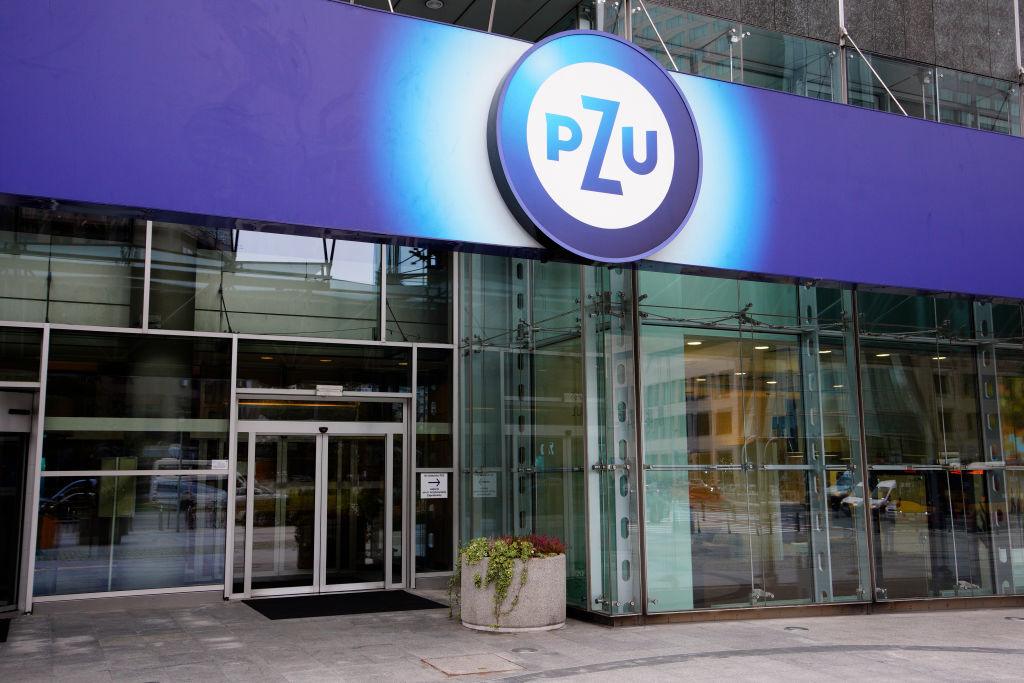
This article is a part of Poland Unpacked. Weekly intelligence for decision-makers
PZU Group, Poland’s leading insurer, is acquiring another market leader: MetLife’s Ukrainian business, which holds a 50% share of the country’s life-insurance market. The deal will not only lift PZU from fourth place to first in Ukraine, but also diversify its revenue streams.
Polish financial institutions are entering the Ukrainian market with growing confidence. Just two weeks after Polish fintech Zen.com acquired the insolvent PIN Bank, PZU announced a conditional agreement to acquire 100% of the shares in MetLife Ukraine. The transaction still requires approval from the National Bank of Ukraine and the country’s Anti-Monopoly Committee.
Unlike Zen.com, PZU – as befits a market leader – is acquiring a player of similar stature. The target is the leader of Ukraine’s life-insurance market, with an estimated 50% market share.
MetLife has operated in Ukraine for nearly a quarter of a century
“We are investing in a market leader with an experienced team and a resilient business model that strengthens our presence in Ukraine. The deal also significantly expands the scale of our life-insurance operations. This decision combines strategic ambition with solid business fundamentals,” says Bogdan Benczak, who was appointed chief executive of the group for a three-year term in mid-April.
The company being acquired by PZU has operated in Ukraine since 2002. It began as ALICO AIG Life. Eight years later, following a global transaction, it became part of the American group MetLife, which specializes in life insurance.
Over that period, the company built a strong position in the Ukrainian market. By the end of 2025, the insurer served 922,000 customers. Most clients use protection-and-savings products (endowment policies). These policies guarantee financial support for beneficiaries in the event of the insured person’s death. If the policyholder survives to a specified age, the product provides funds that can serve, for example, as a supplementary pension.
The insurer also offers group insurance products covering life protection and medical costs linked to the diagnosis of one of 32 life-threatening conditions, including cancer, stroke, and heart attack.
Claims payouts are rising at a double-digit pace
The insurer relies on an extensive distribution network, including partnerships with brokers, a professional agency network, and banks. It works with the two largest players in Ukraine’s banking sector: PrivatBank and Oschadbank.
Despite the war in Ukraine, the company continues to improve its financial performance. In 2025, it generated EUR 38m in revenue and EUR 21m in net profit – up 11.7% and 5% year on year, respectively. At the end of last year, the company’s assets stood at EUR 249m, while shareholders’ equity totaled EUR 99m, down from the previous year.
 Interactive chart
 The Ukrainian insurer notes that it has ranked first in the country for the past ten consecutive years across key operating indicators. In 2025, it collected UAH 3.08bn in gross written premiums, an increase of 10.7%. Claims payouts to policyholders, however, are growing much faster. In 2025, they reached UAH 623.6m, up 23% year on year. That represented 34% of all payouts in Ukraine’s life-insurance market.
The largest share of that amount was linked to survival-benefit policies, which paid out UAH 390m. Since the outbreak of the war in Ukraine in February 2022, MetLife has also paid 2,500 claims to civilian clients affected by the conflict. The total value of those payouts amounted to EUR 971,000.
PZU has been present in Ukraine for 21 years - though still outside the top 3
This is not PZU’s first investment in Ukraine. Poland’s largest insurer has operated in the market since 2005, when it acquired a stake in the Ukrainian Skide-West group, founded in 1993. The group comprised four companies: a non-life insurer, a life insurer, an assistance company, and a motor-claims handling business.
Even then, PZU signaled its ambition to build a strong position east of the Polish border. The transaction was led by Cezary Stypułkowski, then chief executive of PZU and now chief executive of Bank Pekao, which is controlled by PZU. He presented a plan to increase the acquired company’s market share from 4% to 15% by 2010, which was expected to secure market leadership.
According to a presentation published in October 2025, that goal remains some way off. This is particularly true in non-life insurance, where PZU ranks only 11th. In life insurance, it is currently the fourth-largest player. Following the acquisition of MetLife Ukraine, and the merger of the two businesses, the group is expected to pull clearly ahead of its competitors, with a market share exceeding 50%.
International operations account for 17.5% of group revenue
According to the latest available data, in the fourth quarter of 2025 PZU generated PLN 79m (EUR 18m) in insurance revenue in Ukraine, of which as much as PLN 74m (EUR 17m) came from non-life insurance. This clearly illustrates the imbalance between the two market segments east of the Polish border. The combined net profit of PZU’s two Ukrainian companies amounted to PLN 15m (EUR 3.4m), split almost evenly between the two businesses. Non-life insurance contributed PLN 8m (EUR 1.8m), while life insurance generated PLN 7m (EUR 1.6m).
Beyond Ukraine, PZU also operates in the Baltic states. That presence stems from a 2014 transaction carried out under the leadership of Andrzej Klesyk. At the time, the group acquired Link4 along with insurance companies in Lithuania, Latvia, and Estonia. Today, PZU’s subsidiaries are market leaders in non-life insurance in Lithuania and Latvia. In Estonia, they rank third. Lithuania is also home to a life-insurance subsidiary, which is the country’s sixth-largest player in that segment.
Combined revenue in those markets amounts to PLN 746m (EUR 170m), nearly ten times higher than PZU’s insurance revenue in Ukraine. The gap in net profit is smaller: in the Baltic states it reaches PLN 97m (EUR 22m).
Interactive chart At the end of 2025, PZU’s international operations accounted for 17.7% of the group’s insurance revenue, up from 16.5% a year earlier. Following the acquisition of MetLife Ukraine, that share is expected to rise further, strengthening the diversification of the Polish group’s business.
The acquired business delivers above-average profitability
In its official press release, PZU points to the strong profitability of MetLife Ukraine’s business, which averaged around 20% between 2023 and 2025. The insurer also has a substantial capital surplus, allowing it to pay dividends of up to EUR 1m per month despite wartime restrictions on transferring profits out of Ukraine.
PZU also stresses that the acquisition will not only increase the scale of its operations in Ukraine, but also provide access to a sales network complementary to that of PZU Ukraine, a broad product portfolio, and an experienced management team. The group has not disclosed how many people it employs in Ukraine.
“This is an important step toward strengthening customers’ trust in Ukraine’s life-insurance market,” says Maciej Szyszko, chief executive of PZU Ukraine.
“MetLife Ukraine brings a proven operating model capable of functioning in a demanding and volatile market environment, as well as strong business efficiency confirmed by above-average profitability,” PZU’s press office added in response to our questions.
For now, the insurer is not commenting on potential scenarios for integrating the two businesses and remains focused on securing the necessary regulatory approvals. Asked about distribution channels, the group said brokers would remain the dominant channel. It also views bancassurance – insurance sold through banks – as an important long-term growth avenue. PZU plans to build that channel on the strong relationships already developed by both PZU Ukraine and MetLife Ukraine.
PZU is using KUKE support for the transaction
Importantly, the group is receiving support from Poland’s Export Credit Insurance Corporation (KUKE), part of the Polish Development Fund (PFR) group. As a result, the investment is protected against the potential fallout from any deterioration in the military or political situation. The KUKE policy also shields PZU against restrictions on transferring funds, expropriation, and embargoes.
Janusz Władyczak, chief executive of KUKE, stresses that this is another example of a Polish company investing in Ukraine. Limiting political risk – including threats linked to military operations – creates the conditions for Polish firms to expand safely.
“We invest where we have experience, a local presence, and a genuine ability to create value, even in difficult market conditions,” Bogdan Benczak concludes.
PZU has not disclosed the value of the transaction, but according to Forbes Ukraine, the business being sold is worth more than USD 100m. The newspaper reports that three entities were interested in acquiring the company.
Expert's perspective
PZU has seized an opportunity. Ukraine’s market offers significant potential
Although the value of the transaction has not been disclosed, it is reasonable to assume that it is not particularly large. PZU was not required to announce the deal through a current-report filing, while the acquired business accounts for only around 1% of the group’s total revenue and assets. That suggests that even in the event of failure, the negative impact would likely be relatively limited and could be absorbed within one or two quarters.
Ukraine’s market has considerable potential. The country is larger than Poland, while its population is broadly comparable. During the analyst conference call, it was noted that average life-insurance premiums per capita amount to EUR 4 in Ukraine, compared with EUR 159 in Poland. That points to substantial long-term growth potential.


Key Takeaways
- The security of PZU’s investment in Ukraine is supported by cooperation with the Export Credit Insurance Corporation (KUKE), which helps mitigate political and war-related risks. This support allows the Polish group to pursue international expansion without fear of sudden geopolitical deterioration that could destabilize invested capital. Experts note that the Ukrainian market holds significant long-term growth potential, given the currently low level of insurance penetration, with per capita premiums at just EUR 4. The transaction itself, estimated by local media at over USD 100m, represents a relatively small fraction of PZU’s overall value. Combined with its high profit potential, this makes it an attractive “option for the future.”
- PZU is carrying out a strategic acquisition of MetLife Ukraine, which will enable the Polish group to secure a dominant leadership position with over a 50% share of the local life-insurance market. The transaction involves a company with a well-established presence, operating since 2002 and serving nearly 1 million clients, primarily in the endowment (protection-and-savings) segment. Through this acquisition, PZU will expand the scale of its international operations, which already account for more than 17% of the group’s total revenue.
- Despite the ongoing war, the acquired business demonstrates exceptional operational resilience, high profitability at around 20%, and double-digit growth in premiums. In 2025, MetLife Ukraine generated EUR 21m in net profit on revenues of EUR 38m, underscoring the effectiveness of its business model even under extremely challenging conditions. The company has a broad distribution network built on cooperation with key banks such as PrivatBank and Oschadbank. It has also remained the number one insurer in Ukraine for a decade in terms of key operating metrics, making it a highly valuable asset.