

This article is a part of Poland Unpacked. Weekly intelligence for decision-makers
Just a few weeks ago, Krzysztof Krawczyk, head of the Warsaw office of the CVC fund, announced he was stepping down after 11 years with the firm. As XYZ has learned, he has since become a significant investor in G2A – a Polish-origin marketplace that is now operating globally and extends well beyond the gaming sector. A substantial investment push is now underway.
Krzysztof Krawczyk is one of the legends of Poland’s investment community. For nearly 15 years (from 2000 to 2015), he worked at Innova Capital, much of that time as a managing partner. He was responsible, among others, for investments in Wirtualna Polska and Emitel. In 2015, he took the helm of CVC Capital Partners’ Polish operations.
His track record includes the acquisition of Żabka, followed by its listing on the Warsaw Stock Exchange (WSE), taking control of Comarch, one of the largest IT companies on the Polish market, as well as the acquisition of Stock Spirits Group and the sale of PKP Energetyka.
“After eleven extraordinary years, I have decided to take a step forward and make room for what the future will bring. I would like to thank the CVC leadership and my colleagues,” he wrote at the end of March on LinkedIn.
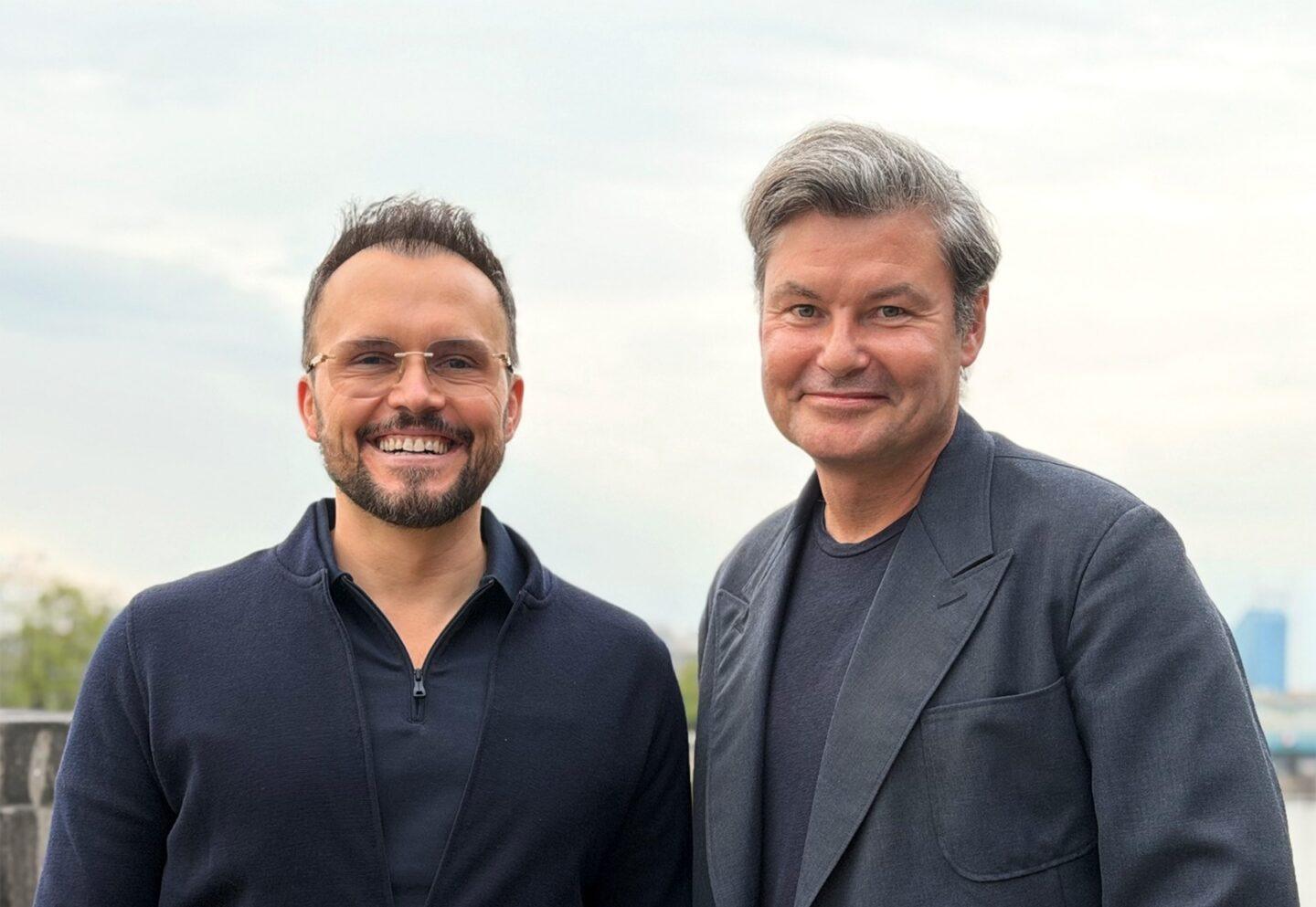
As XYZ has learned, Krzysztof Krawczyk has now invested in G2A Group, the operator of one of the world’s largest digital entertainment marketplace platforms originating from Poland.
“We have gained a partner with extensive experience in scaling global organizations, building M&A strategies, and supporting companies through the next stages of growth,” Bartosz Skwarczek, founder of G2A, told XYZ.pl.
The investment is not purely financial. Krzysztof Krawczyk will be actively involved in the company’s development, including mergers and acquisitions.
G2A and Krzysztof Krawczyk: what the investment is about
Krzysztof Krawczyk has acquired a minority stake in G2A. This marks the first such investment in the company’s history. Until now, G2A has grown exclusively through organic expansion. Neither party has disclosed the size of the stake nor the amount invested.
“I have been following G2A with great interest for nearly eight years. It is one of the most dynamic digital platforms to have emerged in Europe, with clear global potential,” Mr. Krawczyk said.
Beyond his capital investment, Krawczyk has also taken on the role of chairman of the advisory board. This is a new governance body within the business founded by Bartosz Skwarczek. Its purpose is to support a more aggressive global expansion strategy.
“We have reached a stage of development where we want to accelerate global expansion, the development of new categories, as well as initiatives related to acquisitions and AI. For years, we have grown organically and scaled the business very effectively without external capital. Now we have decided that bringing in a partner with international and investment experience is a natural next step in professionalizing the company, as well as building even greater scale at a faster pace,” said Bartosz Skwarczek.
At the same time, he emphasizes that Mr. Krawczyk’s equity participation does not signal an opening to further investors.
“Our goal remains to preserve independence and full control over the company’s strategic direction. This partnership is of a strategic and competence-based nature. We do not plan to broadly open up to external capital, although we are considering scenarios involving debt financing,” added the founder of G2A.
Acquisitions ahead
At present, G2A’s GMV (Gross Merchandise Value – the total value of goods or services sold on the platform) stands at USD 400 million. EBITDA exceeded USD 20 million last year. In total, the company has served 35 million users across 180 countries. According to Bartosz Skwarczek, G2A has been growing at a double-digit year-on-year rate.
“Krzysztof Krawczyk’s investment and strategic support will help G2A maintain its independence, while simultaneously accelerating international expansion – particularly in regions and categories that complement the current portfolio, as well as in the development of agentic AI,” says the G2A founder.
The company is now focusing on two main areas. The first is mergers and acquisitions. Its target universe includes profitable companies valued between USD 5 million and USD 350 million. G2A is also aiming to expand internationally, particularly in Asia and other high-growth markets, including digital categories beyond gaming.
“We are definitely strengthening our capabilities related to inorganic growth. We are actively evaluating M&A opportunities and are already in discussions on several fronts. Inorganic growth will be a permanent element of our strategy. We are interested in profitable companies that can accelerate our geographic expansion, technological development, and diversification across categories,” says Bartosz Skwarczek.
He adds that the company is primarily looking at businesses active in digital commerce, marketplaces, technology, digital services, as well as categories complementary to its existing ecosystem.
“We are interested both in companies strengthening our core gaming segment and in non-gaming areas, which already account for a very significant share of our business. Geographically, we are evaluating several directions, with Asia being one of them. It is a market with enormous growth potential and a key region from the perspective of global digital trade. We are already actively working on several M&A projects and are in discussions with potential acquisition targets,” adds the G2A founder.
G2A invests in AI
In parallel, G2A is accelerating its transformation into an AI-driven organization, implementing artificial intelligence across its operations. According to company representatives, AI tools are already deployed in advanced security systems and fraud prevention mechanisms, as well as in data-driven marketing.
“The implementation of agentic AI is intended to enable highly personalized shopping experiences. The partnership with Krzysztof Krawczyk represents a significant acceleration in developing capabilities that are already an integral part of the platform,” says Bartosz Skwarczek.
Another objective is to diversify revenue streams.
“We see strong potential primarily in broadly defined digital offerings used in everyday life – especially subscriptions, software, gift cards, AI tools, and e-learning. This is a natural extension of the digital marketplace model and a direction in which consumers are increasingly making recurring online purchases,” notes the G2A founder.
New role at G2A: advisory board mandate
With the investment, Krzysztof Krawczyk has also taken on the role of chairman of the advisory board, where he will lead a team advising G2A founder Bartosz Skwarczek.
According to Mr. Skwarczek, this is another step toward strengthening corporate governance and the company’s strategic capabilities. The advisory board will have an international profile, bringing together “leaders from business, technology, and investment.”
“Operational and decision-making authority remains with G2A’s management board. At the same time, the board’s voice will be very important, particularly in areas related to global expansion, M&A, corporate governance, and technological development. We want to build an international advisory board composed of experts in technology, investment, and global business. We are starting today,” says Mr. Skwarczek.
Plans also include further technological expansion. G2A currently operates hubs in Hong Kong and Amsterdam, as well as an R&D center in Poland.
“The company’s strength lies in its scalable marketplace model. As we expand our product categories, G2A has very strong prospects for further growth, supported by scale, technology, global reach, and strong leadership. The priority now is to fully unlock this potential and further build G2A’s position as a global, everyday destination for digital shopping,” explains Krzysztof Krawczyk.
How the company has developed
G2A was founded in 2010 in Rzeszów in south-eastern Poland by Bartosz Skwarczek and Dawid Rożek under the original name Go2 Arena. The initial concept was simple: an online video game store offering gamers the lowest possible prices. However, the company quickly identified a broader trend – the rapid shift from physical boxed games to digital distribution.
Over time, G2A moved away from the traditional online retail model. It evolved into a marketplace, connecting sellers and buyers of digital products. In 2014, G2A Marketplace was launched. This platform became the foundation of the company’s global expansion. Users could primarily purchase activation keys for games on platforms such as Steam, Origin/EA, Ubisoft Connect, Xbox, PlayStation, and Nintendo. Over time, the offering expanded to include gift cards, subscriptions, software, and other digital goods.
The company soon began expanding beyond Poland, with a growing focus on Asia among other regions. G2A also invested heavily in brand recognition within the gaming ecosystem, collaborating with online creators, sponsoring events, and supporting gaming-related projects. In 2016, it became the title sponsor of an exhibition and congress center near Rzeszów, which was renamed G2A Arena.
In 2022, Bartosz Skwarczek took full control of the company from Dawid Rożek, who went on to develop the fintech business Zen, known today, among other things, for employing Andrzej Duda. Skwarczek shifted the company’s focus toward expanding the platform beyond games, adding subscriptions, gift cards, software, e-learning products, and other digital goods.
The current goal is to reach USD 1 billion in GMV by 2030.
“We aim to achieve this through parallel development of new categories, geographic expansion, and M&A activity. We estimate that this level will be reached by 2030,” summarizes Bartosz Skwarczek.
Marketplaces for gamers and its challenges
Companies operating in the video game key resale segment have long faced a range of controversies. The main allegation concerns the possibility of selling keys obtained through unauthorized means – for example, purchased with stolen payment cards, or originating from promotions, bundled offers, or regions with lower pricing.
In 2016, the founder of tinyBuild directly accused G2A of selling game keys worth hundreds of thousands of dollars for his titles on the platform. G2A rejected the claims and called on developers to provide lists of suspicious keys so they could be verified.
Another widely discussed case involved Wube Software, the creators of the game Factorio. Following an online debate, G2A announced it would compensate developers ten times their losses, provided that the sale of illegally obtained keys on the platform could be confirmed. In 2020, the company reported a settlement with Wube and a payment of USD 39,600 for 198 keys deemed to have been sold illegally.
Today, G2A officially states that it has implemented systems designed to prevent abuse. It also emphasizes that a significant share of its revenue now comes from other sources, such as software sales and gift cards.
Expert's perspective
Platforms and gaming companies
The issue is that these platforms charge very high commissions – often around 30%. At the same time, they offer limited support in terms of genuine product visibility. Simply releasing a game on a major marketplace no longer guarantees success. The biggest challenge is now reaching players within the platform itself.
For this reason, I believe there is room in the market for new marketplace models – featuring lower commissions, a more partnership-oriented approach to developers, and better tools supporting sales and marketing. Particularly important are solutions enabling paid but effective and transparent user acquisition directly within the platform, as well as improved analytics and community support.
Well-designed marketplaces can genuinely help gaming studios scale their businesses, expand internationally, and build long-term relationships with players – especially smaller and mid-sized teams that do not have multimillion-dollar marketing budgets.


Controversies around platforms
An analyst speaking anonymously to XYZ stressed that the issue of the grey market in game keys remains highly relevant. According to the source, it negatively affects game developers, who lose an important source of financing for their activities.
“For the entire industry, it would be better if such third-party stores did not exist at all, and if games were obtained exclusively through official distribution channels,” the interlocutor said.
Jakub Szumielewicz, CEO of gaming company Triple Espresso, currently working on the Copa City project, argues that marketplace platforms nevertheless help concentrate player attention, offering opportunities for smaller developers.
“Developers should make deliberate choices and focus on sales platforms that increase their chances of proper positioning and visibility. You cannot be everywhere. In the end, you risk disappearing in the crowd,” says Jakub Szumielewicz.


Key Takeaways
- The history of G2A illustrates a rapid transformation from a game store in Rzeszów into a global marketplace. Platforms trading game keys have long faced criticism related to the grey market, the potentially unauthorized origin of some keys, and the impact of such a model on developers’ revenues. Today, G2A states that it is developing security systems and diversifying its revenue streams. The tension between marketplaces, players, and game producers remains a key issue for the entire industry.
- Krzysztof Krawczyk, one of the most experienced private equity investors in Poland, has taken an equity stake in G2A Group. He has also been appointed chairman of the newly established advisory board. This marks a significant change in the company’s history, as G2A is, for the first time, accepting an external investor. The investment is not purely financial in nature. Mr. Krawczyk is expected to support the company strategically, particularly in the areas of international expansion, mergers and acquisitions, and organizational value creation.
- G2A aims to accelerate its growth beyond its current core business, namely digital entertainment and gaming. The company states that its GMV currently stands at USD 400 million, while EBITDA exceeded USD 20 million. The platform has also served 35 million users across 180 countries. The next stage of growth is expected to be driven by acquisitions of profitable companies valued between USD 5 million and USD 350 million, as well as further expansion in Asia and other fast-growing regions, and the development of new digital categories, including those beyond gaming.