

This article is a part of Poland Unpacked. Weekly intelligence for decision-makers
Their previous successes have set them up for life financially, but their ambitions remain far from exhausted. Their latest venture taps into the growing trend of AI-assisted coding and software personalization. How do you conquer the market with an alternative to Microsoft or SAP technologies? “You have to redefine the category, the way Apple did with the smartphone,” say Piotr and Tomasz Karwatka.
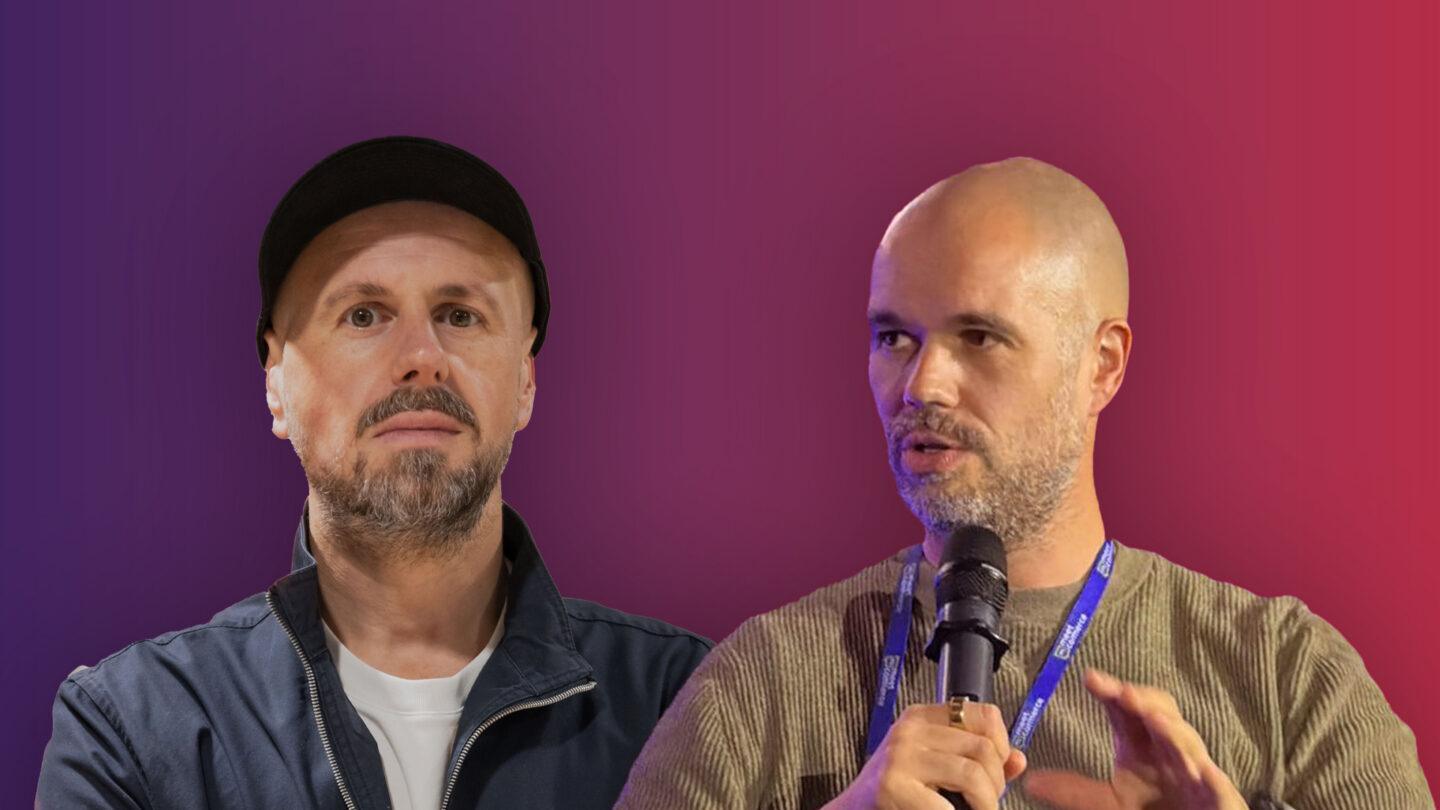
Piotr and Tomasz Karwatka got their first taste of entrepreneurship as children, selling tomatoes at a local market. Today, several decades later, they rank among Poland’s leading businessmen in the technology sector.
In 2022, together with their partners, they sold Divante for PLN 260 million (around EUR 60 million). Three years later, they exited their entire significant stake in Callstack at a valuation of roughly PLN 500 million (approximately EUR 115 million). They also co-founded Alokai, which investors have already valued at several hundred million zlotys. The brothers are also highly active startup investors through Catch the Tornado. At an early stage, they backed ElevenLabs, now the most valuable technology company founded by Poles.
Despite their financial success, the brothers have lost none of their entrepreneurial drive. They believe their latest project, launched in 2025, has global potential.
“Building a unicorn is not the measure of our ambition”
In simple terms, Open Mercato is a technology that uses artificial intelligence to create systems tailored to the specific needs of individual companies. It operates on an open-source model – much like Callstack. Unlike subscription-based software (SaaS) or licensed products, it is free of charge, although implementing and customizing it requires both expertise and time.
“We were never afraid to take risks, but we approached them with common sense. When something did not work out, we quickly looked for another path. Instead of rushing to venture-capital funds with boundless optimism in search of millions of zlotys, we made sure the solution we were building genuinely made sense. That mindset has stayed with us, along with the satisfaction of seeing our assumptions prove correct,” says Tomasz Karwatka, co-founder of Open Mercato.
“Perhaps when we were building our first companies, financial success mattered to us on a subconscious level as well. But today money no longer drives our motivation in the same way. After selling Divante, when I no longer had a specific role to focus on, I began to feel unnecessary. I have always been the kind of person who simply wants to build something useful for society. Building a unicorn [a startup valued at USD 1 billion – ed.] is not the measure of our ambition,” adds Piotr Karwatka, co-founder of Open Mercato.
Who's who
Investors and philanthropists
Piotr and Tomasz Karwatka are among Poland’s most active startup investors. Over the past five years, they have invested more than PLN 20 million (approximately EUR 4.6 million) across nearly 40 companies. This year, they expanded their portfolio with investments in Model Guide, Chainloop, Kanał Otwarty, Salespatriot, and POZ. They remain open to further investments ranging from USD 25,000 to USD 500,000, although they no longer actively seek them out.
“After years in the technology sector, and after seeing how AI is beginning to replace humans across so many areas of the industry, we have started looking for interesting projects elsewhere – particularly in health and broader well-being, such as MOS Health and Cogniguard. Investing in tech companies has become extremely difficult today. There is no shortage of interesting projects, but it is genuinely hard to assess which ones have real long-term value in the face of rapidly advancing artificial intelligence,” says Piotr Karwatka.
The brothers are also involved in several philanthropic initiatives. Among them is the environmental organization Fundacja Las Na Zawsze (“Forest Forever Foundation”), which focuses on protecting nature. Tomasz Karwatka’s book "The 5. Pierwsze pięć lat prowadzenia firmy" (The 5: The First Five Years of Running a Company), popular especially among technology entrepreneurs, is closely tied to supporting the foundation.
“The book’s sales figures are a good example of how Poles excel at collective mobilization. The results have far exceeded my expectations. The founders of Brave convinced me that, with the right campaign, I could sell not 10,000 but 100,000 copies. So far we are close to 62,000, and we are not yet in broad distribution, so there is still plenty ahead of us. Already, enough money has gone to the Forest Forever Foundation to purchase 28 hectares of biodiverse forest. That is a sizeable area – large enough to get lost in,” says Tomasz Karwatka.
Evolution rather than revolution
Before launching Open Mercato, Piotr Karwatka developed three other business projects in recent years – two of them successfully, albeit in very different categories.
Doctor Dok, which used AI and end-to-end encryption to process medical documentation, was acquired by Doctor.One. Meanwhile, text-extract-api – an OCR (optical character recognition) system using AI in an open-source model – earned more than 3,000 stars on GitHub, gaining recognition from the global developer community on the world’s leading software collaboration platform.
The work that ultimately led Piotr Karwatka to create Open Mercato began with a practical need within his own household. His wife, Katarzyna, needed software to manage the Adventure Meadow Child Development Center she was building. Karwatka decided to develop it himself, partly because he was between full-time commitments and, as he puts it, has the mindset of a “builder.”
“I wanted to see whether it was possible to create such a system entirely with the help of AI agents. It coincided with the release of new language models from OpenAI and Anthropic. I discovered that, in an AI-assisted engineering model, you can build genuinely high-quality software very quickly,” Piotr Karwatka explains.
He concluded that it would make more sense to create a framework – a ready-made set of tools – that anyone could use to build systems for managing individual business functions or even an entire enterprise, including ERP-type platforms.
“I started a snowball effect. Very quickly, the first companies interested in implementation appeared, followed by the first contributors [independent providers of tools and solutions], and then more after them. The idea evolved naturally; it was not some dramatic revolution. I did not wake up one morning convinced I had invented a groundbreaking technology,” the entrepreneur admits.
The result of experience and market observation
Tomasz Karwatka argues that Open Mercato is the natural outcome of both the brothers’ experience and their observations of the market. In their own businesses, they had always relied on ready-made software toolkits because clients expected rapid implementation. After all, adapting an existing solution is much faster than building one from scratch.
“In practice, however, clients often used only a few per cent of the licensed software they had paid enormous sums for – simply because that was all they actually needed. It seemed there was no alternative, because building a proprietary system, for example for e-commerce sales, was considered too large and complex a project. With today’s AI coding capabilities, it turns out you can independently create a solution that covers precisely the 5 per cent of licensed software functionality you really need,” Tomasz Karwatka says.
He also points to the accelerating digitalization of the economy. The number of essential systems will continue to grow, along with the demand for personalization.
“Companies want the technology they use to give them a competitive edge. But how can it, if they are all relying on the same off-the-shelf systems? Open Mercato makes it possible to reconcile the need for digitalization with limited budgets. Businesses can build exactly the system they need, and instead of a ten-person development team, they may only require two programmers,” Tomasz Karwatka explains.
Expert's perspective
AI is radically transforming software development
For years, organizations adapted their processes to the limitations of off-the-shelf software. The logic of the software dictated how the company operated, rather than the other way around. AI is beginning to reverse that relationship. More and more often, it is being used not only to generate code, but also to design workflows, integrate systems, and build applications tailored to a company’s specific operating model.
As a result, the economics of software development are changing rapidly. The cost and time required to build proprietary systems are falling significantly, making customized solutions a genuine alternative to standard SaaS platforms. Personalized systems are therefore likely to become increasingly widespread. In an environment of heightened market volatility, companies need technology that evolves alongside their business model, processes, and competitive advantages.
This does not mean the end of the subscription model. What is changing, however, is the basis of competition. Software will need to offer more than just a set of features. Technology will derive its value not merely from automating processes, but from strengthening a company’s ability to execute its strategy and build a sustainable market advantage.


Similar to Claude, Codex, or Lovable – but fundamentally different
The founders of Open Mercato operate by a simple principle: start with a system that is already 80 per cent complete and gradually adapt it to your own needs. They have already developed a strong library of CRM modules for customer relationship management, while their ERP base is also expanding rapidly.
“Rather than forcing rigid software from global vendors into your organization, it is easier to take a ready-made core system and customize only the areas where it is truly necessary. What matters most, however, is our assumption that, in the future, code will no longer be written by humans but by AI agents. It is a qualitative leap comparable to the transition from handwriting to typing on a keyboard. That is why our repository already contains more built-in tools for AI agents than for programmers,” says Piotr Karwatka.
He acknowledges that Open Mercato is most often compared with tools such as Claude, Codex, or Lovable. In all of those cases, a simple prompt and a few minutes are enough to generate a ready-made application – for example, one designed to handle forms.
“The key difference is that we have embedded all the mechanisms associated with enterprise-grade systems beneath the surface. That includes not only visible functionality, but also invisible layers such as data security. Systems built using our technology are immediately ready for production deployment, not merely for testing,” Piotr Karwatka explains.
How do you beat the technology giants?
Online comparisons are already emerging that highlight the scenarios in which Open Mercato performs better than software from technology giants such as Microsoft, Salesforce, or SAP. Tomasz Karwatka argues that, in general, succeeding against global technology providers requires redefining the category itself.
“Apple completely changed the way people perceived the mobile phone with the iPhone – it stopped being merely a device for making calls and became a small computer. When you create an entirely new market from scratch, you automatically become its leader and benefit the most from its growth. Even when direct competitors appear, you are already several steps ahead,” the entrepreneur explains.
That is precisely the philosophy driving Open Mercato. Karwatka recognizes that many companies will continue to compare software offerings from one technology giant or another and ultimately choose an off-the-shelf product – if only because of the strength of the brand behind it.
“That is why we are targeting the most creative companies, the ones that want to think outside the box. We give them the ability to build secure systems their own way, at a fraction of the cost and time that would have been required only a few years ago,” says Tomasz Karwatka.
Open Mercato targets both mid-sized companies and large corporations
The company has identified two main groups of businesses for which its technology could prove particularly attractive. The first consists of mid-sized firms generating annual revenues of PLN 100–200 million (approximately EUR 23–46 million), with the potential to grow severalfold. These companies are often led by younger entrepreneurs and tend to be open to new opportunities, including open-source solutions.
“The second group is made up of large corporations – telecom operators, banks, major retail chains, and the like. They are not going to replace enormous legacy systems overnight, but they do want to learn how to work with AI-driven coding. Open Mercato is ideally suited for that. Right now, every CEO is experiencing a huge degree of FOMO [fear of missing out – ed.] over whether their IT department is actually using artificial intelligence,” Tomasz Karwatka explains.
Slightly more than half of inquiries about Open Mercato currently come from Poland. Some of those companies are likely familiar with the Karwatka brothers because of their previous successes in the technology industry. The geographic spread of interest beyond Poland, however, is remarkably broad.
“We receive more than a dozen per cent of inquiries from the United States, but also from countries such as Vietnam, Turkey, Australia, and Brazil. In those markets, people generally do not know who we are. While our visibility in Poland is certainly helped by our previous achievements as entrepreneurs and investors, the international interest in Open Mercato stems from the fact that we are tapping into a global trend—the use of AI to build independently customized systems, something that seemed impossible only a short time ago,” says Tomasz Karwatka.
Key metrics and the revenue model
An open-source business operates in two phases. The first is building a community of developers who want to help create a library of ready-to-deploy modules, driven by both passion and their own practical needs. Open Mercato already has more than 100 contributors.
“The second phase is about offering additional value and finding customers willing to pay for it. That is exactly where we are today. It may turn out that we have created a fantastic framework that cannot be turned into a commercially viable business. Even so, we would still consider it a success if we built a solution that became widely used free of charge,” Tomasz Karwatka explains.
Already, 25 certified partner agencies are generating revenue from implementing Open Mercato. For now, its creators are earning less from the technology than those partners are.
“Our assumption is that clients will ultimately pay us for something akin to a certification process – a form of homologation. After an audit, we would confirm that the system they built on top of Open Mercato is secure, efficient, and properly assembled. In short, that it is ready for the road. At the moment, we do this manually, but eventually we plan to automate the process using AI,” says Tomasz Karwatka.
He considers the current number of partners and contributors to be optimal. The number of inquiries has risen month by month, from 30 to 55, and continues to grow. Open Mercato’s technology has already been adopted by FreightTech, a company specializing in maritime logistics, while several additional implementations are currently under way.
Expert's perspective
Monetizing open source is no easy task
Most people do not fully understand how companies based on open source actually generate revenue. In many cases, income is shared with firms that serve the end customer – such as payment operators, hosting providers, financial service platforms, or SaaS tooling vendors. Another model involves commissions for availability, visibility, or implementation projects carried out by partner agencies deploying the solution. Yet another approach is commercial software distributions that offer additional value, such as support, security, or ready-made integrations.
It is easy to fall into the trap of building a widely used solution that no one actually pays for. Accumulating thousands of GitHub stars, a large community, and strong developer reputation does not automatically translate into a sustainable financial model. Very often, it is companies building products on top of free technology that capture the revenue, while the original creator remains merely the infrastructure provider for the ecosystem.
If the creator does not define a clear monetization mechanism, they quickly reach a point where maintaining the project costs more - in time and money - than they are able to recover. From day one, they must therefore know who will pay them, for what, and why.
A multi-million-zloty investment should be enough – for now
The founders of the company are giving themselves at least another year to test how the commercialization effort develops. They remain optimistic.
“If Open Mercato were a typical startup, I could precisely say when the money would run out – and if we did not raise the next round, that would be the end. We do not need investors, and we do not want to sell this project. We are simply building something that we enjoy. This is a completely new situation for us,” says Tomasz Karwatka.
Piotr Karwatka adds: “Today, four people are working on Open Mercato full time: myself, Tomek, Patryk Lewczuk, and Maciek Greń. We also rely on several highly engaged contributors. We are deliberately not planning to significantly expand the team; instead, we rely heavily on a growing community with a broad range of experience. We want to prove that it is already possible to build a business this way. We estimate that expenses over the next year will amount to a few million zlotys.”


Key Takeaways
- Strong success fuels even greater ambition. Piotr and Tomasz Karwatka are among Poland’s leading technology entrepreneurs, behind the success of companies such as Divante, Callstack, and Alokai. Although they have already built a combined fortune worth several hundred million zlotys, they have not lost either their ambition or their drive. In recent years, Tomasz Karwatka published a business book, The 5: The First Five Years of Running a Company, while Piotr Karwatka built and sold the medical startup Doctor Dok. Their latest joint project, Open Mercato, has been under development since last year.
- A new approach to software development. Open Mercato is an open-source, AI-powered technology that enables the rapid creation – by small teams – of customized enterprise management systems. Its guiding principle is simple: start with a system that is already 80 per cent complete and gradually adapt it to specific needs. The founders see it as part of a global shift driven by accelerating digitalization and the growing role of AI in software development.
- Scale and plans. The founders of Open Mercato estimate their expenses for the coming year at several million zlotys. They have already built an ecosystem of more than 100 contributors developing modules for the system, as well as 25 certified partner agencies implementing the technology for clients. Piotr and Tomasz Karwatka assume that customers will ultimately pay for a form of “homologation” – a post-audit certification confirming that a system built on Open Mercato is secure, efficient, and correctly assembled. They are giving themselves another year to verify whether the technology can be successfully monetized.