

This article is a part of Poland Unpacked. Weekly intelligence for decision-makers
The entrepreneur has invested PLN 30m (around EUR 7m) in Wisła Kraków and says that, after the club secured promotion to the Ekstraklasa, he finally felt relieved. In an interview with XYZ, he explains how he wants to turn the club into a technology-and-sports hub, why Synerise has its sights set on NASDAQ, and how AI will brutally reshape the labor market.
Grzegorz Nawacki: After the match that secured Wisła Kraków’s promotion to the Ekstraklasa, your emotions were clearly overwhelming. But it looked more like immense relief than wild joy. Did those four seasons in the first division weigh that heavily on you?
Jarosław Królewski, president of Wisła Kraków and Synerise: Yes, it was definitely more relief than euphoria. Those four seasons weighed heavily on us – not only in sporting terms, but also mentally and emotionally. Wisła is an Ekstraklasa club, and regardless of where we were playing, we were all fully aware that we were a top-flight club operating one tier below where we belonged. That always created enormous pressure and expectations.
Of course, there were also moments during that period that gave us pride and joy – our success in European qualifying rounds, winning the Polish Cup, many exceptional matches and the tremendous support of our fans. But at the back of everyone’s mind there was always that one overriding objective: returning to the Ekstraklasa.
It has been an extremely difficult period, full of emotions, disappointments, moments of doubt, but also an enormous amount of hard work by many people. So when the final whistle blew, I felt a huge weight lift from our shoulders. The joy was immense, but perhaps even greater was the sense of relief and of closing a certain chapter.
Who's who
Jarosław Królewski
Founder and CEO of Synerise. Majority shareholder and president of Wisła Kraków football club. Member of the Future Council to the Prime Minister of Poland and the Business Council to the President of Poland. Academic staff member at the AGH University of Kraków. Named a World Economic Forum Young Global Leader 2025.
Is Wisła today a business project for you, a social mission, or perhaps a personal obsession?
It is one of the most important projects of my life. As a fan who has been coming to this stadium for more than 16 years, I want to prove that a football club can find its own path and DNA – something beyond simply winning trophies or selling players. In the Polish context, basing development solely on sporting performance is too risky; it has a lot in common with gambling.
We want to create what I call a technology-and-sports hub, generating passive revenue that does not depend on whether a striker hits the post.
So far, you have managed to increase revenues even without the hub, but the club is still loss-making.
We are posting record revenues, and the financial gap is steadily narrowing. At present, Wisła generates roughly one-quarter of the revenue of Legia Warsaw, which brings in around PLN 200m (approximately EUR 47m) in revenue. That shows how much work we still have ahead of us, particularly in areas such as e-commerce and reaching younger customers.
That said, over the past four years we have consistently increased revenues. In the 2022/2023 season, revenue stood at PLN 35.91m (around EUR 8.4m); in 2023/2024, PLN 45.79m (around EUR 10.7m); in 2024/2025, PLN 51.75m (around EUR 12.1m); while in the first part of the current season it reached PLN 28.61m (around EUR 6.7m).
So how do you get the club into the black?
Looking at the historical data, on average Wisła has been short by around USD 2m-3m a year, regardless of the division – and that is also directly linked to sporting performance. My ambition is to close that gap with our own technology products, such as AI-supported scouting systems delivered as SaaS, proprietary wristbands for tracking heart performance and physical metrics, and injury-prevention solutions.
If Wisła can generate this type of new revenue at a level of EUR 2m-3m annually, the club will become independent of the whims of its owners – both current and future ones.
Can a Polish club really challenge the global giants of sports technology?
In the market for player-performance tracking, there is effectively a duopoly: Catapult Sports and WIMU. Their solutions are extremely expensive – clubs pay hundreds of thousands of zlotys annually for them. We are working with scientists from AGH University of Kraków and the University School of Physical Education in Kraków. For the AGH students building Mars rovers, creating a training machine or an analytics system together with Wisła will not be a problem at all.
We also want to develop data-visualization systems that simplify working with raw information, as well as decision-support systems. We are currently waiting for the outcome of one of the government grant programs. Even today, we are an example of a highly unusual sports club – we have publicly launched our first system, starIQ.app, which we intend to distribute to other clubs.
For now, though, rumors keep resurfacing about liquidity problems and delayed salary payments to players.
That is a problem affecting almost every club in Poland, many of which rely on private capital for financing – recently it was widely discussed in the cases of Cracovia [archrival of Wisła from Kraków – ed.] and Legia Warsaw.
At the time of this interview, we have no overdue payments to players – and let me remind you that we are still at times repaying debts dating back 23 years, as happened recently after qualifying for the European competitions. Moreover, we have communicated the situation openly to supporters and partners at the start of every season: if we want to maintain Ekstraklasa standards while playing in the first division – without shutting down the academy, the women’s team or the reserves – there will be delays.
I even coined the term “the Jarosław ratio”: we operate at around one month of actual delay, while waiting for sponsor instalments or ticket revenues to come in. Importantly, our wage-to-revenue ratio is below 50%, which is one of the healthiest figures in the league.
Which club in Poland is best managed today? Let me guess: Wisła Kraków?
If Wisła were the best-managed club, we would have returned to the Ekstraklasa [top league in Poland – ed.] earlier. I believe Legia Warsaw and Lech Poznań have done an excellent job from both a business and branding perspective. Legia in particular has done a tremendous amount of work to become a well-structured business project, from the academy all the way to fan engagement and outreach.
For now, we are still “plodding along”, but we are increasingly moving toward our technology-driven DNA. I estimate that promotion to the Ekstraklasa will increase our revenues by PLN 15m-20m (around EUR 3.5m-4.7m), which should allow us to reach profitability in either the first or second season.
How much have you invested in Wisła Kraków, and have you ever regretted it?
Taking all financial instruments into account, around PLN 30m (roughly EUR 7m).
Have I regretted it? Ryan Reynolds once said that, from a purely rational standpoint, he regrets investing in Wrexham AFC every week, while at the same time considering it one of the most beautiful things that has happened in his life.
I also have moments of doubt. Football teaches humility. It is an enormous intellectual and emotional challenge, especially when promotion is decided by a single centimeter that no algorithm could ever predict. But that unpredictability is precisely what makes sport so compelling.
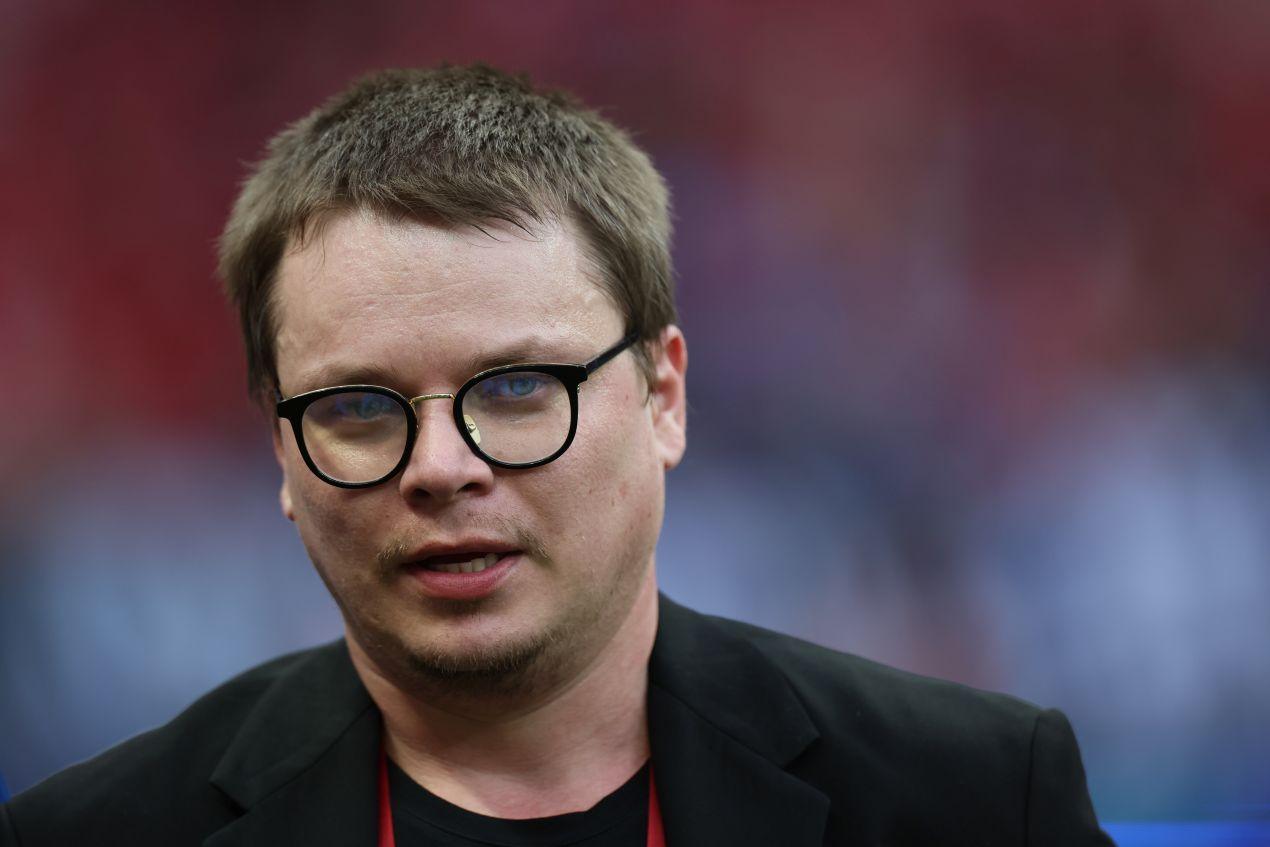
The president of Wisła Kraków FC - Jarosław Królewski. In the coming season the club returns to Ekstraklasa, the top Polish league. Photo: Art Service/PAP
That unpredictability more often means a shocking defeat than an unexpected victory.
That is true. In sport, it is probably felt even more intensely than in business. We have had situations where we failed to secure promotion twice, and there were also very difficult moments – times when you feel a bit like Nokia in its decline: you do many things right, and in the end you still get pushed off the board. Mentally, it is extremely demanding.
What is the difference between the business of sport and an ordinary business?
In business, you have more agency – you can change something today and see the effect tomorrow. You can pivot, shut down a project, start again. In sport, it does not work like that. Once a season begins, you have to go through it to the very end, and only then do you find out whether any of it made sense. The time horizon is much longer, and that is a major challenge.
At first, football seems somewhat untamable – full of unknowns and difficult to predict. But over time, you begin to understand that, despite appearances, it works much like other organizations or businesses. Of course, there are more variables, more unpredictable factors, sometimes things that are outright absurd, but you can still find a certain operating model – a middle ground between a football club and a company.
And I believe we will succeed in finding that at Wisła.
Jarosław Królewski will remain at Wisła for many years to come. Does promotion mean the mission is accomplished?
Emotionally and in my heart, I will always be connected to Wisła, but that does not mean I have to remain in my current role. I am constantly open to bringing in new investors, and we are in talks with investment funds. I certainly will not insist on running the club if better options emerge.
I have a mission to fulfill, and at a certain stage that may require passing the baton to someone else. In my view, running a football club is not fundamentally different from running a company. At different stages of development, you need people with different competencies – sometimes people who are simply better suited to the area that becomes critical at that particular moment.
You entered football as a well-known and respected entrepreneur. In this role, you end up sparring with fans and journalists on social media. At times, you have even had to explain yourself to ultras who insulted you and the team after defeats. Why put yourself through that?
For me, it is a source of dopamine and an intellectual challenge, but also a lesson in managing relationships with a huge community. At Wisła, we have 16,000 shareholders, and I do not hide from them.
When people were shouting at me on the pitch, I listened to them, then took the microphone and told them what I thought. My relationship with the supporters is not based on submission, but on respect. I think scenes like those after promotion last weekend capture that perfectly.
Do you enjoy arguing? The nationwide row with Śląsk Wrocław and the Polish FA (PZPN)?
I do not enjoy arguing for the sake of arguing. I am a very demanding person – toward myself and toward the environment around me. I cannot stand hypocrisy or stupidity, and for me, speaking the truth is a sign of respect for another person. It is that simple.
What happened with Śląsk Wrocław was not a quarrel, but a fight – and fighting is the essence of sport. Specifically, we filed formal motions with the Polish Football Association (PZPN), cited precedents, and the Disciplinary Committee imposed a financial penalty on the other side. Morally, we won the case.
As for those “spats”, that is more a matter of my own fixation and my attempt to eliminate hypocrisy. There is an important difference between causing a scene and seeing a matter through to the end. And that difference matters to me.
If it were up to you, what rules should govern local-government funding for football clubs?
First, ownership must be distinguished clearly. I have no problem with a local authority funding a club that it owns; that is simply a city investing in its own company. But even then, there must be a clear benchmark and a limit: a point of reference – such as the median of comparable clubs in the league – a percentage cap relative to the club’s budget, and a defined time horizon. Without that, public money becomes a permanent cushion for poor management.
Second, in the case of privately owned clubs, public money should go toward infrastructure with genuine social value – academies with open access, women’s football, facilities used by schools and amateur athletes. Those are investments in the community, not subsidies for private business.
Third, there must be full transparency, regardless of the ownership model. Every form of support should be disclosed, including below-market stadium rent, sponsorship from a municipally owned company, or contracts with a city-owned energy provider. Without that, there is no fair competition – only the illusion of it.
And fourth, EU state-aid rules in this sector should be applied in Poland in a real rather than symbolic way. We should not be an exception within the European Union.
Do you hold a grudge against the Polish FA over the forfeited match?
The case is still ongoing and we have appealed. I would rather wait with any further comment until there is a final ruling.
Did you have to explain the decision to the players?
I am the club’s president and owner – and, as in any organization, some form of structure has to apply. The coach and the captain publicly supported my decision and stood behind me from the very beginning; among the people responsible for the club, there was complete unity on this issue.
Explainer
Wisław Kraków vs Śląsk Wrocław
Wisła Kraków refused to travel to Wrocław after Śląsk Wrocław announced it would not admit visiting fans for the match, a decision Śląsk said was taken for safety reasons and after consulting police.
Wisła Kraków called it unfair and a violation of its supporters’ rights, so the Kraków club’s president ordered the team not to play. The home side went onto the pitch, the referee ended the match after about 15 minutes, and the incident is now subject to PZPN disciplinary procedures and likely to be recorded as a walkover in Śląsk’s favour.
The players, naturally, wanted to show their strength on the pitch – that is their profession and their instinct. But in matters that go beyond the field of play, the owner makes the decision and takes responsibility for it. That responsibility also includes explaining the decision to the team.
Let’s turn to Synerise. For many, the company remains something of a mystery, even though it is not new at all.
We have been doing the same thing for 10 years: delivering an AI and big data platform that enables companies to collect data, use proprietary AI models, and automate decision-making. Our key innovation is a database we built entirely from scratch, as well as a foundational model for streaming data (behavioral and transactional), rather than generative data (such as video, text, or audio) like ChatGPT – we are not competing with language models.
Our technology underpins some of the largest companies in Poland, including Żabka, Rossmann, mBank, Empik, and Orange. Internationally, for example, Nike, H&M, IKEA, Castorama, Hugo Boss, and Decathlon rely on our technology in practice.
In operational terms, Synerise helps companies predict customer behavior, personalize user experiences, build recommendation systems, optimize marketing and sales, analyze vast volumes of streaming data, and automate business decisions in real time.
How large is the company after 10 years?
Our recurring revenue (ARR) has exceeded EUR 20m. The company employs more than 200 people. The platform is currently used by 218 organizations in 49 countries across six continents.
Each month, the system processes more than 31 billion user events. Our proprietary database, TerrariumDB, handles over 90 billion queries per month and reaches performance of more than 360,000 queries per second at peak.
Our AI engines generate 3.8 billion recommendations, predictions, and search results monthly, making up to 30,000 decisions per second and executing more than 12 billion workflow decisions per month. The system supports business operations worth approximately EUR 150bn in gross merchandise value (GMV) annually.
Is the EUR 25 million financing from the European Investment Bank a breakthrough?
It is a milestone. We chose debt financing in order not to dilute equity at the current valuation of around USD 150–200 million. Our goal is a listing on the NASDAQ. We want to prove that it is possible to build global IP in Poland.
We do not want to be “the 50th company in an American fund’s portfolio.” We prefer to win through technology, to prove that a single brilliant scientist can optimize a model by 10%, which translates into millions of euros in profit for a client.
How much have investors put into Synerise so far?
Close to PLN 200 million (around EUR 47 million). In global terms for AI and big data companies, that is not particularly much – but in our region, it is significant. I try to keep it at a healthy level.
Over the same period, the company generated PLN 253 million (around EUR 59 million) in net revenue from its product alone – we do not sell services. Excluding the recent European Investment Bank financing, this is already close to roughly PLN 0.5 billion (around EUR 117 million) invested into Polish engineering know-how.
Cofounder and the CEO of Synerise S.A. - Jarosław Królewski. Photo: Leszek Szymański/PAP
What puzzles me most is how you manage both a technology company and a football club at the same time.
What helps is the fact that I do not have children or typical hobbies such as video games or hiking. The free time that others devote to family or leisure, I devote to Wisła and Synerise. Moreover, work in sport and technology constantly feeds into each other in my case. What I deal with at Wisła often becomes an inspiration for solutions developed at Synerise, and it works the other way around as well. This kind of shift between two worlds strongly stimulates creativity and helps me break out of conventional patterns of thinking.
Wisła is also, for me, a kind of accelerated learning course. It teaches me skills I would not acquire by working solely in a technology company: managing extreme pressure, dealing with media relations, or understanding crowd psychology.
At the same time, technology can genuinely support sport. That is why I implement Synerise solutions directly within the club – from AI agents handling fan services to simultaneous automatic translation systems in the dressing room, which help remove communication barriers.
I understand that, but I still wonder how operationally it is possible to have two full-time roles at the same time.
The truth is also that I practically devote all my available time to work. But combining a company and a club requires a lot of discipline, I admit. I structure my day according to the Kaizen philosophy – small steps.
Every day I complete a set of 20–30 tasks: from a game of chess or solving a logic puzzle to expand my cognitive range, through micro-learning, walking a certain number of steps, to more relaxing tasks such as checking who in the company has a birthday or work anniversary.
I divide the day into blocks: routine tasks, obligations for both entities, and creative work.
Do investors who have put millions into Synerise have any issue with how much time you spend on Wisła?
At the beginning, my involvement in Wisła Kraków was more of a curiosity for investors than something they assessed in terms of business risk. But as long as Synerise is developing dynamically, no one sees it as a problem. This is not a competing activity to the company, so there is no conflict of interest.
As I mentioned, these two worlds overlap, and the experience gained in football helps in building Synerise and develops my business competencies. Investors also value my authenticity. Among Synerise investors there are also Legia Warsaw fans, so at most it becomes an interesting conversation topic, not a real business issue.
In a company like Synerise, you work with exceptional “brains.” What is it like managing such people?
With the best engineers or data scientists, it is often the case that I am not able to match them intellectually in their very narrow areas of expertise. If someone spends 12 hours a day on a specific problem, it is natural that they know more about it than I do.
And I do not so much “manage” them as work alongside them as partners in a shared mission. My role as a leader is not to pretend I know better, but to create an environment in which they can do truly outstanding work.
But how do you retain and motivate them if global players can simply pay more?
If we were competing on money alone, we would lose that battle against global giants. That is why you have to offer people something more than just high compensation. The best talent wants to work on problems that are a real intellectual challenge for them.
Our engineers are motivated by the awareness that they are building a system that makes billions of autonomous decisions per day – it gives them a sense of real power and impact. On top of that, there is a shared vision. At Synerise, it is also important that we want to prove that it is possible to build technology in Poland that can compete with the best in the world. For many people, that is a very strong motivation: not only to earn well, but also to take part in something ambitious and exceptional.
Where are we today in the AI revolution?
We are in a phase of extremely rapid acceleration. The moment when we reach AGI, and perhaps even something that could be called superintelligence, is already “hardcore” close. I do not know whether it will happen exactly in three or four years, as some claim – I am a bit more cautious – but the scale of progress today is striking.
Just look at what has happened over the past year in video generation alone. It shows how quickly the boundaries are shifting.
Valuations of AI companies are also soaring – some to the stratosphere. Are we in a bubble?
I do not think this is purely a speculative bubble. If we assume that AI will affect even 1% of global GDP, then the current valuations of the largest technology companies start to look rational. And I believe the impact will be much greater, because AI will touch virtually every industry – from medicine to services, industry, education, and media. This is not a passing trend, but a civilizational shift.
What really determines competitive advantage in the AI race today?
The race is increasingly less about simply accumulating massive datasets, and more about algorithmic optimization. The key question is who can build models that are faster, cheaper, and far more efficient in terms of resource usage.
The advantage will no longer come solely from who has more data, but from who can compute it 100 times faster and at a much lower infrastructure cost.
How will AI change the labour market and the global balance of power itself?
We are in an interesting but also brutal decade, because traditional thinking about careers is becoming outdated very quickly. This applies to programmers, lawyers, journalists, and many other professions.
Even I recently built several data synchronization applications for Wisła without writing a single line of code, relying entirely on AI. Programmers have, in a sense, partially “eliminated” themselves – of course I am referring to the weaker ones. Today, what matters is algorithmic thinking and the ability to ask the machine the right questions. AI is already taking over not only repetitive tasks but also creative domains.
At the same time, AI is becoming a geopolitical and infrastructural issue – it is no longer just a business matter, but also a military project and a source of state-level competitive advantage. That is why I believe every country should build its own AI infrastructure. Europe, unfortunately, is performing poorly in this regard.
From the perspective of companies and startups, the situation is even more demanding, because many narrow functions can suddenly become simply a free feature inside large models.
How do you assess Europe’s strategy in the race for AI leadership?
I believe EU projects such as a “Giga Factory” shared across several countries for €5 billion are an intellectual failure. The European Union should instead require each country to build its own state-backed AI infrastructure.
China is already restricting the open-sourcing of its solutions, treating AI as both a military project and a civilizational asset. If Europe does not invest aggressively in infrastructure and science – and instead continues exchanging emails in multiple languages – we will become a museum piece.
Do you believe AI will replace football coaches?
I believe that most tactical decisions will soon be supported by AI, because a computer can see spatial dynamics and player fatigue better than a human. The coach’s role will shift toward mentorship and leadership.
Where will Jarosław Królewski be in 10 years: in technology or in sport? Or somewhere entirely different? And where will Wisła and Synerise be?
In 10 years, I still see myself operating simultaneously in both the technology and sports worlds, but in reality I believe that by then these two domains will already be largely one and the same. Sport, for me, is a very concrete use case for big data and AI – that is exactly what I work with every day. So working across both worlds will, in practice, mean continuing to do the same thing, just in different contexts.
As for Synerise, my ambition is for the company to debut on the NASDAQ. That would not only be an important business step, but also a symbolic proof that it is possible to build a global powerhouse based in Poland, built on proprietary IP and technology.
In the coming years, we will have to definitively prove the value of what we have created – whether through a stock market listing, continued independence, or broader industry partnerships.
In the case of Wisła Kraków, I look at it even more broadly than purely through the lens of sport. I would like the club to become a laboratory and a technology-and-sports hub – and to reach the UEFA Champions League.
These are both highly ambitious goals…
In general, my ambition is to constantly hack reality. I believe that thanks to technology, a small, highly talented team from Poland can effectively compete with global giants. Algorithmics today makes it possible to offset the capital advantage of much larger players – and that is something I truly deeply believe in.


Key Takeaways
- Synerise is intended to demonstrate that global AI technology can be built from Poland. The company develops an AI and big data platform used by major brands in Poland and abroad, and its ambition is to debut on the NASDAQ. Mr. Królewski argues that competitive advantage in AI depends less and less on data scale itself, and increasingly on algorithmic optimization, processing speed, and infrastructure cost efficiency.
- Wisła Kraków is meant to be more than a football club. Jarosław Królewski aims to build a technology-and-sport hub around it that will generate revenue independent of on-pitch results. In his vision, the club will earn money from scouting systems, AI tools, player monitoring wearables, and solutions designed to reduce injury risk.
- Promotion to the Ekstraklasa closes a difficult chapter, but does not end the ambition. Mr. Królewski speaks of a huge sense of relief after Wisła’s return to the top division, while stressing that the club still needs to bring its financial model into order. He expects revenues to rise by PLN 15–20 million (approximately EUR 3.5–4.7 million) after promotion, which could allow Wisła to reach profitability within one or two seasons.