

This article is a part of Poland Unpacked. Weekly intelligence for decision-makers
Sebastian Kulczyk is betting on Tequipy, a Polish startup founded by former Revolut executives. Manta Ray, together with Smedvig Ventures and Unfold VC, has invested EUR 3m (around PLN 12.8m) to develop a platform that automates IT hardware management for companies operating globally.
Explainer
Sebastian Kulczyk
Sebastian Kulczyk is one of Poland’s most prominent businessmen and investors, though he operates somewhat in the shadow of his late father’s legendary status. Sebastian is the son of Jan Kulczyk, who was Poland’s wealthiest person and most famous entrepreneur until his death in 2015. Jan built a business empire spanning telecommunications, energy, insurance, and breweries during Poland’s post-communist transformation.
After his father’s death, Sebastian and his sister Dominika inherited the family fortune. Sebastian has taken a different path from his father: focus on investments and venture capital and more international orientation.
Big money is flowing into the global automation of IT hardware services. Polish startup Tequipy has secured fresh funding for further growth. The company raised a total of EUR 3m (around PLN 12.8m) in a round led by Smedvig Ventures, Manta Ray and Unfold.vc. Nearly a year ago, we reported on the startup’s first funding round. At the time, the company – founded by former Revolut executives – raised PLN 3m (around EUR 700,000).
The newly secured capital will support what is, in theory, a simple business idea: automating IT hardware servicing for employees, primarily those working remotely. The company already operates in 180 countries and serves 150 clients, including brands such as Booksy and ICEYE.
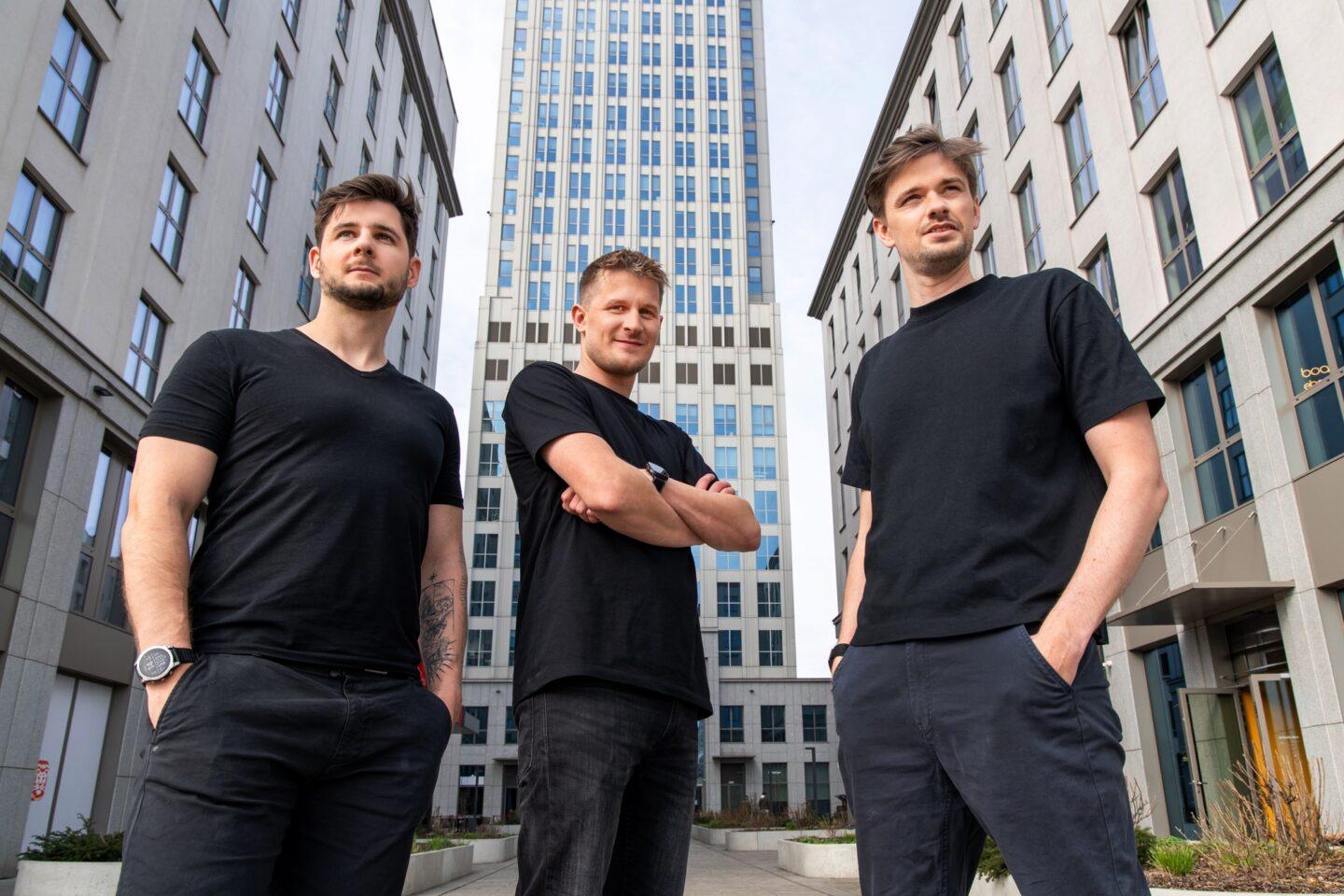
The company was founded by Tomek Stawarski (CEO and former head of IT at Revolut), Bartosz Czerkies (business development and marketing) and Albert Podraza (engineering). Both were also previously employed at Revolut.
How Tequipy is growing
Within a year, Tequipy acquired 50 clients from around the world. In April 2025, its revenues exceeded EUR 310,000 (around PLN 1.3m), at which point the company was operating across 140 markets. The company’s representatives are now reluctant to disclose specific financial figures.
“In 2025, we generated nearly seven times more revenue than in 2024. At the same time, the number of clients we serve – and the number of their employees – also increased. But revenue growth best reflects our actual progress. It captures both new clients and the expansion of cooperation with existing ones,” Tomek Stawarski told XYZ.pl.
The new investors joined a group that had already backed Tequipy in 2025. At that time, the company secured funding from investors including Unfold.vc and a group of business angels. Among them were Piotr Konieczny, founder of Niebezpiecznik, business angel Kamil Stanuch, and Bartek Majewski from Casbeg. Even then, we reported that the company intended to raise a larger round of funding.
Tequipy started with hardware because it is the most difficult part of IT operations to manage. But the company’s ambitions are broader: to eliminate around 80% of manual operational work from global IT departments. The next area of focus is software – employee accounts, licenses, access permissions, passwords and processes covering the entire employee lifecycle within a company.
Investors on Tequipy
“Tequipy gives companies exceptional operational efficiency in managing IT hardware on a global scale. It achieves this through the automation of back-end processes. For clients, this translates into significant savings in both time and costs – largely thanks to a service and platform without which many would now struggle to operate,” says Freddie Kalfayan of Smedvig Ventures.
Commenting on the investment, Sebastian Kulczyk pointed to the startup’s considerable long-term growth potential.
“Companies built for the global market from day one – rather than expanding abroad only after succeeding locally – are still rare in Poland. Tequipy is exactly that kind of business. We invest in companies that will define what Polish technology looks like a decade from now,” says Sebastian Kulczyk, founder of Manta Ray.
Adam Jarmicki, managing partner at Unfold.vc, is also pleased with the investment – particularly as his fund increased its exposure to the startup.
“We invested in Tequipy at a very early stage, and our conviction in the company has only strengthened since then. That is why we increased our commitment in the latest funding round. The Tequipy team has delivered consistent growth, secured high-value clients and chosen the right direction for product development. As a result, we are highly confident about the company’s prospects,” says Adam Jarmicki.
New opportunities for Tequipy
Tequipy’s clients are primarily technology and service companies – including marketing firms – that employ staff across multiple countries.
“They operate either remotely or through offices dispersed around the world. The scale varies – from scale-ups fresh from Series A funding and embarking on aggressive expansion, to companies employing thousands of people, where the scale of the problem is already enormous. Managing IT hardware simultaneously across many countries is a genuine operational challenge for them, not merely an inconvenience,” says Bartosz Czerkies, one of Tequipy’s executives.
The startup now plans to continue scaling its business.
“Our priority is to refine our product as much as possible in order to deliver the highest possible quality. At the same time, we are expanding both our sales and technical teams. We already deliver and service equipment in more than 180 countries, and nearly 92% of our more than 150 clients come from outside Poland,” Bartosz Czerkies explains.
Tequipy does not purchase the equipment itself. Ownership always rests with the company placing the order.
“At a global scale, an ownership-based model is operationally and fiscally simpler for clients than cross-border leasing. It also streamlines MDM [Mobile Device Management] implementation and gives companies greater flexibility when offboarding employees,” Bartosz Czerkies adds.
Expert's perspective
An international mindset is the right direction
The success of Polish managers in international corporations, startup founders on global markets and the growing role of Polish representatives in European industry organizations are finally making young entrepreneurs more confident. Even so, we still carry a strong inferiority complex stemming from our origins in an economy perceived as less developed than those of Western Europe. The same applies to products, where the assumption often remains that Western means better. That is no longer true. Poland has a great deal to be proud of, and it is high time this changed.


Challenges facing the startup
As the company’s founders explain, Tequipy’s goal is to build what they describe as an “all-in-one IT department” – a platform capable of delivering comprehensive support for IT operations.
“Corporate IT departments are responsible for three main areas: hardware, software and security. We started by automating hardware management so administrators no longer waste time ordering and physically handling devices. The next step is software: automatically creating accounts, resetting passwords and managing licenses. The final stage is cybersecurity, meaning the remote management of corporate devices. By combining these three pillars, we estimate that Tequipy will be able to take over as much as 80% of the routine tasks currently handled by IT teams. The role of the corporate administrator will shift from execution to supervision,” says Tomek Stawarski.
The future of Polish startups
The company plans to continue expanding globally while keeping costs under control.
“We currently employ around 30 people. We are deliberately keeping the organization relatively lean,” says one of the company’s executives.
In addition to its direct employees, the company works with several hundred distribution and service partners.
“Our model assumes that scaling the business does not require proportional growth in headcount. Over the coming months, we will focus primarily on expanding our product and sales teams. In operations, our biggest emphasis is on automation. Any process that still requires human intervention and manual handling is, for us, an area either to eliminate or simplify as much as possible,” Tomek Stawarski explains.
Expert's perspective
Opportunities for Polish companies lie abroad
Poland is a sufficiently large market to provide a relatively comfortable living, but too small to generate the meaningful surplus needed for expansion. Companies often fall into a trap: organizationally and financially, they are unable to adapt to rapid international growth, while investors – quite rightly – remain skeptical about funding expansion if the team has not already demonstrated it can succeed abroad. There is also a psychological factor, as appetite for risk diminishes over time.
Unfortunately, I still see a great deal of self-limiting thinking. We tend to view ourselves through the prism of the region. Founders born after 2000 see a modern Poland, and for them that is simply the normal state of affairs.
We still lag behind in sales and marketing talent. There are individual people operating at a very high level, but overall it is far harder in Poland to find professionals with experience and a proven track record in selling technology or SaaS solutions to businesses than, for example, in the United Kingdom.


Key Takeaways
- Tequipy’s ambition extends well beyond hardware management. The founders aim to build what they describe as an “all-in-one IT department”. The company plans to gradually automate software management, employee accounts, licenses, passwords and cybersecurity functions. Ultimately, the platform is intended to take over as much as 80% of the routine work currently handled by IT departments. At the same time, the startup wants to scale its operations without proportionally increasing headcount, relying instead on automation and a network of several hundred distribution and service partners.
- Tequipy has raised EUR 3m (around PLN 12.8m) in a funding round led by Smedvig Ventures, Manta Ray and Unfold.vc. The deal reflects growing investor interest in Polish startups built from the outset for global markets. Founded by former Revolut executives, the company already operates in more than 180 countries and serves over 150 clients, including Booksy and ICEYE. The fresh funding is intended to support the further development of its platform for automating IT hardware management, particularly for companies with distributed teams and remote employees.
- The startup is growing rapidly, although it is no longer disclosing detailed financial data. According to its co-founders, Tequipy generated nearly seven times more revenue in 2025 than in the previous year. Over the past year, the company acquired 50 new clients, while around 92% of its current customer base comes from outside Poland. This underlines how managing IT hardware simultaneously across multiple countries has become a genuine operational challenge for globally active technology and service companies.