

This article is a part of Poland Unpacked. Weekly intelligence for decision-makers
The former head of Poland’s civilian intelligence service, Colonel Piotr Krawczyk, has disclosed details about the service’s cooperation with the media. Other officers are criticizing him for it, arguing that he said too much. The consequences could be very serious.
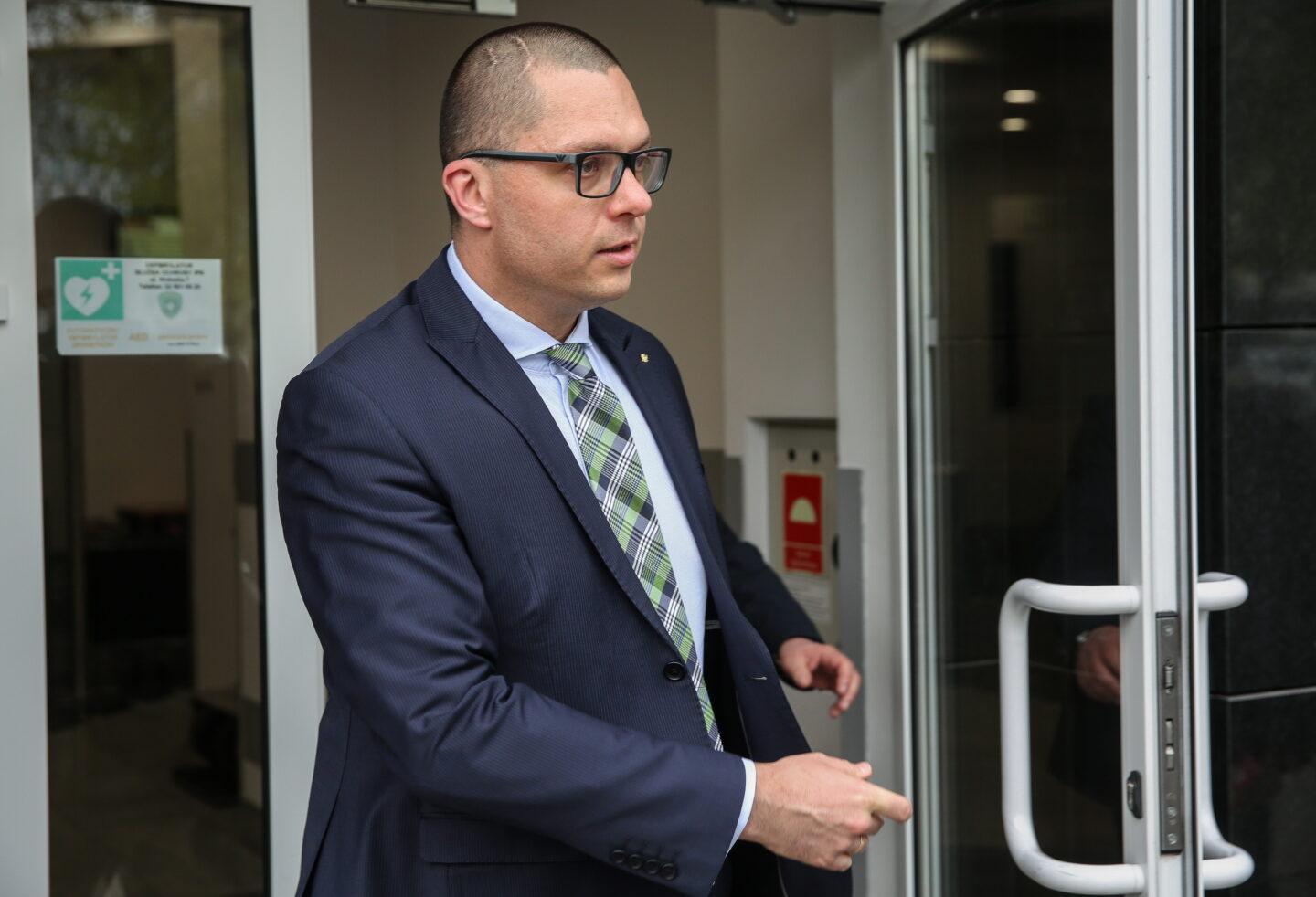
Colonel Piotr Krawczyk is a former diplomat and, between 2016 and 2022, headed the Intelligence Agency (AW). He led the agency during one of the most sensitive periods of the past decade: from the crisis on the Polish-Belarusian border, through the COVID-19 pandemic, to the outbreak of Russia’s full-scale war against Ukraine.
Who's who
Piotr Krawczyk
Piotr Krawczyk is a Polish intelligence officer and diplomat who served as head of Poland’s Foreign Intelligence Agency (Agencja Wywiadu, AW) from December 2016 to August 2022, making him one of the longest‑serving chiefs of the civilian intelligence service in the post‑1989 era.
Before moving into the top job at AW, he studied international relations at the University of Warsaw and specialised in security issues and the broader Middle East. His career included work in military and diplomatic missions in Iraq and Afghanistan, where he first served as a translator and adviser, and later as a political adviser to the Polish military contingent.
Krawczyk is currently a commentator for the Kanał Otwarty platform, where he focuses on security and intelligence services. On Tuesday, in a conversation published by the outlet, Colonel Krawczyk appears to have said a few words too many. In an interview with Igor Janke, he revealed that during the height of the border crisis, Polish intelligence was effectively paying YouTubers to disseminate narratives favorable to the Polish state. This raises a number of questions, including potential legal consequences.
Explainer
Crisis on the Polish‑Belarusian border
Since 2021, Poland’s border with Belarus has been the scene of a prolonged migration and security crisis. The Belarusian regime of Alexander Lukashenko began issuing visas and organizing flights for people from the Middle East and Africa, then pushing them towards the EU border as a way to put pressure on Brussels after Western sanctions. For many migrants, Belarus was marketed as a gateway to the European Union; in practice, thousands ended up trapped in forests and swamps along the border, caught between Belarusian forces pushing them forward and Polish forces trying to stop irregular crossings.
Poland, an EU and NATO member, reacted by declaring a state of emergency in the border zone, sending in the army and building a steel wall with electronic surveillance. Human rights groups and some EU institutions accused Warsaw and Minsk alike of treating people as tools in a geopolitical conflict and of violating asylum law by pushing people back without proper procedures. The Polish government framed this mainly as a security and sovereignty issue, not a migration one.
Why are the former Agency chief’s remarks so sensitive?
Colonel Krawczyk’s statement must be examined on several levels. First, from a formal and legal perspective. The methods and forms of operational work used by intelligence services remain formally classified. One may argue that part of this is already widely known, or amounts to an “open secret,” but here we are dealing with a former head of the Intelligence Agency openly stating: “yes, we recruited people to cooperate.”
Colonel Krawczyk did not specify whether the intelligence service sought collaborators in Poland or abroad, which would also carry legal implications. The Intelligence Agency is, by design, an external intelligence service; it acts as Poland’s eyes and ears in other countries and regions.
Another issue concerns who was recruited for cooperation. Article 37 of the Act on the Internal Security Agency (ABW) and the Intelligence Agency (AW), under which both services operate, is instructive here. It explicitly states that: “the agencies may not, in the performance of their tasks, use covert cooperation (...) with editors-in-chief, journalists, or persons engaged in publishing activities, as referred to in the Act of 26 January 1984 – Press Law.”
One may debate whether a YouTuber qualifies as a journalist in the formal legal sense, but in the era of electronic media this is largely an academic dispute.
A loophole in the law or a blunt approach? Colonel Krawczyk remains silent
The law does, however, contain a certain loophole. Its second point states that “the heads of the Agencies (ABW and AW – ed.), for the purpose of fulfilling the Agencies’ tasks, may authorize the use of covert cooperation with persons referred to in paragraph 1 points 7 and 8, if justified by national security considerations, subject to the approval of the Prime Minister.”
Did Colonel Krawczyk, as the official overseeing and directing the Agency’s operations, request permission from the then Prime Minister to recruit journalists – and did he receive it? We submitted a question on this matter directly to Colonel Krawczyk. As of publication, however, we have received no response.
We also approached the Intelligence Agency with questions as to whether the former head’s remarks were made with the knowledge and approval of its current leadership. Such a possibility is provided for under Article 39 of the same Act.
“In response to the questions raised, please be informed that the reply will be published in a statement by the spokesperson for the Minister Coordinator of Special Services,” the Intelligence Agency replied to our inquiry.
Ethics and responsibility
The second issue in this case concerns responsibility. Not everyone wants their cooperation with the state to become a matter of public pride. Yet it may now be exposed. Given this, as well as the earlier disclosure of a report on the activities of the Military Information Services (WSI), will citizens still be willing to cooperate with such a service?
Explainer
Publication of the WSI report
WSI (Wojskowe Służby Informacyjne, or Military Information Services) were Poland’s military intelligence and counter‑intelligence structures in the 1990s and early 2000s, inheriting personnel and networks from the communist era. In 2006, a conservative government decided to dismantle WSI, arguing that post‑communist security elites still held too much informal power and that the services were vulnerable to Russian influence. A parliamentary commission drew up a long report describing alleged abuses, murky ties between officers, business and politics, and failures in protecting state interests.
In 2007, President Lech Kaczyński made this report public, including names and operational details – an extraordinary step in intelligence politics.
Supporters saw it as a necessary “vetting” of the security sector, a way to break with the communist past and its grey networks.
Critics worried that revealing so much about a NATO country’s intelligence work could endanger sources, damage credibility with allies, and turn complex institutional problems into political ammunition.
— “This is precisely why the law prohibits such statements under threat of severe penalties. All forms and methods of operational work are the most strictly guarded secret, because they are the lifeblood of intelligence activity. Its foundation is reputation and credibility, which build trust in the service,” says a senior intelligence officer speaking to XYZ.
Most of our interlocutors either worked with Piotr Krawczyk or know him personally. They refuse to speak on the record.
— “Without trust, no one is willing to cooperate. And without collaborators, intelligence does not exist. With his statement, Piotr Krawczyk destroyed that trust, and with it the service’s reputation and credibility. At the same time, he committed an offense by violating multiple legal prohibitions,” one source argues.
— “One has to admit, our intelligence service has not been particularly lucky with its chiefs,” another sighs.
Risk of denunciation
There is also a third dimension. One must ask whether, in such a situation, someone whom intelligence services (or any other agency) approach with a request for assistance or cooperation might choose to make it public—thereby burning not only the service’s access channels and networks, but, in a broader sense, potentially also ongoing or planned operations.
A former Intelligence Agency officer, Lieutenant Colonel Arkadiusz Olejniczak, is sharply critical of such conduct.
— “A former head of the service, an intelligence colonel, shows no operational or institutional awareness that would prevent him from speaking publicly about relatively recent matters – especially in highly sensitive directions, such as Belarus. I do not understand it. Do the work, carry out the operations, but do not talk about it publicly,” the officer says with evident frustration.
In such a situation, Olejniczak argues, one must ask: who would agree to cooperate with an organization perceived as leaky, permeable, and one in which even a former head discloses the details of its work?
— “We should separate two issues. No one questions – and no one should question – that such actions may have produced the intended results. But what was the purpose of revealing these operational details publicly?” asks Lt. Col. Olejniczak.
Another of our interlocutors, a senior intelligence officer, notes with a smile that there is “no knowledge of the YouTubers mentioned by Colonel Krawczyk,” though he assesses the likelihood as high. He adds, however, that the problem is not the use of unconventional methods, nor even the fact that they were made public.
— “The real problem is that the whole outfit was doing everything except what it was legally mandated to do. And even if it tried, it was at kindergarten level. And now it is trying to boast about it,” we are told.
Colonel Krawczyk said much more than that
Quite recently, Colonel Krawczyk also disclosed something even more significant in the same media outlet. He stated that Russians allegedly sought to bring about a change of power in Belarus, potentially even at the cost of bloodshed.
At that time, in 2020, Piotr Krawczyk was head of Polish intelligence. If he indeed had information suggesting that Russia stood behind the protests in Belarus, he should have passed it on to the then leadership of the Polish state. Poland strongly supported, at the time, what it saw as an attempted political transition in Belarus and the pro-democracy opposition.
The authorities in Belarus and Russia accused Poland of attempting to interfere in the political processes of its eastern neighbor. This therefore raises a fundamental question in this context: in whose interest were Polish state institutions acting? And if the head of Polish intelligence possessed such information, why did he allow the state apparatus to become involved in supporting the protests?
Will there be consequences?
The current coordinator of special services, Tomasz Siemoniak, declined to comment on the matter. It is nevertheless clear that such remarks by a former head of the Intelligence Agency will not pass unnoticed. It can be assumed they will be observed closely and carefully analyzed in countries unfriendly to Poland.
This may carry consequences – both for Poland on the international stage and for Colonel Piotr Krawczyk personally. Above all, however, it may affect Polish intelligence itself, which risks losing additional foreign assets.
Expert's perspective
Colonel Andrzej Derlatka: “Such things must not be disclosed”
Either way, I will repeat: the forms and methods of intelligence work are not to be disclosed. Also because it calls future cooperation with assets into question. We had a similar situation after the declassification of the so-called restricted collection of the Institute of National Remembrance (IPN). And those responsible faced no consequences. This undermines intelligence operations, because someone may ask: ‘Will my data be disclosed in the future?’ After the publication of the Military Information Services (WSI) report, several of our agents were killed, simply murdered. I received such information from colleagues in military intelligence.
Talking about Polish intelligence conducting subversive activity in Belarus is politically harmful to the Polish state, because it publicly confirms what both Putin and Lukashenko have been saying. In whose interest is this? Certainly not Poland’s.
It forces us to ask who Colonel Krawczyk is. Today, for political purposes, state secrets are being revealed. I do not understand it, I cannot comprehend it.


Key Takeaways
- The statements made by the former Head of the Intelligence Agency, Colonel Piotr Krawczyk, may pose a risk both to the state and to the functioning of civilian intelligence and other Polish special services.
- According to XYZ’s interlocutors, the former head of the Agency’s remarks are unacceptable. They raise concerns about the potential disclosure of the Polish intelligence service’s means and methods of operation, as well as about the possible international consequences of his statements.
- “A former head of the service, an intelligence colonel, shows no operational or institutional awareness that would prevent him from speaking publicly about relatively recent matters – especially in highly sensitive areas such as Belarus. I do not understand it,” says a former Agency officer, Lieutenant Colonel Arkadiusz Olejniczak.