

This article is a part of Poland Unpacked. Weekly intelligence for decision-makers
 Interactive chart
 The Ministry of Finance has published the latest estimates for state budget execution for the first five months of the year. For the record, state budget revenues amounted to PLN 233.3 billion (EUR 54.3 billion), while expenditures reached PLN 341.5 billion (EUR 79.4 billion). This translates into a deficit of PLN 108.2 billion (EUR 25.2 billion).
However, as we have repeatedly stressed in our coverage, what matters for assessing the fiscal situation is not the headline budget deficit alone, but the general government deficit (according to the EU methodology).
Weak VAT performance
What trends can be observed in VAT revenues so far – the most important component of budget revenues? From the beginning of the year through May, they increased by approximately PLN 2.2 billion (EUR 0.5 billion), or 1.6%, compared with the same period last year. This is a slower pace than assumed in the 2026 Budget Act, which foresees VAT revenues growing by 6.2%.
It is worth noting that, under the EU methodology, annual VAT revenues cover inflows from February to December of year n and January of year n+1. Due to a very weak February performance (a drop of roughly 25%), total VAT revenues on this basis are already lower than in the corresponding period last year by PLN 5.8 billion (EUR 1.3 billion), or 5.6%. And it is precisely this measure that will be crucial for assessing Poland’s deficit under the Excessive Deficit Procedure.
In May alone, VAT rose by 2.2% year on year. VAT payments for May relate to April filings and thus already reflect the impact of the government’s “Lower Fuel Prices” (Ceny Paliw Niżej, CPN) program. For VAT purposes, this involved reducing the rate on liquid fuels from 23% to 8%.
Explainer
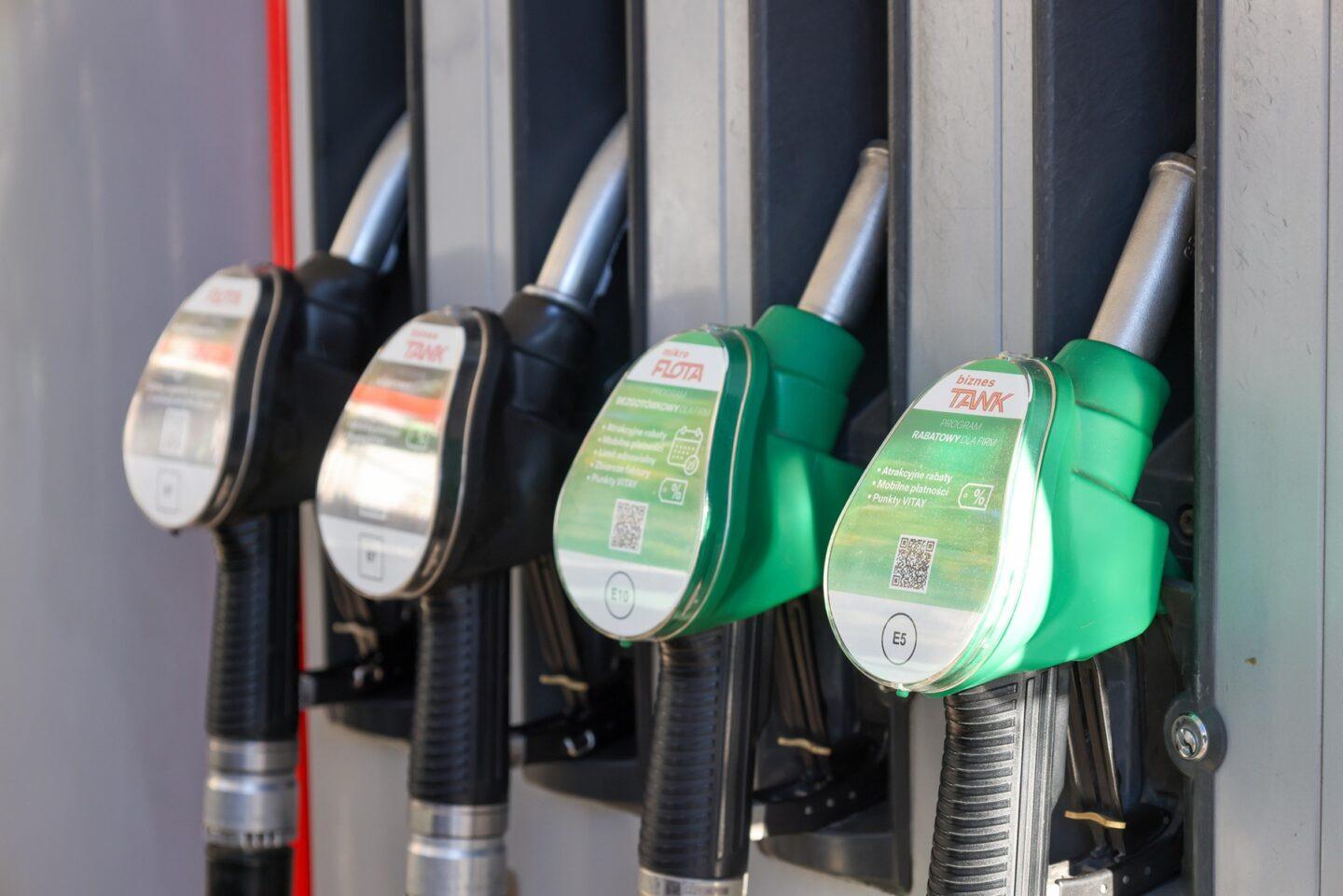
CPN: the fuel station that fueled communist Poland
If you've spent any time in Poland talking to people old enough to remember the PRL – the Polish People’s Republic – you'll eventually hear someone mention CPN with a mix of fondness and exasperation. Fun fact: some of them still call any fuel station a CPN. Simple as that.
CPN stood for Centrala Produktów Naftowych – the Central Petroleum Products Authority. In plain terms, it was the only petrol station in Poland. Not one chain among many. The only one, full stop.
In 1981, CPN employed a total of 14,200 people and 5,600 petrol station agents, and had 43 fuel laboratories operating in the country. It was, in other words, an enormous state apparatus built around the simple act of filling up a tank.
When communism collapsed and Poland began its transformation, the days of CPN as a monopoly were numbered. CPN was restructured as a state-owned limited liability company in 1995. By the end of the decade, CPN's operations included more than 1,400 service stations, 156 fuel depots, a 600-strong fleet of tanker trucks, port operations, and 22 research laboratories.
In 1999, the Polish Council of Ministers decided to partially privatise and merge CPN with Petrochemia Płock, the state firm in charge of the oil refineries in Płock. The resulting company was renamed Polski Koncern Naftowy (PKN), with Orlen added several months later as the brand name.
It is worth recalling that retail sales in constant prices increased by 1.3% year on year in April. A significant contribution to this growth came from the category of solid, liquid, and gaseous fuels. In real terms, their sales value rose by as much as 25.6% year on year – an exceptionally strong increase. Most likely, firms and households were building up inventories out of concern about potential shortages or further price increases.
If the agreement between Iran and the United States proves durable, a gradual unwinding of these inventories could take place in the coming months, which would weigh negatively on VAT revenues. The government has extended the reduced VAT rate on petrol, diesel, and bio-components used as standalone fuels until June 30.
…and excise duty
Revenues from excise duty amounted to PLN 36.2 billion (EUR 8.4 billion), up by approximately PLN 0.9 billion (2.7%) compared with the execution in the January–May 2025 period. In May alone, however, they fell by PLN 1.1 billion (around 15%).
In the case of excise duty, the “Lower Fuel Prices” (Ceny Paliw Niżej, CPN) program reduced rates on diesel and petrol by 24% and 19%, respectively. Under the Budget Act, excise duty revenues are expected to increase by 11.6%.
Thus, both VAT and excise duty are on track to miss the revenue targets set for this year. Against this backdrop, the decision for the reduced excise rates on motor fuels to cease to apply as of today comes as no surprise.
Fiscally stabilizing “anchors”
Relief for public finances may come from three areas.
First, there is the government’s windfall tax on excess profits, which is expected to generate PLN 4 billion (EUR 0.9 billion). At this stage, it remains uncertain whether this amount will be sufficient to offset the cost of the CPN fuel pricing program.
In addition, revenues from income taxes (CIT and PIT) are rising markedly. In the case of CIT, budget revenues are up by approximately 19% compared with last year. A key driver here is the higher tax rate applied to banks.
Due to the freezing of tax thresholds and parameters, the strongest percentage growth in revenues to the public finance sector comes from PIT (both at the level of the state budget and local government units). These revenues have increased this year by PLN 9.9 billion (EUR 2.3 billion), or 13.4% year on year.