

This article is a part of Poland Unpacked. Weekly intelligence for decision-makers
The Think Tank The Company has announced the “Entrepreneurial Poland” program. This is a non-partisan initiative bringing together entrepreneurs, experts, and public administration representatives, aimed at preparing a modernization strategy for the country for 2026–2036. Below are its main assumptions.
On Tuesday, June 23, representatives of the Think Tank The Company signed the “Entrepreneurial Poland” program during an official press conference. XYZ was the first to announce and describe the initiative. Its authors offered a sober assessment of Poland’s economic situation, arguing that the country’s current development model is gradually running out of steam.
“The development model that ensured Poland’s success after 1989 was built on specific foundations: relatively low labor costs, rapid convergence with the West, access to the Single Market, and a role as Europe’s industrial base. Today, it is gradually exhausting itself. Over the past 10 years alone, the average wage in Poland has increased by 120 percent, compared with 40 percent in the EU. This is very good news for the country’s stability, but bad news for the competitiveness model we have developed over the years,” according to the program document obtained by XYZ.pl.
Challenges are mounting on the horizon. Other countries are already producing more cheaply. Europe, including Poland, is losing competitiveness due to high energy prices; protection for domestic industry is weakening, while a crisis of entrepreneurship is deepening.
The initiative’s authors argue that it is time to change this model.
A time for change: “Entrepreneurial Poland” as a new program
As outlined in the opening report of “Entrepreneurial Poland,” without a more efficient state, competitive energy prices, strong private-sector companies, and faster technology adoption, it will be difficult to sustain the growth rates seen over the past three decades.
The new organization is not intended to become another platform for commenting on the economy, but rather a project-based environment focused on concrete regulatory and systemic changes. The Think Tank The Company, operating within a community of approximately 2,500 entrepreneurs representing more than 100 industries, has announced the development of a program called “Entrepreneurial Poland.” Its goal is to create a long-term national development strategy built on four pillars: entrepreneurship, an efficient state, a competitive economy, and innovation, technology, and human capital.
The initiative aims to transfer business experience into the public policy debate. The authors of the declaration emphasize that entrepreneurs want to engage in public affairs as they would in a well-managed project: diagnosing problems, compiling lists of barriers, assigning responsibility for implementation, and measuring outcomes. The point, therefore, is not merely to appeal to politicians, but to build a permanent mechanism of cooperation between business, public administration, and experts.
A direct point of reference is the “SprawdzaMY” initiative, under which entrepreneurs identified 522 barriers hindering business development and investment. According to their declaration, 60 percent of these have already been addressed or entered the legislative process. For the creators of “Entrepreneurial Poland,” this is evidence that cooperation between the state and business can produce tangible results – provided it does not end at the stage of consultations and conferences.
“Poland’s economy today needs data, not declarations. We want to know what is truly blocking the growth of Polish companies and which solutions will allow them to develop faster. The ‘Roadmap of Entrepreneurial Poland’ for the next 18 months is the first step and an invitation to a permanent partnership between entrepreneurs, experts, and public administration,” commented Adam Malinowski, CEO of The Think Tank The Company.
The end of a simple growth model
The opening report begins by recalling the scale of Poland’s success after 1989. In the space of a single generation, Poland has moved from a country catching up on civilizational backwardness to the sixth-largest economy in the European Union. It has built a strong export-oriented industrial base, integrated into the European market, and created hundreds of thousands of private companies. Over the past three decades, entrepreneurship has been one of the key engines of social mobility and the rise of the middle class.
At the same time, the authors argue that the foundations of this model are weakening. For years, Poland benefited from relatively low labor costs, rapid convergence with Western Europe, access to the Single Market, and its role as Europe’s industrial back office. Today, however, this configuration is no longer sufficient. Labor costs are rising, other countries offer cheaper production, and competitive advantage is increasingly built not on price alone, but on productivity, access to affordable energy, technology, branding, and the efficiency of the state.
Expert's perspective
Poland needs a new growth model
We have caught up with Europe, but our development has been based on cheap labor. It was a “Europe’s assembly plant” model. That model is now running out of steam. The new model is AI, data centers, and unicorns. Labor costs will no longer be our competitive advantage.
We are not engaged in lobbying, and we are not creating a political party, but we will engage with politicians on a partnership basis. And at times, we will be firm critics of their decisions.


What The Company aims to change in Poland
As representatives of the business community declare, Poland can no longer base its development solely on its role as a reliable subcontractor for Western firms. Over the next decade, it will need to create more of its own products, brands, and technologies, and develop companies capable of operating on an international scale. Otherwise, it risks being trapped in a middle-income development plateau – facing rising costs but without sufficient productivity or value added.
The declaration also strongly emphasizes the energy dimension. The authors point out that Europe is losing competitiveness, in part due to high energy prices. This is particularly relevant for Poland, where energy costs weigh heavily on industry, investment, and the development of new sectors, including a data-driven economy, automation, and artificial intelligence. Without stable, predictable, and competitive energy prices, it will be difficult to maintain production, attract investment, and scale up domestic businesses.
Expert's perspective
Changing the climate for business
We are in such a dramatic situation that it is a fantastic opportunity to leap three or four levels ahead, avoiding the mistakes made by other European countries.
Entrepreneurship as the foundation of modernization
The first pillar of the program concerns rebuilding entrepreneurship as a positive social and economic norm. This is significant because, according to the authors of the declaration, confidence in starting one’s own business is weakening in Poland. The latest Global Entrepreneurship Monitor surveys are said to show that only 3 percent of Poles plan to start a company within the next three years. This is not only a low figure, but an alarming one for a country seeking to maintain a rapid pace of development.
The problem is not solely that running a business has become more difficult than in the past. The initial registration of a company is not the main barrier. The real difficulties begin later – with constantly changing regulations, a complex tax system, increasing administrative obligations, energy costs, and regulatory uncertainty. For large companies, these are costly but often manageable challenges. For small and medium-sized enterprises, they can determine whether the business survives at all.
Expert's perspective
We live in a tax “Matrix”
Taxes should be simple, cheap to collect, and efficient. Corporate income tax (CIT), in its current form, is impossible to defend: a 360-page statute, 160 exclusions from deductible costs, and more than 400,000 binding tax interpretations. We are living in a tax “Matrix.”
But it does not have to be this way. What is needed is the courage to set things right. The “SprawdzaMY” initiative has improved the situation, but I still feel a sense of dissatisfaction.
That is why, together with the SGH (Warsaw School of Economics), we will present a comprehensive concept of a flat “Estonian-style CIT” next year.
“Polish SMEs are active, innovative, and resilient. However, they have one core demand of the state: they are not asking for privileges or special support programs. They expect stable and predictable rules of the game that allow them to plan investments and develop their businesses in Poland,” said Eliza Kruczkowska Eliza Kruczkowska, Managing Director of Think Tank The Company.
Repairing the image of entrepreneurs
The creators of “Entrepreneurial Poland” point to another issue: the public image of entrepreneurs. In Polish public debate, entrepreneurs are too often portrayed as actors who should be controlled, suspected, or scrutinized for their privileges. Far less frequently are they described as individuals who invest, create jobs, strengthen local communities, and take responsibility for development. Changing this narrative is seen as one of the conditions for rebuilding entrepreneurial ambition among the younger generation.
Expert's perspective
A fundamental difference between Western Europe and Poland
There, entrepreneurs are treated as partners of the state, not as enemies, suspects, fraudsters, or “Janusz-type” business operators. Political leaders reinforce this at every step. That is a fundamental difference. We are not treated as partners of the state. And this is reflected in hard data.
Explainer
Janusz - a Polish name that became a meme
“Janusz-type” business operator is a Polish cultural shorthand for a certain kind of small-time entrepreneur: cheap, corner-cutting, and proudly old-school about it.
The name comes from a male name of Janusz, a meme archetype that emerged in Polish internet culture in the 2010s.
So who is the Janusz Businessman? A stereotypical middle-aged Polish man: born in the communist era, suspicious of anything new, fiercely proud of his resourcefulness, and constitutionally opposed to spending money he doesn’t have to. He drives a battered Audi, wears a shell suit, and considers himself a savvy operator.
This is his typical M.O.:
- pays staff cash-in-hand to dodge taxes and social contributions
- cuts every corner on health, safety, and labor law
- treats regulations as optional inconveniences invented by bureaucrats
- is deeply skeptical of contracts, accountants, and “unnecessary” overhead
- haggles over everything and considers frugality a virtue, not a vice
- runs the whole operation himself because he doesn't trust anyone else
The type is recognizable across many industries — construction subcontractors, small logistics firms, local food stalls, backyard workshops. It’s not purely pejorative: there’s a grudging cultural acknowledgment that these operators survive through sheer stubbornness and improvisational skill. But the term also carries a clear critique: of tax evasion, precarious employment, and a resistance to modernization.
The authors of the declaration cite examples of Polish companies
The authors of the declaration refer to the histories of Polish companies that began with simple ideas and gradually evolved into recognizable brands. Among the examples they cite are InPost, Wiśniowski, Oshee, Adamed, Elemental Holding, as well as companies associated with Michał Sołowow. What they share is ambition, a willingness to take risks, and the belief that it is possible to build something of one’s own. According to the initiative’s creators, such ambition is increasingly rare today.
For this reason, the proposed measures include strengthening entrepreneurial and economic education, promoting entrepreneurship as a path to social mobility, simplifying business activity, supporting succession in family-owned firms, and fostering local and regional entrepreneurship. The latter is particularly important, as Poland’s economic success has not been built solely in the office towers of major cities. It has also been driven by small family businesses, workshops, shops, local service providers, and enterprises operating outside metropolitan areas.
A state that does not obstruct, but cooperates
The second pillar of the program concerns an efficient and partnership-based state. The declaration reiterates the thesis that one of the biggest problems of the Polish economy is not a lack of regulation, but regulatory chaos. Laws change too quickly, regulations are often unpredictable, and entrepreneurs increasingly operate in conditions of permanent uncertainty.
Expert's perspective
The state should build trust and support companies
Not everyone is aware that all Pirelli tires used in Formula 1 are made from rubber produced by Synthos in Poland. It was InPost that created parcel lockers, transforming shopping not only in Poland but also in France and the United Kingdom. We should take pride in and showcase such examples. This is how we will earn greater respect.
Pirelli Formula 1 tires are made from rubber produced by Synthos in Poland. It was InPost that created parcel locker systems (“Paczkomaty”), reshaping shopping habits not only in Poland but also in France and the United Kingdom.
Such uncertainty acts as a hidden tax. Companies are forced to spend more on legal services, postpone investment decisions, and reduce their willingness to take risks. In extreme cases, they relocate parts of their operations to countries where the rules are more stable. A state that changes the rules of the game every few months makes it difficult to build companies capable of planning on a decade-long horizon.
The creators of “Entrepreneurial Poland” place this problem in a broader European context. They point to reports by Mario Draghi and Enrico Letta, which suggest that Europe is losing the race for productivity, technology, and investment to the United States and China. One of the reasons is excessive regulation and slow decision-making processes. In Poland, there is also the phenomenon of gold-plating, meaning the imposition of national requirements that go beyond the minimum standards of EU law.
It is not about “less state”
However, the proposal does not boil down to a simple slogan of “less state.” Rather, it is about a state that is more competent, predictable, and results-oriented. Public administration should regularly verify whether regulations actually solve the problems for which they were introduced. Every new piece of economic regulation should include an assessment of its impact on small and medium-sized enterprises, as well as a defined date for reviewing its effects.
The declaration also calls for greater exchange of expertise between public administration, business, and academia. The authors argue that it is difficult to design good regulations for companies without an understanding of the realities of running a business – managing liquidity pressures, negotiating with banks, investing in production facilities, hiring employees, and competing on international markets. This is not an argument against civil servants or policymakers, but rather in favor of more firmly embedding the law-making process in the experience of the real economy.
More Polish global companies
The third pillar of the program concerns a competitive economy and equal opportunities. As the creators of The Company explain, Poland has many small and medium-sized enterprises, but too few companies are capable of achieving large scale, acquiring foreign assets, and competing globally.
According to the declaration, Polish private companies control only 29 percent of the share capital in the corporate sector, while state-owned companies account for 38 percent and foreign-owned firms for 29 percent. Among the 15 largest companies in Poland by revenue, there is not a single firm owned by Polish private shareholders. According to the initiative’s authors, it is precisely strong private companies – capable of taking risks, scaling operations, and expanding abroad – that in the long run tend to drive innovation and productivity in the economy.
Expert's perspective
We should build an innovative economy and expand abroad
There will be no stable economy if Polish companies do not expand abroad. One percent of firms account for 50 percent of Poland’s exports, and only 4 percent export at all.
We must also have influence over EU legislation, because law today is no longer only national. It is also European.
The authors also draw attention to challenges in the technology sector. They note that most large Polish tech companies that have raised significant funding have holding structures registered abroad. This does not necessarily stem from a reluctance to operate in Poland, but rather from practical barriers: slower investment processes, a less predictable legal environment, and less favorable conditions for closing funding rounds. As a result, value created by Polish talent often materializes – both in tax and capital terms – outside Poland’s borders.
This section of the declaration also puts forward a strong call to build a “Made in Poland” brand. Poland is no longer merely Europe’s low-cost assembly hub. An increasing number of companies compete on quality, design, technology, speed of execution, and ability to scale internationally. The problem is that Poland’s economic brand still too rarely opens doors on global markets. The authors want “Made in Poland” to be associated with credibility, modernity, quality, and a strong work ethic.
How to drive change? Examples from business
There are already examples showing that such a shift is underway. Adamed, which acquired a manufacturing plant from Sanofi near Barcelona, JNT Group, which purchased the oldest cava producer in Spain, and Maspex, which acquired the Czech brand Becherovka, all demonstrate that Polish companies are increasingly moving beyond exports and instead acquiring assets, brands, and distribution channels abroad. This marks a transition from the role of subcontractor to that of a value owner.
To increase the number of such cases, stable succession conditions are needed. The list of necessary actions is longer. It includes easier access to growth financing, a predictable energy policy, better use of public procurement to support innovation, and more integrated support for international expansion. The program also calls for the creation of a “one-stop shop” for companies entering foreign markets. It further appeals for better coordination between Polish Investment and Trade Agency, BGK (state development bank – ed.), and economic diplomacy, as well as for rewarding companies that reinvest profits and scale up their operations.
Expert's perspective
Local content is welcomed by business
AI, demographics and productivity
The fourth pillar of the program concerns the future – innovation, technology, and people. The starting point is a demographic diagnosis. Poland’s society will age, the number of people of working age will decline, and maintaining the current pace of development will become increasingly difficult. Under these conditions, productivity is no longer an abstract economic indicator but a core prerequisite for state stability.
Artificial intelligence, automation, and new technologies are meant not to be an add-on to the economy, but its very competitiveness infrastructure. As with electrification, the internet, or industrial automation in the past, AI today can transform how companies, public administration, healthcare, logistics, and education operate. This will not always resemble a futuristic revolution. More often, it will mean an accountant using automation tools, a doctor analyzing test results with algorithmic support, an engineer preparing designs more quickly, or a manufacturing company optimizing logistics.
Poland has talent and isolated world-class successes. ElevenLabs and ICEYE demonstrate that globally significant technology companies can be built with Polish participation. The problem, therefore, is not a lack of ideas, but the ability to commercialize them, scale operations, and broadly deploy technology across the economy. Countries that learn faster how to use AI in industry, services, energy, and public administration will be able to sustain growth despite demographic aging. The others risk declining productivity.
The program also calls for a predictable labor migration policy. The authors argue that in conditions of a shrinking labor supply, automation alone may not be sufficient. Migration should not be treated solely as an ideological issue, but also as an element of the state’s economic security. What is needed is a system based on skills, labor market needs, and the capacity for effective professional integration.
The Company emerges from “SprawdzaMY.” Leading Polish entrepreneurs behind the initiative
The “Entrepreneurial Poland” initiative is one of the projects carried out by the Think Tank The Company. The organization was launched in early February 2026 as a new, non-partisan advisory and analytical center created by the Polish business community. Its ambition is to combine business experience, professional analysis, and practical cooperation with public administration.
At the core of the project lies the belief that Polish business has matured to a point where it should no longer merely comment on the regulatory environment, but also co-create concrete systemic solutions. The Business Council of The Company brings together representatives of the largest private companies and capital groups in Poland, including Rafał Brzoska, Michał Sołowow, Małgorzata Adamkiewicz, Krzysztof Pawiński, Robert Dobrzycki, Bartosz Skwarczek, Paweł Jarski, Dariusz Gałęzewski, César Lipka, Agnieszka Hipś, and Michał Wypychewicz. Rafał Brzoska serves as Chair of the Foundation Council, while Michał Sołowow chairs the Business Council.
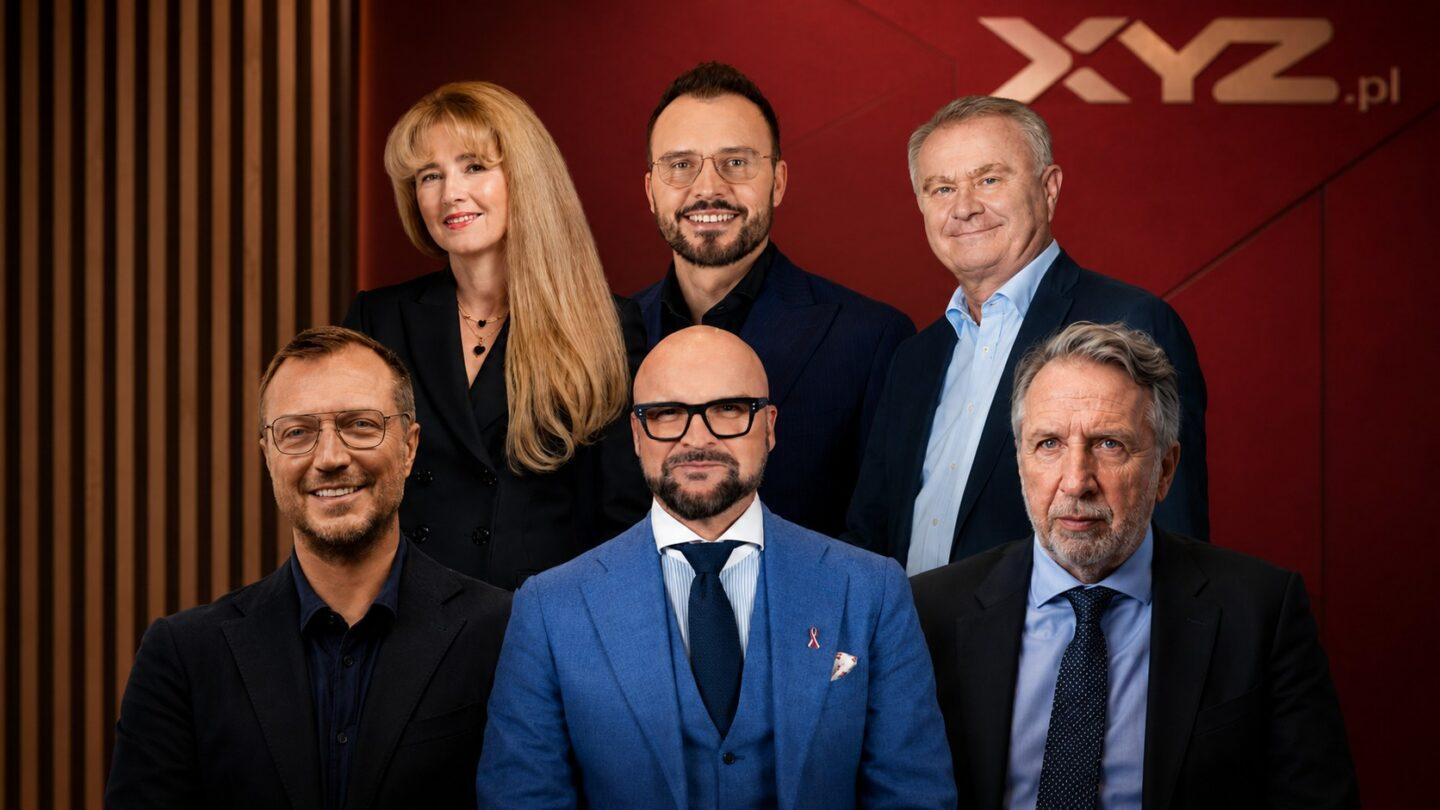
Operationally, the organization is led by Ryszard Chmura, President of the Think Tank The Company. The CEO is Adam Malinowski, formerly associated with the “SprawdzaMY” project, while the Managing Director role is held by Eliza Kruczkowska, former Director of the Innovation Development Department at the Polish Development Fund.
How “SprawdzaMY” took Poland by storm
The most direct experience from which The Company emerges is “SprawdzaMY” – a civic deregulation initiative launched by Rafał Brzoska in 2025. Its mechanism was simple, yet unusual by Polish standards. Citizens, entrepreneurs, and experts could submit legal barriers and propose simplifications. These proposals were then analyzed by expert teams, assessed, and forwarded to the government as legislative recommendations.
“SprawdzaMY” was designed to demonstrate that deregulation does not have to be a slogan used during election campaigns, but can instead become a process grounded in data, priorities, and accountability for implementation. In its first phase, more than 16,000 public submissions were collected and reviewed by over 700,000 participants. From this pool, 522 deregulation proposals were selected and grouped into 15 packages submitted to the Government Deregulation Team.
The team held 91 meetings, and according to the government’s summary, by February 2026, 354 proposals had been accepted for implementation, 193 changes had been adopted by the government, and 126 had already entered into force.


Key Takeaways
- “Entrepreneurial Poland” is intended as the business community’s response to the gradual exhaustion of the existing growth model. The authors of the declaration argue that advantages based on low labor costs, convergence with Western Europe, and the role of Europe’s production back office will no longer be sufficient in the next decade. The new sources of competitiveness are to be productivity, technology, an efficient state, strong private companies, and stable energy prices. The initiative does not aim to limit itself to commenting on the economy. It is designed to operate as a project-oriented platform that identifies barriers, proposes solutions, and monitors their implementation.
- At the core of the program is a call to reshape the relationship between the state and entrepreneurs. The Company argues that Poland’s economic challenge is not only the volume of regulation, but also its volatility, unpredictability, and detachment from the realities of running a business. The authors of the declaration call for a more competent, partnership-based, and results-driven state. They propose, among other things, assessing the impact of new regulations on small and medium-sized enterprises, conducting regular regulatory reviews, and improving the exchange of expertise between public administration, business, and academia. In this view, the entrepreneur should be treated not as a subject of suspicion, but as a co-creator of national development.
- The program strongly emphasizes the need to build a greater number of Polish companies capable of global expansion. According to the declaration, domestic private capital still holds too weak a position relative to state-owned and foreign firms, while a significant share of technology ventures created by Polish talent see their value materialize outside the country. For this reason, “Entrepreneurial Poland” calls for a stronger “Made in Poland” brand, improved growth financing, more effective support for international expansion, and a predictable energy policy. A key backdrop is demographics. An aging society will make automation, artificial intelligence, and responsibly managed labor migration essential conditions for sustaining economic growth.
We are publishing this information because we consider it important and noteworthy. For the sake of full transparency, we would like to inform readers that the RiO fund, owned by Rafał Brzoska - CEO and shareholder of InPost - is an investor in XYZ.