

This article is a part of Poland Unpacked. Weekly intelligence for decision-makers
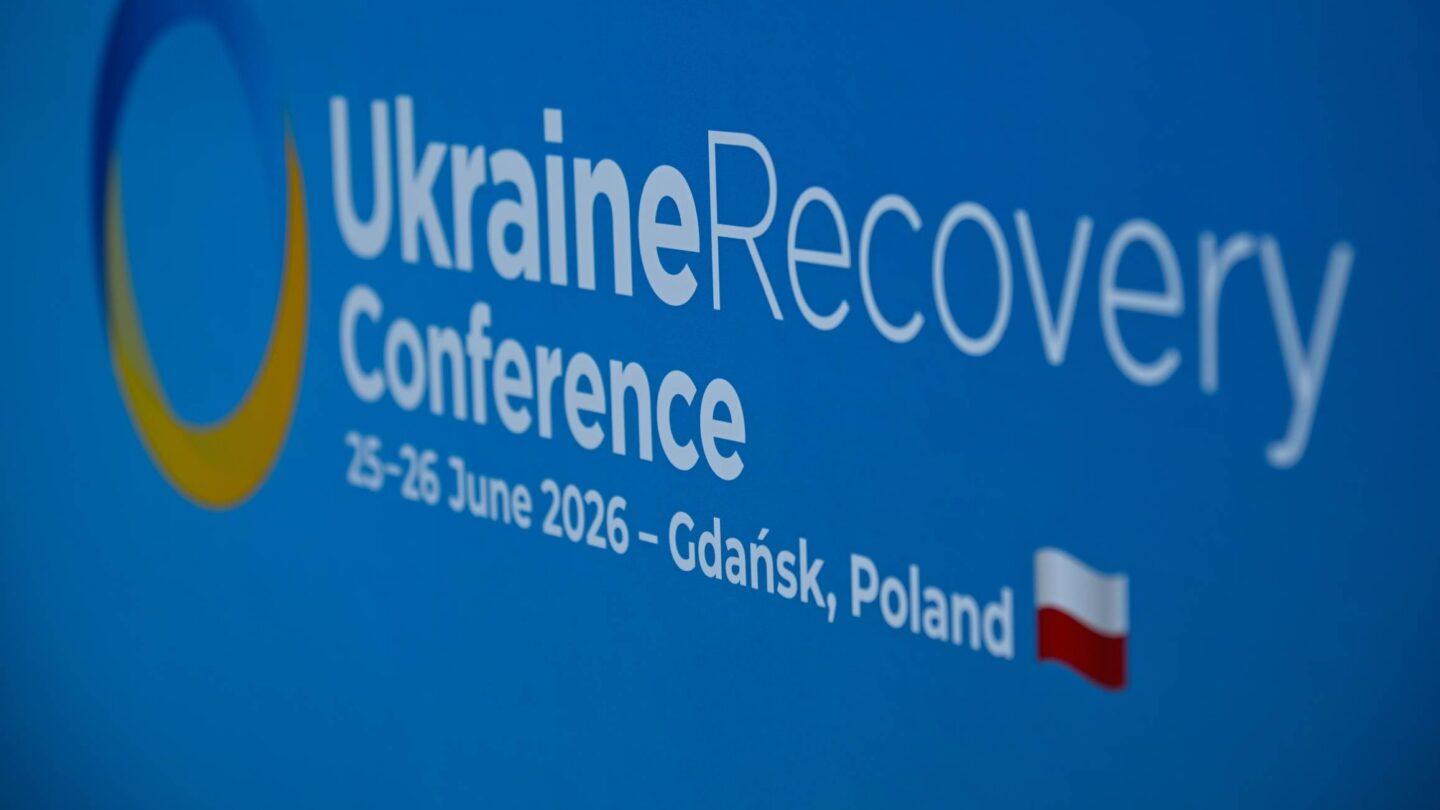
The conference drew around 7,500 participants to Gdańsk. This included nearly 70 national delegations, of which 19 were represented at presidential or cabinet level. There were also 30 delegations from international organizations and around 5,000 representatives of the business community.
In his opening address, Prime Minister Donald Tusk acknowledged the symbolic significance of choosing Gdańsk as the host city.
“Gdańsk was rebuilt from ruins and has become, on a global scale, one of the most complete examples of reconstruction - not only architectural. The spirit of the city was also restored. Ukraine now faces a similar enormous effort,” he said on Thursday.
The prime minister also stressed that a shared future can only be built on truth, mutual respect, and an understanding of history - a clear reference to recent Polish-Ukrainian tensions over historical issues.
Those tensions contributed to the cancellation of Ukrainian President Volodymyr Zelensky’s planned visit to Gdańsk, despite his role as co-organizer of the event. The Ukrainian delegation was downgraded in rank and led instead by Prime Minister Yuliia Svyrydenko, accompanied by roughly half of her cabinet. Ukrainian participants nonetheless repeatedly expressed gratitude to Poland.
Nearly 200 agreements
Eliza Zeidler, deputy head of the Ministry of State Assets, said that nearly 200 contracts, agreements, and memoranda of understanding were signed during the two-day conference. These figures remain preliminary, with organizers still compiling data. At the opening of the conference, Prime Minister Svyrydenko had spoken of expectations to sign 160 agreements worth a total of EUR 10 billion (approximately PLN 43 billion).
The Bank Gospodarstwa Krajowego (BGK) joined the European Flagship Fund for the Reconstruction of Ukraine, investing EUR 15 million (approximately PLN 65 million). The fund raised around EUR 260 million (approximately PLN 1.13 billion) in its first round. Alongside BGK, it has attracted development-finance institutions from, among others, Germany, France, and Italy, as well as the European Investment Bank.
Another notable development was an agreement between the Polish Armaments Group and Ukrainian company TAF Industries. The two firms signed a memorandum of understanding on the production of unmanned aerial vehicles in Poland.
New conditions for discussing Ukraine’s reconstruction
Representatives of both politics and business highlighted several features that distinguished the Gdańsk conference from previous editions. The first was Ukraine’s recent battlefield successes and the damage Russia has sustained due to sanctions and strikes on industrial infrastructure. The second was the opening of the first negotiating cluster in Ukraine’s accession talks with the European Union.
Wojciech Kostrzewa, president of the Polish Business Roundtable, told XYZ that developing economic cooperation with Ukraine at this early stage could pay off once Ukraine joins the EU.
“We do not know whether this is a five- or ten-year horizon, but it is already visible. Just as in Poland 30 years ago, when accession negotiations began, this is an opportunity to build a position in that market at a fraction of the cost it would take to establish an equivalent position in Poland. Ukraine is our neighbour, and our economies will cooperate for decades and centuries to come,” he said.
In the shadow of political tensions
Western media suggested that the political conflict between Poland and Ukraine had affected—or even overshadowed—the conference. However, participants from both countries stressed that current disputes did not hinder discussions on long-term cooperation.
The absence of Volodymyr Zelensky was criticised on Thursday by Ukrainian boxing champion Wladimir Klitschko, who met with the media. A day later, his brother, Kyiv mayor Vitali Klitschko, arrived in Gdańsk. He paused briefly when asked about Zelensky, and when questioned about tensions in relations with Poland, emphasised the need for cooperation as well as Ukraine’s EU aspirations.
Ukraine’s ambitions to join the European Union were also discussed extensively. Ukrainian politicians underlined the need for judicial and legal reforms, as well as decisive action against corruption.


Key Takeaways
- The conference brought together around 7,500 participants from dozens of countries across the world. It combined political and economic dimensions. Despite political tensions preceding the event, Polish and Ukrainian government representatives reiterated their commitment to cooperation.
- One of the main outcomes was a large number of commercial agreements. Preliminary estimates suggest nearly 200 deals were signed. Key developments included BGK’s investment in Ukraine’s reconstruction fund, the memorandum between the Polish Armaments Group (PGZ) and TAF Industries, and letters of intent by Polish energy companies aimed at rebuilding Ukraine’s energy sector.
- Participants highlighted the role of financial mechanisms in reducing investment risk.
Ukraine’s EU aspirations were a central theme. Both Polish and Ukrainian representatives emphasised the need for extensive reforms prior to accession. Despite the political tensions ahead of the event, participants stressed that these did not negatively affect cooperation.