

This article is a part of Poland Unpacked. Weekly intelligence for decision-makers
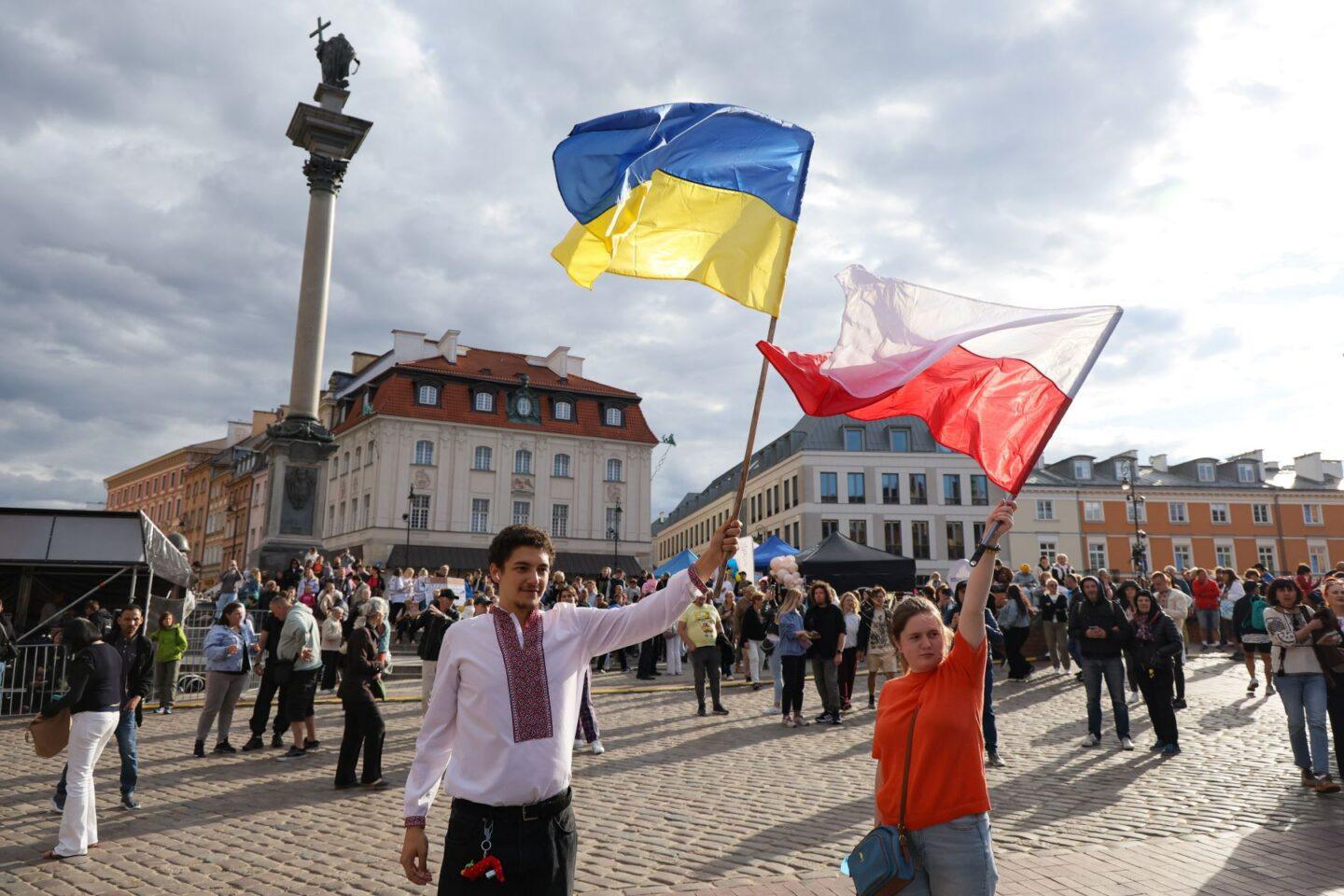
— The fact that something is acceptable in Ukraine does not mean it is acceptable in Poland, says Dr. Mateusz Kamionka, a political scientist at Jagiellonian University. In his view, many of today’s tensions stem from differences in everyday social norms. In an interview with XYZ, he explains the causes of the recent attacks on Ukrainians and points to Kyiv’s responsibility for the dispute over the Ukrainian Insurgent Army (UPA).
Explainer
UPA
Poland and Ukraine have stumbled into a fresh political row, reigniting one of the most sensitive historical disputes between the neighbors. In late May, President Volodymyr Zelensky named a Ukrainian military unit after the “Heroes of the Ukrainian Insurgent Army” (UPA). The move, intended in Kyiv as a nod to national military traditions and wartime resilience, has triggered a sharp backlash in Poland.
The reaction in Poland has been unusually unified across political divides. Criticism of the UPA reference has come from both government and opposition figures, reflecting the enduring sensitivity of the issue. According to Poland’s Institute of National Remembrance (IPN), the UPA killed between 80,000 and 100,000 Polish civilians during the Second World War in what is now western Ukraine (Volhynia).
For years, Warsaw has pressed Kyiv to allow exhumations and proper burials of the victims. Ukraine, for its part, resists formally recognizing the massacres as genocide. In Ukrainian public discourse, UPA symbols are still used by some as emblems of anti-Soviet resistance, creating a stark divergence in historical narratives.
President Karol Nawrocki escalated the dispute further. He announced that on June 8 he would ask the Chapter of the Order of the White Eagle to consider stripping Mr. Zelensky of Poland’s highest state decoration. The Ukrainian leader received the award in April 2023 from then-president Andrzej Duda for strengthening Polish-Ukrainian relations and contributing to European security amid Russia’s full-scale invasion.
Krzysztof Figlarz: The past few weeks have brought a series of incidents and acts of violence against Ukrainian citizens. Are we seeing a genuine shift in public sentiment in Poland, or rather the emergence of attitudes that have existed all along?
Dr. Mateusz Kamionka: Hostility toward people from Ukraine – and, more broadly, toward foreigners – has been with us all along. I saw it as early as 2022, when I was working as a volunteer myself. Its scale has increased in recent months, however. My argument would be that it was largely hidden before. People hostile toward foreigners – whether Ukrainians, Germans or other groups – tended to operate within their own circles: on online forums, in comment sections, among people who shared the same worldview. And even in 2022, at the outbreak of the war, not all comments were sympathetic; I remember that well. The point is that, in most cases, these people were afraid to openly express their views because of the scale of Poland’s – and above all ordinary Poles’ – involvement in helping Ukraine.
Several factors contributed to the change. The first was last year’s election campaign in Poland. The second – and in my view more important – was President Volodymyr Zelensky’s decision to invoke the legacy of the UPA in the name of one of the military units. In my opinion, it was difficult not to foresee that this decision would be received very negatively in Poland. All the more so because people around the president include individuals who are well versed in Polish public debate. Given that President Karol Nawrocki headed the Institute of National Remembrance for years and, at his very first meeting with Zelensky, presented him with books about the UPA, it was clear that something was going to happen. Perhaps the only thing that surprised them was the speed and scale at which it happened.
As a result, people with extreme views became more vocal. They realized that the moment had come when they could say out loud what they had previously kept to themselves. That, in a kind of shorthand, Polish society was already “tired of the war” in Ukraine. And then everything came to the surface.
A deliberate shift in the narrative
Among liberal commentators, some have occasionally explained Zelensky’s decision by pointing out that he is from Kryvyi Rih and simply does not know the history of the UPA. Is that a serious argument in the case of a politician who has held the country’s highest office for years and has an entire advisory apparatus at his disposal?
Who's who
Dr. Mateusz Kamionka
A Polish political scientist specializing in Polish-Ukrainian relations, security in Central and Eastern Europe, and comparative analysis of young people’s political awareness. He is a Fulbright scholar for the 2026–27 academic year.
I see two interesting threads here. First, in my view, the timing was not entirely accidental. Shortly beforehand, it had become clear that some Western countries would not accelerate Ukraine’s path to EU membership. The narrative of rapid accession to the EU was very important to Kyiv because it was part of a broader story about survival and a better future. It offered hope and an additional source of energy. Leaving Ukraine on the ordinary, “normal” multi-year path for a candidate country meant, in my view, that it had to change its domestic narrative. It had to move away from a purely pro-European story, because that story necessarily comes with certain standards.
This adjustment in the politics of memory would have happened sooner or later anyway: Ukraine’s historical narrative would have had to become more nuanced if the country were to join the EU as a full member. The same issue arose, for example, in Romania and Croatia, while North Macedonia even had to change its name to join NATO. So this is nothing new.
Ukraine still faces a serious debate about its history
Second, and this is the more important issue, I have the impression that Ukraine has not yet had anything like the broad debate over its own historical policy that has taken place, to varying degrees, in Poland. I am not claiming that Poland is the best example here, but we know the darker sides of our own history – anti-Semitism, Operation Vistula, and the policies of the Second Polish Republic toward minorities. Precisely the issues that the Ukrainian side emphasizes so strongly today. In Poland, there is a fairly broad consensus on how to assess many of the difficult chapters of our history, although there are, of course, groups that interpret them differently. That is the result of having worked through this history – better or worse.
Explainer
Operation Vistula
Operation Vistula (Akcja Wisła) was a forced resettlement carried out by Poland’s communist authorities from April to July 1947. More than 140,000 Ukrainians, Lemkos, Boykos and members of mixed Polish-Ukrainian families were removed from their historic communities in the south-east – particularly the Bieszczady and Lower Beskids – and dispersed across the so-called Recovered Territories in northern and western Poland, formerly part of Germany.
The authorities presented the operation as a military and security measure intended to cut the Ukrainian Insurgent Army (UPA) off from civilian support. Yet the collective punishment of civilians, including many with no connection to the underground, also served the communist state’s wider goal of breaking up Ukrainian communities and accelerating their assimilation.
The operation remains one of the most painful and contested episodes in modern Polish-Ukrainian history. Its victims lost homes, land, churches and established social networks; many were deliberately scattered so that they could not rebuild compact communities, while some Ukrainians were imprisoned in the Jaworzno camp.
Polish authorities and historians continue to debate how the operation should be legally and politically described, particularly in light of UPA violence against Polish civilians and the broader post-war expulsions on both sides of the new border.
The Ukrainian side, by contrast, has barely had such a debate when it comes to the history of insurgent movements. It has not even addressed the issue in its most basic terms: who was right and who was wrong. Instead, there has been extensive heroization, without asking whether everything should really be viewed in that way.
I understand that wartime is not the best moment for such a discussion. But we have to remember that it will have to happen eventually. There have already been opportunities. Under Viktor Yushchenko, who enjoyed the strong support of Lech Kaczyński, we had a crisis in bilateral relations over the decision to award Stepan Bandera the title of Hero of Ukraine. Then, for a while, nothing happened, but we had the revolution and the war in eastern Ukraine. Those were moments when something could have been done about the issue. Yet, as we can see, the worst possible moment was chosen – when Ukraine is fighting off Russia’s full-scale invasion.
Nor is this about either side imposing its own interpretation of historical facts, events or figures. It is about conducting reliable and objective historical research into these issues – perhaps even jointly. That has not happened, and today we are at a point where everything is either black or white. That does not help the debate.
History is deepening a dispute about the present
Does that mean that the dispute over the UPA is, in essence, a dispute over contemporary politics rather than history?
To a large extent, yes. That is why when someone says the issue should be left to historians, I would add that political scientists should also be brought into the discussion. They take a somewhat different approach, because this is not solely about historical findings but also about what is known as the politics of memory. They can see how this conflict affects contemporary bilateral relations – between governments, businesses and ordinary citizens alike.
At the same time, it is worth noting that in Ukraine, historians and politicians dealing with this subject are often the same people. But that is a topic for another conversation.
Before our interview, you also pointed out that we have very few experts who appear in the Ukrainian media. The Ukrainian perspective is virtually absent from our debate. Are there voices in Ukraine’s public debate that offer a more nuanced view of its own history, despite the ongoing war and the need to maintain morale?
We need to distinguish between two things. First, very few people from Poland speak Ukrainian at all, let alone appear in the Ukrainian media. You could count them on one, perhaps two hands. Most of the people commenting on Ukrainian affairs in the Polish public sphere are Ukrainian citizens living in Poland. Some experts are also unable, because of the nature of their work, to comment on domestic Polish issues – for example, people affiliated with the Centre for Eastern Studies (OSW) or the Polish Institute of International Affairs (PISM). So, in my view, we have far too few experts who genuinely understand the realities on both sides.
Second, we cannot forget that we are in the midst of an armed conflict, and any narrative can be interpreted very differently today. I understand that. The question, however, is whether this is precisely the moment when a certain debate needs to begin.
Because while many circles in our media strongly defend the Ukrainian narrative – paradoxically, sometimes more strongly than Ukrainians themselves – in Ukraine, at least from the perspective of someone who follows this debate, there have not been many voices advocating a more nuanced approach to historical relations with Poland. The picture is strictly black and white.
A far more difficult debate about history in wartime
Such circumstances are not conducive to dialogue. In Poland, there is a broad spectrum of views – from unequivocal support for Ukraine to strong criticism – which creates space for debate. In Ukraine, the discussion on this subject appears to be much more constrained. From the perspective of someone who follows the Ukrainian media, I have the impression that there is now considerably less room for more nuanced voices than in Poland. This is probably also a consequence of the realities of a country at war.
There is often a perception that Poland is trying to impose its own interpretation of history. At times, references are also made to neocolonialism or Polish imperialism.
Yet such a view does not always seem to take into account the realities of contemporary Europe, which is built on cooperation and the search for compromise, with countries balancing their own interests against the common good. Ukraine – which, understandably, as a relatively young state with a difficult history, places great emphasis on building its own identity and agency – naturally attaches considerable importance to establishing its own sense of national identity and independence.
In wartime, building a shared historical narrative becomes, for the authorities, part of strengthening social resilience. That is why discussing difficult chapters of history is considerably harder today than it would be in peacetime. At the same time, it is worth remembering that Poland and Ukraine will remain neighbors, and the presence of a large Ukrainian community in Poland means that long-term dialogue and mutual understanding are in the interests of both societies.
Ukraine’s perspective imposed on Poles
The problem is that many Ukrainian citizens come to Poland either with no knowledge whatsoever of our historical differences or with the conviction that we are trying to convert them to some particular view. That creates a negative attitude from the outset and leads to conflicts.
The point is to ensure that this debate takes place at all – so that Ukrainians understand that there is another perspective besides the binary view of “our side is good versus Polish neocolonialism.” Especially since, on some issues, it is the Ukrainian side that imposes its perspective on Poles.
Take the phrase na Ukrainie, for example. In Russian, it has negative connotations, but in Polish it does not. After all, we say na Litwie, na Łotwie, na Słowacji and na Węgrzech – “in Lithuania,” “in Latvia,” “in Slovakia” and “in Hungary.” In Polish, this usage has a long tradition and is not widely perceived as an expression of disrespect toward Ukraine.
Explainer
A linguistic matter
When you speak in Polish that something is IN a country, you say either 'W' or 'NA'. Both are correct and simply depend on the traditional usage. Examples:
elections in Latvia – wybory na Łotwie
elections in Germany – wybory w Niemczech.
Supporters of na Ukrainie (the traditional version) point out that the form is deeply rooted in Polish usage and does not, in itself, express disrespect or deny Ukraine’s sovereignty. There is no simple grammatical rule that NA refers to non-sovereign territories while W refers to states.
The Polish Language Council (RJP) made this point explicitly: the pattern developed centuries ago, when borders and ideas of political community were different. It is a historical linguistic convention, not originally a deliberate statement about Ukraine’s status.
At the same time, the Council acknowledged that linguistic meaning also depends on how expressions are experienced by the people concerned. Since many Ukrainians hear na Ukrainie as uncomfortable or politically charged, the Council recommended greater use of w Ukrainie, particularly in official, governmental and journalistic contexts.
A black-and-white image of the UPA in Ukraine
If, from the Ukrainian perspective, there is neither the will nor the space for such a discussion, what would have to happen for the idea to emerge in the first place?
I would move away from binary thinking and look for shades of gray. This is about taking a hard look at ourselves: were all members of Ukrainian partisan formations really heroes? We know from our own history that this was not the case among our own partisans either. Statistically, it would be unrealistic to expect otherwise.
A genuine signal that it was time to begin a dialogue would therefore be a thorough and rigorous examination of the history of Ukrainian national liberation movements during the Second World War, showing whether they were all really so blameless. Were there also people who killed civilians and who therefore cannot be included in this pantheon?
The further we move away from these events in time, the harder it will be to reverse the process. That is how mythologization and heroization work, particularly now that there are virtually no people still alive who remember those events. We may reach a point at which it turns out that some of those regarded as heroes were not heroes at all. That does not mean, however, that others could not then emerge as heroes.
We know very little, for example, about the activities of Ukrainian national liberation movements outside the territory of the former Second Polish Republic. This includes what is now central, southern and eastern Ukraine.
But reciprocity is crucial here. If Ukraine undertakes such a reckoning, Poland should understand, appreciate and accept it. If the Ukrainian side acknowledges that not all members of the UPA were heroes, the Polish side should accept that not all members of the UPA were murderers. Only then can a genuine conversation begin.
Poland has condemned its own wrongs against Ukrainians
We have talked a great deal about the Ukrainian side’s responsibility. Do we, as Polish society, also have anything on our conscience – historically or today?
I do not think there is a competent person in Poland who would say that Operation Vistula was positive in any way. It was, in fact, clearly condemned by the Polish authorities as early as the late 1980s and early 1990s. Similarly, the Second Polish Republic’s (between 1918 and 1939 – ed.) policy toward the Ukrainian minority was not good and is not something to be proud of.
It is worth remembering that on the other side of the border at the time, in Soviet Ukraine, things were incomparably worse. Most countries in the region were authoritarian at the time, not just Poland. That does not change the fact that this is a part of our history of which we should be ashamed and which we should not seek to relativize in any way. There will, of course, be people who defend that policy. But I am a political scientist, not a historian, so I will not get drawn into purely historical disputes.
Today, the issue is more straightforward: we cannot endorse the increasingly common narrative that the war – whether we date it to 2014 or 2022 – was somehow provoked by the Ukrainians. That narrative is false and harmful. The point is not to shut down the debate entirely, but to avoid reinforcing an antagonistic narrative that is being fueled by Russian propaganda.
Migration policy and integration
Four years ago, supporting Ukraine was an obvious matter of national interest in Poland. Today, we talk more about old, unresolved wounds from past atrocities than about the present. Few politicians now openly advocate unequivocal support for Ukraine. Most recently, the only member of the government camp to speak about it openly was Minister Katarzyna Pełczyńska-Nałęcz. What contemporary, everyday problems in Polish-Ukrainian relations need to be addressed most urgently?
I see several issues here. First, we need to create, or at least refine, a migration policy, because this is clearly an area where we are falling short. Language education is a good example. We now require certain levels of proficiency – B1, B2 or C1, for instance, in the context of university studies. But we do not provide systemic support for learning Polish. This directly affects the position of Ukrainian citizens on the labor market and contributes to a lack of integration.
Second, there is a shortage of major integration programs. I want to be very precise here: I am not talking about projects aimed at Ukrainian organizations and carried out within those organizations. I mean systemic solutions – for example, youth programs aimed directly at Ukrainians living in Poland, showing them how they can participate in Polish society, such as through scouting, rural women’s associations, volunteer fire departments, sports clubs or employment offices.
Many Ukrainian citizens in Poland feel lost, particularly in smaller towns and rural areas. They live in Poland with one foot, while the other – information, family and friends – remains in Ukraine. They spend their time on their phones and gradually become disconnected from the society around them, leading to alienation. That is a negative phenomenon for Poland.
We also need to show that these are potentially people who want to integrate into our society. That positive message is missing, particularly in the context of the negative examples of failed integration that we see in Western Europe.
...and security and infrastructure
Third, security. Despite all its limitations, the Ukrainian military now has frontline experience from which we can learn a great deal. Cooperation in this area is necessary. Not to provoke Russia, but to be prepared in the event of a conflict.
Fourth, we should make much better use of our geographic position, above all through infrastructure. I come from Olkusz, where the broad-gauge rail line effectively ends. At the beginning of the full-scale war, Ukrainian evacuation trains arrived there. The infrastructure exists, but we are not making full use of it.
Ukrainian citizens constantly complain about congested border crossings and hours-long queues. We could, after all, build transshipment or transfer hubs closer to central Poland. The same applies to processing facilities in eastern Poland.
The Ukrainian market is not an easy one. Many Polish companies have had bad experiences there, and that needs to be stated clearly. But it is a market that will open up before long and one in which Western companies will certainly participate. That is also an opportunity for us, despite the potential challenges.
Will Ukrainians stay in Poland or return home?
Given these structural problems, the recent incidents and acts of violence against Ukrainians in Poland, and Ukraine’s difficult economic outlook, do Ukrainians see their future in Poland, or are they more likely to return east?
An increasing number of studies suggest that those who were going to return have already done so. More and more people, after spending a long time in Poland or other countries, are planning to stay here. This is particularly true of children, who integrate very quickly.
There is one thing we need to remember, however: Ukraine needs these people much more than we do. According to various estimates, between 22 million and 25 million people currently live in the unoccupied territories – roughly half the country’s population in 1991. If Ukraine is to rebuild, it has no alternative but to do so with its own human resources.
We have already seen how strong emotions were triggered in Ukrainian society by the relatively small influx of workers from Asian countries into the western part of the country. The issue has since faded from public view, but the reaction was extremely sharp.
That is why I do not expect the Ukrainian side to actively support the integration of its citizens in Poland. Its interests lie in the opposite direction. Hence the emphasis on maintaining ties: online content, online schools, and a large number of events organized in Poland by Ukrainian and Polish organizations. The aim is to keep the level of engagement with Ukrainian affairs high.
The problem of emerging enclaves
So, given the current lack of integration efforts, are we seeing the emergence in Poland of a parallel society?
I would use more cautious language, but the problem does exist. I know people from Ukraine who have been living here for several years, working remotely for Ukrainian employers or studying within the Ukrainian education system, and who barely speak Polish. This is problematic above all for them. If such a person loses their remote job or finishes school and wants to go to university, they will not be able to do so because they do not know the language. Nor will they be able to enter the Polish labor market, while they have no intention of returning to Ukraine, partly because of the fear of mobilization.
What is missing are projects focused on integration within specific local communities. And I want to stress that I am not talking only about large cities. This is a common mistake in discussions about Ukrainians. We tend to view them through the lens of earlier waves of migration, which were concentrated mainly in Warsaw, Wrocław, Kraków and Poznań.
Those who arrived after 2022, however, also live in county-level towns and rural areas. We see extreme cases there: from excellent integration to virtually none at all.
Polish and Ukrainian cultural norms
What, then, are the prospects for improving Polish-Ukrainian relations, particularly with next year’s elections in mind?
I would start with something that I think is often misunderstood. Many of the tensions we see today are not political in nature but stem from differences in everyday norms. I recently spoke to a woman whose husband is regularly reported to the police by a neighbor because he warms up his car in the morning before leaving for work. I told her plainly: this is not permitted in Poland, which is why her neighbor is reporting him – not because of his nationality. She replied that this is allowed in Ukraine.
And that is the crux of the matter: the fact that something is permitted in Ukraine does not mean it is permitted in Poland.
Consider where some of the high-profile scandals of recent months have come from. I certainly do not condone them, and I despise violence, but it is worth understanding the mechanism. Driving a car toward Morskie Oko mountain lake: in Ukraine, mountainous areas are often heavily traversed by off-road vehicles. Or take the story about catching and taking away a large catfish in Warsaw. Or barbecuing in a park, which is common in Ukraine but not allowed here, or playing music loudly during quiet hours.
Unfortunately, Poland also has plenty of criminals – I would call them nothing else – who are simply waiting for an opportunity like this to “show Ukrainians that they are not at home.”
Every migrant should remember that they are living in another country, where legal and social norms may differ from those they know from their country of origin. Poland is a similar country, but it is still a foreign country. We know this ourselves. Even today, when our children go on school trips, teachers remind them that in Western countries they do not have the right of way at crosswalks and must let cars pass. In the past, Poles were more inclined to turn a blind eye to minor things; now, such issues are increasingly becoming flashpoints.
The political weaponization of Ukraine
And what about next year’s election and the use of Polish-Ukrainian relations in the campaign?
The presence of Ukrainian citizens in Poland will certainly feature in the election campaign and become a subject of political disputes. It is important, however, that the issue not be reduced solely to a tool in the day-to-day political battle. If it is to be part of the public debate, it should be discussed substantively and based on facts.
We are talking about around two million Ukrainian citizens living in Poland. This is already an important issue, and it will become even more significant in the future. Some of these people will obtain permanent residency, and some will also become Polish citizens.
That does not mean that the challenges associated with migration should be ignored. On the contrary, we should recognize them and discuss them openly, drawing lessons from the experience of other European countries. At the same time, what we need is a policy based on responsibility, long-term thinking and mutual understanding, rather than emotions or oversimplification.
We can expect political groups with more radical views to use this issue to mobilize their voters. That makes it all the more important not to leave the entire debate to extreme narratives, but to conduct it in a substantive and responsible manner.


Key Takeaways
- According to Dr. Mateusz Kamionka, hostility toward Ukrainian citizens is not a new phenomenon and has increased only slightly in recent months. What has changed above all is that it is no longer being hidden. Dr. Kamionka points to two factors behind this shift: last year’s election campaign in Poland and President Volodymyr Zelensky’s decision to invoke the legacy of the UPA in the name of one of the military units.
- Dr. Mateusz Kamionka identifies the lack of a systemic integration policy as a problem with consequences extending beyond the symbolic sphere. Poland requires Ukrainian citizens to attain specific levels of Polish-language proficiency without providing systemic support for learning the language, while people working remotely for Ukrainian employers remain outside the Polish labor market. Kamionka stresses that the issue also affects county-level towns, not just the largest metropolitan areas.
- Dr. Mateusz Kamionka identifies the lack of a systemic integration policy as a problem with consequences extending beyond the symbolic sphere. Poland requires Ukrainian citizens to attain specific levels of Polish-language proficiency without providing systemic support for learning the language, while people working remotely for Ukrainian employers remain outside the Polish labor market. Kamionka stresses that the issue also affects county-level towns, not just the largest metropolitan areas.