

This article is a part of Poland Unpacked. Weekly intelligence for decision-makers
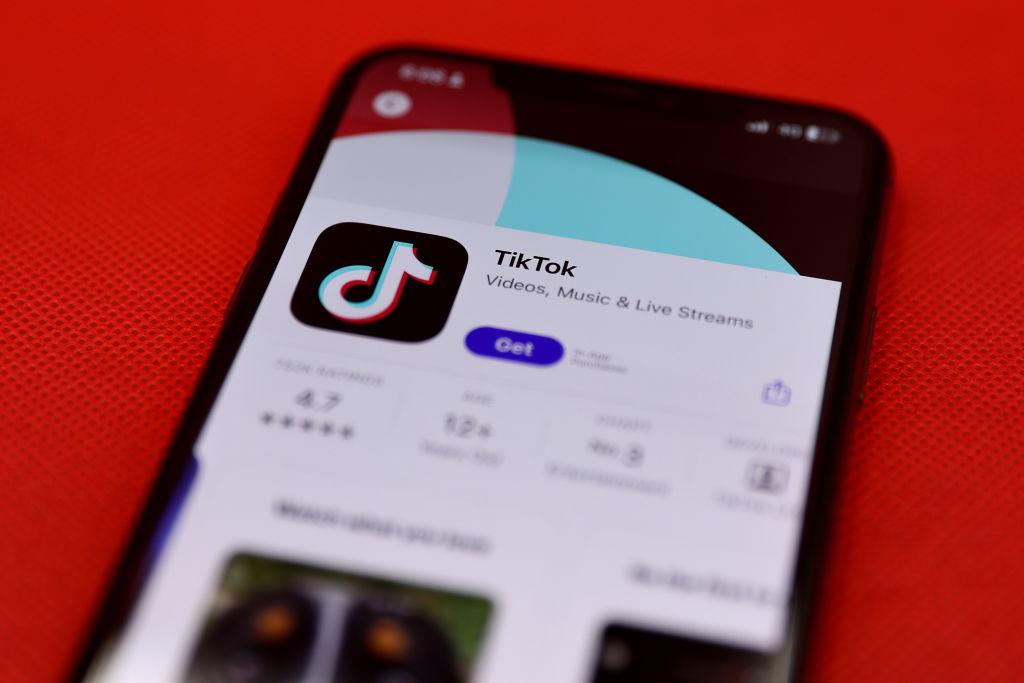
The state-run institute has warned about the risks associated with TikTok, while Deputy Prime Minister Krzysztof Gawkowski does not recommend using the platform. At the same time, the state is using TikTok to compete for Poles’ attention: the president, prime minister, government ministries and local authorities all maintain official accounts. Here is how they explain it.
NASK, a state-run institute responsible, among other things, for cybersecurity and combating disinformation, has warned about the TikTok platform. In its July report, “Algorithmic Manipulation: China Through the Eyes of Polish TikTok Users”, it wrote: “NASK recommends not only taking a critical approach to content appearing on the platform, but also exercising particular caution when publishing materials and data on it – this applies especially to government entities and people associated with the state apparatus.”
NASK’s recommendation should come as no surprise. Back in 2024, Deputy Prime Minister and Minister of Digital Affairs Krzysztof Gawkowski said: “I do not recommend it, and I warn against anyone installing TikTok on official devices. This should not happen. (…) TikTok should not be present on an official device.”
The politician acknowledged at the time that he himself had TikTok installed on his personal phone, but said he was neither a “daily user” nor a “big fan” of the app.
“I will not ban anyone in Poland from having the platform. I am simply warning that different platforms process data differently in Poland. We do not know all the details of how this data is processed, and an official device certainly should not be used to install such applications,” Deputy Prime Minister Krzysztof Gawkowski said.
Major government institutions and some local authorities are on TikTok
President Karol Nawrocki has two TikTok profiles. The first, @Nawrocki25, has nearly 740,000 followers, while the second, @Nawrockipl, has 310,000. Prime Minister Donald Tusk has more than 636,000 followers. Despite warnings from the deputy prime minister and NASK, the platform is also used by the Chancellery of the Prime Minister (KPRM), with 10,600 followers, the Ministry of Development Funds, with 1,200 followers, and an account promoting the Ministry of Climate, which has just 221 followers.
The last post shared on the official Ministry of Health account, which has 853 followers, dates from December 2025.
Some local authorities also maintain official TikTok profiles. The City of Warsaw has 200,000 followers, the official Wrocław account has 10,500, and Gdynia has 4,400.
“We are talking here only about the presence of people holding the most important positions in the state and in public institutions. TikTok, of course, also has accounts belonging to political parties and politicians.”
KPRM ignores questions, while the President’s Office says it does not run the @Nawrockipl account
How is it possible that, despite NASK’s warnings and the views publicly expressed by Deputy Prime Minister Krzysztof Gawkowski, some ministries in Donald Tusk’s government are present on TikTok? And are the materials published on the platform from official government devices? We received no answers to these questions. The Chancellery of the Prime Minister (KPRM) did not respond to our inquiries. Nor can we be certain that all profiles presenting themselves as government accounts are actually operated by government ministries. The Ministry of Climate’s account does not carry an official verification badge.
The President’s Office, meanwhile, says that the second TikTok profile associated with President Karol Nawrocki, @nawrockipl, is not operated by the Office of the President of the Republic of Poland.
The President’s Office says that, under its current IT Security Policy, using an application requires a full procedure covering the application, assessment, purchase and installation of the software.
“Independent installation or modification of installed software on official equipment is not permitted. Under the applicable rules, users may only use software approved and installed by IT services,” the Office of the President of the Republic of Poland explains.
Warsaw uses TikTok to reach young people
“Warsaw is aware of the recommendations and warnings concerning digital security issued by state institutions,” says Marzena Gawkowska, the city’s press spokeswoman.
According to information provided by Gawkowska, Warsaw’s presence on TikTok reflects the need to reach as broad a group of residents as possible with reliable and verified information – Including young Warsaw residents, for whom TikTok is often one of their main sources of information.
The capital’s authorities argue that the absence of public institutions from platforms with broad reach does not eliminate the risk of disinformation. Instead, it may increase it by leaving more room for unverified content.
“Managing an official profile is not the same as processing special-category data through the platform or using it to perform tasks requiring access to classified or legally protected information. Warsaw’s official profile is used exclusively for public information campaigns, communication with residents, and the promotion of city events and services,” Marzena Gawkowska stresses.
Why is Gdynia on TikTok? “So residents are not left out of the information loop”
The city of Gdynia has also decided to maintain an official TikTok profile. Why?
“So that residents who use the app are not excluded from receiving information,” explains Piotr Wiśniewski, director of the Gdynia IT Center.
Wiśniewski points out that the Ministry of Digital Affairs does not prohibit local government authorities from being active on TikTok; it has merely issued recommendations on how the platform should be used.
“Following a decision by the city authorities, Gdynia City Hall complies with the ministry’s recommendations and limits the installation of TikTok to two phones designated specifically for this purpose and equipped with appropriate software security measures,” Piotr Wiśniewski says.
The director of the Gdynia IT Center assures that employees using phones with TikTok installed “are fully aware of the situation concerning the possibility of TikTok’s owners using algorithms for the purposes of social engineering and manipulating social attitudes.”
Interestingly, the restriction on installing TikTok on official phones does not apply to other popular social-media apps. Facebook, Instagram and Threads can be installed on the official phones used by Gdynia City Hall.
Wrocław follows the path set by the president and prime minister
Wrocław also has an official TikTok profile.
“Being on TikTok is part of our communications and public-information strategy, allowing us to reach audiences that make less use of traditional communication channels,” says Olha Tokalenko of Wrocław City Hall.
Wrocław’s authorities point out that Poland’s most prominent politicians – including the president and prime minister – are also active on TikTok.
“The city’s official profile is used exclusively for information and promotional activities. It features content prepared by the city or by partner organisations and does not include sensitive data or protected information,” Olha Tokalenko explains.
Wrocław City Hall says that running a TikTok profile does not involve sharing classified information, protected data or the office’s internal documents on the platform.
“The platform is used solely to communicate with residents and promote city events, initiatives and services,” says Olha Tokalenko.
For Kraków, TikTok is too risky
“Kraków does not have its own profile and has no plans to undertake any activity on TikTok. Under Kraków City Hall’s security rules, employees may use only software and applications on official devices that are necessary for their work and have been approved for use in accordance with applicable procedures,” says Patrycja Piekoszewska of the Kraków City Hall Press Office.
Kraków City Hall is, however, active on Facebook, Instagram, X (formerly Twitter), YouTube and LinkedIn.
Piekoszewska says a risk assessment was carried out for these social-media platforms, along with a set of recommendations covering the security of the profiles and the content published on them.
A similar risk assessment was conducted for TikTok.
“One of the first measures implemented was to disable access to the unused platform (TikTok) on official devices. The TikTok app was added to the list of unauthorised applications, so its presence on a device triggers a mandatory uninstallation process,” Patrycja Piekoszewska says.
The other social-media applications used by Kraków City Hall are not currently on the list of unauthorised software.
Public institutions on TikTok? Expert says there is no clear-cut answer
“A public institution that opens a TikTok account is not merely using another communications tool. It is legitimizing the platform as a neutral channel and handing part of its relationship with citizens to an opaque algorithm operating in the shadow of an authoritarian state. TikTok is therefore not simply a battleground for attention; it can also be a tool in the struggle over whom society trusts,” says Marcin Jerzewski, a sinologist and political scientist and director of the Taiwan office of the European Values Center for Security Policy (EVC).
The EVC is a Czech think tank focused on foreign policy and security in the context of Europe’s relations with the Indo-Pacific region.
In the expert’s view, TikTok should be treated differently from Facebook, Instagram or X. Marcin Jerzewski notes that all social-media platforms carry risks of disinformation, polarization and opaque user profiling.
“TikTok, however, is not simply another American commercial platform. It is owned by ByteDance, a company operating within China’s political and legal system, where the boundary between corporate interests and those of the party-state is fundamentally different from that in democracies” - Marcin Jerzewski, Director of the Taiwan office of the European Values Center for Security Policy (EVC).
Despite these reservations, the expert believes institutions should not automatically boycott TikTok.
“Being on TikTok can be justified if an institution genuinely wants to reach groups it cannot reach through traditional channels – including younger audiences. The platform’s scale matters: according to data cited by NASK, TikTok has around 11.4m adult users in Poland,” Marcin Jerzewski says.
In his view, institutions should differentiate their communications first and choose their tools afterwards.
“An institution should determine what it wants to communicate to each group and how, and assess whether it has the resources to create regular, clear content tailored to the platform,” Marcin Jerzewski says.
In his view, simply opening another account and copying content from Facebook is not an effective communications strategy.
“The account should be operated on a dedicated device, with no access to sensitive data or the institution’s core IT infrastructure,” the expert argues.
What does TikTok say?
“Many governments, political figures and political parties around the world use our platform. We welcome their presence on TikTok, where they can discover a range of ideas, get to know creators and engage with members of their communities. This is also beneficial for ensuring a balanced flow of information,” says Piotr Żaczko, a TikTok spokesperson.
In its response, TikTok says that although the service remains primarily an entertainment platform, a growing number of politicians and public institutions are joining the community to reach citizens directly.
TikTok says the platform is used, among others, by European Parliament President Roberta Metsola, French President Emmanuel Macron, German Chancellor Friedrich Merz, British Prime Minister Andy Burnham and Hungarian Prime Minister Péter Magyar.


Key Takeaways
- State-run NASK recommends particular caution when public institutions and people associated with the state apparatus use TikTok. In the past, Deputy Prime Minister Krzysztof Gawkowski also warned against installing the TikTok app on official phones.
- Despite these recommendations, the country’s most senior officials, government institutions and some local authorities are active on TikTok. Accounts are maintained by, among others, President Karol Nawrocki, Prime Minister Donald Tusk, the Chancellery of the Prime Minister, the Ministry of Development Funds, and the cities of Warsaw, Gdynia and Wrocław. Kraków has taken a different approach: following a risk assessment, it added TikTok to its list of unauthorized software on official devices.
- Experts, however, offer no simple yes-or-no answer on whether public institutions should be on TikTok. Marcin Jerzewski points out that a public institution’s presence can legitimize the platform as a neutral communications channel and hand part of its relationship with citizens to an opaque algorithm. At the same time, he does not advocate an automatic boycott of TikTok. In his view, being on the platform can be justified if it helps an institution reach specific audiences and is done with appropriate safeguards in place. TikTok, for its part, stresses that politicians and public institutions use the platform in many countries.