

This article is a part of Poland Unpacked. Weekly intelligence for decision-makers
The rapid growth of AI is sharply increasing demand for power and efficient data-center cooling. Warsaw-based DCX wants to capitalize on the trend, securing around USD 176m (PLN 656m / EUR 152m) from Taiwan’s Liteon, as well as access to some of the world’s largest customers.
Taiwan’s Liteon Technology has announced a major investment in Warsaw-based DCX Liquid Cooling Systems, which develops liquid-cooling solutions for data centers. The group will invest more than PLN 650m (EUR 151m), valuing the Polish company at more than PLN 2.6bn (EUR 603m).
Once the transaction closes, Liteon is expected to hold around a 25% stake in the Polish company. The total investment will amount to approximately USD 176m, or around PLN 656m (EUR 152m).
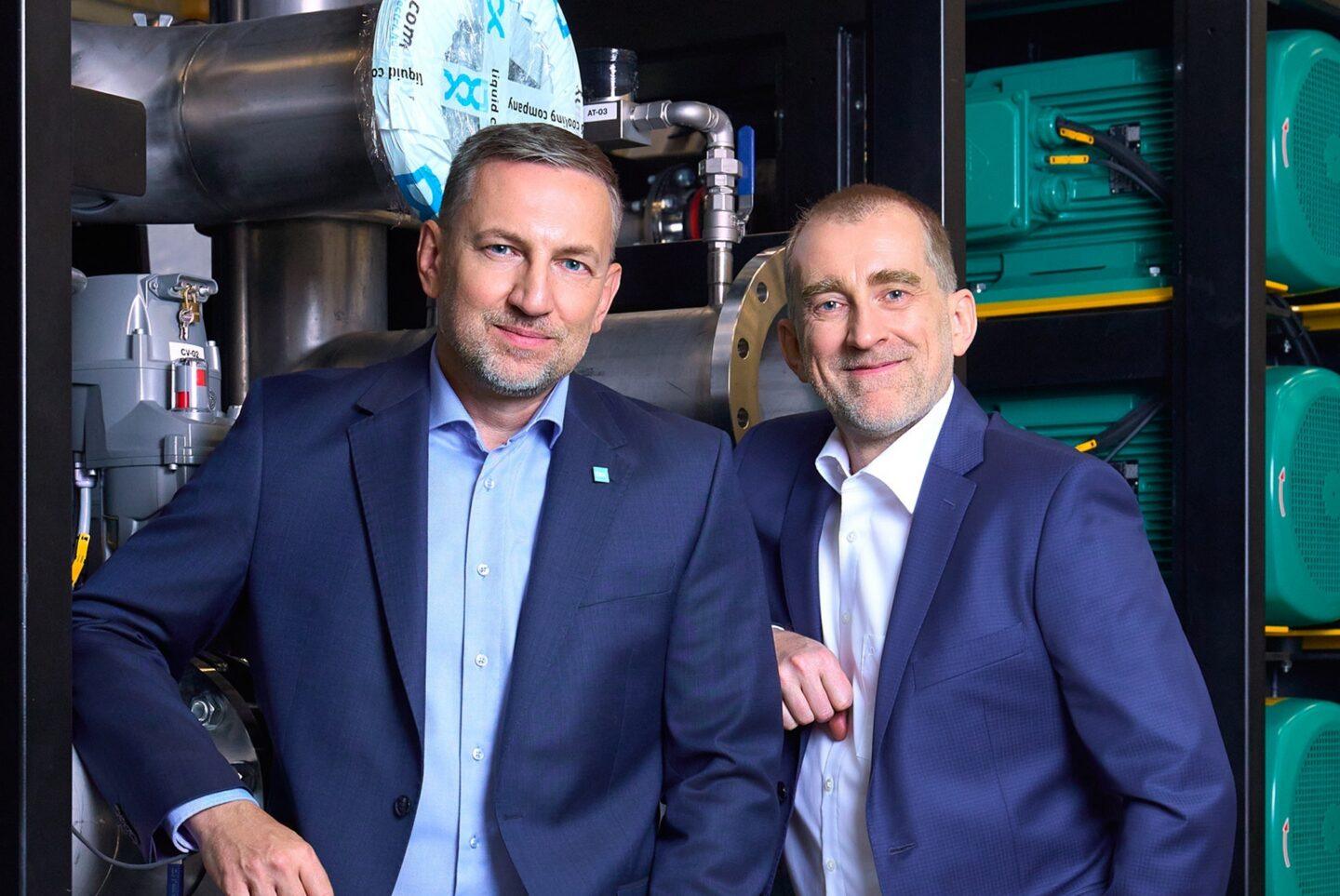
“We decided to look not so much for financing as for a strategic partner. Several large players from the energy and cooling industries took part in the process. They reportedly included global corporations operating on a much larger scale. In the end, we chose Liteon’s offer,” says Maciej Szadkowski, founder and chief technology officer of DCX.
The investment is intended to combine the cooling technologies developed by DCX with Liteon’s solutions, particularly in powering infrastructure used for artificial intelligence and high-performance computing. The companies plan to jointly develop systems designed primarily for high-power-density data centers.
DCX specializes, among other things, in coolant distribution units, facility coolant distribution units, cold plates and immersion-cooling systems.
DCX spent years growing without an investor. Now Liteon is expected to open doors to the biggest customers
Maciej Szadkowski stresses that bringing Liteon on board was not an attempt to secure capital needed to keep the business running. Until now, DCX has financed its growth primarily from its own sales revenue.
“The rapid growth of AI has changed the demands placed on data centers. New computing systems generate so much heat that conventional cooling technologies are no longer sufficient. DCX began developing liquid cooling relatively early and is now one of the few European companies with a complete product portfolio, its own team and hands-on deployment experience,” the company’s founder explains.
Getting to this position was not easy, however. Maciej Szadkowski recalls that only a few years ago, DCX’s foreign competitors were raising multimillion-dollar funding rounds, while the Warsaw-based company was unable to find a comparable investor in Poland.
“We had to grow locally, without external financing. In the meantime, our competitors were receiving huge investments, while we developed the business on our own,” says Maciej Szadkowski.
The situation changed as consolidation in the data-center cooling market gathered pace. In recent years, many technology companies in the segment have been acquired by larger groups. DCX remained one of the few independent players with market-ready solutions and references from major customers. Maciej Szadkowski says the company has already worked with xAI, among others, as well as other large companies involved in data centers and artificial intelligence.
“What we wanted was an investor that would open up markets for us and bring us closer to customers. This means we do not have to build a huge sales team from scratch to serve hyperscalers,” explains DCX’s chief technology officer.
Access to the largest customers is expected to be one of the most important benefits of the transaction. Liteon has extensive relationships with companies including Microsoft, Google, Meta and Nvidia. According to Szadkowski, however, the Taiwanese group’s portfolio lacked the technologies offered by DCX.
“They needed our component. Now they are bringing us in to work with their biggest customers,” he says.
New factories in Poland and overseas expansion. “We have complete freedom to operate”
Liteon’s acquisition of an approximately 25% stake does not mean the Taiwanese investor will take operational control of DCX. Maciej Szadkowski says the Polish company will retain a high degree of independence, although the two firms will work closely together on technology development, production and sales.
“We have complete freedom to operate. We will coordinate very closely, but creativity and technology development will remain on our side,” he says.
One of the main uses of the new capital will be to expand production capacity. DCX plans to build two plants in Poland. At the same time, the company wants to develop assembly, servicing and technical support capabilities closer to its most important customers in the United States and the Asia-Pacific region.
Part of the funding will also be used for working capital. In advanced cooling systems, scaling up production requires the upfront purchase of pumps, heat exchangers, controllers and other components, as well as securing the supply chain.
Above all, the new capital is intended to enable the company to scale much faster.
“We have never needed an investor just to keep the business going. We have sales, customers and a strong project pipeline. Now it is primarily about working capital and being able to scale production quickly,” he explains.
The transaction also leaves the door open to further stages of capital-market development. The company’s founder acknowledges that one of the scenarios being considered over the longer term is a stock-market listing in the United States. He stresses, however, that the company does not plan to raise capital through regular funding rounds and currently has sufficient capital to execute its plans.
DCX wants to serve an increasingly large share of the global market from Poland and expand exports.
“The most important thing is that we can manufacture here and expand our plants. A Polish company can now enter the top tier of customers and compete on equal terms with companies generating billions in revenue,” Maciej Szadkowski concludes.
Expert's perspective
VCs want to invest in AI infrastructure
We see opportunities, among other things, in new computing architectures, memory solutions, chip-to-chip communication and technologies that allow some computation to be performed closer to memory. These are areas where technological innovation can matter more than scale alone. Poland has very strong engineering and scientific expertise, so we definitely see scope for companies of this kind to emerge here, provided they are built for the global market from the outset.


Liteon: Cooling complements our AI data-center offering
“Artificial intelligence has become a force reshaping entire industries, and data-center infrastructure is the foundation needed to unlock its full potential,” said Tom Soong, president of Liteon.
He said the investment would strengthen the group’s presence across the AI data-center infrastructure supply chain.
“Together, we can offer operators a single integrated solution ready for the next generation of AI computing platforms,” said Tomasz Buk, CEO of DCX Liquid Cooling Systems.
Expert's perspective
An opportunity for more startups
The gap in the development of Polish technologies is particularly evident in highly specialized sectors such as IT infrastructure and data centers. The expansion of ideas developed by domestic teams may also have been constrained by questions over who would handle commercialization, who the next investor in the VC funding journey would be, and what the eventual exit prospects might look like. In this context, DCX’s success could become a reference point and a catalyst for more Polish startups.
AI data centers need increasingly powerful cooling
As the computing power of AI servers increases, liquid cooling is becoming more important. DCX is developing two main types of solutions in this area.
Founded in 2019 and headquartered in Warsaw, DCX develops direct-to-chip solutions, in which heat is removed directly from processors and other server components that generate the most heat, as well as immersion-cooling systems.
The company’s portfolio includes coolant distribution units (CDUs) with capacities ranging from 600 kW to 2.6 MW, as well as facility distribution units (FDUs) designed for large data centers, with capacities of up to 16 MW. DCX also manufactures cold plates, rack manifolds and modular data-center systems.
According to the company, its solutions have been deployed by three of the world’s ten largest AI data-center operators. DCX products are currently sold in 75 countries.
Good to know
AI heats up the data-center cooling market
Demand for liquid cooling is rising as increasingly powerful data centers are built to support artificial intelligence. The scale of the shift is illustrated by data from the International Energy Agency. According to its latest forecast, global electricity consumption by data centers is expected to rise from around 485 TWh in 2025 to roughly 950 TWh in 2030. Over the same period, electricity consumption by data centers primarily dedicated to AI is expected to roughly triple. Meanwhile, global data-center electricity consumption increased by 17% in 2025.
For cooling-system manufacturers, however, power density is even more important. The IEA estimates that the power density of AI servers increased elevenfold between 2020 and 2025 and could rise by a further fourfold by 2027. This means that far more heat will have to be removed from the same, or a similar, amount of space.
According to a 2025 Uptime Institute survey, 22% of organizations surveyed used direct liquid cooling, while 75% relied on perimeter air-cooling systems. The market is changing fastest, however, in the most demanding AI-related installations. Uptime Institute says that forthcoming generations of AI infrastructure could soon exceed 200 kW of power per server rack.
Liteon expands its data-center business
Liteon Technology was founded in 1975 and is listed on the Taiwan Stock Exchange under the ticker 2301.TW. The group develops solutions for AI infrastructure, including power-management systems, battery backup units (BBUs), server racks and mechanical components.
The company also operates in optoelectronic semiconductors, automotive electronics, 5G and AIoT.
The investment in DCX expands Liteon’s capabilities in liquid cooling. The technology is becoming an increasingly important part of data-center infrastructure, particularly as the power requirements of new processors and accelerators used for AI computing continue to rise.
Liteon is also a member of the RE100 initiative. The group says that by 2040, all electricity it uses will come from renewable sources.
Expert's perspective
The transaction marks a turning point
What is also interesting is who is behind the company: people with real operational experience of large-scale deployments, who turned that expertise into a proprietary product designed from the outset for global customers, rather than for the Polish or even European market. That is rarely achieved at this scale.
Personally, I see this as a positive signal that it is possible to build a deep-tech company in Poland with unique IP that attracts the attention of global industrial players, not just investment funds. The question is whether this will be the first of many such cases – which is what I would most like to see for both myself and the market – or whether it will remain an exception.


Key Takeaways
- Liteon will invest around $176m, or approximately PLN 656m (EUR 152m), in Warsaw-based DCX Liquid Cooling Systems. Once the transaction closes, the Taiwanese group is expected to hold around a 25% stake in the Polish company. The partnership will combine the liquid-cooling technologies developed by DCX with Liteon’s solutions for powering AI infrastructure. The companies plan to jointly develop systems for high-power-density data centers while expanding production and sales.
- The investment comes amid rapidly growing demand for more efficient cooling of artificial-intelligence infrastructure. As servers become more powerful, they consume more electricity and generate more heat, prompting liquid-based solutions to increasingly replace traditional air cooling. According to IEA data, electricity consumption by data centers could rise from around 485 TWh in 2025 to roughly 950 TWh in 2030. At the same time, the power density of AI servers is increasing rapidly, further driving demand for technologies offered by companies such as DCX.
- For DCX, the partnership with Liteon could above all mean greater scale and faster international expansion. The Warsaw-based company already sells its products in 75 countries and says its systems have been deployed by three of the world’s ten largest AI data-center operators. Liteon brings expertise in power electronics, manufacturing capabilities and relationships with global hyperscale customers. Together, the companies aim to offer integrated cooling and power solutions for the next generation of AI infrastructure.