

This article is a part of Poland Unpacked. Weekly intelligence for decision-makers
The Monetary Policy Council decided to leave interest rates unchanged. The main policy rate therefore remains at 3.75%. The market had expected the decision.
 Interactive chart
 The main question is: what comes next? According to Statistics Poland’s preliminary estimate, inflation stood at 3.4% year on year in August, slightly above the upper bound of the 3.5% inflation target range. The final August reading will probably prove somewhat lower because the government’s CPN package – tax cuts and a price cap – was in force in the second half of the month.
Interactive chart In the coming months, however, inflation can be expected to rise further because of very high energy commodity prices. Brent crude has surged to USD 105 a barrel. Gas prices have also risen sharply. On the Dutch exchange, which serves as the benchmark for European prices, they are around two and a half times higher than before the US attack on Iran.
According to NBP data, higher energy prices already account for half of the overall increase in prices across the economy. Falling food prices, by contrast, are pulling inflation down. In August, food prices fell by as much as 0.9% year on year. In the coming months, however, this effect is likely to fade.
How high, then, could inflation go? Economists at consulting firm EY estimated this in recent days. In an extremely adverse scenario in which oil prices rise above USD 140 a barrel, inflation could increase by around 2 percentage points. That would mean it could climb to more than 5% year on year.
NBP governor: rates likely to stay unchanged through year-end
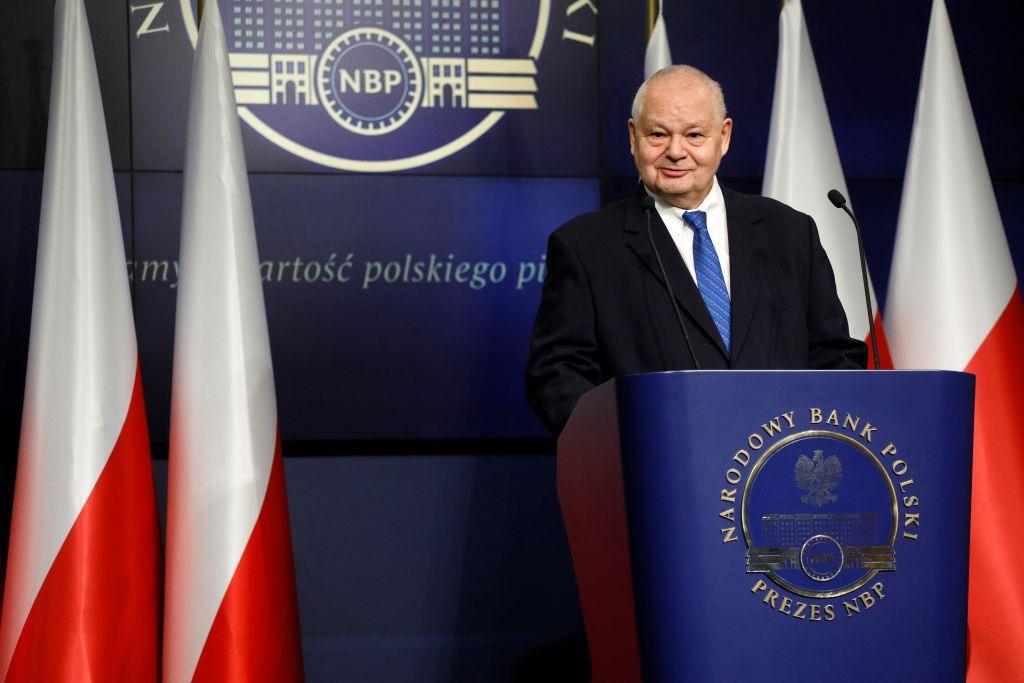
National Bank of Poland (NBP) Governor Adam Glapiński said at a press conference following the Monetary Policy Council’s meeting that interest rates are unlikely to change before the end of the year. He cautioned, however, that much will depend on energy prices and how they feed through to the economy.
The central bank is particularly concerned about the so-called second-round effect: rising energy prices pushing up the prices of other goods and services, which in turn leads workers to demand higher wages. There are no signs of this effect so far, but until now the government’s CPN package had been limiting increases in fuel prices. Its impact will only start to become clear from September onwards, once the data come in.
Globally, some central banks have already started raising interest rates. The European Central Bank has delivered two hikes, taking its main policy rate from 2% to 2.50%. The US Federal Reserve, meanwhile, is due to make its decision next week. Markets are pricing in roughly a 70% probability of a rate increase.
Interactive chart Data from the Bank for International Settlements on central-bank decisions suggest that a global rate-hiking cycle may be getting under way. In recent months, the net number of central banks raising rates – those increasing rates minus those cutting them – has been positive for the first time since the end of 2023.
XYZ view
In recent weeks, financial markets had broadly assumed that the conflict between the US and Iran would end before the midterm elections to Congress on November 3. Those hopes are now fading, especially after Donald Trump recently said that “the war with Iran will end right after the election.” Translated into analytical language, that would read: “there is little chance of it ending in the near future.”
That means a scenario in which oil prices remain above USD 100 a barrel for an extended period is entirely plausible. Prices of other energy commodities would also stay elevated. In such circumstances, inflation in Poland would move above target, leaving the Monetary Policy Council little choice but to raise interest rates.
It is worth noting that the NBP governor said he was prepared to accept neutral real interest rates – that is, nominal rates minus inflation – at around zero. This can be read to mean that if inflation remains around 3.75%, or perhaps even 4% year on year, there may be no rate hikes. But if inflation were to move significantly higher, the risk of an increase in rates would rise.


Key Takeaways
- The Monetary Policy Council left its main interest rate unchanged at 3.75%, while NBP Governor Adam Glapiński signaled that rates are likely to remain on hold through the end of the year. Much, however, will depend on energy prices and their impact on inflation.
- The risk of higher inflation has increased markedly following the surge in oil and gas prices. In an extreme scenario in which oil rises above USD 140 a barrel, inflation in Poland could exceed 5%, according to estimates by EY economists.
- There are growing signs that a global rate-hiking cycle may be beginning, as reflected in recent central-bank decisions. If energy prices remain high and inflation in Poland moves clearly above 3.75–4%, the Monetary Policy Council may be forced to raise rates.