

This article is a part of Poland Unpacked. Weekly intelligence for decision-makers
Following a successful succession, HandsManFood is approaching PLN 300m in revenue and is ready to double that figure within three years. The growth of its new category – Chillberry chocolate-covered frozen fruit – has exceeded even the company’s expectations. It is looking for factories to acquire so it can keep up with demand. An investor? That is not out of the question.
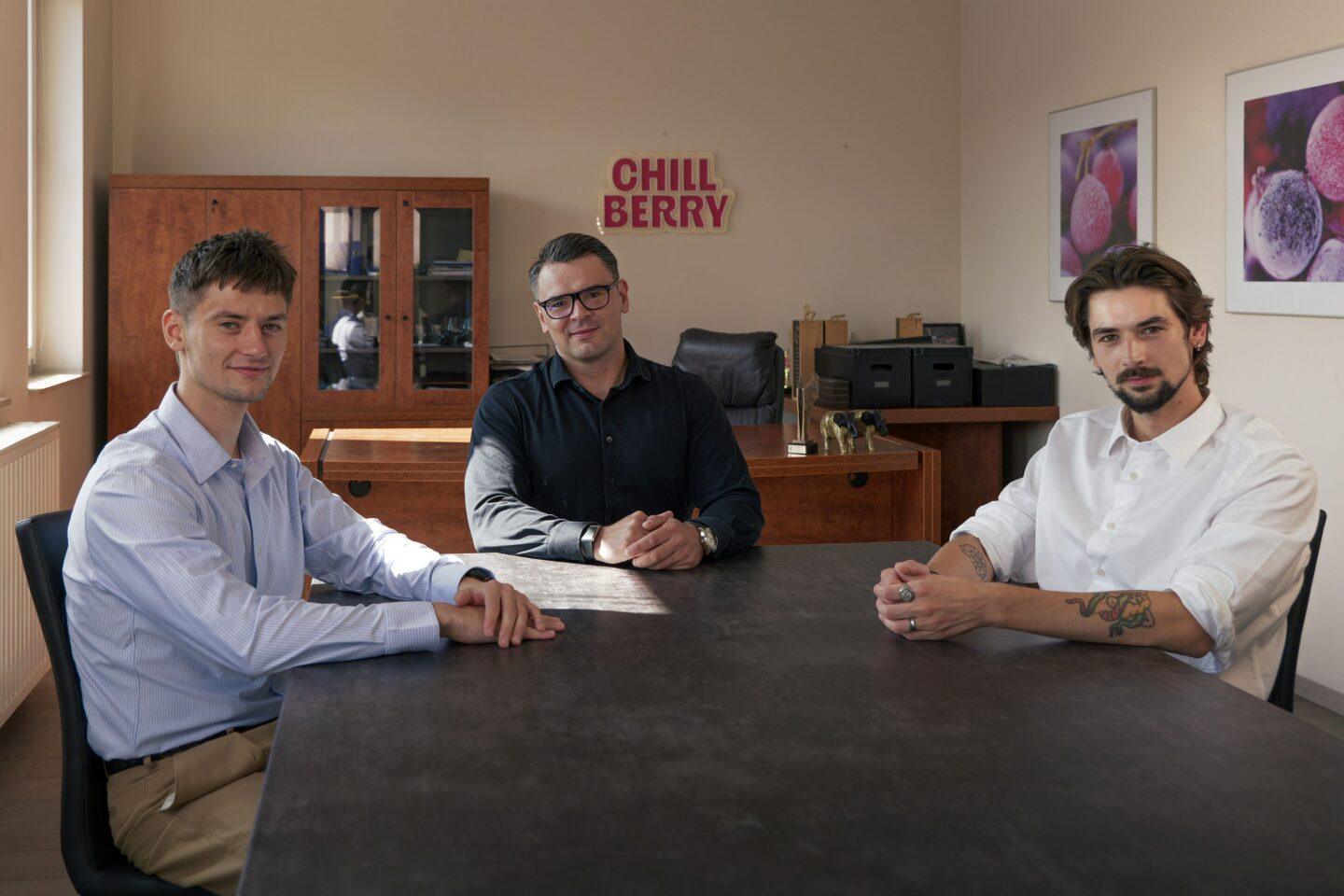
A growing number of Polish family businesses are being taken over by the next generation. Succession is a difficult process that can push some companies into stagnation. HandsManFood has navigated it exceptionally smoothly and is growing at a rate of several dozen percent. The founders’ sons have been involved in the business for several years.
The Kozieł family company began in 2009 by providing logistics services to the food industry. Over time, it moved into trading and later into contract production of frozen fruit and vegetables. Another important business line has proved to be its own Chillberry brand, operating in an entirely new snack category: frozen fruit coated in chocolate and toppings.
In 2025, the group increased revenue by 25% to PLN 208m. This year, it expects to reach PLN 300m. And that is only the beginning.
“We are capable of growing at a rate of several dozen percent in the near term and doubling our scale in roughly three years. We maintain an EBITDA margin in the low-to-mid teens. Profit is not our priority at this stage; we have not paid a dividend for years. We invest as much as possible,” says Łukasz Kozieł, CEO of HandsManFood.
Once a DJ and baker, now CEO of the family business
From an early age, the entrepreneur tried his hand at various businesses. He organized events at clubs, where he also performed as a DJ, and later ran a bakery. In 2017, he proposed joining forces with his father. He used his father’s relationships with customers and food producers, as well as the company’s logistics infrastructure, to build a second business line: the sale of frozen fruit and vegetables.
“That meant I did not have to start from scratch. From day one, I had access to potential customers, an operating base and, above all, my father’s extensive product knowledge. Each of us managed ‘our’ part of the company without getting in the other’s way,” explains Łukasz Kozieł.
The decision paid off, as the importance of logistics services within the group has fallen significantly. The business had been focused mainly on eastern markets – Ukraine, Russia and Belarus – from which the group has since withdrawn.
“My father now works on strategic matters from the supervisory board, while my mother still keeps a close eye on the finances. I can still count on their support. Their trust at the outset was invaluable,” says Łukasz Kozieł.
The second generation joins HandsManFood
The involvement of the Kozieł family’s second generation in the company came naturally. The younger Maciej joined in 2024 with the task of creating the Chillberry consumer brand.
He saw it as a major opportunity. For several years beforehand, he had been building his personal brand on social media, giving him a good understanding of how to create content, build engagement and spot emerging trends.
“I gave up my own influencer business to focus fully on Chillberry. I am very comfortable analyzing trends and working in creative marketing, so joining the family business was a natural step for me. Especially since I have always enjoyed working together with my family,” says Maciej Kozieł, marketing manager at HandsManFood.
The youngest brother, Jakub, meanwhile, started working on the production line during the summer before university. He joined the company permanently in 2024 and is responsible for product development and innovation.
“Ultimate responsibility for decisions rests with me as CEO, a role I have held since 2019. But I attach great importance to the team’s views in the decision-making process. I listen to recommendations, analyze different perspectives and draw conclusions from them. Good decisions are rarely made in isolation from the knowledge and experience of others,” says Łukasz Kozieł.
From logistics to investment in production
The eldest son’s involvement in the family business coincided with a broader market observation. As Poland’s economy has grown rapidly, and wages along with it, the country is ceasing to be a source of cheap labor. Competitive advantages therefore have to be found elsewhere.
“I started, among other things, by importing blueberries from Peru, because in Europe they are available only for part of the year. I quickly realized it was worth having our own production facilities. In 2018, we bought a warehouse in Rogoźnica and converted it for the production of frozen fruit and vegetables. For the investment, worth around PLN 30m, we secured PLN 10m in EU funding,” recalls Łukasz Kozieł.
In recent years, total capital expenditure has amounted to around PLN 40m. The group has been steadily automating its first plant. At the same time, it is renovating a second facility. That investment is worth around PLN 10–12m.
“We need to gradually separate the individual business lines and diversify geographically to secure better access to raw materials. In 2027, meanwhile, we plan to launch a 1 MW solar farm,” says Łukasz Kozieł.
Good to know
Strained relations between retailers and suppliers
Food producers have it tough. On the one hand, they must contend with sometimes sharp swings in raw-material prices, such as cocoa. On the other, Poland is seeing a growing number of proceedings concerning the abuse of market power by the largest retail chains. No Polish producer has bargaining power comparable to that of Biedronka, Lidl, Dino or Żabka.
The result? This year Wawel, the owner of one of Poland’s strongest chocolate-confectionery brands, came close to losing its contract with Biedronka. In 2025, the retailer accounted for as much as one-fifth of the company’s revenue, or PLN 147m. After several months of negotiations, Jeronimo Martins Polska withdrew its notice terminating the agreement.
“Prices of agricultural and food products have been highly volatile for years. We try to hedge raw-material prices as much as possible and renegotiate prices with customers every year. We work with almost all of the largest retail chains in Poland. So far, we have not felt that anyone has used their scale advantage in dealings with us. Price is not the only factor; product quality also matters. Changing suppliers requires work and time for the necessary audits. Both sides therefore have an interest in maintaining continuity in the relationship,” says Łukasz Kozieł, CEO of HandsManFood.
Factory acquisition on the table – and perhaps an investor
To keep pace with rapidly growing demand, HandsManFood is looking in Poland for a factory that it could adapt to its needs. It is already in talks with several owners that have expressed an initial willingness to sell.
“The scale of the investment will depend on the size and potential of the plant we choose. We are talking about anything from the low tens of millions to several tens of millions of zlotys,” says Łukasz Kozieł.
He sees plenty of such opportunities in the market. Some business owners are approaching retirement age and facing the challenge of succession. In other cases, the pressure on profitability in recent years is prompting entrepreneurs to sell some assets or entire plants.
“There are also assets being offered as part of restructuring or bankruptcy proceedings. From our perspective, this creates interesting acquisition opportunities,” says the entrepreneur.
He is not actively looking for an investor himself. HandsManFood remains a family business. It has no need to give up equity or raise additional capital to carry out its plans.
“We are aware, however, that things can always be done faster or on an even larger scale. If we find the right growth partner, we would not rule out discussions about a transaction,” emphasizes Łukasz Kozieł.
Most frozen fruit and vegetables go for export
For several years, exports have accounted for 60% of the group’s sales. It has steadily increased both the value and volume of sales at home and abroad.
“We expect a similar revenue mix to be maintained in the coming years. Internationally, we supply not only finished products but also raw materials used to make jams and yogurts. The latter accounts for around 30% of our revenue,” says Łukasz Kozieł.
Germany is the most important foreign market, accounting for around 20% of sales. Scandinavia also has a significant share. The company plans to accelerate expansion into other Western European markets, including the UK, France, Italy and the Benelux countries.
“We are already growing at 25–35%, so we have to be realistic about how much we can take on. We are continually adapting our infrastructure and capabilities to support further expansion and ensure we are ready to handle increased demand,” says Łukasz Kozieł.
Expert's perspective
Poland is a powerhouse in frozen foods
Poland is also one of the largest exporters. In frozen vegetables, it has for many years been the EU’s third-largest supplier to the bloc’s internal market, with a 12% share of trade. Poland plays an even greater role in frozen fruit. It is the EU leader, accounting for almost one-third of the total volume supplied.
The domestic industry is similarly important in exports outside the EU. Poland ranks third in frozen vegetables, while in frozen fruit it is the clear leader. Polish companies account for almost half of all EU exports of frozen fruit.
The main challenge on the supply side appears to be fluctuations in domestic fruit and vegetable production. Adverse weather conditions — such as spring frosts, very high temperatures and rainfall shortages during the summer — affect both harvest volumes and quality. In some years, processors therefore have to contend with reduced availability of raw materials and high prices. That does not help a sector that exports the bulk of its production and competes with other suppliers.
On the demand side, the challenge is growing competition in the EU market, which is the main destination for Polish companies. Imports of frozen products from Egypt and Ukraine have been rising rapidly for years. Expansion of the raw-material base and processing capacity for strawberries in Egypt, combined with competitive pricing, is driving EU imports of frozen fruit. A similar trend can be seen in Ukrainian frozen raspberries. For Polish companies, this means greater pressure on margins and a constant need to improve efficiency.


Polish competition is strong in Europe
In conventional frozen products, HandsManFood competes in Europe mainly with Polish factories. Some are domestically owned, while others belong to foreign owners.
“However, when it comes to frozen fruit coated in chocolate or a sour sugar coating, I do not know of any other producer on the continent that is ready to deliver the scale expected by the largest retail chains. We spent two years developing the technology for industrial-scale production,” says Łukasz Kozieł.
Although expansion in Europe is crucial for the company, it does not intend to stop there. It wants to make a stronger push into the US and Canada.
“We already export to both countries, but we intend to enter retail chains directly with frozen fruit coated in chocolate and in a sweet-and-sour topping. We expect the first sales in 2027. The potential is enormous,” says the head of HandsManFood.
Chillberry’s rapid success as an own brand
The idea of developing an innovative snack category and creating the company’s first own brand, Chillberry, came to Łukasz Kozieł during a family trip to Spain. At a café in Cartagena, he ordered frozen raspberries coated in two layers of chocolate. They cost the equivalent of around PLN 32. Almost instinctively, he began calculating how much it would cost to produce a similar portion.
“The business potential seemed very attractive to me. The product offered an appealing margin, had a relatively simple ingredient list and was based on real fruit. Most importantly, I could not think of anything similar on the Polish market. We held a brainstorming session with the team, and by April 2024 we were ready to start production. Biedronka liked the product so much that the chain asked for its first deliveries as early as May,” recalls Łukasz Kozieł.
Initially, the products were sold under the Chillberry brand. Over time, the company also expanded into contract manufacturing in this category, producing goods under retailers’ private labels.
The entire business line already accounts for one-third of revenue. Demand is growing rapidly regardless of the season. The company therefore expects sales to double this year to 14–15m packs.
“We were the first in Poland to bring frozen products into the ready-to-eat segment [products intended for immediate consumption – ed.] and it was also the first time we had built a consumer brand. I was therefore thrown in at the deep end. What helped us was that, from the outset, the product largely ‘sold itself.’ The hardest part was getting the communication started and the first year of building the brand. We are not selling yet another bag of chips, but an entirely new snack category,” says Maciej Kozieł.
Expert's perspective
An own brand offers advantages – but you need to know how to use them
Hybrid models are becoming increasingly common, although they require different capabilities. In contract manufacturing, cost efficiency is paramount, which often comes with lower product and packaging quality. With an own brand, by contrast, the key factors are marketing communication with customers, brand image and the values behind it.
When expanding production, it is important to keep the two activities clearly separate. For various reasons, manufacturers very often create separate entities. This is not simply a matter of putting a different producer’s name on the packaging. It means separating teams, setting distinct objectives and managing customer relationships independently.
Product differentiation and pricing strategy are major challenges. We live in an age when consumers will not be fooled by repackaging the same product, putting a brand name on it and charging a higher price. Social media can be unforgiving and can quickly turn such moves into a reputational crisis. Choosing the right people to manage both areas, and ensuring they have the right skills, is also crucial. For branded products, the online channel often plays a key role.
From the perspective of selling the company, it is important to remember that expanding in two areas – even if financially successful – can make it significantly harder to find a strategic buyer. But despite these caveats, there is plenty to play for. Companies that combine both areas and understand the differences between them can compete effectively with market leaders.


Key Takeaways
- The family business is growing fast and making money. Founded in 2009, HandsManFood is now run by the second generation of the Kozieł family. It started out providing logistics services, later moved into trading and then into the production of frozen fruit and vegetables. Since 2024, it has also been developing Chillberry, its own brand of innovative snacks. In 2025, revenue rose by 25% to PLN 208m, and this year the company expects to reach PLN 300m. It plans to double the scale of the business in roughly three years. Its EBITDA margin remains in the low-to-mid teens.
- Investment, acquisitions – and perhaps an investor. The move into production involved an investment of around PLN 30m in 2018. In recent years, total capital expenditure has amounted to around PLN 40m. The group is steadily automating its first plant and renovating a second. It is also looking for a factory in Poland and is prepared to spend up to several tens of millions of zlotys on an acquisition. It is not looking for an investor, but is open to talks with a partner that could help accelerate its expansion.
- Ambitions for even greater exports. Exports have accounted for 60% of HandsManFood’s sales for several years. The company is steadily increasing both the value and volume of sales at home and abroad. It expects a similar revenue mix to be maintained in the coming years. Germany remains its most important foreign market, while Scandinavia is also significant. The company plans further expansion in Western Europe – including the UK, France, Italy and the Benelux countries – as well as in the US and Canada.