Poland Unpacked week 40 (21 - 27 September 2026)

Welcome to this week’s edition of our Poland Unpacked, where we deliver key insights and trends shaping the economic, corporate and political landscape. Catch the most important insights from Poland in this week’s briefing.

Loading the Elevenlabs Text to Speech AudioNative Player...
Business
The global turn
Grzegorz Nawacki

The week brought several notable moves by Polish entrepreneurs. Adamed, the pharmaceutical giant owned by Prof. Małgorzata Adamkiewicz, acquired an Italian company for PLN 100m (EUR 22.9m). The deal will accelerate its expansion in a key market and give it an entry into the US. A few months earlier, Adamed bought a factory in Spain. It is also a major investor in Vietnam. As a result, revenue from abroad has already exceeded PLN 1bn (EUR 229m) – and the company is not stopping there. Growth is also being fueled by substantial investment at home, with PLN 1.5bn (EUR 343m) planned. Here is how a Polish pharmaceutical giant is taking on Europe.

CLIP Group this week opened a major intermodal terminal in Zabrze, in southern Poland. The logistics group, controlled by Wojciech Staniszewski, invested nearly PLN 200m (EUR 45.7m) in the project. The terminal is intended to increase Silesia’s importance on European transport routes and help Poland strengthen its position as one of Europe’s logistics hubs. Full story here.

Wonga, the lender acquired in 2019 by debt-collection group Kruk, is also setting its sights abroad. Although Poland’s consumer-lending market has come under pressure from regulation and legal changes, Wonga – the country’s seventh-largest player – is not retreating and plans to accelerate sharply. It wants to double the size of its business, is launching a campaign in Romania, is applying for a new license from the Polish Financial Supervision Authority (KNF) and intends to make greater use of its place within the Kruk group. Here's the plan.

Polish football, meanwhile, has attracted a foreign investor. Michael Gorzynski has acquired a 40% stake in Legia Warsaw, Poland’s biggest football club – although one that has endured weaker results on the pitch in recent years, with financial consequences. Until now, the club had been owned solely by businessman Dariusz Mioduski. Reading the new investor’s biography in the club’s official statement, one might assume that Mr. Gorzynski is simply a wealthy American financier. He was born in Wrocław, but studied at prestigious universities in the US, worked for well-known firms, then founded his own fund and joined the boards of several companies. A classic career path for a Harvard graduate. Nothing could be further from the truth. In fact, he has an unusually interesting background – and a highly distinctive investment style that some consider controversial. Here is everything worth knowing about him.

Economy & Markets
Retail resists the slowdown
Marek Skawiński

The most important developments in the Polish economy last week were the latest data on retail sales and wages. Next week will bring the September reading of consumer-price inflation.

Wage growth in Poland is slowing markedly. In August, the average wage in the enterprise sector stood at PLN 9,259.54 (about EUR 2,118), up 5.9% from a year earlier, compared with 6.8% in July. At the same time, inflation rose to 3.4%, meaning real wages increased by just 2.1% year on year. That is significantly less than in 2024 and 2025, when real wages rose by 7.0% and 4.5%, respectively. This year’s pace has also fallen below the 2016–2025 average of 3.4%. All indications are that both trends weighing on real wages – slower nominal wage growth and higher inflation – will persist in the coming months.

Slower growth in household purchasing power could weaken consumption, although it also reduces cost pressures on companies. In its draft 2027 budget, the government assumes average wage growth of 5.9% and inflation of 2.8%, implying real wage growth of roughly 3%. The key question, however, is how quickly the current inflationary impulse fades. If it persists, it would curb growth in real incomes, although over time it could also revive wage demands and push nominal wage growth higher again.

Retail sales in constant prices rose by 3.8% year on year in August, almost the same pace as in July, and by 4.6% on a seasonally adjusted basis. Sales of durable goods recorded the strongest growth: cars, motorcycles and parts were up 11.7%, while furniture and consumer electronics and household appliances rose by 10.6%. In the case of cars, much of the strong volume growth reflected falling prices, as the value of sales increased by only 4.4%. Clothing and footwear sales, meanwhile, fell by 2.7% in real terms, while the increase in the value of fuel sales was driven primarily by higher prices.

The overall picture for consumption therefore remains relatively strong for now, with no clear sign yet that high fuel prices are causing households to cut back on purchases. The outlook for the coming months is weaker, however, because real wage growth is slowing: in August it was 2.1% year on year. Elevated fuel and energy prices may also encourage households to spend more cautiously, although savings accumulated in recent years could partly cushion the effect. As a result, a gradual slowdown in retail-sales growth appears more likely than a sharp collapse in consumption.

In our structural analysis, we are looking at the minerals extraction tax. In Poland it applies mainly to copper and silver mining, which account for 94% of revenues, with crude oil and natural gas making up only a small share. The boom in metals is generating far higher budget revenues than initially expected. In 2026, receipts from the tax on the extraction of certain minerals are expected to reach a record PLN 8 billion (about EUR 1.83 billion). That is PLN 4.8 billion (about EUR 1.10 billion) more than originally planned. The main reason is the sharp rise in metal prices: between January and August, copper prices in PLN terms were around 30% higher than a year earlier, while silver was up as much as 81%. Record revenues are being generated despite a reduction in the coefficient used to calculate the tax, from 0.85 to 0.74. For 2027, the Ministry of Finance forecasts revenues of PLN 6.6 billion (about EUR 1.51 billion), alongside a further reduction in the coefficient to 0.68.

Politics & Policy
Escalation outside, friction within
Krzysztof Figlarz

For yet another week, Polish politics was dominated by the issue of Russian escalation in Europe. A Russian Mi-8 helicopter flew over Braniewo in northeastern Poland, close to the Kaliningrad region. The helicopter remained in Polish airspace for more than ten seconds. Fighter jets were scrambled and ground forces were placed on alert.

In addition, a fire was deliberately started at a Starlink station near Grójec, south of Warsaw. The station provides satellite internet connectivity across Central and Eastern Europe, including Ukraine.

The incidents have drawn the attention of the Polish authorities, which are warning of an intensification of Russian provocations in Poland and allied countries.

Unfortunately, the issue is likely to keep returning and to cast a long shadow over Polish politics.

Domestic politics, however, provided plenty of other developments as well.

Poland’s right is in ferment. Four right-wing parties currently sit in the Sejm, competing for broadly the same electorate. Elections to the Sejm are held under proportional representation, giving right-wing parties an incentive to compete with one another for conservative voters.

Poles also elect representatives to the upper house of parliament, the Senate. Senate elections use a first-past-the-post system, meaning that only the winning candidate in each constituency takes the seat – much as in Britain.

A divided right therefore has little chance of wresting control of the Senate from the current centrist-liberal governing coalition, which contested the previous election as a joint Senate bloc.

Discussions about creating a similar alliance on the right are hardly new. Recently, however, they have run into considerable difficulties. A government can still govern and pursue its agenda without controlling the Senate, but doing so is somewhat more difficult. The right does not want to hand the Senate to its opponents without a fight, yet for now there is little to suggest that an agreement is within reach. Why? Our analysis explains.

Startups / VC / Tech
Polish business takes on the social-media giants
Cezary Szczepański

Nearly 17% of ads on Meta’s platforms – Facebook and Instagram – are highly likely to be scams, according to an analysis by the creators of the ScamWatch initiative. The findings are part of the “150% Stop Scam” campaign launched by Rafał Brzoska, founder and CEO of InPost. The team wants the state to stop treating fraudulent advertising solely as a content-moderation problem.

Importantly, Poland’s ministries of digital affairs and justice have already taken action over scams on online platforms.

At this year’s International Defense Industry Exhibition in Kielce, Polish Armaments Group (PGZ) and Finnish-Polish technology company ICEYE announced plans to cooperate on developing a military satellite communications system, or MILSATCOM, for the Polish Armed Forces. “The culmination of this process, which began today, may – and will – be a ‘Polish Starlink’. This is not merely a matter of national satisfaction. […] Anyone who follows the Russia-Ukraine war closely knows how important communications are,” Prime Minister Donald Tusk said.

Does Poland – and Polish business – have the expertise to build a “Polish Starlink”? Yes. But, as ever, capital and capacity remain the challenge. More in our analysis.

The past week also brought plenty of news from the startup sector. VC fund Momentum Capital Partners, established in 2025, has yet to make its first investment but has already raised additional capital. It launched with PLN 146m (about EUR 33.6m) and now has PLN 170m (about EUR 39.1m) available to invest in startups. The fund is targeting more mature, growth-stage companies. It plans to build a portfolio of eight to nine companies and invest PLN 5–20m (about EUR 1.2–4.6m) in each project. It wants to announce its first investment in the fourth quarter. Here's the story.

Startups have also raised fresh funding. Hellobot, a provider of autonomous voice agents for businesses, secured PLN 5m (about EUR 1.2m); Vaxican, a biotech company developing therapeutic cancer vaccines, raised PLN 1.2m (about EUR 276k) from Rubicon Partners Group; and 1Security raised PLN 900k (about EUR 207k), including from Digital Ocean Venture.

This is part of a broader wave of startup investment, especially as Western investment funds take a growing interest in the Polish market. In 2025, Polish startups raised PLN 600m (about EUR 138m) in funding rounds involving exclusively foreign venture-capital funds. That was significantly more than a year earlier. In our analysis, we looked at how the success of ElevenLabs and ICEYE has drawn the attention of global investors.

After hours
Painting the Internet
Michał Szcześniewski

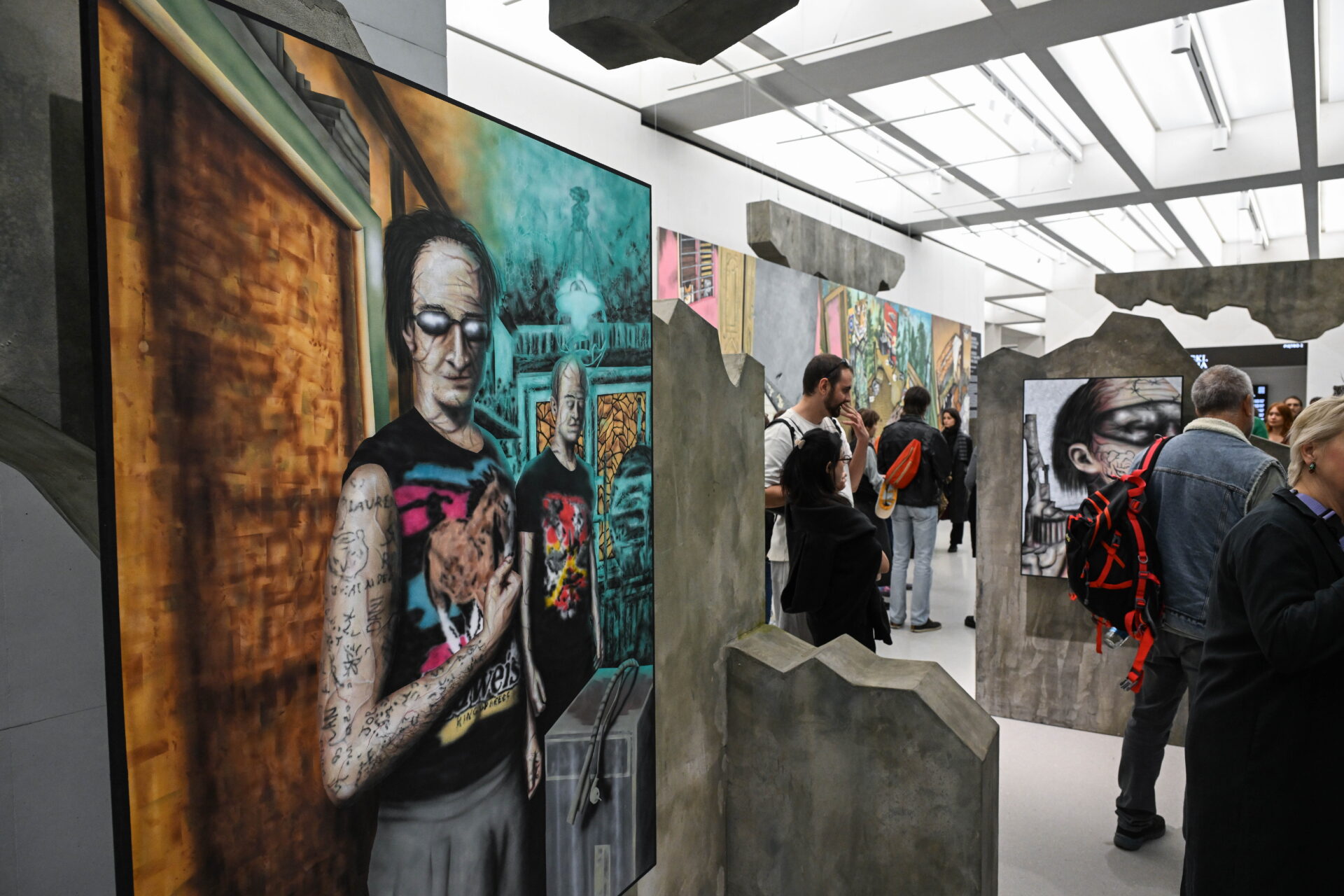
If the internet had a nervous system, Adam Kozicki might be painting it. His new exhibition, Everyone at War with Everyone Else, at Warsaw’s Museum of Modern Art looks at the Web not as a repository of cat videos and holiday photographs, but as a permanent arena of culture wars, competing identities and increasingly blurred lines between fact, opinion and feeling.

Kozicki takes inspiration from round-the-clock online reality shows such as Fishtank LIVE, where participants are watched continuously and provocation is part of the business model. He translates this very digital world into the decidedly analogue language of painting: portraits, claustrophobic interiors and scenes reconstructed from memory rather than simply copied from a screen. The result is less a portrait of the internet than of what the internet may be doing to us. The exhibition runs until January 10, 2027, at the Museum of Modern Art in central Warsaw.

Adam Kozicki
The exhibition runs until January 10, 2027, at the Museum of Modern Art in central Warsaw. Photo: PAP/Radek Pietruszka
fun fact about poland
A smile in disguise
Michał Szcześniewski

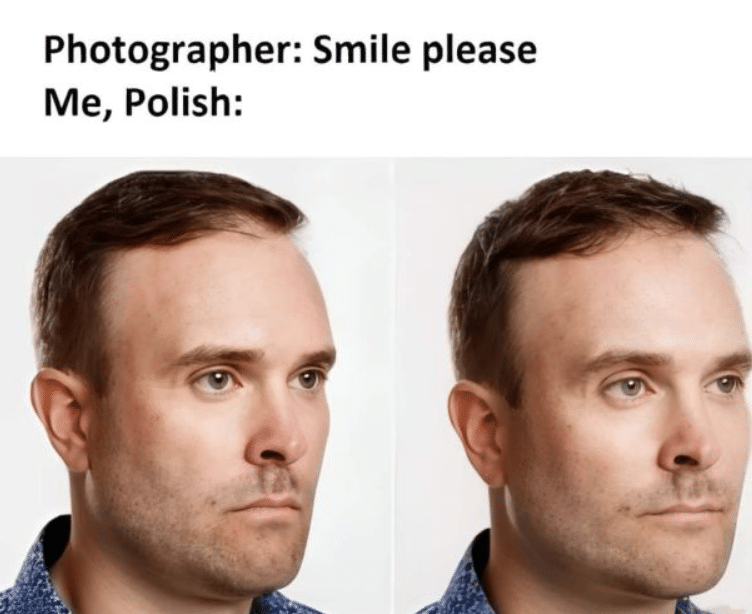
October 2 is World Smile Day, an occasion that may require some explanation in Poland. Here, a smile is less a default setting than a carefully rationed resource.

Poles do smile. They just prefer not to advertise it. To an outsider, the standard Polish expression can resemble mild concern about a delayed train, a badly drafted regulation or the general direction of civilisation. Yet this is not necessarily gloom.

Smiling at strangers for no obvious reason can still feel suspiciously enthusiastic; warmth is more often reserved for actual interaction than deployed as social wallpaper.

The Polish smile is therefore a subtle thing: present, but understated. Think of it as happiness with the brightness turned down. Source: kwejk.pl