

This article is a part of Poland Unpacked. Weekly intelligence for decision-makers
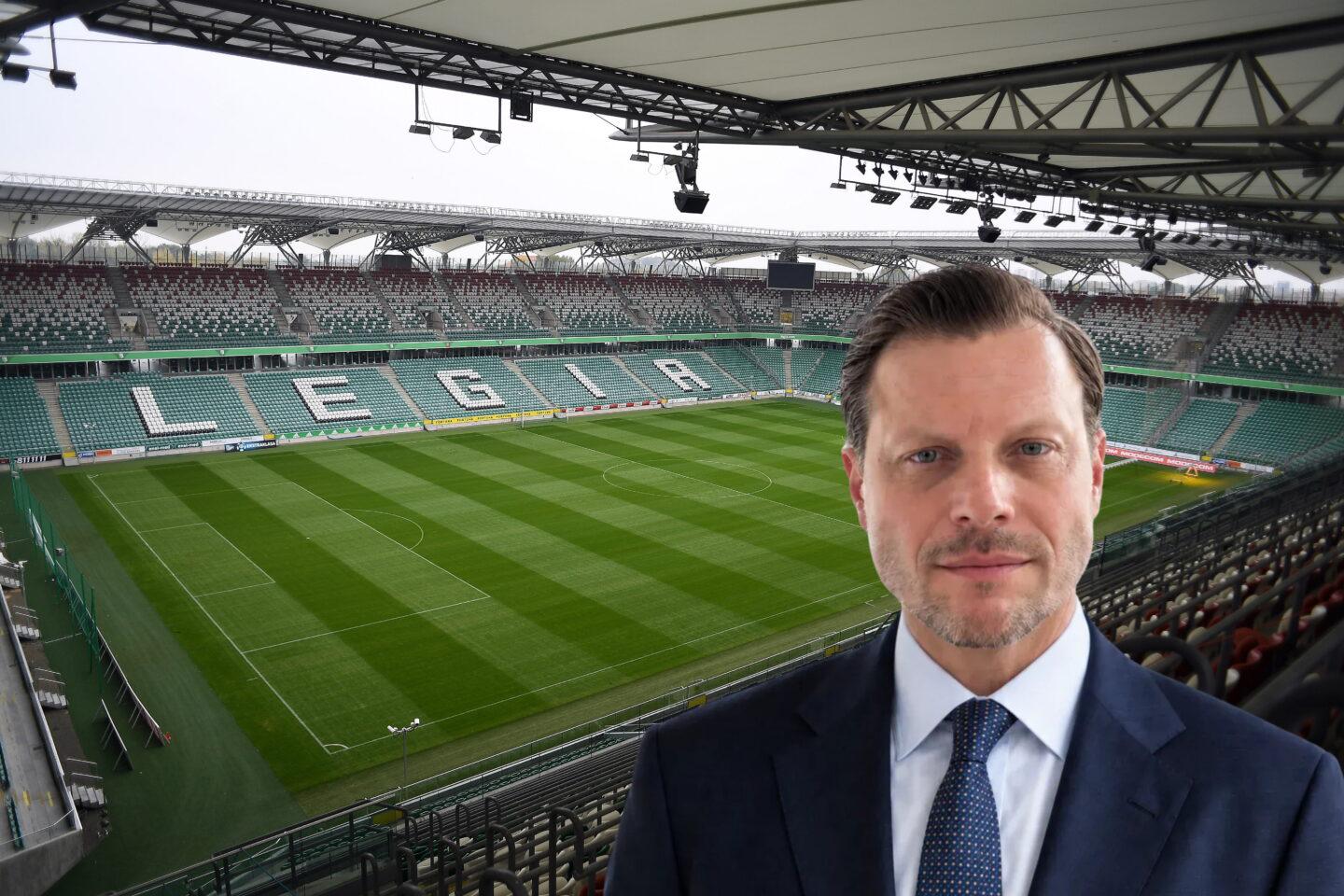
Michael Gorzynski has acquired a 40% stake in Legia Warsaw and become chairman of the club’s supervisory board. The American has an impeccable résumé, but a fairly aggressive investment strategy. He joined the boards of two companies following conflicts with their chief executives and other members of management.
It is official: Legia Warsaw has a new co-owner. Michael Gorzynski, a Polish-born American investor who was born in Wrocław, has acquired a 40% stake in the Warsaw club and taken over as chairman of its supervisory board. Dariusz Mioduski will remain chief executive and majority shareholder, with a stake of around 60%.
As part of the transaction, the new investor not only bought some of the shares from the chief executive, but also acquired newly issued shares as part of a capital increase at Legia. He also provided the club with a shareholder loan to finance current expenses. Unofficial estimates put the total value of the transaction at as much as EUR 50 million, although the club does not want to disclose the official amount.
Michael Gorzynski. A wealthy American financier?
Reading the brief biography of Legia’s new investor in the club’s official announcement, or in profiles prepared by media close to Legia, one could come away with the impression that Michael Gorzynski is simply a wealthy American financier. He graduated from prestigious universities, worked for well-known firms, then set up his own fund and joined the boards of several companies. A classic career path for a Harvard graduate.
Yet the American investor has a highly unusual and interesting professional record. Several stages of his career, spanning more than two decades, stand out. Not every financial analyst manages to raise enough capital to launch his own fund. Nor does every fund owner go on to join the boards of other companies.
We analyzed the professional experience of Legia’s new investor not only to shed new light on the achievements listed in his official biography, but also to better understand his investment style. Here is what you need to know about Michael Gorzynski.
Michael Gorzynski’s education and early career
Michael Gorzynski earned a bachelor’s degree from the University of California, Berkeley, and an MBA, or Master of Business Administration, from Harvard Business School, where he remains active as a member of the alumni board. It is worth noting that Dariusz Mioduski also studied at Harvard, more than a decade earlier, though at its law school.
Gorzynski began his professional career as an analyst on investment teams at institutions including Mellon Ventures, Credit Suisse First Boston and Spectrum Equity Investors. After spending time at these large, traditional firms, he joined Third Point, a hedge fund known for its unconventional approach and distinctive investment strategy. He also started there as a junior analyst, but over time became responsible for the firm’s global investments in so-called special situations.
Third Point and activist investing. Where did Gorzynski’s style come from?
Third Point is no ordinary hedge fund. It was founded by legendary financier Dan Loeb, known as an activist investor. This type of investor buys shares in troubled companies and commits not only capital but also people to help turn them around. Very often, that means replacing the existing management team and taking executive roles until the company is back on a firmer footing.
This approach can make plenty of enemies, but it can also generate substantial returns. Third Point has repeatedly ranked among Wall Street’s most profitable hedge funds. It has invested in and helped turn around companies including Yahoo, Sotheby’s, Nestlé, Seven & I, the owner of the 7-Eleven chain, and Ligand Pharmaceuticals. The fund invested in the latter in 2007, when Michael Gorzynski was one of its analysts.
Gorzynski even wrote about the investment in a paper at Harvard Business School. As noted earlier, he later became responsible at Third Point for investments in special situations. This meant buying shares in companies in response to specific events such as mergers and acquisitions, spin-offs, restructurings or shareholder disputes. And because he worked for an activist investor, these investments were naturally made with the intention of becoming involved in the company and actively working to improve its position.
MG Capital. His own fund and the first high-profile clashes
In 2011, Michael Gorzynski struck out on his own. He left Third Point and founded MG Capital. Everything suggests that it is the founder’s personal investment vehicle, used for his private investments rather than as a commercial fund. There is little public information about its investment strategy or earlier deals. Complicating matters, another fund also called MG Capital, founded just two years later, became embroiled in a major scandal. Its founder defrauded investors and was sent to prison, which is why online search results are dominated by that case rather than by Michael Gorzynski’s fund.
MG Capital’s strategy can nevertheless be inferred from the high-profile investments covered by the US media. The first major references to the investment vehicle appeared in early 2020, across the global financial press. Michael Gorzynski, described at the time as making his first activist investment, set his sights on Philip Falcone, the billionaire best known for making his fortune by anticipating the collapse of the housing market, much like the protagonists of The Big Short.
No mercy, but a profit
MG Capital invested in HC2 Holdings, a financial-services company. It then publicly criticized the board for incompetence, conflicts of interest and weak corporate governance, before calling for the resignation of chief executive Philip Falcone and the other board members. Gorzynski argued that he could help the company cut costs and refocus its strategy on its core business, but that doing so would require full control.
The board fought back fiercely. Falcone even wrote a highly emotional letter to shareholders in which he described MG Capital’s actions as deceptive and false. He portrayed Gorzynski as an untested and inexperienced investor. The dispute became increasingly acrimonious, but ultimately ended in a compromise.
Gorzynski secured two seats on the board: one for himself and another for his associate Kenneth Courtis. His campaign to improve the company also attracted Avram Glazer, an investor who acquired a stake of more than 5% and likewise joined the board. Glazer is now chairman of the company, which has since changed its name to Innovate and returned to a more stable footing.
Through MG Capital, Gorzynski still owns shares in Innovate, although he no longer sits on its board. He is, however, a board member of insurer Continental General Insurance, which was once part of Innovate. Gorzynski acquired Innovate’s insurance business, spun it out as a separate company and joined its leadership as executive chairman. He is therefore not the chief executive, but a senior executive who chairs the board while also taking an active role in the company’s day-to-day management.
How Michael Gorzynski joined the board of Alpha Metallurgical Resources
Michael Gorzynski is also a board member of Alpha Metallurgical Resources. On LinkedIn and in many other places, this is how he is most often described: as a director of the metallurgical-coal producer. He did not arrive there by chance. To understand how, it is necessary to go back to Contura Energy and to 2020, when MG Capital acquired just under 6% of the company’s shares.
In October of that pandemic year, Gorzynski sent a letter to Contura’s board. He argued that the remedy for the company’s problems was a change in strategy and a refresh of the board, including the replacement of three of its six members. He named the executives he believed should step down and said MG Capital was ready to propose their successors. How the story ended is not difficult to guess.
Contura Energy did indeed appoint three new board members, including Michael Gorzynski. Today the company is called Alpha Metallurgical Resources and, although it still produces metallurgical coal, it does so more efficiently. The shares of the New York-listed company have risen by 271% since MG Capital joined the board and began pushing through changes.
What can Michael Gorzynski bring to Legia Warsaw?
With a touch of irony, one could say that Legia Warsaw is the first organization in which Gorzynski has taken on a senior role without first clashing with the existing management. He became chairman of the club’s supervisory board without anyone having to be pushed out. It is hard to imagine, however, that he will completely change his business approach and simply watch from the sidelines.
According to Legia’s website, Michael Gorzynski will focus on ownership matters and strategic initiatives. The club’s management board will remain unchanged. Responsibility for day-to-day operations and sporting decisions will continue to rest with Legia’s existing management team, led by Marcin Herra.
That does not tell us much. We will have to watch Gorzynski’s actions to see what his role will actually look like. It may indeed prove more restrained, given that he has no previous experience of running a sports club. His investment, however, fits neatly into a trend that has become increasingly visible in recent years: American capital moving into European football.
Initially, investors from across the Atlantic focused on English clubs, but over time they expanded into other European markets. It was only a matter of time before they reached Poland as well, particularly its biggest clubs. Michael Gorzynski, quoted in Legia’s official announcement, pointed to the scale of the club.


Key Takeaways
- Gorzynski’s career to date shows that he becomes actively involved in the companies he invests in. He has repeatedly used his position as a shareholder to influence management teams, propose strategic changes and take on senior roles himself. This approach sets him apart from many institutional investors.
- Gorzynski’s investment style was shaped by his time at Third Point, run by one of Wall Street’s best-known activist investors. It was there that he gained experience in investments involving restructurings, shareholder disputes and ownership changes. His later activity through MG Capital suggests that he largely retained this approach and carried it over into his own investment business.
- Michael Gorzynski’s entry into Legia Warsaw fits into the broader trend of American capital flowing into European football. For now, he is expected to focus on ownership and strategic matters, while day-to-day management remains in the hands of the club’s existing leadership. His previous investments, however, suggest that he places considerable importance on shaping the direction of the organizations he invests in, which means his future role at Legia is likely to be closely watched.