

This article is a part of Poland Unpacked. Weekly intelligence for decision-makers
Poland’s Monetary Policy Council (RPP) has left interest rates unchanged, while central bank governor Adam Glapiński sees no need for imminent hikes. This marks a sharp contrast with 2021–2022, reflecting the nature of the current shock, different macroeconomic conditions and government measures to cushion its impact.
The Monetary Policy Council, the National Bank of Poland’s rate-setting body, decided to keep interest rates unchanged, leaving the benchmark rate at 3.75%. The decision came as no surprise to markets.
According to Statistics Poland’s preliminary estimate, inflation reached 4% year-on-year in September, exceeding the upper limit of the central bank’s 3.5% inflation target range. This was the first time in 14 months that inflation had moved outside the target range.
 Interactive chart
 In a somewhat unexpected move, President Karol Nawrocki signed legislation imposing a windfall profits tax on fuel companies on October 1. This enabled the government to introduce the full version of its Lower Fuel Prices (CPN) scheme, including cuts to VAT and excise duties. The measures took effect on October 3 and will remain in place until the end of the year. Lower fuel prices should translate into a decline in inflation as early as October.
Glapiński does not expect a rate hike in November
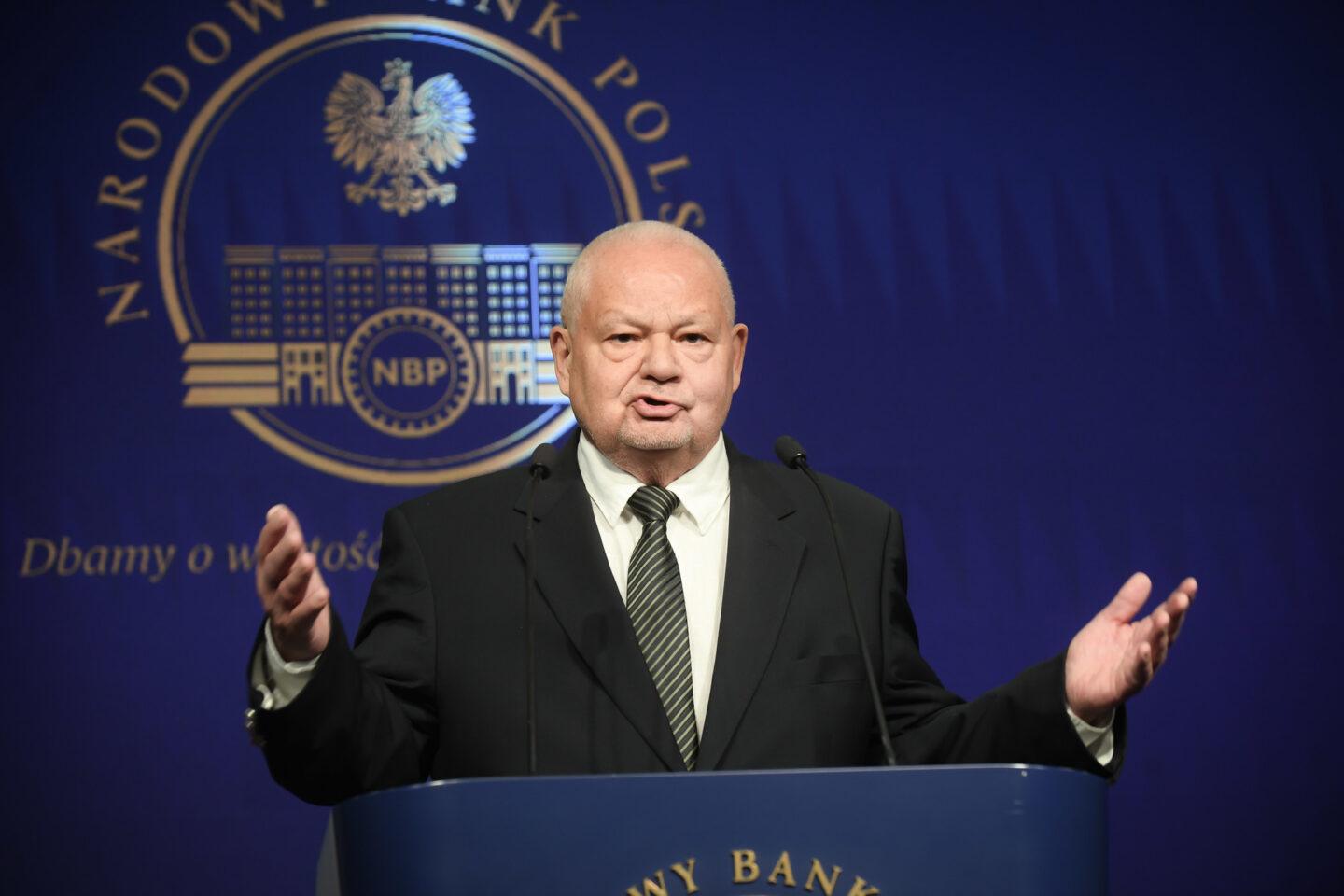
At a press conference, National Bank of Poland (NBP) Governor Adam Glapiński warned that the inflation outlook remains highly uncertain and that the Monetary Policy Council (RPP) must proceed cautiously to prevent higher energy and fuel prices from feeding into broader inflationary pressures. He also stressed that the government’s Lower Fuel Prices (CPN) scheme is temporary.
Among the risks, Glapiński highlighted persistently strong domestic demand. According to the NBP governor, economic activity slowed only marginally in the third quarter. An improvement in economic conditions abroad, particularly in Germany, could provide an additional boost to Poland’s economy. He also pointed to rising agricultural commodity and industrial producer prices. Fiscal policy remains another significant risk. The draft 2027 budget, which envisages a general government deficit of 7.1% of GDP, does not provide for meaningful fiscal tightening.
On the other hand, Glapiński noted that there has so far been little evidence of higher energy and fuel prices spilling over into other categories of goods and services. Available data also suggest that core inflation declined in September, while estimates for October indicate that headline inflation should return to the NBP’s target range. The central bank’s November inflation projection will provide further insight into the outlook. Glapiński did not rule out the need to raise interest rates but emphasized that he does not currently expect such a move.
Polish interest rates have converged with US and UK levels
In 2021–2022, as inflation surged in the wake of the COVID-19 pandemic and Russia’s invasion of Ukraine, interest rates in Poland rose much more sharply than in the United States, the United Kingdom and the eurozone. At their peak, the gaps reached as much as 4–6 percentage points. Today, the picture looks very different. Despite another supply shock, this time driven by conflict in the Middle East and rising energy prices, Polish interest rates have almost converged with those in the US and UK. Only the gap with the eurozone remains significant, although it is considerably narrower than in 2022.
Interactive chart Why is monetary policy responding differently this time?
What explains the change? First, the nature of the two shocks is different. In 2021–2022, supply chain disruptions and soaring energy prices coincided with a strong post-pandemic rebound in demand in Poland. The current shock is more concentrated in energy commodity markets and therefore does not necessarily pose the same risk of generating broad-based, persistent inflationary pressures.
Second, the starting conditions matter, particularly core inflation, wage growth and inflation expectations. If expectations remain anchored, and businesses and workers do not fully pass higher energy costs on to other prices and wages, central banks have greater scope to tolerate a temporary rise in inflation without raising interest rates. Notably, nominal wage growth in Poland has been on a downward trend for some time. Before the latest shock, the median forecast for 2026 had pointed to inflation falling from 3.6% to 2.5%.
Third, government relief measures play an important role. Poland has introduced its Lower Fuel Prices (CPN) scheme, which includes cuts to fuel taxes and limits on retail fuel prices. These measures reduce the direct impact of rising global oil prices on inflation and may also limit the risk of second-round effects, whereby higher energy costs feed into broader prices and wages. They can therefore reduce the need for monetary tightening. However, they do not eliminate the economic costs of the shock. Instead, they shift part of the burden onto public finances.


Key Takeaways
- Poland’s Monetary Policy Council remains cautious but does not currently expect to raise interest rates. Although September’s inflation exceeded the upper limit of the National Bank of Poland’s target range, it could return to that range as early as October, helped by lower fuel prices following the introduction of the Lower Fuel Prices (CPN) scheme. NBP Governor Adam Glapiński nevertheless stresses that inflation risks remain significant, particularly due to strong domestic demand, fiscal policy and the possibility of second-round effects.
- Polish interest rates are now much closer to those in major advanced economies than during the previous inflation shock. In 2021–2022, the gap between Polish rates and those in the US, UK and eurozone reached as much as 4–6 percentage points. Today, Polish rates have almost converged with US and UK levels. This marks a significant shift, suggesting that another surge in energy prices does not necessarily require equally aggressive monetary tightening.
- The current energy shock differs from the previous one, while government relief measures may help contain its inflationary impact. In 2021–2022, rising energy prices coincided with a strong post-pandemic rebound in demand and widespread supply chain disruptions. This time, the shock is more concentrated in energy commodity markets. Poland’s CPN scheme also limits the direct impact of higher global oil prices on retail fuel prices. However, it does not eliminate the costs of the shock, instead shifting part of the burden onto public finances.