

This article is a part of Poland Unpacked. Weekly intelligence for decision-makers
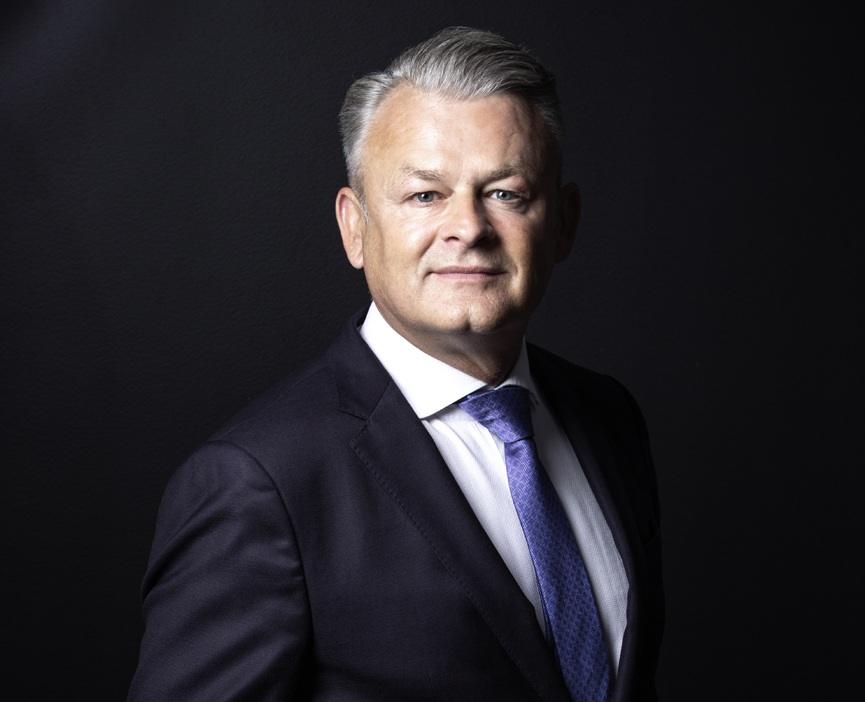
A stock market listing and the creation of a premium fashion group are among the options being considered by the founder of one of Poland’s leading brands in the segment. For now, Kazar is busy expanding into clothing, and after 35 years in business, its founder has no shortage of ambition. “Retirement is a rather abstract concept to me,” says Artur Kazienko, Kazar’s CEO and owner.
Western European and American brands dominate the global premium fashion market. In Poland, domestic companies in this segment have generally remained focused on their home market. Kazar is an exception.
The company was founded in 1990 by four friends: Zbigniew Inglot, Krzysztof Kassan, Dariusz Łyszczek and Artur Kazienko. They began by selling branded shoes imported from Italy. Later that decade, they opened their first store, with Kazienko eventually becoming the sole shareholder.
In recent years, Kazienko’s son, Karol, has joined him as a shareholder through their family investment vehicle, Enco Capital. Over three decades, Kazar has developed into the Polish premium fashion brand with the widest reach both domestically and internationally. Although it identifies larger companies such as Ochnik, Wittchen and Wojas as its main competitors, it positions itself at a higher price point.
In 2026, Kazar is entering a new chapter. At the end of September, it introduced its first full clothing collection. Footwear, however, will remain the brand’s core category.
Good to know
Three decades of Kazar
Artur Kazienko is one of the established figures in Poland’s fashion industry. Few domestic entrepreneurs can match his experience in the sector or the scale of his business.
Over more than three decades, he has built not only the nationwide premium brand Kazar, which has also gained recognition in other European markets, but also Kazar Studio, a sub-brand targeting more demanding customers. He is a co-founder and management board member of the Association of Polish Retail and Service Employers (ZPPHiU).
Kazienko has led Kazar continuously since 1996. He is also CEO of Enco Capital, the family investment vehicle. His executive education includes programs offered by ICAN, Harvard Business Publishing Corporation and MIT Sloan Management Institute. Although he regularly visits Warsaw, where the company has an office, he remains closely associated with Przemyśl, in southeastern Poland.
Dressing head to toe in his own brand
Mariusz Bartodziej, XYZ: I hear you own more than 100 pairs of shoes. How will your wardrobe change now that Kazar is entering the clothing market?
Artur Kazienko, CEO and founder of Kazar: I had not bought any clothes for quite some time because I was waiting for our fall collection. I made my first purchases within days of the launch. I started with a few items I needed for a trip, but I will gradually add more to my wardrobe.
I have not bought shoes from any other brand for 30 years, apart from athletic footwear, which we do not produce. Now it will be much the same with clothing. Kazar will take up even more space in my wardrobe. There is great satisfaction in wearing products from a brand you have spent so many years building.
How long have you been waiting to dress entirely in products from your own brand?
We had been thinking about introducing clothing for roughly a decade. Even before the pandemic, we were opening stores designed to accommodate an expanded product range, with space for fitting rooms and fixtures that could be adapted to display clothes.
The pandemic changed our priorities, however. We focused on our core business and its profitability. We returned to the clothing project once we had the organizational and financial capacity to deliver it to the standards we expect of the Kazar brand.
Investing millions of zlotys
How significant is this project?
It is one of our most important growth initiatives. Karol Kazienko, our Marketing and Women’s Collection Director and the head of the project, is leading it together with Creative Director Kamila Dudzic.
We assembled a dedicated eight-person clothing team. All the company’s key departments are also involved, from product design, manufacturing, supply chains and IT to finance, sales and marketing.
We also invited Dawid Woliński, one of Poland’s best-known fashion designers, to join us as guest artistic director. His experience and distinctive creative perspective make an important contribution to developing the new category.
When did work formally begin?
The first person responsible for production joined the team in November 2025. Less than a year passed between that point and the launch. I am proud of the entire team’s work and what we achieved together. The experience gained from the first collection will be extremely valuable in subsequent seasons.
How much are you investing?
This is a multi-year undertaking covering collection development, team expansion, operational infrastructure and the retail network. A significant proportion of the investment will go toward modernizing and enlarging selected stores.
We want to create spaces where footwear, accessories and clothing can all be displayed effectively, allowing customers to put together complete outfits comfortably. We will adjust the pace of investment according to the development of the new category and the performance of individual locations. We expect to spend between a dozen and several dozen million zlotys over the next few years.
How will the average store size change?
Our stores currently average around 170–180 square meters. The new format, designed to showcase the full product range, envisages approximately 300–350 square meters. That does not mean we will automatically double the floor area of the entire network. We will introduce the changes gradually in selected stores.
One of the first will be our remodeled store at Posnania shopping center. It was already among our largest locations. We plan to reopen it under the new concept at the end of October. We will announce further locations as investment schedules are confirmed.
Dozens of clothing styles
Rival Wittchen is also looking to clothing to revive growth, while Dariusz Miłek has entered the sector on a large scale through several retail chains. Now Kazar is following suit. What does clothing offer that footwear and accessories do not?
We are pursuing a strategy we have been working on for years. We want to develop Kazar into a complete fashion brand that allows customers to put together an entire outfit. Clothing gives us a way to express the brand’s identity more fully and deepen relationships with customers who already know our footwear and accessories. We have an established base of customers who trust us.
Before the launch, we commissioned Kantar to conduct a survey of a representative sample of respondents. A total of 61% said they would buy Kazar clothing or would consider doing so. That was an important indication of interest in the new category.
What else did you ask?
We wanted to understand which products customers expected us to offer. They mentioned leather clothing, coats, blazers, suits, women’s matching sets, tops and sweaters, among other items. Their responses helped shape the direction of the collection.
Further expansion of the range remains a possibility for the future. For now, we are concentrating on building a strong clothing category. We already have experience developing products beyond footwear and accessories – we have also offered home fragrances for years.
How extensive was the clothing range at launch?
The fall-winter collection includes approximately 80 women’s styles and 40 men’s styles. We designed it so that individual pieces can be combined easily and worn in different outfits.
In subsequent seasons, we will expand the range in response to customer interest and sales results. Footwear and accessories remain Kazar’s foundation, with clothing complementing them. Collection consistency and product quality are important to us, and the pace of expansion will depend on what we learn in the coming seasons.
PLN 100–150m in additional revenue
Have you reached a growth ceiling with your existing product range? Sales had already returned to pre-pandemic levels in 2021, followed by two years of strong growth. But since 2023, revenue has remained above PLN 270m without increasing substantially.
In recent years, our main focus has been improving profitability and business efficiency. [The EBITDA margin increased from 6% to 10.4% between 2023 and 2025 – editor’s note.] With costs rising, it is particularly important that sales growth translates into stronger financial results. We have therefore examined the economics of individual sales channels and the quality of our revenue.
That also applies to online marketplaces. We adjust our presence and product offering according to the terms of cooperation and the profitability of each model. At the same time, we are expanding sales through our own online store, including internationally.
 Interactive chart
Will the results become visible in 2026?
We expect revenue in 2026 to be close to last year’s level. This is a year of investment and the launch of a new category. We plan to return to sales growth in 2027.
We already have an extensive physical retail network in Poland. We see further growth opportunities in improving store efficiency, e-commerce, international expansion and clothing. We are developing these areas while maintaining consistent premium positioning.
What is the potential?
Our ambition is to increase revenue by around PLN 100–150m over five years. That is a strategic target. Growth in clothing, international expansion and further development of our existing categories are all expected to contribute.
At the same time, we want to maintain profitability as we invest. Our assumptions envisage an EBITDA margin of around 10%. We will adjust the pace of expansion and our approach to profitability according to results and market conditions.
Interactive chart Premium is no longer exclusively foreign
You have been building this company since 1990. When did you realize it had the potential to reach its current scale?
One of the turning points was launching online sales in 2013. E-commerce allowed us to reach customers without first having to establish a network of physical stores in every country.
We realized there was much greater room for expansion. We could gradually explore new markets, test demand for our products and build brand awareness. It changed the way we thought about the scale Kazar could achieve.
How have Polish consumers’ perceptions and definitions of premium fashion changed over the decades? Such products now appear seasonally even in grocery discount chains, attracting considerable interest at Biedronka and Lidl.
Consumers today have far more choice and more opportunities to compare products. Simply calling something “premium” is no longer enough. Brands have to justify the label through material quality, craftsmanship, design and customer service.
Different brands choose different distribution models. We are developing Kazar in a way that preserves consistency between the product, its price, the retail environment and our communication. We want customers to know what to expect whenever they encounter the brand. For us, premium means a commitment to maintaining a particular standard.
Has premium fashion in Poland stopped being associated primarily with Western brands?
Yes, a great deal has changed in that respect. For many years, foreign brands were an important benchmark for Polish consumers. Today, domestic companies have a much stronger position, their own design language and the experience needed to compete in a demanding market.
Polish origins can be an advantage, but they must be backed by quality and an attractive product offering. Customers choose products that appeal to them and brands they trust. Our strengths are our long-standing understanding of customers, extensive store network and established e-commerce business.
The case for Polish premium brands going global
Many domestic premium brands have encountered barriers to further growth. Deni Cler has plateaued at around PLN 50m in revenue, and VRG has been considering selling it since 2024.
Every brand has its own history, business model and circumstances. It is difficult to assess all the factors affecting another company’s development from the outside.
Our experience suggests that building a premium brand requires patience and consistency. Growth must respect the brand’s identity, customer expectations and profitability. Pricing and promotional policies must also support that positioning. Short-term sales decisions affect how customers perceive a brand in subsequent seasons.
What allows Polish premium brands to compete internationally?
Above all, good products and brand credibility. When customers first come across Kazar online, they often examine our website, collections and social media communications. That shapes their initial impression of the company.
Then comes the most important test: product quality, comfort and the shopping experience. The price must be justified by what customers receive. If we meet their expectations, there is a chance they will return and recommend us to others. That is how a brand gradually establishes itself in a new market.
The satisfaction of creating a quality product
Is sourcing premium fashion production very different from fast fashion? Two years ago, Modivo openly stated that identical T-shirts manufactured for USD 2.15 could later be sold for PLN 60–200, depending on the label attached.
I would rather not comment on other companies’ calculations. In our case, the starting point is what we require from a particular product: the material, construction, manufacturing methods, finishing and comfort. Even in apparently simple garments, differences in these areas can be significant.
We select manufacturers according to the requirements of each design. For example, we entrusted production of a suit from our fall collection to a garment manufacturer in Kraków that works with major European brands. We wanted to achieve a particular standard of construction and quality.
Production conditions are also important. Customers increasingly ask where materials come from and how products are made. This requires brands to communicate accurately, based on what they can actually verify.
How difficult is it to grow in Poland’s premium segment when discounters and fast-fashion brands are expanding and making money the fastest? Sinsay, for instance, has become the growth engine of LPP Group. What keeps you in premium fashion?
We have developed the brand in this segment from the beginning. We understand the market and our customers’ expectations. We see scope for further growth, particularly through a broader product range and international expansion.
I also get considerable satisfaction from working on a good product. It is rewarding when customers appreciate the design and craftsmanship, and return for another pair of shoes, a bag or now an item of clothing.
A book from the boss
We have discussed products. Let’s turn to people. What kind of boss are you, and what attitude would you like your employees to emulate?
Collaboration and shared accountability are very important to me. For many years, I gave new employees a book devoted to precisely that approach: The Oz Principle. We discontinued the tradition during the pandemic, but I would like to bring it back.
What else do you expect from employees?
I am demanding. I expect competence, commitment and accountability for decisions. A willingness to collaborate and learn is equally important because both the company and the market are constantly changing.
I want a team that can act independently and speak openly about what needs improvement.
Sharing responsibility after decades at the helm
After more than 30 years, what keeps you running the company?
I enjoy the work. Fashion and brand development still give me considerable satisfaction, particularly when I see customers responding positively to our collections. I also find it rewarding to see the team operating independently.
I began deliberately building the management team in 2017. Initially, I thought it would take two or three years. In practice, the process took longer because organizational independence requires not only the right people but also trust and experience working together.
At the same time, the next generation is taking on greater responsibility. Karol Kazienko has been connected with the company since childhood. He learned the business from the ground up, from the warehouse and shop floor to marketing and brand development. Today, he and Kamila Dudzic have a major influence on the brand’s identity and how it reaches new customer groups.
I still have plenty of energy for work, however, and I want to continue contributing my experience to the company.
How the founder’s role is changing
How do you see your role evolving?
As the company grows, the way it is managed changes. Increasing responsibility for day-to-day operations now rests with directors and their teams. I focus on strategy, setting objectives and the most important development and investment decisions.
I remain closely involved with the business and its results, but I no longer need to participate in every operational decision. That gives the team room to act and allows me to take a longer-term view.
What does that look like in practice?
Together with the management team, we establish objectives and the framework for achieving them. Within those boundaries, individuals have their own responsibilities and decision-making autonomy.
We review results and areas requiring attention. If there is a significant deviation from our assumptions or a new growth opportunity emerges, we analyze the situation together and make a decision.
How often does that happen?
Major changes in direction are rare. Our everyday discussions are much more often about how best to execute the strategy we have adopted.
I remain particularly close to the products and the brand. I want to know whether our collections meet the needs of different customer groups, including those who have been with us for many years.
Kazar is 35 years old. Someone who discovered the brand at 20 is now 55. We want to remain attractive to those customers while winning over new generations. Karol and Kamila bring an important perspective to that process. Part of the strength of a brand built to last is its ability to evolve alongside its customers while reaching new ones.
Acquisition offers came, but no deal followed
You seem to be in a comfortable position today, but you have weathered more than one crisis. How many times have you wanted to leave everything behind and escape to the Bieszczady Mountains [a popular saying in Poland when you want to get away from it all is 'maybe I should escape to Bieszczady' - ed.]? They are not far from Przemyśl, after all.
Never, although the Bieszczady Mountains really are close by. Difficult situations motivate me to act. At such moments, I focus on what we can influence, which decisions need to be made and how to guide the company through change.
I have learned a great deal over the years. Looking back, I particularly appreciate the importance of teamwork, consistency and the ability to react quickly. Overcoming difficulties is satisfying, but learning lessons for the future is just as important.
Gino Rossi tried to acquire Kazar twice, in 2011 and 2017, at a valuation of around PLN 200m. How do you view the failure of those negotiations in hindsight, particularly since Gino Rossi itself entered a serious crisis in 2018 and was subsequently acquired by CCC?
Looking back, remaining independent was the right decision for Kazar. It allowed us to develop our own strategy, positioning and operating model consistently.
Any transaction of that kind requires aligned objectives and sound organizational preparation. During those discussions, we were unable to reach an acceptable agreement. Kazar’s subsequent development showed that growing independently offered considerable opportunities.
How many offers have you rejected since then? With EBITDA of around PLN 30m, you could probably negotiate a valuation almost twice as high today.
We have received various proposals, but none resulted in a decision to proceed with a transaction. I would prefer not to discuss the details of those conversations or hypothetical valuations.
Any potential equity partnership would need to support Kazar’s long-term development and meet our expectations as owners. For now, we are concentrating on clothing, international sales and profitability. We assess capital-related options in the context of those priorities and market conditions.
Could Kazar list on the Warsaw Stock Exchange?
What about going public? Investors on the Warsaw Stock Exchange are already familiar with the fashion industry, and an IPO does not necessarily mean giving up family ownership. LPP is a good example.
A stock market listing remains one of the possibilities for the future. In 2025, we completed our conversion into a joint-stock company, but that does not mean we have decided to pursue an IPO or set a timetable.
Our current focus is on increasing the scale and value of the business. We view a potential listing as a tool that could support further development. Any decision would depend on the company’s needs, its readiness and market conditions.
Answear.com, with a market capitalization of around PLN 500m, has not exactly been a favorite among stock market investors. Perhaps a valuation closer to PLN 1bn would be needed, along with a sufficiently large free float.
I would rather not assess another company’s valuation. In Kazar’s case, the key question would be whether a listing at a particular moment supported our strategy and allowed us to raise capital on suitable terms.
We are not setting a specific date or target valuation.
Building a group of premium brands is worth considering
Could Kazar become an acquirer rather than an acquisition target? Taking into account the proposed allocation of 2025 profits, your supplementary capital exceeds PLN 70m. Combined with potential debt financing, that would give you considerable room for acquisitions.
Our immediate priority is developing Kazar, including clothing and our more upscale Kazar Studio line. In the longer term, building a group of premium brands could be a direction worth considering.
Any acquisition would need a strong strategic and economic rationale. Supplementary capital is not the same as cash available for acquisitions. Financing capacity must be assessed alongside investment requirements and the company’s overall liquidity.
We remain open to interesting opportunities, but I would not want that to be interpreted as an announcement of a specific deal.
Could you succeed where VRG previously struggled? Bringing brands including Vistula, Bytom and W.Kruk under one roof was supposed to be only the beginning of building a Polish luxury fashion group.
Every such project has its own circumstances, so I would not compare hypothetical plans for Kazar with the history of other groups.
In our case, the foundation would be strategic alignment, complementary brands and respect for their individual identities. Cooperation could bring benefits in selected areas, but it would also require careful preparation and risk assessment.
It is too early to discuss details.
International expansion: E-commerce and perhaps a Berlin store
What else would you like to achieve with Kazar before retiring?
I have no plans to retire for now. It is a rather abstract concept to me. I find it much easier to imagine our next collection than my last day at work. I intend to remain involved in developing the company for as long as I can contribute energy, experience and good ideas.
What matters most to me is further international expansion. Currently, we generate around 27–28% of revenue outside Poland. Our ambition is to increase that share to approximately 50% within a few years, while continuing to develop the business at home.
I would like Kazar to become increasingly recognizable and popular in more European markets. That is an exciting prospect for me and an opportunity for the company to achieve greater scale and stability.
How do you intend to achieve that?
Primarily through further growth in online sales. Our own website, Kazar.com, plays an important role because it allows us to build direct relationships with customers. Online marketplaces also remain a way to reach consumers, provided that the individual partnership models are profitable.
Online sales data help us assess the potential of specific markets and cities. Berlin is one example of a location where we see interest in the brand. If the business reaches sufficient scale and the economics make sense, we may consider opening a physical store there.
Our experience shows that the two channels can reinforce each other. A physical store allows customers to see and try on products and receive personal service, while e-commerce makes subsequent purchases more convenient.
What about Hungary? In January, you closed one of your four stores there.
We adjusted the network to the potential of individual locations and their lease terms. Decisions about retaining stores are based on their role in our overall business in a particular market.
Physical stores support brand awareness, allow customers to experience the products firsthand and complement online sales. Our Hungarian operations became profitable in 2025. This year, we are focusing on further improving the results.
Hungary remains an important market for us, although Germany accounts for our largest volume of international sales.
The war in Ukraine reinforces the case for a more resilient business
How many more locations in Poland could accommodate a Kazar store? You currently have 46. In 2025, you did not renew leases at Galeria Łódzka and Felicity Lublin.
Our domestic network is already well developed. We see a few more potential locations, but adapting selected stores to accommodate the brand’s full range and improving their efficiency will be more important.
We assess each location based on sales potential, lease terms and the role it could play in a given city. We are also considering returning to places where we previously operated, provided the conditions fit our strategy. We are finalizing discussions about a return to Felicity in Lublin.
What worries you most today? Is it the war in Ukraine, given that the company is headquartered just 10 kilometers from the border?
The geopolitical situation is one of the factors we must take into account when running the business. But I focus primarily on what we can control: the company’s financial health, operational efficiency and consistent execution of our strategy.
That is why international expansion is so important to me. Operating in more markets and diversifying revenue sources helps build a more resilient business.
After 35 years of running a company, I know that conditions are never perfect. You have to monitor your environment carefully, make responsible decisions and keep moving forward.


Key Takeaways
- Clothing is expected to drive the next phase of sales growth. Founded in the 1990s, Kazar spent decades building its position as a major player in premium footwear and accessories. The company began considering clothing roughly a decade ago, but the pandemic disrupted those plans. Having restored stability and increased its EBITDA margin to approximately 10%, Kazar is now ready to accelerate expansion. Revenue is expected to remain around PLN 270m in 2026, before increasing by PLN 100–150m over the following five years.
- Expansion at home and abroad. Kazar operates 46 stores in Poland and sees room for only a handful of additional locations. It will instead focus on gradually remodeling selected stores, potentially doubling their floor area to 300–350 square meters to accommodate clothing. The company also operates several stores in Budapest, which it intends to retain, and is considering further locations, potentially including Berlin. E-commerce, however, remains the priority for international expansion. Kazar aims to nearly double the share of revenue generated abroad to approximately 50% within a few years.
- The founder is taking on a new role. Artur Kazienko has led Kazar for more than three decades and has no intention of retiring. His role, however, has changed considerably in recent years. His son Karol and a management team have assumed much of the operational responsibility, working with him to set the company’s strategy. Potential longer-term options include a stock market listing and building a broader group of premium fashion brands.