

This article is a part of Poland Unpacked. Weekly intelligence for decision-makers
Belgian cybersecurity company Aikido Security has acquired Warsaw-based startup Cyberly, whose solutions have protected more than 300,000 employees across over 200 organizations. The Polish company's technology will become part of a new platform designed to combat AI-powered fraud, representatives of both companies told XYZ.
Belgian company Aikido Security has been developing tools to automatically detect threats and vulnerabilities in software since 2022. Its customers include Revolut, SoundCloud and Niantic, the developer of Pokémon GO. In January 2026, following a Series B funding round, the company achieved unicorn status. Now it is expanding into a new area of cybersecurity.
"We want to apply the same philosophy that helped Aikido grow in software security: bringing fragmented security functions together into a single, easily accessible platform. We place a strong emphasis on ease of use and affordability," Roeland Delrue, co-founder and COO of Aikido Security, told XYZ.
The platform will be built around technologies developed by two companies: Belgium's Outkept and Warsaw-based Cyberly.
Their solutions will form the foundation of Noon, a platform integrating email and device security, cyberattack simulations, training and tools for monitoring how artificial intelligence is used within organizations.
Polish startup grows rapidly in two years. Its founders had no plans to sell
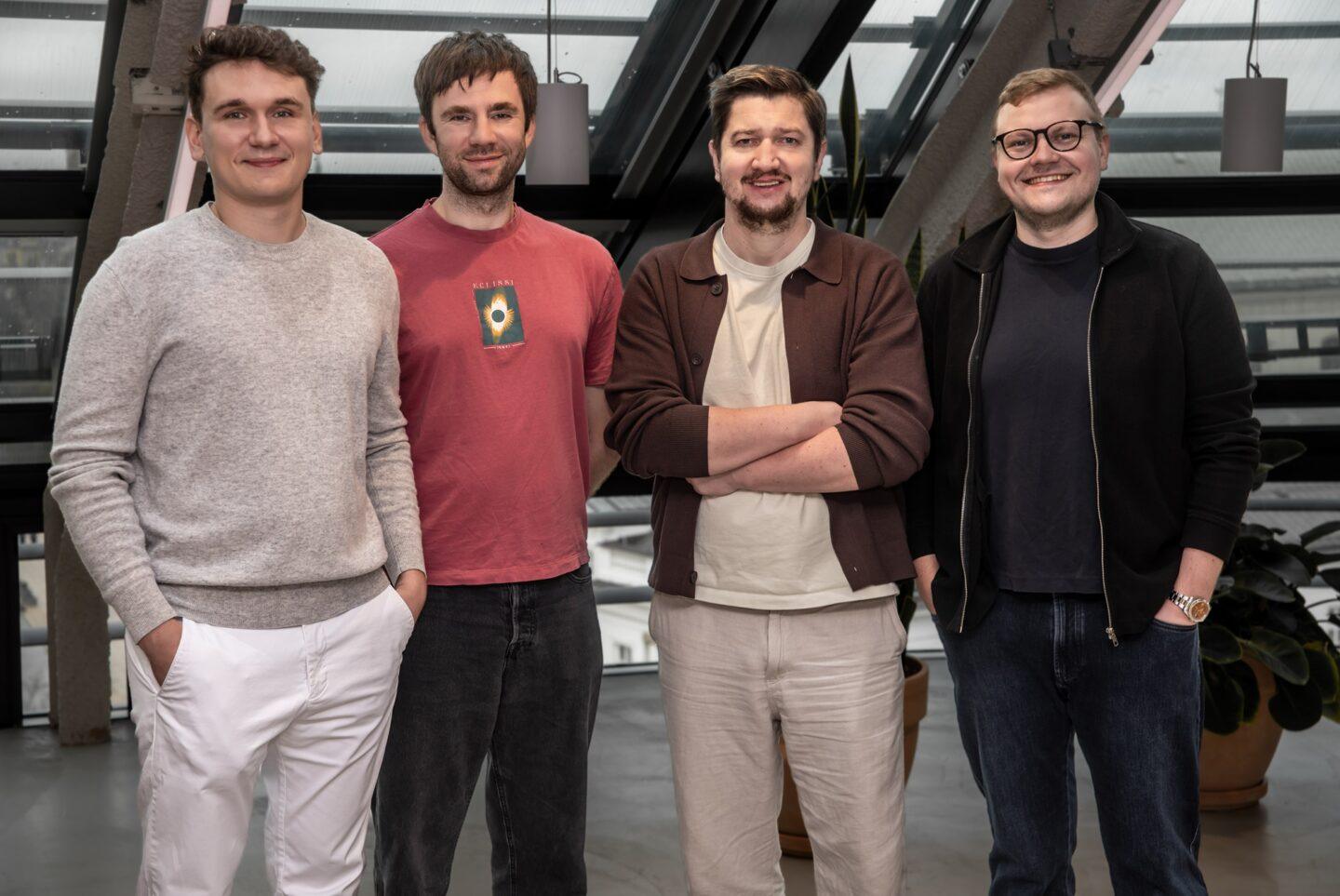
Cyberly was founded in Warsaw in 2024 by Alex Horlach, Evgeny Chamtonau, Pavel Hraznykh and Andrew Labadzinski. Their idea was to use AI to create realistic simulations of attacks targeting employees, deliver personalized cybersecurity training and analyze threats arising from the everyday use of technology.
The startup quickly expanded internationally. It served more than 200 organizations worldwide, and its solutions were used to protect over 300,000 people.
It attracted investors including KAYA VC, Zone II Ventures, Andreessen Horowitz and Octopus Ventures. Vlad Yatsenko, Revolut's co-founder, also invested in and advised the company.
"We weren't planning to sell the company after just two years. We built Cyberly with long-term growth in mind," Alex Horlach, Cyberly's co-founder, told XYZ.
Discussions with the Belgian company, however, changed the founders' plans.
Cyberly could have continued growing independently, but Aikido offered access to a larger customer base, an international sales network and greater technological resources.
"We weren't looking for a quick exit. We want to build something much bigger, and do it much faster," Horlach emphasizes.
Expert's perspective
Plenty of room for growth
AI is increasing both the effectiveness and scale of cyberattacks, further raising the risks faced by institutions responsible for citizens' data and the continuity of public services.
The public sector is particularly vulnerable. According to the European Union Agency for Cybersecurity (ENISA), public administration is the most frequently targeted sector. Universities and research institutions are also increasingly becoming targets. This does not, however, mean that all these attacks involve AI.
I expect demand for cybersecurity services to remain high in both the short and long term, across businesses and public administration. This is particularly true of threat detection, incident response and securing newly deployed AI systems.
These needs are not always reflected in available budgets. Cybersecurity is still often regarded as a cost rather than an investment.
That is why services offering measurable reductions in risk and improvements in operational continuity have the greatest potential.


The terms of Cyberly's acquisition
Neither the buyer nor the sellers have disclosed Cyberly's valuation or the value of the transaction.
"What attracted us to Cyberly was the technology and expertise the team had developed in a relatively short time, rather than how long the company had been operating," explains Roeland Delrue.
He notes that Cyberly brings AI-powered social engineering attack simulations to Noon, including sophisticated attacks carried out simultaneously across several communication channels and using cloned voices.
The company also has technology that allows businesses to examine how their employees use AI tools.
"We saw an opportunity to combine these solutions with Outkept's technology and experience in phishing protection and cybersecurity training. Together, they formed the foundations of Noon," the Aikido representative says.
Expert's perspective
The changing nature of cybersecurity
Traditional defense methods, based on manual analysis of threat alerts by security operations center (SOC) teams, may prove too slow to counter such attacks.
Businesses are beginning to understand this and are increasingly adopting solutions that use AI itself to combat AI-powered threats in real time – an approach known as "fight AI with AI."
The situation is considerably more difficult in the public sector.
Although government institutions and critical infrastructure are among the main targets of the most sophisticated criminal groups, their technological debt, budget constraints and staffing shortages mean that autonomous defensive tools are being adopted more slowly.
Demand for advanced cybersecurity services is unprecedented, but its nature is changing.
Customers are moving away from buying dozens of disconnected tools towards integrated, autonomous platforms, a trend known as platformization.
Personal opinion, not representing the official position of any institution.
Founders stay on. Technology development continues in Warsaw
Cyberly's Warsaw team will remain in Poland and continue working on solutions originating from the startup, as well as a substantial part of the development of Noon.
The Polish company's engineers will collaborate with teams from Outkept and Aikido. The coming year will focus on integrating the different technologies.
"All four of us are staying at Aikido and working on Noon. We're responsible for developing the parts of the platform that originated at Cyberly, but our role goes beyond that.
"We're also working with Aikido's business team on Noon's market positioning, launch strategy and sales. At this stage, we're not announcing specific job titles," Horlach explains.
Around 20 people are currently working on Noon. Approximately 80% come from the Cyberly and Outkept teams, while the remainder have either transferred from other Aikido departments or been recruited specifically for the new project.
"We intend to continue investing in the team and gradually expanding its capabilities, including in Poland. At this stage, however, we're not announcing specific recruitment targets or investment plans," an Aikido Security representative says.
A new platform: From suspicious emails to a fake call from the boss
Noon is being developed in response to increasingly sophisticated fraud.
Cybercriminals do not necessarily need to exploit vulnerabilities in corporate systems if they can persuade employees to disclose passwords or transfer money.
Generative AI tools make it possible to create convincing messages, while voice cloning enables criminals to impersonate a manager during a phone call.
Noon is designed to detect and remove malicious messages that have bypassed basic email filters, while also protecting devices.
The platform will also enable companies to run simulated attacks involving cloned voices, QR codes, text messages and multiple communication channels simultaneously.
Based on these exercises, businesses will be able to provide training tailored to employees' specific responsibilities, including directly through Slack or Microsoft Teams.
"We started by making software security simpler. But companies also need to protect the people using that software.
"AI is making scams more convincing and easier to carry out at scale," says Willem Delbare, co-founder and CEO of Aikido Security.
Employee AI use presents a separate challenge
The second pillar of Noon will be monitoring the use of artificial intelligence in the workplace.
More employees are using chatbots and AI agents outside their companies' approved systems.
From a business perspective, this creates a risk of data exposure, for example when an employee uploads confidential information to a tool that has not been authorized by their employer.
Technology originating from Cyberly will allow security departments to see which AI tools and models employees use on their devices.
Aikido wants to combine this information with data from email systems, devices and attack simulations, allowing security specialists to analyze threats in one place rather than switching between several independent applications.
"We expect the area related to AI use to grow the fastest. AI tools and agents are becoming part of everyday work, so companies need to know how employees use them and what data is being shared with them," says Horlach.
Expert's perspective
The situation is alarming. It needs to change
I say this based on my own experience and observations in information security management. Given that many organizations still struggle with basic cybersecurity, it is difficult to expect them to be adequately prepared for the new risks associated with AI.
The situation in this area could even be described as alarming.
Many organizations still fail to introduce security policies that would protect them against shadow AI, the use of artificial intelligence tools by employees outside organizational oversight.
Such practices expand the attack surface and create opportunities for additional threats.
Importantly, this can all happen without the knowledge of those responsible for security.
The situation is, of course, better than it was two or three years ago, but it would still be difficult to describe organizations as adequately prepared.
The problem affects both the private and public sectors.
If even serious cybersecurity incidents fail to change how organizations approach security, it is difficult to expect them to treat new AI-related threats responsibly.
Security investments are still frequently viewed as unnecessary costs or expenses incurred merely to comply with legal obligations.
They are not treated as an element of strategic organizational management.
Belgian company also targets smaller businesses
Noon is intended to be accessible to smaller businesses that cannot afford several specialized security systems.
Aikido is working on a free basic version, although it has not announced when this will become available or disclosed sales targets for the next three years.
"We see Noon as an important long-term growth opportunity. We're developing it as a separate product business within Aikido," a company representative says.
Experts emphasize that demand for new cybersecurity solutions is substantial.
"Cybersecurity has entered a period of pronounced asymmetry between attackers' capabilities and defenders' ability to respond.
"Artificial intelligence hasn't reinvented cyber threats, but it is fundamentally changing their economics, speed and scale.
"Activities that once required significant time, specialized expertise and the involvement of many people are becoming increasingly easy and inexpensive.
"This applies both to cybercrime and to operations conducted by states and groups linked to them.
"Meanwhile, organizations' security systems, procedures and capabilities are not adapting to these new conditions at the same pace," Łukasz Turkowski, founder of the Information Sovereignty Center, told XYZ.
He compares the current situation to the fight against doping in sports.
"Imagine a medical breakthrough that radically enhances athletes' capabilities.
"New solutions become available almost immediately, but detection methods, oversight mechanisms and regulations still have to be developed.
"We're seeing something similar in cybersecurity. The difference is that the adversary doesn't even have to pretend to follow the rules of fair competition," Turkowski explains.
The balance is shifting against businesses
Experts stress that solutions designed to protect against AI-powered cyberattacks are still developing.
Meanwhile, the gap between the capabilities of attackers and defenders is widening.
"Protection against AI-powered attacks varies enormously and is still failing to keep pace with the speed at which threats are evolving, both in business and in the public sector.
"Companies, however, are doing considerably better," says Krzysztof Kanciak, a cryptologist and assistant professor at the Military University of Technology in Warsaw.
The main problem is the imbalance between attackers and defenders.
"Conditions are becoming increasingly favorable for attackers. Criminals can achieve greater gains by using increasingly sophisticated tools.
"Defenders, on the other hand, face growing difficulties.
"The number of AI-powered attacks is increasing by as much as 100% annually, and in my opinion the figure could be as high as 200%," Kanciak observes.
Mateusz Kozłowski, CEO of Techni Schools, believes the current situation is encouraging the development of new cybersecurity tools.
"Companies and institutions are prepared to very different degrees.
"Large organizations generally have greater resources to maintain security teams and round-the-clock monitoring, although this does not make them immune to every attack.
"The situation is particularly difficult for smaller companies and local governments.
"Poland's Supreme Audit Office (NIK) found that 71% of the 24 public offices it inspected were not prepared to ensure the continuity of their systems," Kozłowski says.
Limited budgets and shortages of experienced specialists are particularly serious barriers in the public sector.
"I believe demand for cybersecurity services is already high and will continue growing.
"A company needs someone who can assess its defenses and actually respond when an incident occurs.
"That helps explain the interest in acquiring Polish companies. The buyer gains both a product and a team that could take years to build independently.
"From the perspective of a school training programmers and cybersecurity specialists, I believe we cannot wait until university or later professional retraining to develop these skills.
"We need to start in high school and teach security alongside software development," Kozłowski emphasizes.
Expert's perspective
Businesses are adopting AI faster than they can secure it
I encounter formal oversight of AI agents and designated individuals responsible for granting them permissions in roughly half of cases.
Most companies claim to have visibility into the machine identities used within their organizations, but only about a third actually monitor them.
Large companies, particularly in finance, have endpoint detection and response (EDR) systems, apply Zero Trust principles and use immutable backups, including Single Write Repository architectures.
Yet they rarely know how many AI agents they have, who owns them or what those agents are allowed to delete.
Medium-sized companies are virtually defenseless in this area. They often give AI assistants administrator privileges simply "to make them work."
The gap is even greater in the public sector, where two problems converge: staffing shortages and outdated infrastructure.
Many public offices, local governments and municipal companies are still sorting out the basics, including asset inventories, backups and account management.
Meanwhile, AI is already entering public-facing services and internal processes.
In sectors such as water utilities and energy, which use operational technology (OT), additional problems include service accounts in SCADA systems without designated owners and certificates that have not been updated for years.
On the positive side, new regulations, including the amendment to Poland's National Cybersecurity System Act implementing the NIS2 Directive, together with funding programmes, are finally forcing organizations to adopt a systematic approach rather than merely fixing vulnerabilities as they arise.
Investment is essential
Artur Piechocki, managing partner at law firm APLAW, draws attention to the broader legal context of these developments.
"Cybersecurity is no longer solely the domain of technical specialists. It has become a matter of regulatory and corporate responsibility.
"EU regulations, including the NIS2 Directive, transposed into Polish law through an amendment to the National Cybersecurity System Act, as well as the Digital Operational Resilience Act (DORA) and the General Data Protection Regulation (GDPR), impose obligations on a broad range of organizations.
"These include risk management, implementing appropriate security measures, overseeing suppliers and supply-chain security, and responding to incidents.
"The crucial change concerns accountability: cybersecurity is now also the responsibility of an organization's management, not just its IT department.
"Failure to comply with statutory obligations can result in substantial administrative penalties and civil liability, and in certain circumstances even personal liability for executives," Piechocki explains.
He therefore expects demand for advanced cybersecurity services to continue growing, driven by both technological and legal developments.
"AI-based solutions for identifying threats, monitoring systems and automating incident response are becoming particularly important.
"Technology alone, however, is not enough to meet regulatory requirements. It must be accompanied by appropriate organizational procedures and risk oversight," Piechocki concludes.


Key Takeaways
- Belgian unicorn Aikido Security has acquired Polish startup Cyberly and plans to use its technology to develop a new cybersecurity platform called Noon. Previously focused on automated software protection, Aikido is expanding into securing employees, email systems and corporate devices. The new product will be built around technology developed by Cyberly and Belgium's Outkept. Aikido plans to integrate threat detection, cyberattack simulations, training and monitoring of AI use within businesses into one platform. Neither the transaction value nor the Polish company's valuation has been disclosed.
- Cyberly found a buyer just two years after its founding, although its creators had not planned such an early exit. Established in Warsaw in 2024, the startup attracted more than 200 institutional customers worldwide, and its solutions were used to protect over 300,000 people. Aikido's interest was driven by the Polish team's technology and the expertise of its founders. Ultimately, the opportunity to accelerate growth through the Belgian company's international sales network and resources convinced them to sell. All four founders are staying with Aikido, while Warsaw will remain an important development center for Noon. The Belgian company plans to continue investing in the team but has not disclosed specific hiring targets.
- Artificial intelligence is changing the nature of cybersecurity threats, and Aikido wants to capitalize on this trend by building a new business. Noon is designed to help companies detect malicious messages, simulate attacks involving cloned voices, text messages and QR codes, and provide training tailored to employees' needs. Monitoring the use of AI tools will be another important feature, as uncontrolled adoption can expose confidential corporate data. Aikido plans to offer these capabilities through a single platform accessible to smaller businesses as well. It is developing a free basic version but has not yet announced a launch date or sales targets.