

This article is a part of Poland Unpacked. Weekly intelligence for decision-makers
Festive spirits still prevail in the New Left. In mid-December the party held internal elections, as a result of which the new-old chairman turned out to be the Speaker of the Sejm, Włodzimierz Czarzasty. The party’s executive board also now includes, among others, Deputy Prime Minister Krzysztof Gawkowski; Agnieszka Dziemianowicz-Bąk, head of the Ministry of Family, Labor and Social Policy; and MP Tomasz Trela.
The New Left: old achievements, new ideas
At its congress, the New Left showcased its achievements to date at the midpoint of the governing term of the October 15 coalition. Party figures highlighted in particular the introduction of the widow’s pension, the rollout of a pilot program for shorter working hours, and a prepared reform of the National Labor Inspectorate. Agnieszka Dziemianowicz-Bąk also devoted part of her speech to presenting the party’s recent proposal for reforming the health-care system.
Explainer
Widow's pension or survivor's pension
Wdowia emerytura (widow's pension or survivor's pension) is a Polish social security benefit that allows widows and widowers to receive pension benefits after their spouse dies. Recent reforms have made this significantly more generous than it used to be.
Since January 2025, survivors can choose between two options when their spouse dies:
- Keep their own pension and receive 15% of their deceased spouse's pension on top, OR
- Keep 15% of their own pension and receive 100% of their deceased spouse's pension
You pick whichever combination gives you more money. Previously, the additional amount was capped at just 10%.
This benefit expansion was a major political promise and campaign issue. Poland's pensioners vote in large numbers, and survivor benefits are crucial for elderly women who often have lower pensions due to career interruptions for childcare. The recent increase was championed as addressing pension inequality and supporting widows who face financial hardship.
Activists from the New Left are proposing the introduction of a single health tax applicable to all forms of employment, with the primary objective of replacing the current health-insurance contribution. The party also calls for a tax-free allowance of PLN 30,000, which – according to its estimates – would “increase the incomes of 90% of Poles.”
Corporate income tax (CIT) payers would also be brought into the system. The proposal further envisages changes to the allocation of excise-tax revenues. Under the new rules, 80% of excise receipts would go to the National Health Fund (NFZ), with the remainder flowing to the state budget.
“This will put an end to the annual patching of holes in the NFZ with taxpayers’ money. But most importantly, it will mean a genuine improvement in access to specialists, faster and better care in clinics and hospitals. It is a chance for better health and longer lives – for us, our families, our parents, and our children,” declared the head of the Ministry of Family, Labor and Social Policy from the stage.
Explainer
NFZ
In practical terms, NFZ is the public payer that signs contracts with clinics and hospitals and then reimburses them for treating insured patients. Regional NFZ branches run tenders where healthcare providers submit offers that must meet specific requirements (staff, equipment, profile of services), and then the NFZ and the selected providers sign contracts for defined “packages” of services (e.g. primary care, cardiology, surgery). These contracts set prices and limits.
From the provider’s point of view, this means that any clinic or hospital with an NFZ contract can treat insured patients free at the point of use, and then bill the NFZ according to the contract rules. However, contracts usually cap the volume of services the NFZ will fully pay for; when a facility treats more patients than the contracted limit, it often has to wait many months to be paid for “over‑limit” services or receives only partial reimbursement, which creates financial pressure and sometimes debt.
Those who quarrel no longer get along
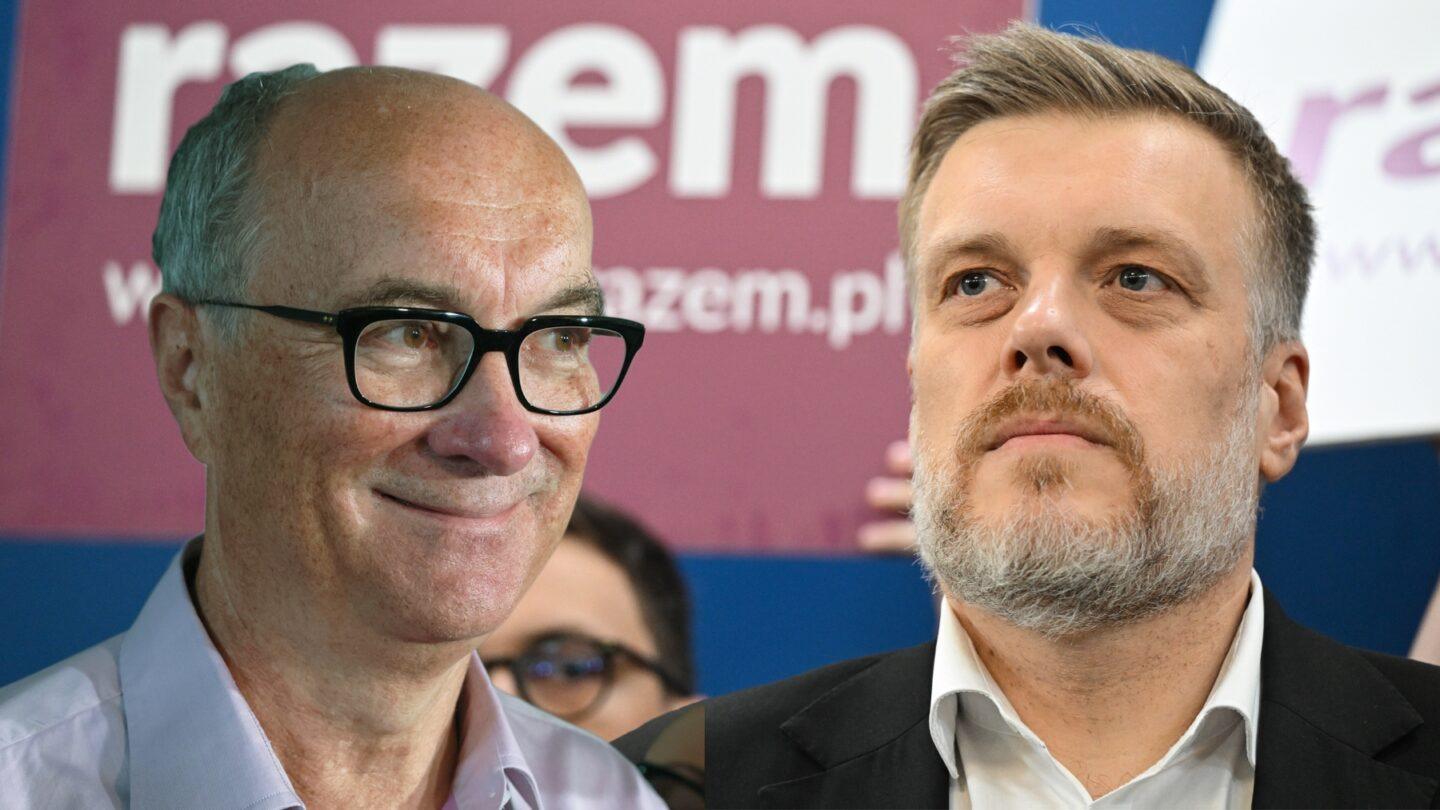
The New Left’s congress was not merely a platform to promote the party’s successes and to reaffirm loyalty to the October 15 coalition. It was also designed to remind left-leaning voters of the New Left’s primacy over the Razem party. Amid the self-congratulation and the unveiling of fresh initiatives, Agnieszka Dziemianowicz-Bąk also found time to deliver a few pointed jabs at her former party colleagues in Razem.
“We have proven that we do not have to choose between heart and reason, between what is right and what is possible. While others gave up, opting for the comfortable – and let’s be honest, very easy – role of armchair critics, we got down to work. For us, being on the left is not about discussion forums and social-media posts. For us, the left is about values, a plan of action, and ultimately real change. Because politics is about changing the world, not merely commenting on it,” said Ms. Dziemianowicz-Bąk.
Although the head of the Ministry of Family, Labor and Social Policy did not explicitly name the addressees of her remarks, no one in the room was in any doubt as to whom they were directed at – the Razem party.
“Turbo Poland” and the roadshow
The rivalry between the New Left and the Razem party, while not yet at boiling point, is becoming increasingly visible. Both are vying for the attention of a similar electorate through comparable legislative initiatives. Examples include proposals for a speculation tax (originally put forward by Razem) and a cadastral tax (an initiative of the New Left). While the details differ, politically both proposals are aimed at the same group: young people priced out of buying their first home.
For Razem, recent weeks have been marked by a pre-campaign roadshow under the banner “Turbo Poland.” Party activists have visited former provincial capitals such as Bielsko-Biała, Włocławek, and Konin. In the first months of the new year, they also say they will travel to, among other places, Kraków, Tarnobrzeg, and Elbląg.
Explainer
Former provincial capitals
Poland underwent major administrative reform on 1 January 1999. It went from 49 voivodeships down to 16. This was part of broader decentralization reforms as Poland prepared for EU membership. The reform consolidated the smaller voivodeships into larger regions with more administrative and financial autonomy.
The 49-voivodeship system dated from 1975 and was seen as overly fragmented and inefficient. The small regions lacked the resources and capacity to manage regional development effectively. The new 16 larger voivodeships were designed to be more self-sufficient, handle EU structural funds, and match the EU's NUTS-2 regional classification system used for statistical and funding purposes.
The reform was controversial at the time. Cities that lost their voivodeship status felt downgraded. Yet the idea was to create more viable regional governments capable of managing development funds, infrastructure projects, and regional planning.
The pre-campaign tour follows the drafting of a new programmatic declaration. In it, Razem promises “a Poland built on nuclear power, silicon, and steel.” The slogan is not new: similar pledges featured in the presidential bid of the party’s co-chair, Adrian Zandberg. The new program elaborates on the concept, with the party declaring support, among other things, for the construction of additional nuclear power plants, the creation of a “long-term and ambitious plan for Poland’s economic development,” and investments in digital sovereignty.
The party also points to gaps in Poland’s civil-protection system. Razem pledges to rebuild strategic reserves and to establish professional structures for strategic communication (so-called STRATCOM) to combat disinformation.
Much of the program is devoted as well to strengthening the role of state institutions in the economy and to reinforcing labor rights. The declaration says less about the party’s stance on issues such as the rule of law or Poland’s migration strategy in the years ahead.
For a close observer of political life, Razem’s proposals should not come as a surprise: its politicians have been making such arguments for years. Some of them overlap with the New Left’s declarations – notably on housing policy and health-care reform. What is no secret, however, is that the two formations are divided above all by their attitude to Donald Tusk’s government, of which the New Left is a part.
Political pinpricks
This is also evident in the rivalry on the purely political front. One of the first decisions taken by the new Speaker of the Sejm, Włodzimierz Czarzasty, was to stop inviting representatives of parliamentary groups to the Council of Elders. While the Sejm’s rules of procedure do not require such invitations, Szymon Hołownia, during his tenure as Speaker, had made a practice of doing so. Mr. Czarzasty chose to put an end to it, even though in justifying his decision he referred exclusively to representatives of Grzegorz Braun’s party, which has a three-member parliamentary group.
“I will not invite to the Council of Elders a party that, in my view, operates on the borderline between being a Russian agent and being subject to delegalization,” Mr. Czarzasty said.
At the same time, the Speaker’s decision also affects the Free Republicans group and, notably, the Razem group. It is worth recalling that Razem’s parliamentary circle had earlier voted against Mr. Czarzasty’s candidacy for Speaker. Shortly thereafter, Razem MPs supported Szymon Hołownia’s bid to become Deputy Speaker of the Sejm. This is therefore not about tensions between the government and Razem, but rather a conflict squarely between two left-wing formations.
A battle for the threshold
The picture for both formations in 2025 is therefore a bittersweet one. After the presidential election, Razem had reason to celebrate: Adrian Zandberg won more votes than his former party colleague Magdalena Biejat. The campaign also brought an influx of new members, and activists began building party structures in smaller towns.
On the other hand, opinion polls offer Razem no guarantee of comfortably clearing the electoral threshold of 5%. The party is hovering around an average of roughly 3–4% in aggregated polling. At the same time, this is a level that could potentially allow it to cross the threshold in 2027 – provided it succeeds in establishing structures in all electoral districts.
The New Left, by contrast, is the only one of the smaller coalition partners to regularly post poll numbers that would see it clear the threshold in two years’ time. Although support averaging around 6% appears stable, it does not give Włodzimierz Czarzasty’s formation complete certainty. The New Left’s future will depend to a large extent on its visibility within the government and on the strength of Civic Platform (Koalicja Obywatelska) as the coalition’s leading force.
The sum of old fears from a decade ago
On the left, memories of 2015 elections remain vivid. That year, none of the parties associated with the left – the United Left, Your Movement, or Razem – managed to clear the electoral threshold, despite their combined support reaching the low double digits.
Today, however, the differences in approach to cooperation with the liberal bloc are far more pronounced. From a political standpoint, it makes little sense for any of the formations to declare support now for a potential joint left-wing list in 2027. A further, undeniable difficulty is the question of credibility: can an alliance between a party that has been pro-government and one that has been anti-government truly be viable?
Perhaps, in the longer run, the answer will be delivered by parliamentary arithmetic. For now, it is unforgiving. By the end of 2025, a parliamentary majority – albeit a very fragile one – would be secured by the right, with Grzegorz Braun included. The Confederation of the Polish Crown outperforms both the New Left and Razem in every poll. That, above all, is the fact that should give both formations most cause for concern.


Key Takeaways
- The New Left, under Włodzimierz Czarzasty’s leadership, is consistently building the image of an “effective left,” legitimizing its place in government through tangible achievements such as the widow’s pension and the reform of the National Labour Inspectorate. At the same time, Agnieszka Dziemianowicz-Bąk’s rhetoric takes aim at the Razem party, reducing its activity to that of “online commentators.” The goal is to capture voters who expect concrete legislative change – even at the expense of ideological purity.
- “Turbo Poland” and the call for a “Poland built on nuclear power, silicon, and steel” are an attempt to move beyond the traditional culture-war agenda toward economic and digital sovereignty. Although Adrian Zandberg strengthened his position after the presidential election, the party continues to hover around the electoral threshold, seeking support in smaller urban centres while distancing itself from the liberal course of Donald Tusk’s government.
- Despite competing for the same electorate – including young voters struggling in the housing market – both parties remain hostages to parliamentary arithmetic and to the rising fortunes of the far right. The lack of appetite for a joint list in 2027, rooted in fundamental differences over the governing coalition, combined with growing support for Grzegorz Braun’s formations, casts doubt on whether the left will be represented in the next parliament at all.