

This article is a part of Poland Unpacked. Weekly intelligence for decision-makers
The founder od LPP took out his first corporate loan for USD 120,000; more recently, banks were willing to lend him PLN 20bn (approx. EUR 4.6bn). Although he has built one of Poland’s most valuable companies, he insists: “I would like to remain modest.”
What, in his view, lies behind the success of LPP and of the Polish economy? “We still have the drive – that’s our advantage,” says Marek Piechocki, founder of LPP.
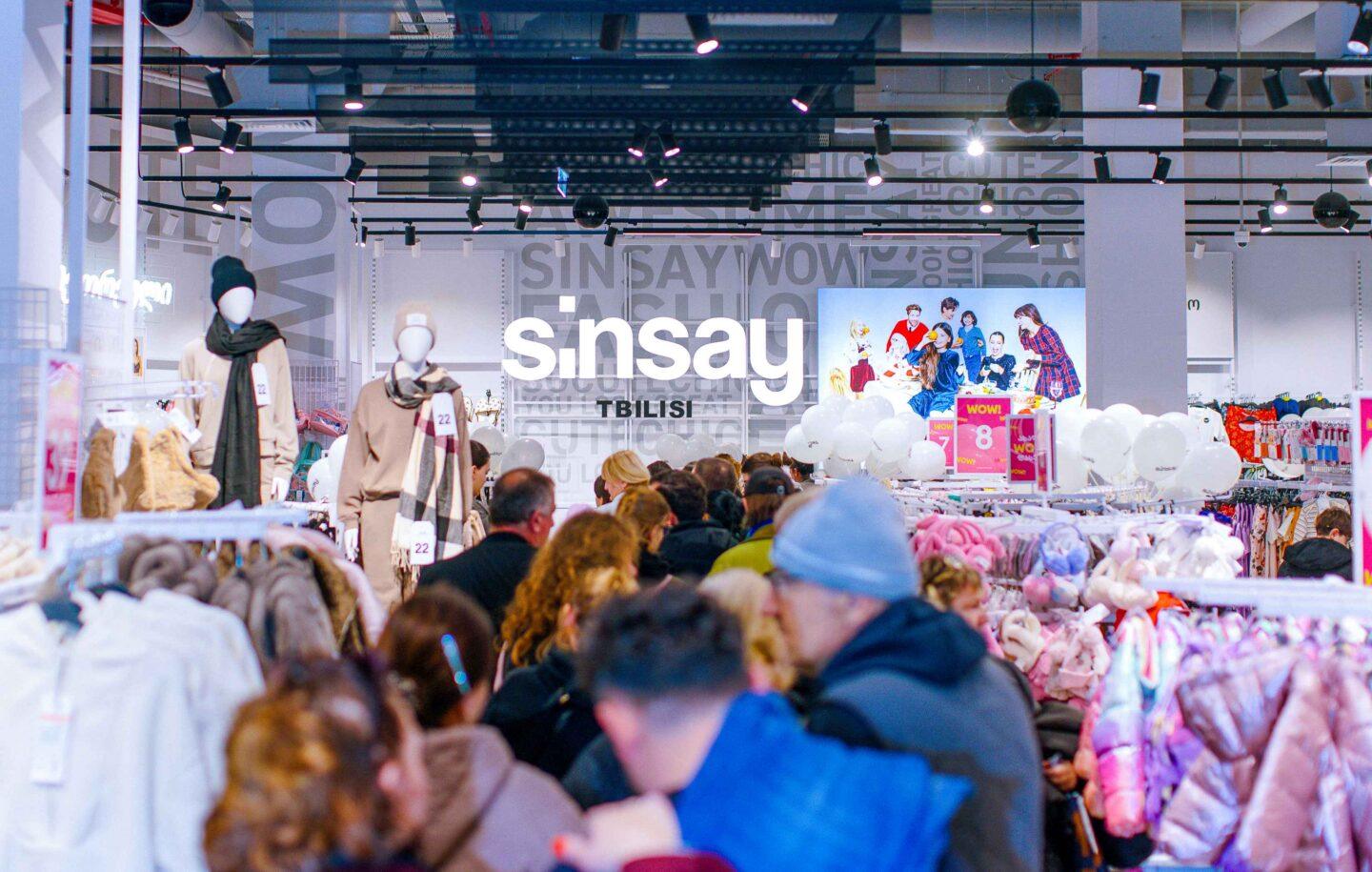
The history of LPP, the region’s largest fashion group, dates back to 1991. Ten years later, the company – co-founded and led by Mr. Piechocki – listed on the Warsaw Stock Exchange. At the time, it had 16 Reserved stores and revenues of PLN 171m (approx. EUR 39m). It closed 2025 with a network of 3,748 stores across five brands (also Sinsay, Cropp, House and Mohito) in 35 countries (including e-commerce, it operates in 46 markets), and sales of PLN 23.1bn (approx. EUR 5.3bn), with EBITDA of PLN 5.4bn (approx. EUR 1.2bn) and net profit of PLN 2.4bn (approx. EUR 550m).
In some respects, more than three decades on, LPP is enjoying a second youth. Under its updated strategy for 2025–27, it plans to open around 1,000 stores a year, while growing both brick-and-mortar and e-commerce revenues at a similar pace. Almost all of the increase in retail space (more than 900 outlets) will come from the group’s youngest brand, Sinsay.
In 2025 the company invested a record PLN 3.2bn (approx. EUR 730m); in the coming years, it expects to invest around PLN 2.6bn (approx. EUR 600m) annually. The firm can sustain this rapid expansion in part thanks to securing about PLN 13.5bn (approx. EUR 3.1bn) in syndicated refinancing from 21 banks last year. Over the past year, LPP’s market capitalization rose by roughly one-fifth to around PLN 40bn (approx. EUR 9.2bn).
 Interactive chart
 The end of ten-year crisis cycles
Mariusz Bartodziej, XYZ: Do you remember your first corporate loan?
Marek Piechocki, CEO and co-founder of LPP: I remember it as if it were yesterday. In 1990 we borrowed USD 120,000 – still in the form of a letter of credit – to finance a delivery of goods. It was a dreadful experience: the winter jackets did not arrive until January, right in the middle of the sales season.
In the early years, financing was difficult, but our reliability paid off. For more than 30 years we have repaid every loan on time. Not once in our history have we missed a payment.
Given that track record – as well as the scale of your business and its growth – it is no surprise that in 2025 banks were competing to join the syndicate that provided PLN 13.5bn (approx. EUR 3.1bn) in refinancing.
That is true. We could have secured as much as PLN 20bn (approx. EUR 4.6bn), but there was no need. Still, we have worked for more than three decades to reach such a comfortable financial position.
From the perspective of a Polish entrepreneur who has been in business this long, have the past few years been the most turbulent in geopolitical terms?
Certainly. Since the COVID-19 pandemic, the old ten-year crisis cycles have disappeared. Something serious now happens every two years. The war in Ukraine has led to a sharp polarization between East and West – and we sit right at that fault line. We withdrew from Russia, which accounted for roughly one-fifth of our business, and in Ukraine we are expanding more slowly than we would in peacetime.
Even so, it must be said that, despite all these upheavals, Poland remains remarkably strong. Our economy is not only growing the fastest in the region; it is admired across Europe. Whatever the turbulence, the strength of Polish entrepreneurship is such that we continue to surprise the world.
Ambition and trust drive success at LPP
To some extent, is this what motivates you to get up every morning thinking about what else can be improved in your business?
Exactly. As a country, we still have much to do, but our advantage is a large group of people who are driven – who want to achieve something in life. This applies not only to entrepreneurs, but also to managers and to those just starting their careers, steadily working their way up to director-level roles.
As a society, we have far more internal energy than, say, Western Europe. Yes, we have our problems and we complain a lot. But we remain more entrepreneurial and more motivated to act.
And do you still have that drive yourself?
Of course – because that is the culture we have at LPP. The average tenure of our top 50 managers is around 15 years. We have hundreds of employees who have been with us for at least a decade. That is our culture: we focus on what can deliver tangible results and move us forward. Every day, we look for what else can be done.
When a company grows quickly, it creates opportunities for its people. Most of our directors – now managing teams of 200–300 people – started out as sales assistants, store managers, and so on. The person now responsible for the entire Reserved collection, overseeing 500 employees, began as a buying assistant. We have many such stories at LPP.
In a way, this reflects the broader situation in Poland. We are a society with drive – and if companies give people the conditions to grow together, they push themselves even harder.
Which employees do you value most – and who would be better off looking for work elsewhere?
We say this openly, including within the company: we are looking for people who fit our FAST philosophy – fire-fueled, ambition-driven, success-focused and trust-based. We are driven by passion, we have the courage to aim higher, results matter most, and we trust one another.
We start assessing candidates by asking whether they fit this culture. If someone does not identify with our values, is not motivated by success, lacks ambition, or cannot trust their colleagues, then they would indeed be better off seeking opportunities elsewhere.
Ambition is one thing – but how much rest do you allow yourself during the week and in annual leave?
If work becomes a passion – and for many people at LPP, myself included, it is – it becomes very difficult to draw a clear line between professional duties and private life. The two genuinely overlap. Take one example: if a buyer from our team goes to a shopping mall on a Saturday, do you think they do not instinctively observe how customers dress and behave? Those very observations determine which collections we order and in what volumes. So should that be treated as working time?
Another example: if our designers browse social media in the office, are they working? In the evening, they may do exactly the same in a café. In both cases, they are doing it to stay on top of trends. That is why we do not want employees who clock-watch and walk out the door at 3pm sharp. We are looking for people who constantly think about how to improve what they do. Those are the ones who tend to stay with us for the long term and rise to senior positions.
So you do not take holidays with a full digital detox?
Not quite – why make life unnecessarily difficult? That said, it is not as if employees call me constantly and give me no peace. And certainly not because they are afraid of me. We have clearly divided responsibilities, and I trust my people, so they do not need to consult me on everything.
When a serious issue arises, they call immediately. That was the case with the warehouse fire in Romania in June 2025. Sebastian Sołtys, CEO of LPP Logistics, called me first. I remember it was a Sunday.
So much for a day off – you have to act.
For me, that is obvious. And it applies to every manager here. If someone disconnects from the company, it means they do not identify with it – so working at LPP is merely an unpleasant obligation for them. I have no intention of forcing anyone to do something against their will. I am looking for people who tie their ambitions to the development of our company.
Expansion into Central Asia, “no” to China
Speaking of ambition: a year ago you announced plans to double revenues and EBITDA to around PLN 40bn (approx. EUR 9.2bn) and PLN 8bn (approx. EUR 1.8bn) respectively by 2027, and to nearly triple your store network to 7,500 outlets. In December, you slightly lowered those expectations. Is it now time to raise the bar again?
For me, what matters most is healthy growth – meaning that both net and operating margins increase year after year, even if only marginally. The key is for profit to grow the fastest. We achieved that in 2025 and are focused on sustaining that performance. Sometimes excessive investment leads to margin compression, which unsettles the market – and that is something we want to avoid.
Interactive chart At what stage of development is LPP compared with its main international competitors? Since 2019, Inditex has been steadily reducing its store count – including for its flagship brand, Zara – yet it continues to grow both sales and profits. In your group, there is no talk of downsizing the network; even your most mature brands show no signs of drastic change.
Compared with Inditex, we are still a small company. At roughly EUR 5bn versus EUR 40bn in revenues, it is clear we are still far from that level of maturity. That said, we are growing faster. Between 2019 and 2025, Inditex increased revenues by 1.4 times and profits by 1.6 times; in our case, the figures were 2.5 times and 3.7 times, respectively.
LPP is still a “young player” in Central Asia. How is your effort to displace bazaar trade progressing in markets such as Kazakhstan and Uzbekistan?
Customers always want something new and fresh – and we provide that. However, true expansion will have to wait until we open a warehouse in the region, planned for early 2027. The scope for improving logistics efficiency is enormous.
At present, goods first travel 40–50 days by sea to Gdańsk, and then spend more than 30 days by rail to reach Kazakhstan. In that time, they could circle the globe. With a local warehouse, we will be able to ship goods there directly by rail from China in 14 days. That will fundamentally improve our supply-chain management – faster, cheaper and more sustainable.
How large will this investment be, and how much could it accelerate the expansion of your store network?
At the outset, we will need around 30,000 square meters of warehouse space. The investment itself will be modest, as it will be limited to fitting out a leased facility, thereby reducing risk. Once we start supplying stores from there and assess the results after a few months, we will determine the pace of expansion. For now, we are establishing a foothold, opening around 30 stores a year in individual countries. The pace could be several times faster, but it is too early to say.
What is holding you back from expanding further east – and how distant is the prospect of entering China? Poland’s Diverse has already opened its first stores there, breaking new ground.
China is a very challenging market. Diverse is likely operating there in partnership with local players, whereas we prefer to open our own stores. We do not see sufficient potential in China to justify entry. It is no coincidence that Inditex has closed half of its stores there. China is the world’s largest e-commerce market – not only because of its population, but also because of the exceptionally high share of online sales in total retail, at around 50%.
Interactive chart Logistics automation; caution towards AI shopping agents
Returning to logistics, how is its role as a competitive advantage evolving? Last year, you increased the number of robots in your three e-commerce warehouses sixfold, to 3,500. There are now more robots than employees: 3,000.
That is somewhat symbolic, but justified by efficiency. In e-commerce, logistics is one of the largest cost items, so automation can bring substantial benefits. Zalando, for example, reports that logistics accounts for 23% of its costs. In brick-and-mortar retail, it is only a few percent – around 3%. In such a case, reducing costs by 10% or even 20% does not make a significant difference.
Moreover, warehouse automation for store supply is already well established. For years, specialized machinery has been used, including at our company. However, in e-commerce logistics, this process really began with the rapid growth of the sector following the pandemic. As the industry evolves quickly, new solutions emerge just as fast, and we have to keep pace with these changes. That is why, in our next warehouse, we will already be using machines capable of climbing racks.
What about other technologies in the group – have any turned out to be failures?
It is difficult for me to point to such cases, which stems from our strategy. I do not want to be an innovator, because that carries the highest costs and the greatest risk of failure. I prefer to be the second mover – the one who implements solutions that have already proven effective.
I spent a long time analyzing the introduction of self-checkout systems in our stores. Once I decided to roll them out, we did so on a large scale right away. Many different solutions failed in the market, forcing companies to withdraw them. Fortunately, we have avoided major technological missteps.
Do you already have your own private AI shopping assistant?
No. I always do my shopping myself. AI shopping assistants may one day take over part of that process, but in our industry it is difficult. Choosing clothes depends on many subjective factors that are hard to capture in an algorithm. Fashion is not a bottle of water that you simply want to buy as cheaply as possible.
If a customer asked me for a red dress, even if the size were correct, I doubt I would meet her expectations. And that is before considering an AI assistant.
So you take a cautious view of the AI-driven shopping revolution recently forecast by, among others, Rafał Brzoska of InPost?
Simply cautious – at least in our industry. Because should a blouse have two buttons or three? Should they be silver or gold? Should they be trimmed or not? That is simply fashion.
Numerous acquisition offers, no reasons to pursue them
And how do you view the acquisition-led expansion of Polish companies into Western markets? Does LPP have the profile to join that group?
We do not want to join any group. We simply want to grow the business in a healthy way. In 2025 we opened over 1,000 stores, increasing retail space by around 30%. We have our hands full.
We receive numerous acquisition offers – on average, they land on my desk every two weeks. At times, I am left perplexed, as they concern companies with revenues comparable to what we generate in a single weekend. Why would we buy a business worth PLN 100m (approx. EUR 23m)? Acquisitions make sense when a company no longer sees room for organic growth. In our case, that potential remains very significant. We are riding a fast-moving horse – why switch?
When was the last time you seriously analyzed a potential transaction? Modivo completed several over the past few years.
In truth, not once since the acquisition of Artman in 2008 [owner of the House and Mohito brands, for nearly PLN 400m – editor’s note]. Since then, we have consistently been able to grow sales at a rate of 15–20% annually. We simply have not needed acquisitions.
Will the marketplace under the Sinsay brand be the next growth driver?
It is too early to go into details. We are building the team and the platform; the effects will likely become visible in the second half of the year. In reality, we will show more in 2027.
Marek Piechocki: “I would like to remain modest”
You described LPP’s 2025–27 strategy not as a CEO’s dream or vision, but as a carefully prepared plan. How high, then, do your dreams and vision reach?
It is difficult to responsibly set plans for more than three years ahead. For over 30 years, we have been moving forward step by step. We are not extremely innovative; we simply adapt to the market. Let us first achieve the goals set for 2027. After that, I will likely turn my attention to succession, so that my children can carry the business forward and invest the family capital.
In Poland, we already have a “king of shoes, a prince of socks and a sultan of handbags” – as Dariusz Miłek, founder of CCC, recently joked about himself. What title would you give yourself?
I will answer with a message I received today from a friend, because I am proud of it. He wrote: “What you have achieved inspires my infinite respect; you are our humblest national asset.” At first, I thought it sounded overly lofty, because I am certainly not a national asset. But I would like to remain modest.
I am simply an entrepreneur who has been building value for the country for more than 30 years. In 2025, LPP paid nearly PLN 3bn (approx. EUR 690m) in taxes in Poland. With that money, our government will build schools, roads, and more. Everyone is different. I do not seek public appearances, because what matters most to me is business success and what we leave to society. And I hope our country can take pride in the fact that LPP’s brands are recognizable in many countries.


Key Takeaways
- What holds Marek Piechocki back. The pace of expansion in Central Asia is limited by the lack of a local warehouse, which would reduce delivery times to a fraction of current logistics durations. The facility is scheduled to launch in early 2027. LPP is also cautious about entering China due to intense competition and the exceptionally high share of e-commerce in that market. At the same time, the company consistently declines acquisition offers, citing strong organic growth potential – especially as some offers concern companies with revenues comparable to what LPP generates in a single weekend. The entrepreneur does not intend to set long-term plans. He aims to achieve the targets set through 2027 and will then begin to focus on succession.
- LPP is a place for the ambitious. Passion drives the company; employees are encouraged to aim higher, results matter most, and mutual trust underpins relationships – these are the pillars of LPP’s organizational culture. Marek Piechocki, the company’s CEO and co-founder, emphasizes that he looks for ambitious people, as they are the ones who build the success of the Polish economy. “If someone does not identify with our values, is not motivated by success, lacks ambition, or cannot trust their colleagues, then they would be better off seeking opportunities elsewhere,” the entrepreneur says.
- Approach to technology. Marek Piechocki stresses that he does not want to be an innovator, as that entails the highest risk and the highest costs. He prefers to be a “fast follower” – implementing solutions that have already proven effective. He spent a long time analyzing the rollout of self-checkout systems in his stores, but once he made the decision, he implemented them on a large scale. He is equally decisive in logistics automation: in his three e-commerce warehouses, there are already more robots (3,500) than employees (3,000). He takes a cautious approach to AI shopping agents, particularly in fashion, while the effects of introducing a marketplace under the Sinsay brand are expected to become clearly visible in 2027.