

This article is a part of Poland Unpacked. Weekly intelligence for decision-makers
 Interactive chart
 At its March meeting, the Monetary Policy Council left interest rates unchanged. The reference rate remains at 3.75%. This was the expected – and, in effect, the only plausible – decision. A month ago, the RPP cut rates by 0.25 percentage points.
A hike at the subsequent meeting would have been out of the question, as it would have undermined confidence in the central bank. A further cut, meanwhile, was ruled out by rising fuel prices and higher inflation readings. According to preliminary data from Statistics Poland (GUS), inflation reached 3% year on year in March, up from 2.1% in February.
The situation is different from the period after the outbreak of war in Ukraine
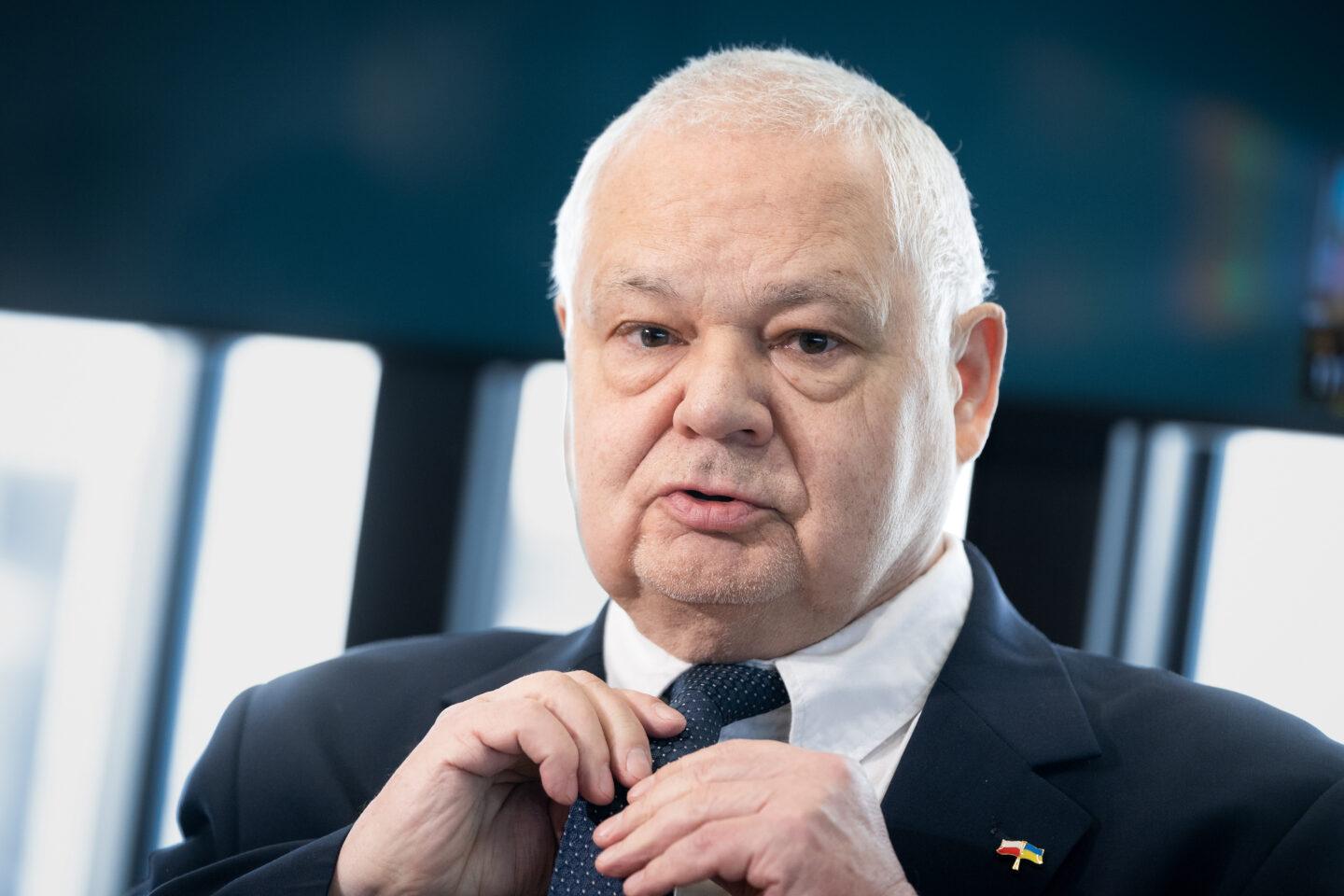
At the post-meeting press conference, NBP Governor Adam Glapiński listed several factors explaining why the current situation differs from 2022–2023. Among them, he pointed to lower increases in energy commodity prices compared with that period. He highlighted in particular gas and coal prices, as well as agricultural commodities. This is accompanied by weaker global demand and an “export of deflation” from China. At the time, major global economies were still in the post-pandemic recovery phase. The NBP governor also noted that disruptions in maritime trade are now more limited and mainly affect fuel markets.
Domestic conditions in the Polish economy are also different. Wage growth is lower and slowing. Interest rates are currently significantly higher. Back then, rate hikes were only just beginning after a year and a half in which the main policy rate had been held at 0.1%. In addition, the złoty has weakened only marginally, whereas at that time it depreciated substantially – by 20% against the US dollar over six months.
As a result, Adam Glapiński indicated that he does not expect any changes in interest rates.
“Nothing at the moment suggests that we are moving away from the inflation target of around 2.5%,” said the head of the NBP.
He cautioned, however, that if conditions were to change abruptly, the Monetary Policy Council could raise rates. This would be possible if the conflict were to escalate again and oil and fuel prices were to rise significantly, pushing inflation above the target level.
XYZ’s perspective
A repeat of the inflation seen during the pandemic-and-war period is indeed unlikely. The NBP governor presented a fairly comprehensive set of arguments highlighting how the current situation differs from that earlier episode. Even so, there may be some similarities in the way price dynamics unfold in markets, particularly in the gradual recognition of risks by investors.
Interactive chart A useful example is gas prices. On the Dutch exchange, the European benchmark, prices initially surged after the outbreak of war in Ukraine. Just ten trading days after the invasion, gas was more than 170% more expensive than the day before it. Yet this was followed by an equally sharp cooling in sentiment. After 20 days, prices were 19% higher than pre-war levels, and after 70 days they had returned to their pre-war level. The price shock, however, began only around day 80, when sanctions on Russian oil imports started to take effect and later the Nord Stream pipelines were blown up.
After US and Israeli strikes on Iran, gas prices also experienced a sharp spike. Within three days, they rose by nearly 100%. In recent days, however, they have begun to fall sharply, following a trajectory similar to the one observed after the outbreak of war in Ukraine. This does not mean that another price surge of the same scale must follow. Much will depend on supply conditions in the gas market, and therefore indirectly on how the conflict in the Middle East evolves.
The Polish złoty behaved in a similar way during the earlier episode of gas price volatility in Europe. There was an initial sharp sell-off, but after a few days the currency began to recover against both the euro and the US dollar. A more sustained weakening of the złoty only began several months into the conflict, driven precisely by the sharp increase in energy commodity prices.
Markets tend to overreact
One point worth bearing in mind is the market’s limited ability to anticipate developments. In moments of sudden shocks, it can even amount to an inability to do so. Pricing swings from excessive pessimism at the outset to excessive optimism – and back again.
In the current environment, price increases as abrupt as those seen after the outbreak of war in Ukraine appear unlikely. Inflation in Poland should remain close to target, and interest rates are likely to stay unchanged until the end of the year. Even so, it is worth remaining mindful of certain types of risk. Commodity prices and exchange rates can move extremely quickly and have a significant impact on price dynamics across the economy.


Key Takeaways
- While a repeat of the sharp inflation seen during the pandemic and war period is unlikely, markets may still overreact to geopolitical events. Commodity prices and exchange rates can swing rapidly from declines to increases, meaning that despite stable forecasts, potential risks to inflation and monetary policy should still be taken into account.
- The Monetary Policy Council kept interest rates unchanged at 3.75%, in line with market expectations. The decision reflected the earlier rate cut and a rise in inflation to 3% year on year in March, which ruled out both another cut and a rate hike.
- NBP Governor Adam Glapiński noted that the current macroeconomic environment differs from that of 2022–2023, including lower commodity price pressures, weaker global demand, and a more stable złoty. In addition, wage growth is slower, and interest rates remain relatively high, which reduces the risk of a sharp acceleration in inflation.